Sick Beagle Mix Rescued After Becoming Too Weak to Finish Her Meals
Reader Theme:
Font Size:
24px
Honey Arrives at the Shelter
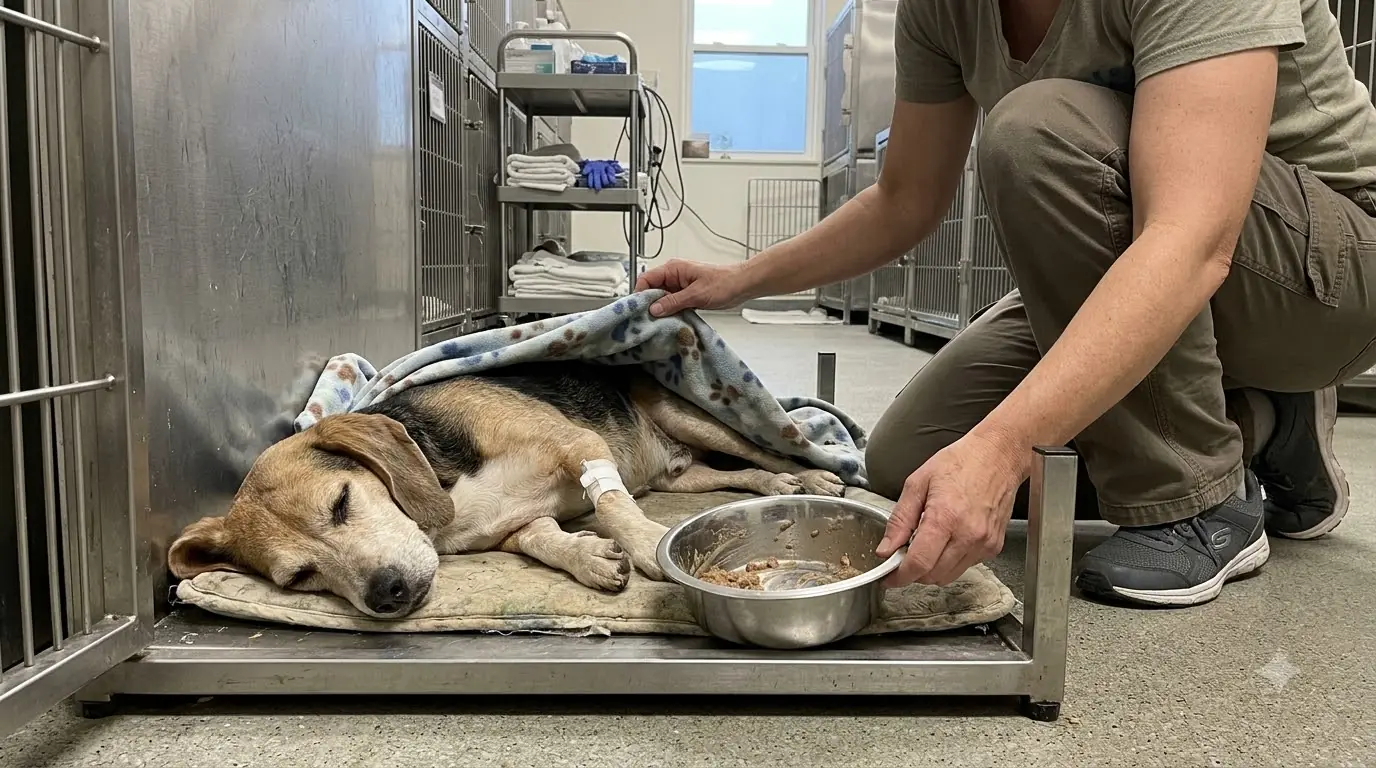
Honey did not arrive looking like a dog interested in exploring her new surroundings.
The 6-year-old Beagle mix walked only as far as necessary.
Then she wanted to lie down.
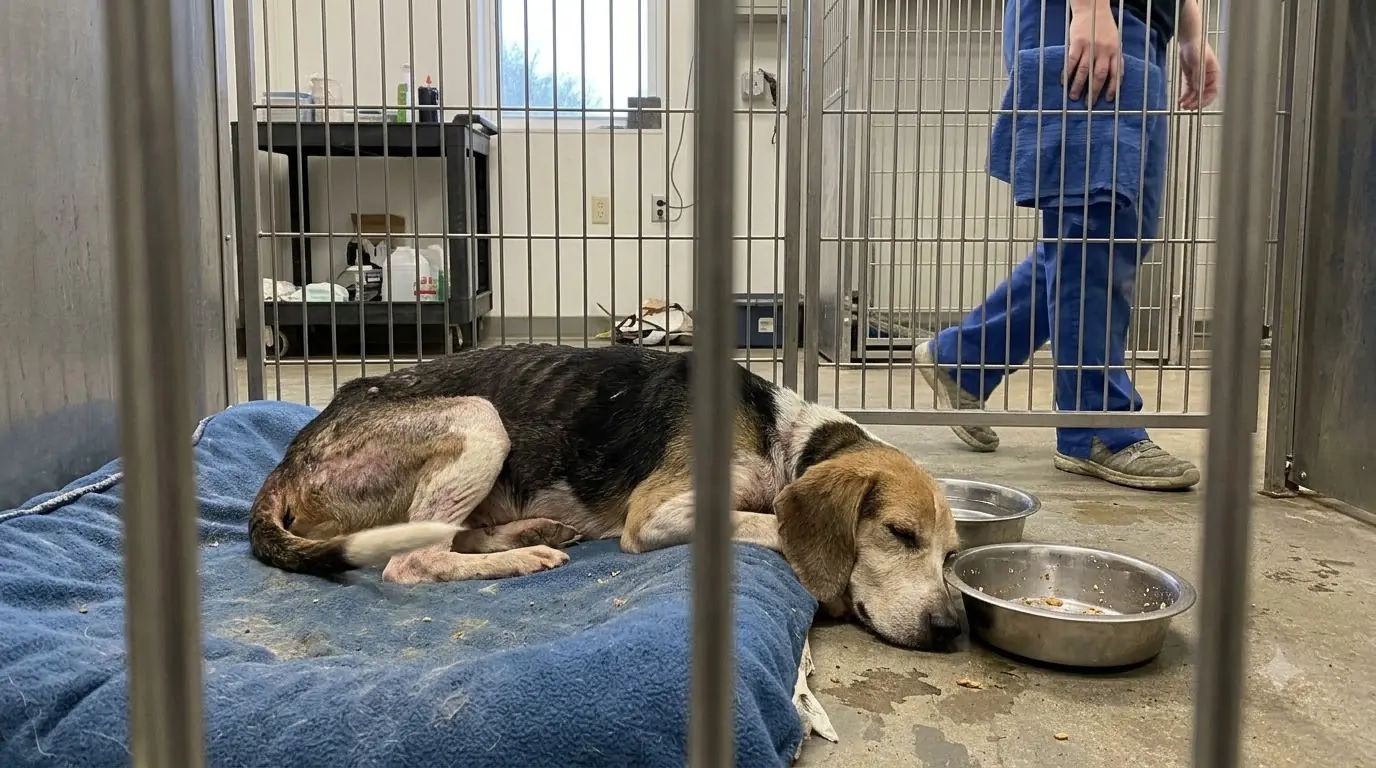
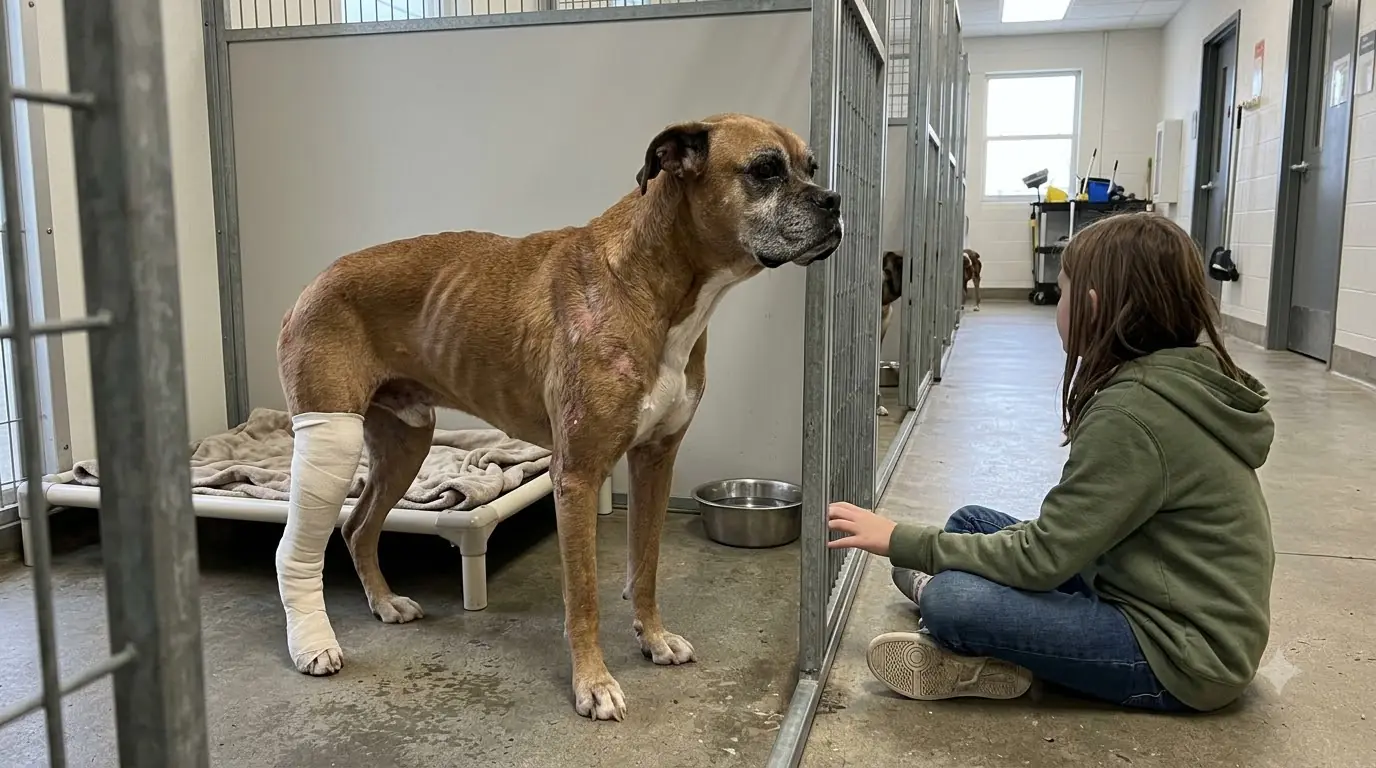
Her body condition was clearly below ideal. Her ribs were visible beneath her coat, her waist was pronounced, and there was noticeable loss of muscle around her hips.
Her eyes looked tired.
Her gums felt tacky.
When a bowl of water was placed nearby, Honey drank, paused, and drank again.
Staff immediately became concerned about dehydration.
Food interested her too, but only briefly.
Honey approached the bowl, ate several bites, and stopped.
She lowered herself onto her bed.
A few minutes later, she returned for another bite or two.
Then she stopped again.
This was not a dog simply being selective about shelter food.
Honey looked physically unwell.
What We Didn't Know
There was limited reliable information explaining how Honey had reached this condition.
Her symptoms could have resulted from many different medical problems.
Parasites.
Gastrointestinal disease.
Infection.
Dental pain.
Kidney or liver disease.
Endocrine disorders.
Cancer.
Or combinations of several conditions.
The rescue could not determine her history by looking at her body.
We could not say she had deliberately been deprived of food or medical care.
We could document only what we knew.
Honey was sick.
She was dehydrated.
She was underweight.
And she needed veterinary evaluation.
Her First Veterinary Examination
Honey was examined shortly after intake.
Her temperature was mildly elevated.
Her heart rate was faster than expected at rest, which could have reflected dehydration, illness, stress, or a combination of those factors.
Her lungs sounded clear.
Her abdomen was mildly uncomfortable during palpation, particularly through the intestinal area, but there was no obvious large mass.
Her gums were paler than ideal.
That raised concern about anemia.
The veterinarian also noted poor body condition and generalized weakness.
Honey could stand and walk independently, but she tired quickly.
Rather than repeatedly asking her to move, the team allowed her to remain on padded bedding during much of the examination.
Bloodwork Provides the First Clues
A complete blood count confirmed mild to moderate anemia.
Honey's white blood cell pattern was also consistent with an inflammatory or infectious process, although bloodwork alone could not identify the exact cause.
Her chemistry panel reflected dehydration.
There were mild electrolyte abnormalities that required correction and monitoring.
Fortunately, her kidney and liver values did not indicate advanced organ failure.
That was encouraging.
Still, Honey's digestive symptoms and poor nutritional condition needed further investigation.
A fecal sample was collected.
Parasites and Intestinal Disease
Testing identified a significant intestinal parasite burden, including hookworms.
Hookworms attach to the intestinal lining and feed on blood. In substantial infections, particularly in vulnerable dogs, they can contribute to anemia, weakness, gastrointestinal problems, and poor body condition.
Honey's anemia was therefore clinically important.
Additional gastrointestinal testing and her examination were consistent with enteritis—significant inflammation of the intestinal tract.
The veterinary team believed the combination of intestinal parasites, gastrointestinal inflammation, reduced food intake, and dehydration explained much of Honey's condition.
There was no evidence that emergency abdominal surgery was required.
Treatment could begin medically.
Rehydrating Honey
Correcting Honey's hydration was one of the first priorities.
Fluids were administered according to her veterinary assessment.
The goal was controlled restoration of hydration and electrolyte balance rather than simply giving as much fluid as possible.
Her heart rate, hydration status, urination, and general comfort were monitored.
As hydration improved, Honey became slightly more alert.
She still slept frequently.
That was expected.
Her body had been functioning with limited reserves.
Recovery would require more than a few hours of fluids.
Treating the Parasites
Honey began veterinarian-prescribed deworming treatment.
Because parasite life cycles can make repeat treatment necessary, her plan included follow-up doses and future fecal testing.
Staff also maintained careful sanitation.
Feces were removed promptly.
Bedding was changed regularly.
Kennel surfaces were cleaned according to shelter protocols.
Treating Honey was only part of parasite control.
Reducing environmental contamination mattered too.
Her Stomach Needed Time
Honey's intestinal tract was already irritated.
Offering a huge meal because she looked hungry could have made her digestive problems worse.
Instead, the veterinary team developed a feeding plan using a complete, highly digestible diet.
Honey received small portions several times throughout the day.
At first, she rarely finished one.
She might eat several bites enthusiastically and then seem to lose energy.
Staff recorded how much she consumed.
The pattern mattered.
If her intake declined further, more intensive nutritional support might become necessary.
The Half-Finished Bowl
One evening, a shelter worker entered Honey's area to check on her.
The room was quiet.
Honey had been offered another small meal earlier.
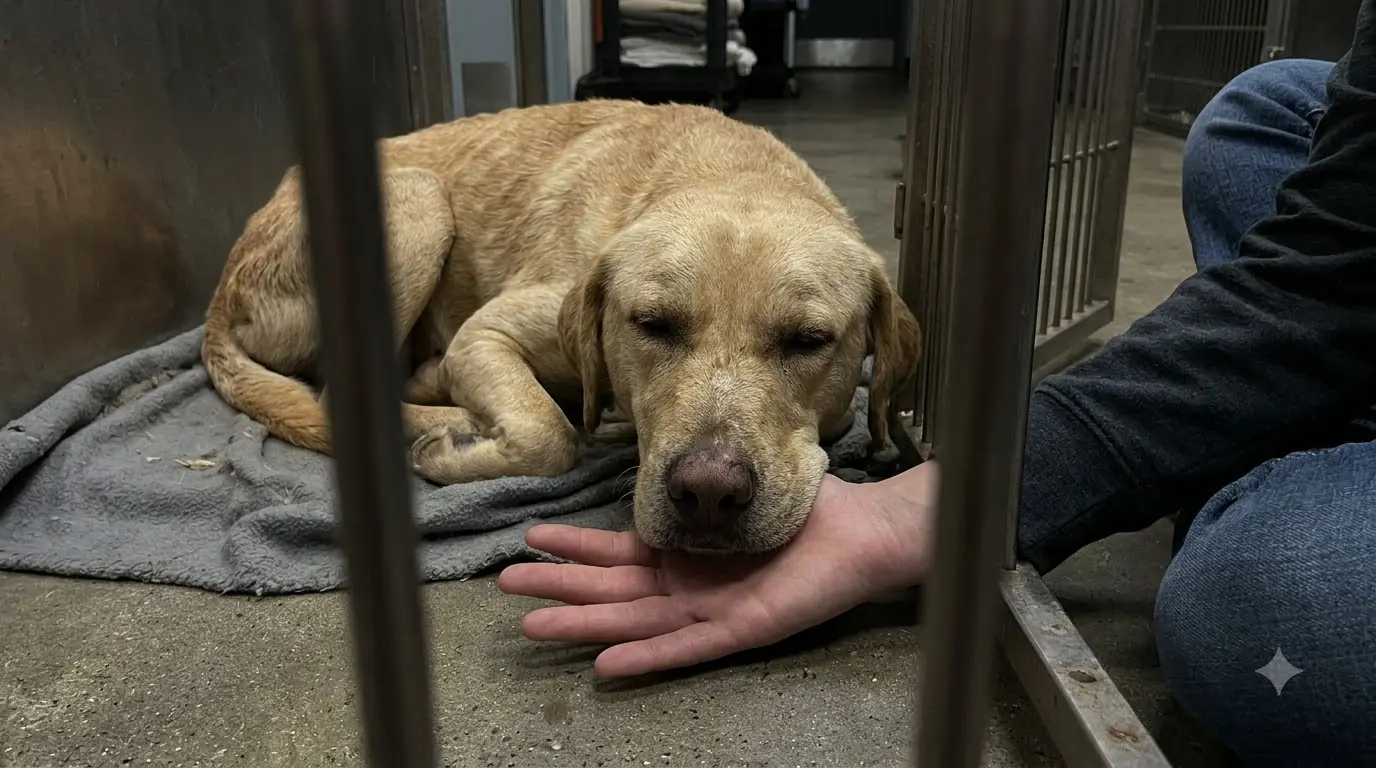
The worker found her asleep.
Her head was resting beside the bowl.
Food remained inside.
For a moment, the scene summarized Honey's first days better than any medical chart could.
She wanted to eat.
She simply did not always have enough energy to finish.
The worker did not wake her.
She gently moved the bowl away so Honey would not accidentally spill it while sleeping.
Then she pulled a clean blanket over Honey.
Honey barely stirred.
The worker turned off the brighter light and left her to rest.
The Next Morning
Breakfast arrived early.
Honey smelled it.
Her head lifted.
She stood slowly and approached the bowl.
Then she began eating.
The worker watched from outside the kennel.
Honey continued.
She did not stop after several bites.
She finished the entire measured portion.
Then she lifted her head.
She looked toward the worker.
Her tail moved once.
Then again.
It was a soft wag.
Nothing about that moment meant Honey was cured.
Her anemia had not disappeared overnight.
Her parasites still required treatment.
Her gastrointestinal tract still needed time to recover.
But appetite is valuable information in a sick dog.
Honey had finished a meal.
For the first time, her body seemed to be asking for more life than sleep.
Appetite Becomes More Consistent
Over the following days, Honey's appetite continued improving.
She still received smaller, frequent meals rather than one or two large portions.
Most were finished.
Her water intake normalized as her hydration improved.
She no longer drank with the same urgency seen at intake.
Her urination remained appropriate.
Staff watched carefully for vomiting.
Honey had one brief episode of nausea early in treatment but did not develop persistent vomiting.
Her stools required more time to improve.
Monitoring Her Stool
Intestinal parasites and enteritis had affected Honey's bowel movements.
Initially, they were loose and occasionally darker than normal, something the veterinary team monitored carefully given the hookworm infection and anemia.
As treatment progressed, the stools gradually became more formed.
There was no ongoing evidence of severe gastrointestinal blood loss.
Her abdomen became less uncomfortable during examination.
These changes suggested that treatment was working.
But the team still needed objective confirmation.
Repeat Bloodwork
Honey's blood counts were checked again.
Her anemia had stabilized.
That was important.
A falling red blood cell count would have raised concern about continued blood loss or another underlying process.
Instead, Honey's values began moving gradually in the right direction.
Her hydration-related chemistry abnormalities also improved.
No new major organ dysfunction appeared.
The veterinary team continued her treatment plan.
Weight Gain Begins
Honey was weighed regularly.
The first objective was to stop further loss.
Once her appetite stabilized, the scale began moving upward.
The gains were modest.
That was appropriate.
Her ribs did not disappear in a week.
Muscle did not suddenly return.
Healthy recovery from significant weight loss takes time.
Honey received enough calories and protein to support rebuilding without overwhelming her digestive system.
As her gastrointestinal condition improved, meals could gradually become larger and less frequent.
Her Energy Changes
The earliest change was not running.
It was standing.
Honey began standing when she heard the food cart.
Then she started walking toward the kennel gate.
A few days later, she followed a staff member several steps after a bathroom break before realizing they were heading in the wrong direction.
Her nose also became increasingly active.
That was when everyone started seeing more of the Beagle in her.
Food smells became extremely important.
So did every interesting scent outside.
Honey still tired easily.
But she was curious again.
Bathroom Breaks
Early in her recovery, Honey's outdoor trips were short.
She had enough strength to walk independently but did not need unnecessary exercise while dehydrated and anemic.
She urinated normally.
As her intestinal disease improved, her bowel movements became increasingly predictable.
Staff documented frequency and consistency because gastrointestinal recovery was one of the major indicators of her progress.
Eventually, Honey's bathroom habits normalized completely.
A Small Setback
About a week into treatment, Honey had a morning when she refused part of breakfast.
Given her history, staff paid attention immediately.
She appeared mildly nauseated and less energetic.
Her temperature was checked.
The veterinarian reassessed her abdomen and hydration.
There was no evidence of an acute obstruction or other emergency.
Her treatment plan was adjusted, and she was offered a smaller meal later.
She ate it.
By dinner, her appetite had improved.
The setback lasted less than a day.
Still, it reminded everyone that recovery from gastrointestinal illness is not always perfectly linear.
Her Personality Appears
As Honey became physically stronger, her personality emerged.
She was gentle with familiar people.
She liked having the side of her neck scratched.
She was especially interested in anyone carrying food.
Her nose often arrived before the rest of her.
When staff opened the kennel door, Honey began sniffing pockets.
One worker started calling her a “professional snack investigator.”
Honey seemed comfortable with the job description.
Trust Through Routine
The worker who had covered Honey with the blanket continued spending time with her.
At first, Honey's strongest reaction to her had been the small tail wag after breakfast.
Later, Honey began standing when she heard her voice.
Then she started approaching.
She did not leap or bark.
She simply walked forward and leaned gently against the worker's leg.
The relationship grew through ordinary routines.
Meals.
Medication.
Fresh bedding.
Bathroom trips.
Quiet attention.
Trust did not arrive in one dramatic moment.
It accumulated.
Her Follow-Up Parasite Testing
After Honey completed the appropriate stages of deworming, follow-up fecal testing was performed according to the veterinary plan.
The results showed that the treatment had been effective.
Preventive care was established to reduce the risk of future parasite infections.
The rescue also continued monitoring her blood count because the anemia would take longer to fully resolve than the intestinal infection itself.
The Anemia Improves
Over subsequent weeks, Honey's red blood cell measurements continued improving.
Her gums looked healthier.
Her stamina increased.
She no longer needed to lie down after very short periods of activity.
There was no indication that she required a blood transfusion.
Her body was rebuilding what had been lost.
That process took time.
The veterinary team continued monitoring until the trend was clearly stable.
Moving Into Foster Care
Once Honey no longer required the shelter's level of medical observation, she moved into foster care.
Her foster home was quiet and experienced with recovering adult dogs.
Honey was given a bed in the living room.
Food and water remained nearby.
During the first evening, she inspected everything.
The sofa.
The rug.
The kitchen.
Especially the kitchen.
Then she found her bed.
She circled twice and lay down.
Her foster caregiver covered her loosely with a blanket.
Honey looked up.
Her tail moved.
Meals Become an Event
The dog who once fell asleep beside unfinished food eventually became very interested in mealtimes.
Honey learned the sound of her bowl.
She learned where food was stored.
She learned exactly which cabinet contained treats.
Her foster caregiver continued measuring portions carefully.
Because Honey had been underweight, it would have been easy to overcompensate once her appetite returned.
That would not have been healthy.
Beagles and Beagle mixes can be extremely food motivated, and excess weight could create future orthopedic and metabolic problems.
The goal was healthy body condition.
Not unlimited food.
Rebuilding Muscle
As Honey's anemia resolved and her body condition improved, controlled exercise became appropriate.
Her first walks were short.
She sniffed more than she walked.
That was perfectly acceptable.
Gradually, the distance increased.
Honey developed more muscle around her shoulders and hindquarters.
Her gait remained normal.
She did not show persistent lameness.
If she became tired, the walk ended.
Recovery remained guided by her body rather than a predetermined distance.
Her Sleep Changes
Honey still loved sleeping.
The difference was why.
At intake, sleep seemed to consume whatever time she was not using to eat, drink, or go outside.
Later, sleep became ordinary rest.
She played.
She explored.
She followed her foster caregiver.
Then she curled into bed because she was comfortable.
Sometimes she rested her head near her empty food bowl.
Her foster caregiver joked that Honey was making sure nobody forgot what came next.
Another Veterinary Recheck
At a later examination, Honey's weight had increased into a much healthier range.
Her hydration was normal.
Her abdomen was comfortable.
Her coat looked healthier.
Her blood count had continued improving.
Her gastrointestinal symptoms had resolved.
No persistent fever remained.
The veterinary team was satisfied that the intestinal infection and parasite-associated illness had responded appropriately to treatment.
Honey could transition toward routine preventive care.
What We Cannot Say About Her Past
Honey's condition raised understandable questions.
How did she become so thin?
How long had she been sick?
Why had the parasites become significant enough to affect her health?
We do not have verified answers.
We cannot responsibly claim that someone intentionally failed her.
We can describe her condition at intake.
We can document her diagnoses.
We can explain her treatment.
But her previous circumstances remain unknown.
Honey does not need an invented history for her recovery to matter.
Preparing for Adoption
Once Honey was medically stable, the rescue began evaluating her for a permanent home.
Her future family would receive her medical records.
They would need to maintain routine parasite prevention and veterinary care.
Her weight would need to be monitored.
Given her enthusiasm for food, measured meals would remain important.
Her adopter would also need to understand that significant changes in appetite, persistent diarrhea, vomiting, weakness, or pale gums should never simply be dismissed.
Honey had recovered well.
Responsible care meant remembering where she had started.
The Kind of Home Honey Needed
Behaviorally, Honey had become an affectionate, curious adult dog.
She enjoyed people.
She liked moderate walks.
She loved using her nose.
She could settle quietly indoors.
She did not need a highly athletic home.
She needed consistency.
A family willing to provide routine, appropriate exercise, preventive veterinary care, and sensible nutrition would suit her well.
Most importantly, Honey no longer needed someone watching every bite to make sure she had enough energy to finish.
Another Breakfast
One morning in foster care, Honey's caregiver prepared breakfast.
Honey was already waiting.
The bowl touched the floor.
She began eating immediately.
Within minutes, it was empty.
Honey inspected it again in case food had somehow appeared after she finished.
Then she looked up.
Her tail wagged.
The foster caregiver thought about the shelter worker who had once found Honey asleep beside a half-finished bowl.
The contrast was simple.
And enormous.
Honey Today
Honey is now eating a normal, complete diet in appropriate measured portions.
She drinks normally.
Her weight has improved substantially.
Her body condition is healthy.
Her bowel movements are regular.
Her hydration is normal.
Her anemia improved as the parasite burden was treated and her nutritional condition recovered.
She has completed the prescribed treatment for her intestinal parasites, with follow-up care performed as recommended.
Her energy has returned gradually.
She walks comfortably.
She explores.
She sniffs everything.
She seeks out familiar people.
And yes, she still takes her meals very seriously.
Recovery Was Not One Breakfast
It would be easy to tell Honey's story as though everything changed the morning she finished that first meal.
It didn't.
That breakfast was a sign.
Recovery required much more.
Veterinary examinations.
Bloodwork.
Fecal testing.
Fluids.
Medication.
Deworming.
Careful nutrition.
Monitoring.
Repeat bloodwork.
Rest.
Foster care.
Time.
Honey had good days and slower days.
Her weight increased gradually.
Her anemia resolved gradually.
Her digestive tract recovered gradually.
That is what responsible recovery often looks like.
The Blanket
The shelter worker still remembers finding Honey beside that bowl.
Honey's eyes were closed.
Her head was resting only inches from food she had not been strong enough to finish.
The worker could have awakened her.
Instead, she moved the bowl.
She pulled a blanket over Honey.
And she let her sleep.
There was nothing medically complicated about that act.
It did not treat parasites.
It did not correct anemia.
It did not restore hydration.
But rescue care is made of both kinds of things.
The treatment that changes laboratory results.
And the small acts that make a sick animal comfortable while treatment has time to work.
Honey needed both.
From Half a Meal to a Full Life
Today, an unfinished breakfast would be unusual for Honey.
She stands when food is prepared.
She walks to her bowl.
She finishes.
Then she often checks whether anyone nearby might have accidentally prepared a second breakfast.
Her caregivers laugh.
But they also remember.
There was a time when eating half a small meal required nearly all the energy she had.
There was a night when sleep won before dinner was finished.
And there was a morning when Honey ate everything in front of her, lifted her head, and softly wagged her tail at the person who had covered her with a blanket.
That tail wag did not tell us her treatment was finished.
It told us Honey was beginning to feel better.
The rest took patience.
Today, Honey no longer needs food brought directly to a bed because she is too weak to reach it.
She can walk to her own bowl.
She can go outside.
She can follow an interesting smell.
She can choose a comfortable place to sleep after a full day rather than collapsing from exhaustion.
Her future will still require the same things every dog deserves: preventive care, appropriate nutrition, veterinary attention when something changes, exercise, security, and people who notice the small details.
For Honey, one of those details was a half-finished bowl.
Later, it was an empty one.
Between those two bowls was everything her body needed to begin healing.