At 9:17 on a cold Tuesday morning in Chicago, Daniel Carter learned that an eight-hundred-million-dollar partnership was about to die. He learned it standing beside a black Lincoln Navigator, wearing a gray jacket that smelled faintly of rain and the inexpensive coffee he had spilled on its cuff.
Above the revolving doors, the silver letters BENNETT GLOBAL caught what little sunlight had broken through the clouds.
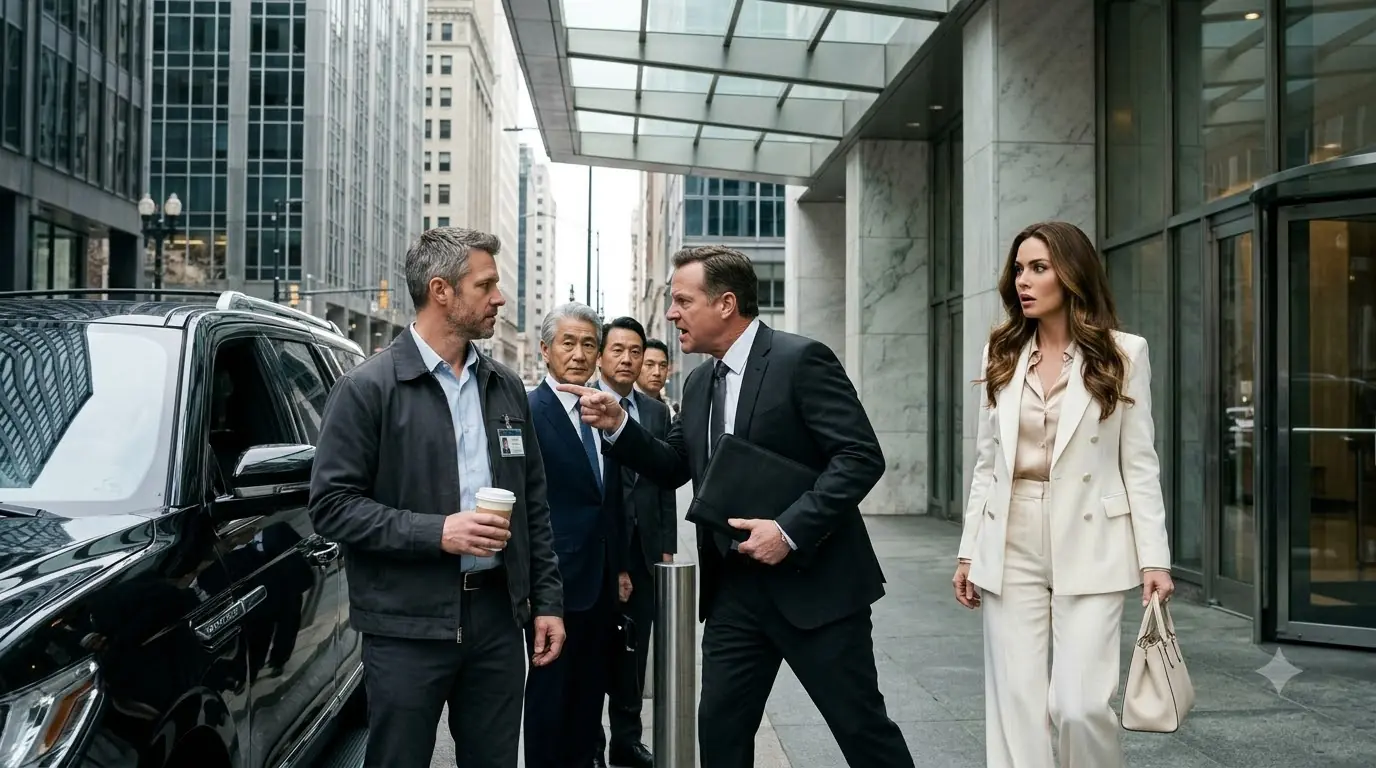
Thirty-eight floors above him, twelve executives were preparing a presentation meant to convince everyone that the deal was practically finished. Twenty feet behind Daniel, three Japanese businessmen were quietly deciding to leave before lunch.
"We should depart without creating a scene," the youngest of them said in Japanese. "The numbers are acceptable, but the relationship is not."
"It is not merely a relationship problem," another answered. "They keep giving us answers to questions we did not ask."
The oldest man, Chairman Kenji Watanabe, waited until the others fell silent. "If they cannot understand what responsibility means to us after three months of discussion, signing a document will not teach them. Tell Tokyo that my recommendation has not changed."
Daniel kept his eyes on the traffic moving through the intersection. A bus hissed against the curb, and a cyclist shouted at a delivery van that had drifted into the bike lane. He could have turned around and explained what he had heard. Seven years ago, on another continent, he would probably have been expected to do exactly that. Instead, he checked his watch, adjusted the vehicle's heating controls, and reminded himself that his job description contained one clear instruction: drive the guests wherever the transportation coordinator sent him.
The badge clipped to his jacket said DANIEL CARTER beneath a photograph taken in terrible fluorescent light. Under his name, in letters larger than they needed to be, was the word DRIVER. He had worn the badge for six days, long enough to learn that most people at Bennett Global read the bottom line and stopped there. The building contained thousands of intelligent, ambitious people, yet very few had asked him anything more complicated than whether the vehicle was ready or where they should place their luggage. Daniel did not resent honest work. What bothered him was how quickly some people decided honest work was evidence that a person had nothing else to offer.
He was forty-two, a single father, and the man responsible for remembering which evening his daughter needed poster board, which orthodontist accepted installments, and why the kitchen light flickered when the microwave ran. Eleven-year-old Sophie had recently grown tall enough to look him almost squarely in the chest when she hugged him. Her braces estimate lay folded beside the electricity bill on their apartment counter. The last appointment had left him staring at a figure that would have seemed insignificant during his old career and impossibly large at the end of an ordinary driving shift. He had taken the assignment because it paid reliably, and reliability had become more valuable to him than prestige.
That morning had begun at 5:46, when his phone alarm vibrated against a cracked wooden nightstand. He had turned it off before the second buzz, partly out of habit and partly because Sophie had been awake half the night testing a small circuit for her school science exhibition. The apartment was warm