SOMETIMES GETTING OLDER MEANS QUIETLY LOSING YOUR SOCIAL WORLD
Reader Theme:
Font Size:
24px
SOMETIMES GETTING OLDER MEANS QUIETLY LOSING YOUR SOCIAL WORLD
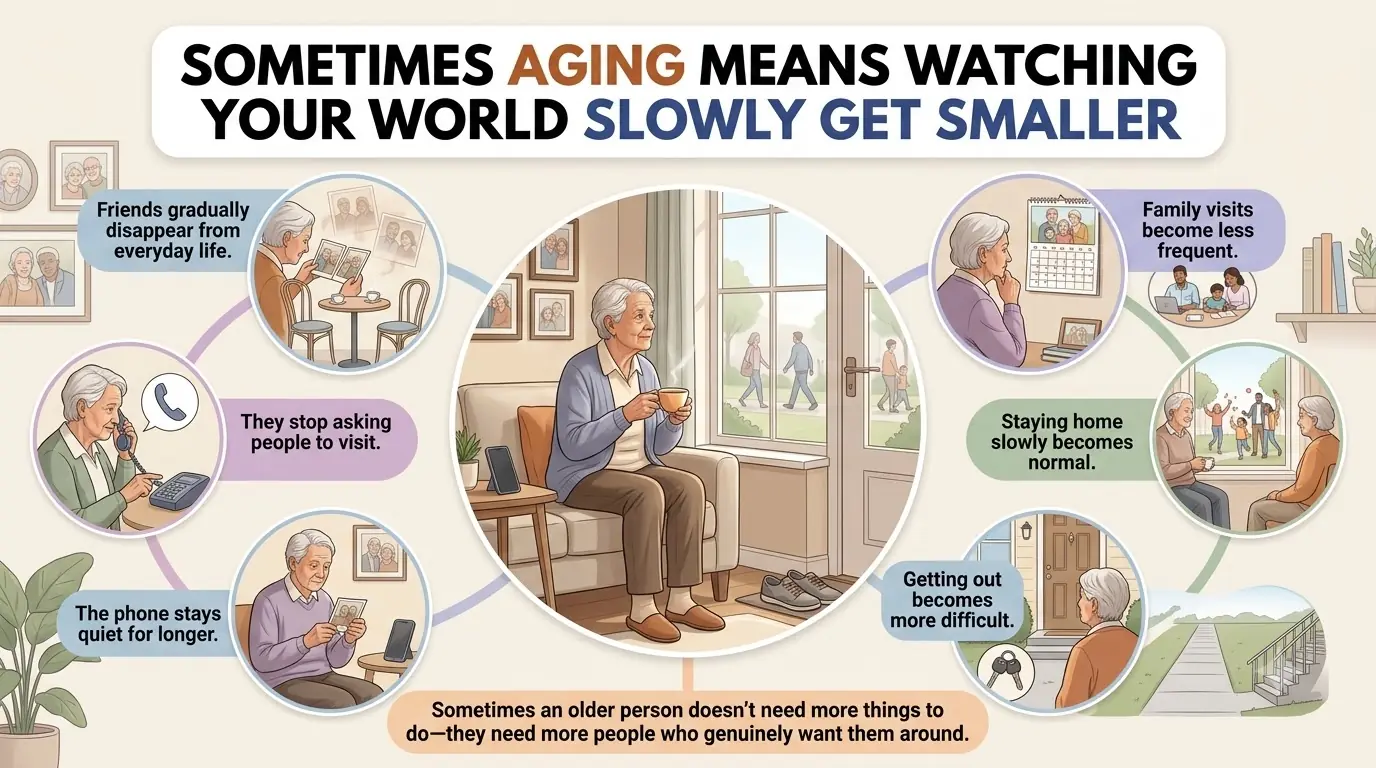
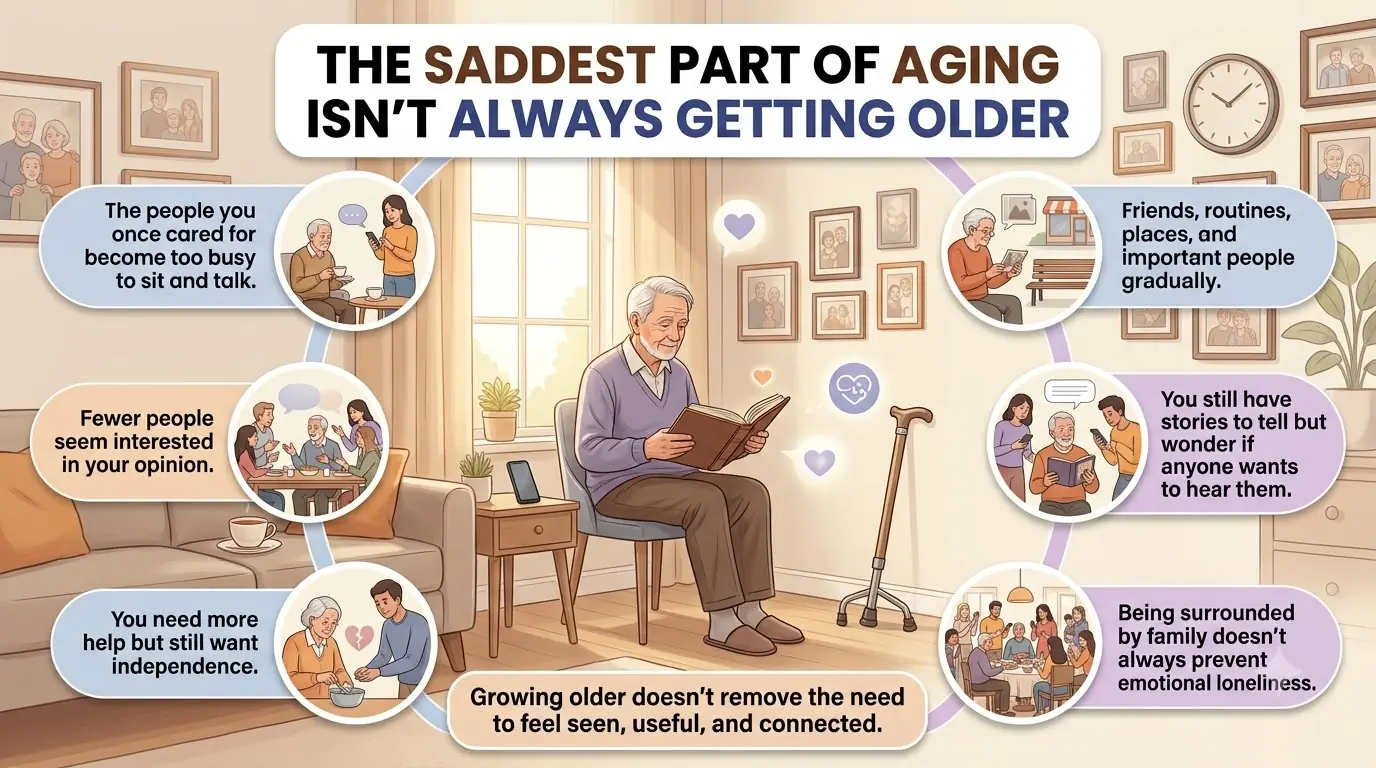
Growing older can bring changes that are easy for other people to see: retirement, changes in mobility, new health concerns, or the need for more assistance. But another transition can happen much more quietly. The social world that once surrounded someone every day may gradually become smaller.
Close friends may move away, become ill, or die. Retirement can remove years of routine conversations with coworkers. Adult children may live far away or have demanding families and careers of their own. Driving or mobility difficulties can make spontaneous social activities harder.
None of this means loneliness is an inevitable part of aging. Many older adults maintain active, fulfilling social lives. But when meaningful connections disappear faster than new ones develop, social isolation and loneliness can become important concerns.
Companionship isn't something people outgrow. The need to feel connected, included, and valued remains important throughout life.
Loneliness and Social Isolation Aren't Exactly the Same
The terms are often used interchangeably, but they describe different experiences.
Social isolation generally refers to having relatively few social contacts, relationships, or regular interactions.
Loneliness is the distressing feeling that your social relationships aren't providing the connection you want.
A person can live alone without feeling lonely.
Another person can live with family, attend gatherings, and interact with people every day while still feeling emotionally disconnected.
This distinction matters because simply putting more people around someone doesn't necessarily solve loneliness.
Meaningful connection matters too.
1. Close Friends May Gradually Disappear From Everyday Life
Friendships often form the invisible structure of adult life.
There may be coworkers you see every morning, neighbors you regularly talk with, couples you meet for dinner, or lifelong friends you call whenever something happens.
As people age, these relationships can change.
Friends may:
- Move closer to their children.
- Develop serious health problems.
- Enter assisted living.
- Become less mobile.
- Stop driving.
- Lose a spouse.
- Pass away.
These losses may occur repeatedly over many years.
A younger person who loses a friendship may still encounter new people through work, school, parenting, or social activities. An older adult with limited mobility may have fewer natural opportunities to replace lost connections.
That can gradually shrink someone's social world without anyone deliberately choosing isolation.
2. There May Be Fewer People to Call Just to Talk
One sign of a strong social network is having people you can contact without needing a specific reason.
You call because something funny happened.
You want to discuss the news.
You have a question.
Or you simply feel like talking.
As someone's social circle becomes smaller, these casual conversations may disappear.
This can be particularly noticeable after the death of a spouse or close friend.
A person hasn't only lost someone they loved. They may also have lost the person who heard all the ordinary details of everyday life.
That absence can make a home feel different.
Family members don't need to replace lost relationships, but regular conversations can help older relatives remain connected to everyday life.
Sometimes a phone call without an agenda can be particularly meaningful.
3. Family Gatherings May Become Rare Bright Spots in Quiet Weeks
An older adult may appear socially connected because they attend birthdays, holidays, and family celebrations.
But those occasions don't necessarily reveal what ordinary life looks like.
Thanksgiving might involve a house full of people.
Tuesday afternoon may involve nobody.
For someone who lives alone, there may be many quiet days between family gatherings.
This doesn't mean adult children should feel guilty for having their own responsibilities. Nor does every older adult want constant company.
The important question is whether the person has the amount and quality of social connection they actually want.
Instead of assuming, ask:
“Do you feel like you're getting enough time with people?”
“Who do you enjoy spending time with?”
“Would you like us to call more often?”
Those questions can reveal much more than simply asking whether someone is “okay.”
4. Retirement Can Remove More Than a Job
Retirement is often imagined primarily as freedom.
No alarm clock.
No commute.
No boss.
More time for hobbies, travel, and family.
For many people, retirement is indeed enjoyable. But work often provides things we don't fully appreciate until they're gone.
A workplace can provide:
- Daily structure.
- Regular conversation.
- Friendships.
- A sense of purpose.
- Responsibilities.
- Recognition.
- A reason to leave the house.
Someone may retire after spending decades surrounded by other people and suddenly find themselves alone for much of the day.
The transition can be especially difficult when someone hasn't developed relationships and activities outside work.
Planning for retirement therefore isn't only about finances.
It can also mean thinking about purpose, routines, friendships, physical activity, and how ordinary days will be spent.
5. Older Adults May Want Companionship Without Wanting to Feel Like a Burden
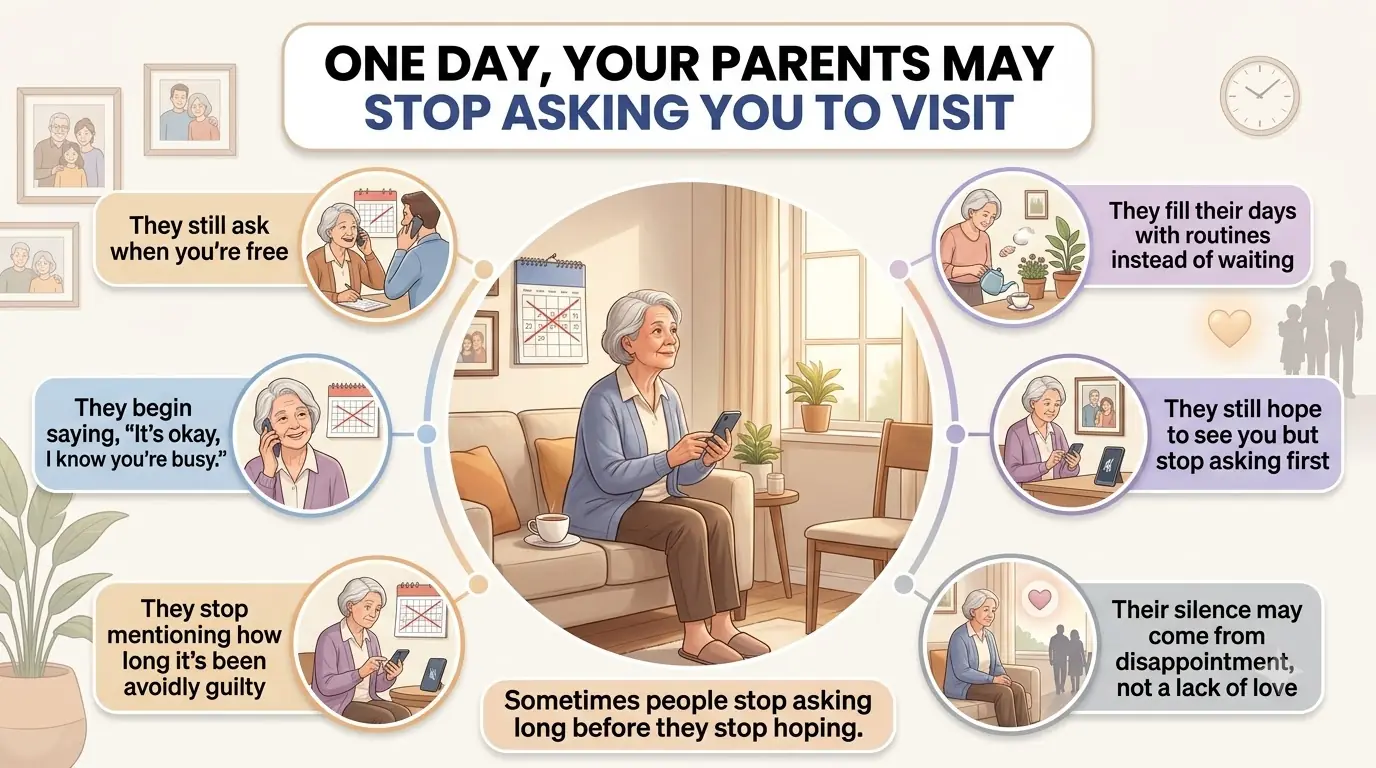
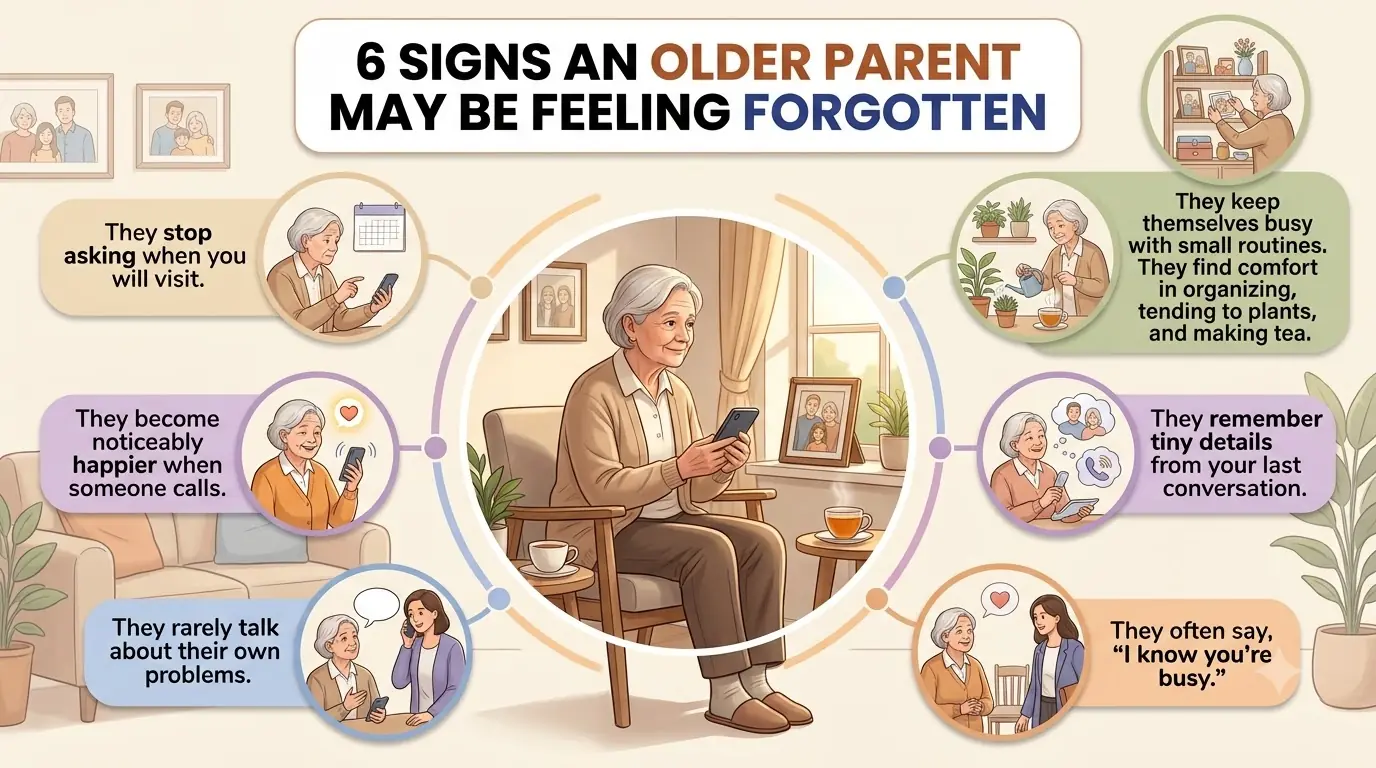
An older parent may want you to visit while simultaneously telling you not to come.
“I know you're busy.”
“Don't make a special trip.”
“I'm perfectly fine.”
“Take care of your family.”
Sometimes those statements mean exactly what they say.
But sometimes they reflect something more complicated.
A person may want companionship while worrying that requesting it will create an obligation for someone they love.
They may therefore wait for other people to initiate contact.
This can create an unfortunate misunderstanding.
The family assumes:
“They'll call if they need us.”
The parent thinks:
“I don't want to bother them.”
Nobody intends to create distance, but the distance grows anyway.
One way to avoid this pattern is to make some contact predictable.
A regular Sunday call or monthly lunch can remove the need for someone to repeatedly ask.
6. Loneliness Can Exist in a Room Full of People
Physical proximity isn't the same as emotional connection.
An older adult may attend a large family gathering yet spend most of it sitting quietly while everyone else talks.
Hearing loss may make conversations difficult to follow.
People may discuss subjects they don't understand.
Family members may be distracted by phones.
Conversations may focus entirely on the older person's medications and health.
Eventually, the person may feel present but not truly included.
This helps explain why counting social contacts doesn't tell the whole story.
Quality matters.
A meaningful twenty-minute conversation may sometimes provide more genuine connection than several hours spent in a crowded room where someone feels invisible.
Why Social Connection Matters for Health
Loneliness isn't simply an unpleasant emotion.
Research has linked social isolation and loneliness in older adults with poorer physical and mental health outcomes.
Social isolation has been associated with increased risks involving cardiovascular disease, cognitive decline, depression, and premature mortality.
These associations don't mean loneliness directly causes every health problem. Health and social connection influence each other in complicated ways.
For example, someone who becomes ill may stop leaving home, which increases isolation. Isolation may then make physical activity, healthy routines, and emotional well-being more difficult to maintain.
This can create a cycle in which health problems and social isolation reinforce one another.
Hearing Loss Can Quietly Push Someone Out of Conversations
One often-overlooked contributor to social withdrawal is hearing loss.
Imagine sitting at a dinner table where you can hear voices but can't clearly understand the words.
You repeatedly ask people to repeat themselves.
Eventually, you may stop asking.
You smile when everyone else laughs.
You remain quiet because participating requires too much effort.
To other people, you may appear withdrawn.
In reality, you simply can't follow the conversation.
If an older adult becomes noticeably quieter in social situations, hearing should be considered alongside mood, cognition, and other possible explanations.
Appropriate hearing evaluation and treatment may make communication easier.
Mobility and Transportation Can Shrink a Social Network
Relationships require access.
Someone who no longer drives may suddenly have difficulty visiting friends, attending community activities, going to restaurants, or participating in hobbies.
Mobility limitations can create similar barriers.
If walking across a parking lot becomes exhausting or stairs become frightening, someone may begin declining invitations.
Eventually, friends may stop asking.
When possible, addressing transportation and accessibility can therefore be part of addressing social isolation.
The problem isn't always that someone has lost interest in people.
Sometimes reaching those people has simply become difficult.
How Families Can Help Without Creating Pressure
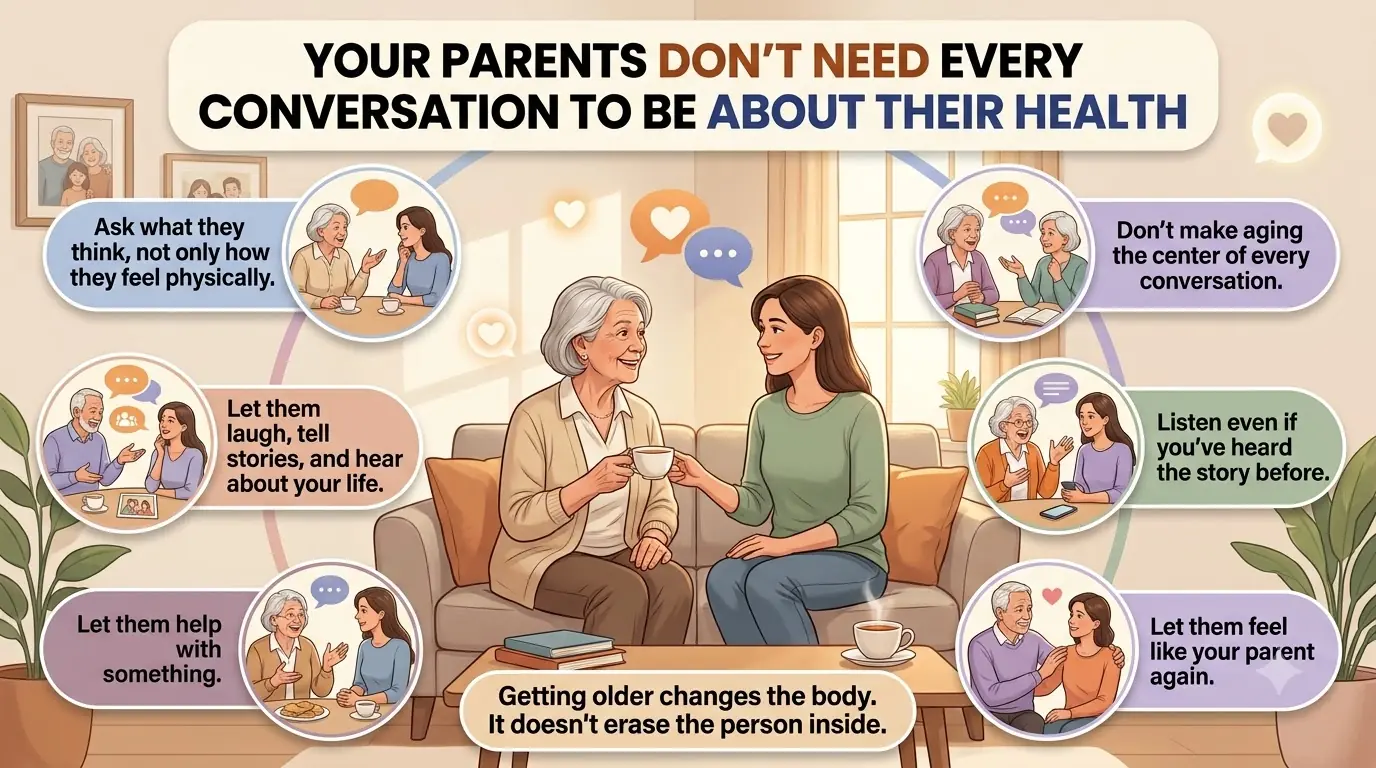
Supporting social connection doesn't require organizing constant activities.
Start by asking what the older person actually wants.
Useful approaches may include:
- Establishing regular phone or video calls.
- Scheduling predictable visits.
- Including older relatives in ordinary family activities.
- Helping with transportation.
- Supporting hobbies they genuinely enjoy.
- Helping them reconnect with old friends.
- Exploring community or volunteer opportunities.
- Addressing hearing, vision, or mobility problems that make socializing difficult.
Even simple interactions can matter.
Have coffee together.
Take a walk.
Cook something.
Watch a game.
Ask for advice.
Tell them what's happening in your own life.
Connection doesn't always require a special occasion.
Purpose Can Be as Important as Company
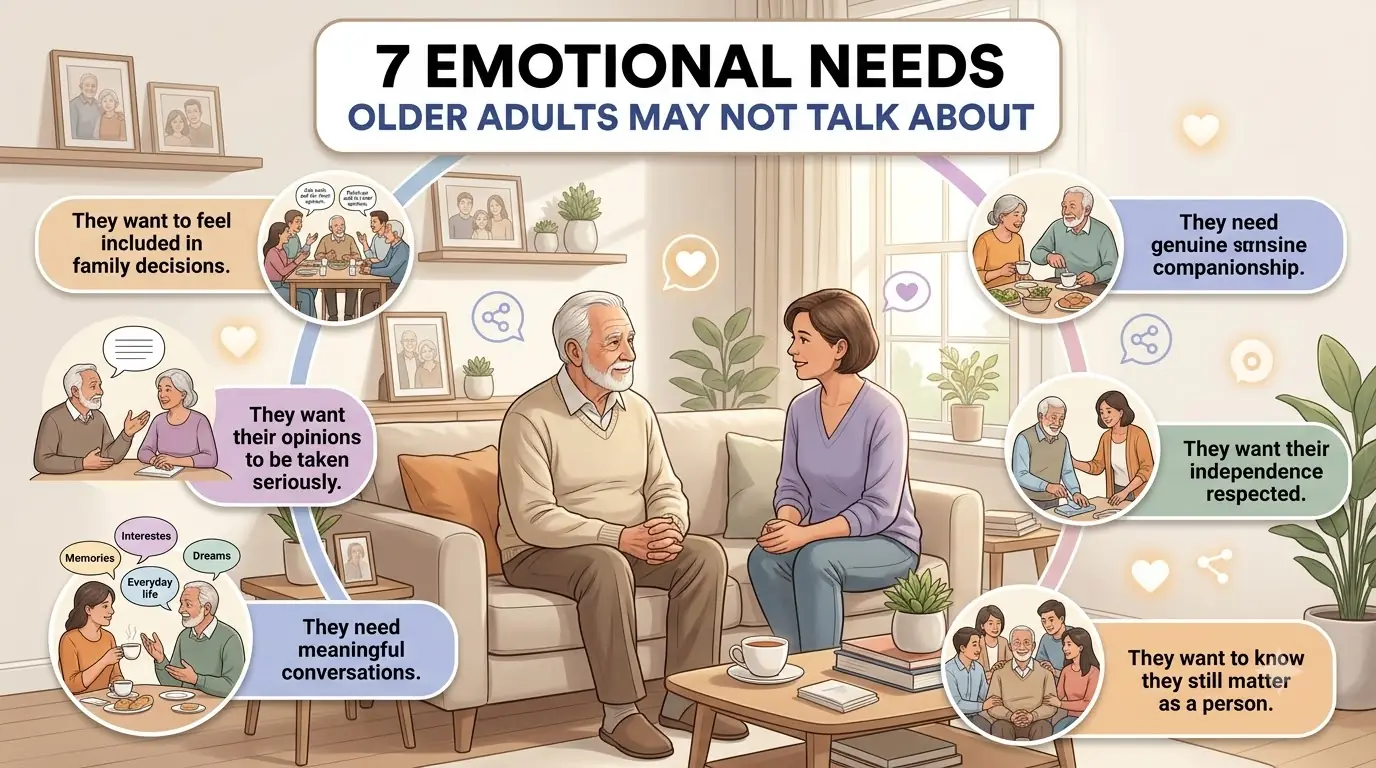
Older adults don't necessarily want to spend their lives being entertained or looked after.
Many still want opportunities to contribute.
Someone who spent decades caring for others may find it difficult to suddenly become the person who is always receiving help.
Look for genuine opportunities to involve them.
They might teach a grandchild a skill, volunteer, help with a family project, share professional knowledge, cook a favorite meal, care for a garden, or participate in community activities.
The specific activity matters less than whether it feels meaningful to the person.
Being needed and having something to anticipate can provide important sources of purpose and connection.
When Social Withdrawal Deserves Medical Attention
Wanting time alone isn't a medical problem.
However, a noticeable change from someone's usual behavior deserves attention.
Consider talking with a healthcare professional if an older adult:
- Suddenly withdraws from friends or family.
- Loses interest in activities they previously enjoyed.
- Expresses persistent sadness or hopelessness.
- Experiences major changes in sleep or appetite.
- Neglects personal care.
- Develops significant memory or personality changes.
- Becomes increasingly confused.
- Stops participating in everyday activities.
Depression isn't an inevitable part of aging.
Medical illness, chronic pain, medication effects, hearing loss, grief, cognitive impairment, and other conditions can also contribute to withdrawal.
Identifying the cause is more useful than simply labeling someone lonely.
Don't Wait for Someone to Say “I'm Lonely”
Some people will say directly that they feel lonely.
Others never will.
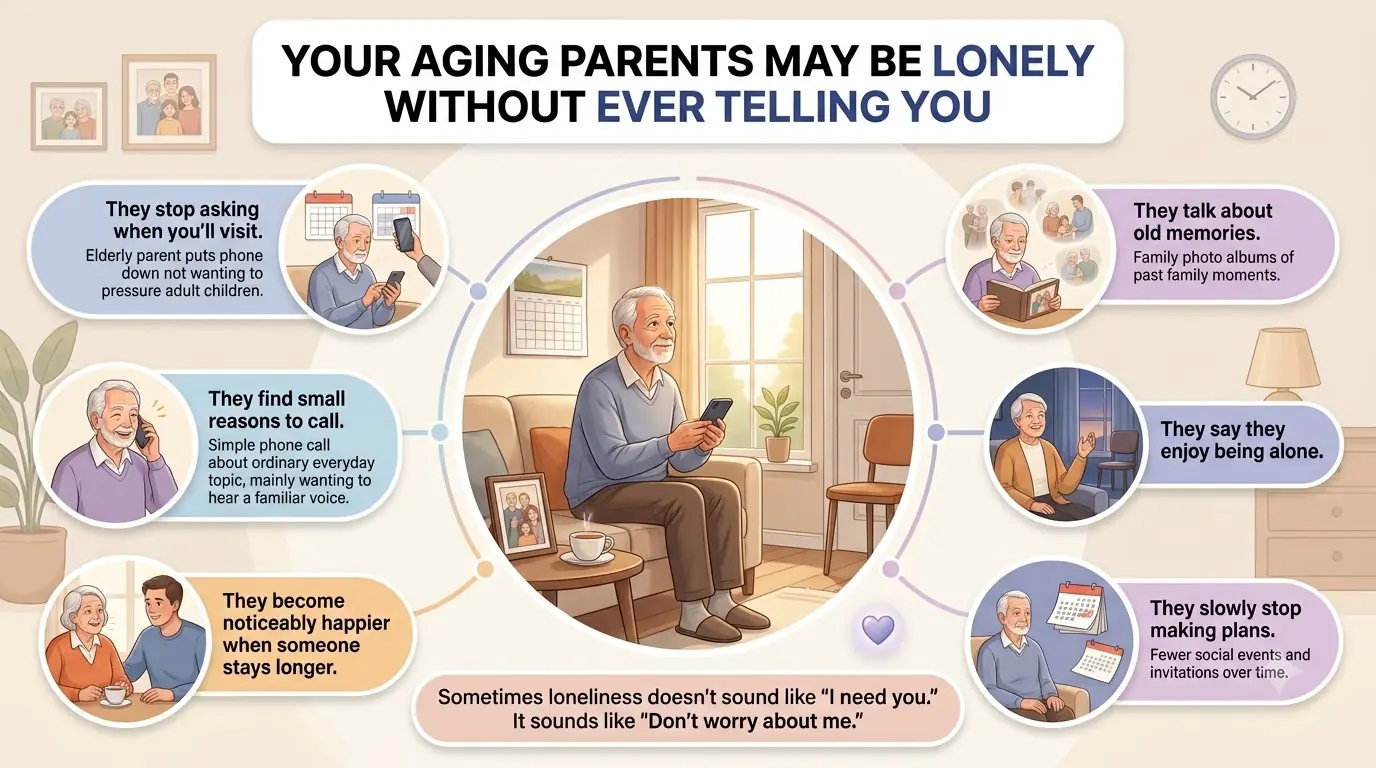
Instead, you may hear:
“Everyone's busy these days.”
“There's nothing going on.”
“I don't really go anywhere anymore.”
“Don't worry about me.”
None of these statements proves someone is lonely.
But they can create an opportunity for a deeper conversation.
Rather than assuming what someone feels, ask gently and directly about their social life.
Sometimes the most useful question is simply:
“Do you have enough people in your life that you really enjoy spending time with?”
Then listen to the answer.
Key Takeaways
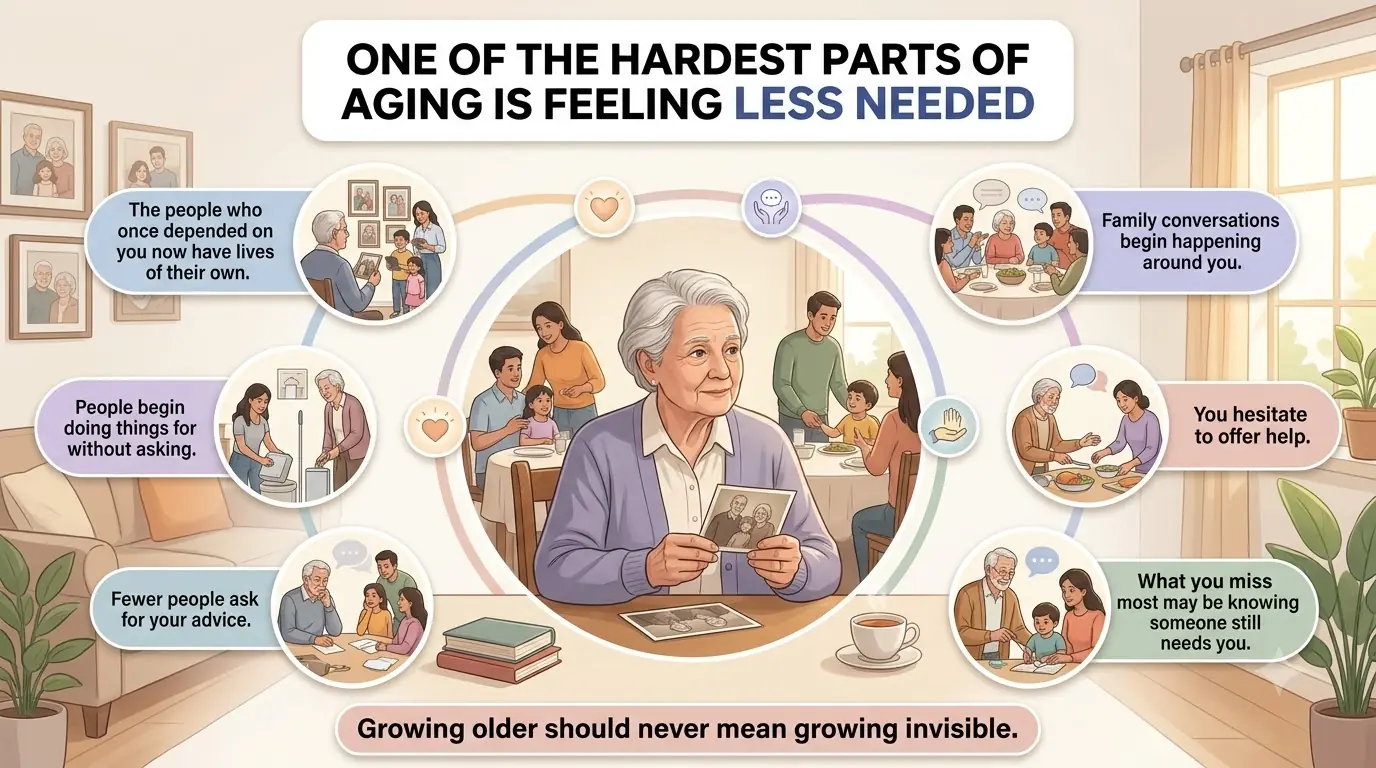
- Aging can gradually shrink someone's social world as friendships, routines, workplaces, mobility, and family circumstances change.
- Living alone doesn't automatically mean someone is lonely, and being surrounded by people doesn't guarantee meaningful connection.
- Retirement can remove daily conversation, structure, relationships, and a sense of purpose along with the job itself.
- Older adults may hesitate to request companionship because they don't want to feel like a burden.
- Hearing loss, mobility difficulties, and loss of transportation can contribute to social withdrawal.
- Quality of connection can matter as much as the number of social interactions.
- Regular calls, ordinary visits, accessible activities, friendships, and opportunities to contribute can help preserve connection.
- Significant or sudden social withdrawal may indicate depression, cognitive changes, hearing problems, medical illness, or another condition that deserves evaluation.
Growing older may change someone's social world, but it never removes the need for companionship, belonging, purpose, and meaningful human connection.
Medical Disclaimer
This article is for general educational purposes and is not a substitute for professional medical or mental health advice, diagnosis, or treatment. Loneliness and social withdrawal can have many causes, and every older adult has different preferences for social interaction. Persistent sadness, significant withdrawal, loss of interest, cognitive changes, or major changes in everyday functioning should be discussed with a qualified healthcare professional.