STOP flushing without looking—your pee color could be revealing a warning sign you’ve been ignoring
Reader Theme:
Font Size:
24px
YOUR URINE COLOR CAN REVEAL IMPORTANT HEALTH CLUES

Most people use the bathroom, flush, and move on without giving the color of their urine a second thought. But urine can occasionally provide useful clues about hydration, medications, foods, and certain health conditions.
Normal urine color can range from nearly clear to pale or darker yellow depending largely on how concentrated it is. A temporary color change is often harmless. Something you ate, a vitamin supplement, medication, or simply not drinking enough fluid may explain it.
What deserves more attention is a new, unexplained, or persistent change, especially when it occurs with pain, fever, weakness, yellowing of the skin or eyes, or visible blood.
Urine color alone cannot diagnose a disease, but knowing what common colors can mean may help you recognize when it's time to seek medical advice.
What Gives Urine Its Normal Yellow Color?
Urine is produced when your kidneys filter the blood, removing waste products and excess water that eventually leave the body through the urinary tract.
Its familiar yellow color comes primarily from a pigment called urochrome, also known as urobilin.
The concentration of urine strongly influences its appearance.
When you've consumed plenty of fluid, urine generally becomes more diluted and appears lighter. When your body is conserving water, urine becomes more concentrated and usually looks darker yellow.
That's why your first urine after waking may be darker than urine later in the day.
However, hydration isn't the only factor that changes urine color.
Food pigments, vitamins, medications, blood, and certain medical conditions can also affect its appearance.
1. PALE YELLOW URINE IS GENERALLY NORMAL
For many healthy people, pale or straw-yellow urine is a common normal appearance.
It generally suggests that the urine isn't highly concentrated.
However, there isn't one exact “perfect” urine color that everyone needs to achieve throughout the day.
Color naturally changes depending on:
- How much fluid you've consumed.
- How much you've been sweating.
- Temperature and physical activity.
- Foods and beverages.
- Vitamins and medications.
- Time of day.
You also don't need to continuously drink water until your urine is completely clear.
Fluid requirements vary considerably between people.
2. DARK YELLOW URINE CAN BE A SIGN YOU NEED MORE FLUID
When your body doesn't have as much water available, the kidneys conserve water and produce more concentrated urine.
The result can be a darker yellow or amber appearance.
You may also notice other signs of dehydration, including:
- Thirst.
- Dry mouth.
- Reduced urination.
- Fatigue.
- Dizziness or lightheadedness.
After heavy sweating, exercise, hot weather, vomiting, or diarrhea, dehydration becomes more likely.
For many otherwise healthy people, urine that becomes lighter after drinking an appropriate amount of fluid is reassuring.
However, very dark urine that persists despite adequate hydration shouldn't automatically be blamed on dehydration.
Older adults deserve particular attention because the sensation of thirst may become less reliable with age.
3. COMPLETELY CLEAR URINE DOESN'T ALWAYS MEAN “HEALTHIER”
There's a common belief that perfectly clear urine means you're extremely healthy and hydrated.
Not necessarily.
Clear urine often simply means that you're producing very diluted urine, commonly because you've recently consumed a large amount of fluid.
Occasionally seeing clear urine isn't generally concerning.
But there's usually no reason to force yourself to drink excessive quantities of water simply to keep your urine transparent.
Drinking far more water than your body needs can, in extreme circumstances, lower sodium levels in the blood, a potentially dangerous condition called hyponatremia.
People with kidney disease, heart failure, or certain other medical conditions may also receive specific instructions about fluid intake.
More water isn't automatically better.
4. PINK OR RED URINE DESERVES ATTENTION
Red urine doesn't always mean blood is present.
Foods such as beets and certain medications can temporarily change urine color.
But blood in the urine—known medically as hematuria—can also produce pink, red, or brownish urine.
Possible causes include:
- Urinary tract infections.
- Kidney stones.
- Enlarged prostate.
- Kidney or bladder problems.
- Vigorous exercise in some cases.
- Certain medications.
- Urinary tract cancers.
The cause cannot reliably be determined by appearance alone.
Importantly, visible blood can sometimes occur without pain.
If your urine appears bloody and there isn't an obvious harmless explanation, contact a healthcare professional promptly.
Visible blood in urine shouldn't simply be watched for weeks to see whether it disappears.
5. ORANGE OR VERY DARK URINE CAN HAVE SEVERAL CAUSES
Orange urine can sometimes result from medications, supplements, food pigments, or concentrated urine.
But very dark amber, orange, brown, or tea-colored urine can occasionally occur when substances such as bilirubin are present.
Bilirubin is a yellow pigment produced during the normal breakdown of red blood cells. The liver normally processes it so the body can eliminate it appropriately.
Certain liver or bile-duct problems can cause bilirubin to appear in urine.
Pay particular attention if dark urine occurs alongside:
- Yellow skin.
- Yellowing of the whites of the eyes.
- Pale stools.
- Persistent itching.
- Abdominal discomfort.
- Nausea or loss of appetite.
These symptoms deserve medical evaluation.
6. CLOUDY URINE ISN'T REALLY A “COLOR”—BUT IT CAN MATTER
Urine appearance includes more than color.
Cloudiness can sometimes occur because of harmless substances or temporary changes in urine concentration.
However, cloudy urine can also occur with urinary tract infections, particularly when accompanied by:
- Burning during urination.
- Frequent urination.
- An urgent need to urinate.
- Lower abdominal discomfort.
- Fever.
Kidney stones and other urinary conditions may also affect urine appearance.
Cloudy urine by itself doesn't prove that you have an infection.
If it persists or appears alongside urinary symptoms, medical evaluation can determine whether testing is necessary.
What About Foamy Urine?
A few bubbles in the toilet aren't automatically concerning.
Urine can temporarily appear bubbly because it hits the toilet water quickly or because the urine is concentrated.
Persistent or unusually heavy foaminess can sometimes occur when excess protein is present in urine.
Protein in the urine can be a sign of kidney damage, particularly in people with diabetes or high blood pressure.
You cannot diagnose kidney disease by looking at foam.
A urine test is needed to determine whether abnormal protein is actually present.
Foods Can Change Urine Color
Before assuming an unusual color means disease, think about what you've recently eaten.
Certain foods and food pigments can temporarily affect urine appearance.
Beets, for example, can produce pink or reddish urine in some people.
Other strongly pigmented foods may also cause temporary changes.
These effects usually disappear after the food has passed through the body.
If a color change continues without an obvious dietary explanation, it deserves more attention.
Vitamins and Medications Can Produce Surprising Colors
Supplements are another common explanation.
B-complex vitamins, particularly riboflavin, can make urine appear strikingly bright or fluorescent yellow.
Some prescription and over-the-counter medications can produce orange, red, blue-green, brown, or other changes.
That doesn't necessarily mean the medication is harming you.
If your urine changes color after starting a medication, check the medication information or ask your pharmacist or healthcare provider whether it's an expected effect.
Don't stop prescribed medication solely because your urine changed color unless a healthcare professional tells you to do so.
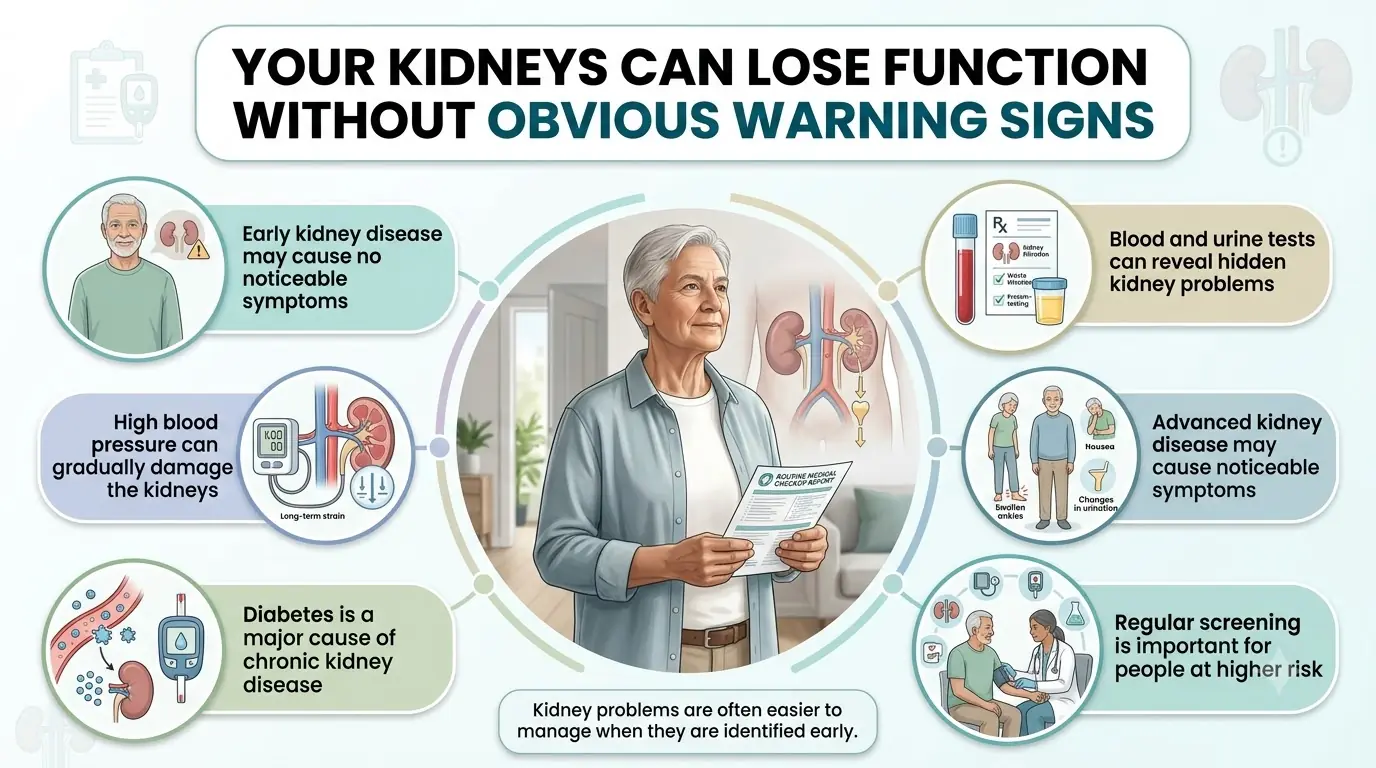
Urine Color Cannot Tell You Whether Your Kidneys Are Healthy
This is an important misconception.
Kidney disease can develop while urine continues looking completely normal.
Early chronic kidney disease often causes few or no obvious symptoms.
People with diabetes, high blood pressure, cardiovascular disease, or other kidney risk factors shouldn't rely on urine appearance to judge kidney health.
Blood and urine testing provide much more useful information.
Healthcare professionals may use tests such as:
- Blood creatinine.
- Estimated glomerular filtration rate (eGFR).
- Urine albumin-to-creatinine ratio (UACR).
These can identify abnormalities that you would never see by looking into the toilet.
When Should You See a Doctor?
Seek medical advice for a new or persistent urine change that doesn't have an obvious explanation, particularly if you notice:
- Visible blood.
- Persistent red, pink, brown, or very dark urine.
- Pain or burning when urinating.
- Fever with urinary symptoms.
- Significant abdominal, side, or back pain.
- Persistent cloudy urine with urinary symptoms.
- Yellow skin or eyes with dark urine.
- Persistent unusual foaminess.
- A major unexplained change in how much you urinate.
Older adults should also be evaluated promptly when urinary symptoms occur with sudden confusion or significant weakness, as an acute illness may be present.
When It May Be an Emergency
Seek urgent medical attention if urine changes occur with severe pain, inability to urinate, severe weakness or confusion, repeated vomiting, or signs of a serious systemic illness.
Visible blood accompanied by significant blood clots or difficulty passing urine also requires prompt medical attention.
Don't Diagnose Yourself From a Color Chart
Online urine-color charts can be useful educational tools, but they have major limitations.
Lighting changes what colors look like.
Toilet water dilutes urine.
Foods and medications can imitate disease-related colors.
And many important conditions cause no visible urine changes whatsoever.
Think of urine color as a clue, not a diagnosis.
When something looks significantly different from your normal pattern and you can't explain why, medical testing is much more reliable than trying to identify a condition from color alone.
Key Takeaways
- Normal urine commonly ranges from nearly clear to shades of yellow.
- Dark yellow urine often reflects more concentrated urine and can occur with dehydration.
- Completely clear urine isn't necessarily healthier, and excessive water intake isn't beneficial.
- Red or pink urine can come from foods or medications, but visible blood requires medical attention.
- Orange or dark brown urine can have several causes and deserves evaluation when persistent or accompanied by other symptoms.
- Cloudy urine accompanied by burning, urgency, frequency, or fever may indicate a urinary problem.
- Persistent foaminess can sometimes occur with protein in the urine and may warrant testing.
- Foods, vitamins, and medications can produce dramatic but harmless urine-color changes.
- Normal-looking urine doesn't guarantee healthy kidneys.
- Persistent or unexplained changes should be evaluated rather than diagnosed from appearance alone.
Looking before you flush can occasionally reveal a useful health clue—but what matters most is recognizing unusual changes and knowing when they deserve proper medical testing.
Medical Disclaimer
This article is for educational purposes only and is not a substitute for professional medical advice, diagnosis, or treatment. Urine color can change for many harmless reasons and cannot diagnose dehydration, kidney disease, liver disease, infection, or other medical conditions by itself. If you notice visible blood, persistent unexplained discoloration, significant urinary symptoms, or other concerning symptoms, consult a qualified healthcare professional.