7 Foods to Eat Regularly in Your 60s to Stay Strong, Energized, and Youthful
Turning 60 doesn't mean you suddenly become “old.”
But this is often the decade when changes that were once easy to ignore become much more noticeable.
You may lose muscle more easily. Recovery can take longer. Your skin may become thinner and drier. Energy can feel less predictable. Maintaining the same strength, weight, and physical capacity you had in middle age may suddenly require more effort.
That's why nutrition after 60 isn't simply about preventing disease.
It's also about protecting what you don't want aging to take away: your strength, mobility, energy, appearance, independence, and ability to keep living an active life.
No food can stop aging. But the way you eat can help support many of the systems that influence how well you age.
Here are seven foods and nutrition habits worth keeping in your routine.
1. Leafy Greens — Support the Circulation Your Body Still Depends On
Spinach, kale, arugula, romaine, Swiss chard, and other leafy greens may not look like “anti-aging” foods.
But they're nutritional workhorses.
Leafy greens provide folate, vitamin K, carotenoids, fiber, and numerous plant compounds. Many are also naturally rich in dietary nitrates, which the body can convert into nitric oxide.
Nitric oxide helps blood vessels relax and supports healthy circulation.
And circulation becomes increasingly important as we age.
Every tissue in your body depends on blood flow to receive oxygen and nutrients—including your muscles, brain, heart, and skin.
That doesn't mean eating spinach will suddenly erase wrinkles or make you look 20 years younger.
It means leafy greens support some of the basic systems your body needs to continue functioning well.
Make it an everyday habit
You don't need an enormous salad at every meal.
Add spinach to eggs.
Put arugula on a sandwich.
Throw kale into soup.
Serve mixed greens beside dinner.
After 60, small habits you can repeat for years are usually more valuable than extreme diets you can tolerate for only a few weeks.
2. Protein — Because Losing Muscle Can Make You Feel Older Fast
One of the biggest mistakes people can make after middle age is thinking about protein only in terms of bodybuilding.
Muscle is much more important than appearance.
It's what allows you to climb stairs without thinking about it.
It's what helps you carry groceries, get out of a low chair, lift a suitcase, maintain your balance, exercise, travel, garden, and continue doing ordinary things without constantly asking for help.
Unfortunately, maintaining muscle generally becomes more challenging with age.
That's why getting adequate dietary protein becomes particularly important.
Protein provides amino acids that your body uses to maintain and repair tissues. It also works together with resistance exercise to support muscle maintenance.
Don't save all your protein for dinner
A common eating pattern is something like:
Coffee and toast for breakfast.
A light lunch.
Then a huge serving of protein at dinner.
Instead, consider including a meaningful protein source throughout your day.
Eggs, Greek yogurt, cottage cheese, chicken, fish, lean meat, tofu, beans, lentils, and other protein-rich foods can all contribute.
Some people may find roughly 25–30 grams per meal useful, but there is no universal target for everyone. Needs vary according to body size, activity, health status, kidney function, and total diet.
The bigger idea is simple:
If you want to remain physically capable in your 60s and beyond, protecting your muscle deserves to become a priority.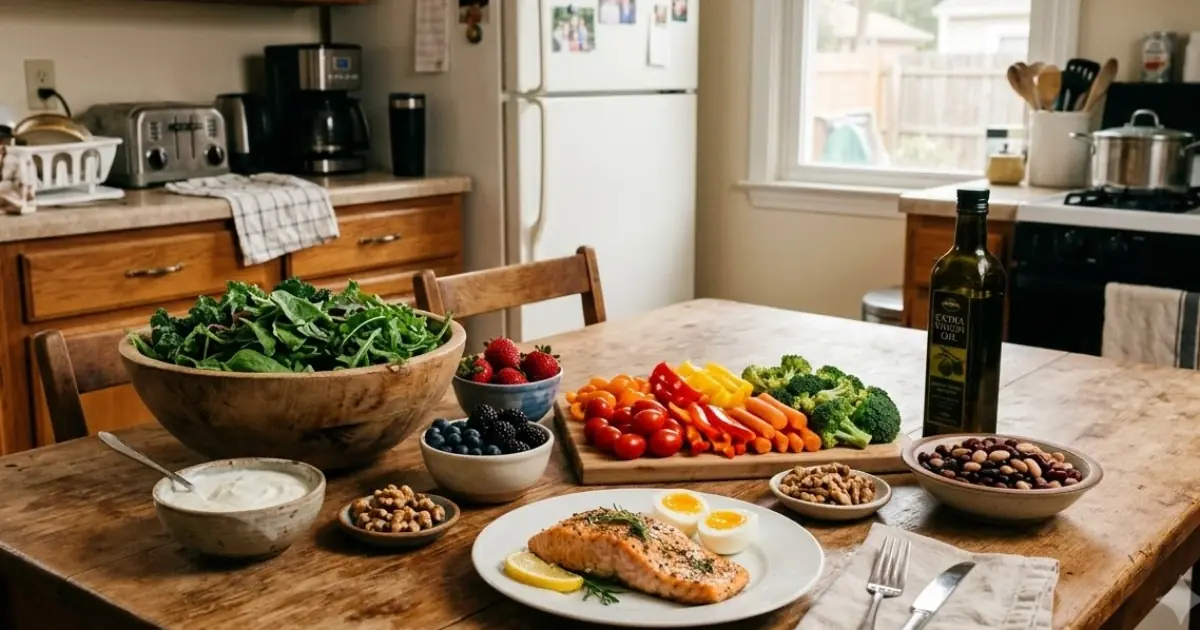
3. Dark Berries — A Small Daily Habit With a Lot of Nutrition
Blueberries, blackberries, raspberries, and strawberries are easy foods to underestimate.
They provide fiber, vitamin C, and numerous polyphenols.
Blueberries and other deeply colored berries are especially known for anthocyanins—the compounds responsible for many of their dark blue, purple, and red pigments.
These compounds continue to be studied in areas including cardiovascular, metabolic, and brain health.
That's particularly relevant after 60 because healthy aging isn't only about your face.
It's about keeping the brain, heart, blood vessels, muscles, and metabolism functioning well enough to support the life you still want to live.
Frozen berries work too
One of the easiest ways to make this habit sustainable is to keep frozen berries at home.
Add them to oatmeal.
Mix them into Greek yogurt.
Blend them into a smoothie.
Or simply eat fresh berries as a snack.
You don't need an exotic “anti-aging superfood.”
Sometimes one of the smartest foods in your kitchen is already sitting in the freezer.
4. Eat More Colors — Don't Search for One Miracle Vegetable
A colorful plate is one of the simplest visual shortcuts for building a nutrient-dense diet.
Think:
Dark green spinach.
Red tomatoes.
Orange peppers.
Purple cabbage.
Blueberries.
Carrots.
Broccoli.
Sweet potatoes.
Different plant foods provide different combinations of vitamins, minerals, fiber, carotenoids, polyphenols, and other naturally occurring compounds.
Rather than searching for the single “best” anti-aging vegetable, focus on variety.
Your body needs more than one nutrient to age well
Skin needs more than vitamin C.
Muscles need more than protein.
Bones need more than calcium.
Your brain needs more than one supplement.
Healthy aging depends on an enormous network of biological processes working together.
That's one reason dietary variety matters.
Instead of asking:
“What's the one food that keeps me young?”
A better question is:
“How many nutrient-dense foods can I consistently fit into the way I already eat?”
5. Oily Fish — Healthy Fats Plus High-Quality Protein
Salmon, sardines, trout, herring, and other oily fish provide omega-3 fatty acids, particularly EPA and DHA.
They're also excellent sources of protein.
That combination makes oily fish especially useful in a healthy-aging diet.
Omega-3 fatty acids are well established as part of heart-healthy dietary patterns and are important components of cell membranes throughout the body.
Dietary fats also contribute to normal skin structure and function.
But don't think of omega-3s as a cosmetic treatment.
Eating salmon won't suddenly tighten loose skin or remove wrinkles.
The bigger benefit is supporting the body as a whole.
Because looking energetic and feeling energetic usually come from the same place: taking care of the systems underneath the surface.
6. Extra-Virgin Olive Oil — Make Healthy Food Taste Like Food You Actually Want
Extra-virgin olive oil is one of the simplest ingredients to keep around.
It provides predominantly monounsaturated fat and contains various polyphenols.
It's also a signature component of Mediterranean-style dietary patterns, which have been extensively studied for cardiovascular and overall health.
But there's another reason olive oil deserves attention:
It makes healthy foods enjoyable.
Drizzle it over tomatoes.
Use it with roasted vegetables.
Add it to beans.
Make a simple salad dressing.
Use reasonable amounts when preparing meals.
If olive oil helps turn vegetables from something you “should eat” into something you actually look forward to eating, that's valuable.
Healthy doesn't mean unlimited
Olive oil is still calorie-dense.
The goal isn't to pour enormous amounts over everything.
Think of it primarily as a healthier source of dietary fat—particularly when it replaces foods or fats that are less supportive of your overall dietary pattern.
7. Supplements Like NMN — Interesting, but Don't Let Them Distract You From the Basics
NMN, or nicotinamide mononucleotide, has received enormous attention in the longevity world.
NMN participates in biological pathways related to NAD+, a molecule involved in cellular energy metabolism and numerous cellular processes.
Because NAD+ biology changes with age, scientists have become increasingly interested in compounds that influence these pathways.
That sounds exciting.
But there's an important reality check.
Research into NMN supplementation in humans is still developing. Early studies have explored its effects on NAD+ levels and various health measures, but that isn't the same as proving that NMN makes humans younger, prevents aging, or extends lifespan.
Long-term questions remain.
So if you use supplements, think of them as exactly that:
supplements to a healthy lifestyle—not substitutes for one.
No capsule can compensate for years of inactivity, inadequate sleep, poor nutrition, smoking, or neglected medical care.
Anyone considering NMN or another supplement should discuss it with a qualified healthcare professional, particularly if they take medications or have existing health conditions.
The Bigger Goal: Don't Just Live Longer—Stay Capable Longer
This is where my definition of “anti-aging” changes.
I don't expect to have the exact same face at 70 that I had at 40.
That's unrealistic.
What I don't want is to feel unnecessarily old before I need to.
I don't want ordinary stairs to become intimidating.
I don't want a suitcase to suddenly feel impossibly heavy.
I don't want to stop traveling because walking all day feels overwhelming.
I don't want getting off the floor to become an event.
I don't want to spend the later decades of my life watching everyone else live actively while I slowly withdraw from the things I once enjoyed.
That's why healthy aging should be about much more than wrinkles.
Think about what “young” actually means
When people say they want to stay young, they're often describing abilities rather than an age.
They want energy.
Strength.
Mobility.
Confidence.
Mental sharpness.
A body capable of keeping up with their plans.
They want to wake up and still have things they want to do—and enough physical capacity to actually do them.
That's a much more realistic goal than trying to stop the clock.
Food Is Only One Part of Staying Youthful After 60
Nutrition matters enormously.
But it can't do everything.
If maintaining a younger level of function is your goal, several habits work together.
Strength training helps protect muscle.
Regular walking and cardiovascular activity support endurance and heart health.
Adequate sleep supports recovery.
Sun protection is one of the most important habits for reducing premature skin aging.
Not smoking protects nearly every system involved in healthy aging.
Social connection and meaningful activities matter for mental and emotional well-being.
Preventive healthcare can identify problems before they begin interfering with daily life.
And good nutrition provides your body with the raw materials it needs along the way.
None of these habits is particularly glamorous.
That's exactly the point.
A Simple Day of Eating After 60
Breakfast doesn't need to come from a longevity laboratory.
Try eggs with spinach and berries.
Or Greek yogurt with blueberries, walnuts, and fruit.
Lunch might be chicken or beans over a colorful salad dressed with extra-virgin olive oil.
Dinner could be salmon with roasted vegetables and a whole grain or potato.
Add fruit, nuts, dairy, legumes, or other nutrient-dense foods according to your needs and preferences.
Suddenly you've covered protein, fiber, colorful plants, healthy fats, and numerous micronutrients without following an extreme diet.
That's sustainable nutrition.
Don't Wait Until You “Feel Old” to Start
Perhaps the most important healthy-aging habit is starting before declining function forces you to care.
You don't need to completely change your life tomorrow.
Add protein to breakfast.
Eat another vegetable at dinner.
Buy berries this week.
Walk regularly.
Start age-appropriate resistance training.
Improve your sleep routine.
Schedule the medical checkup you've been postponing.
Small actions don't feel dramatic today.
But healthy aging isn't built in one dramatic day.
It's built through thousands of ordinary days.
The Goal Isn't to Be 40 Again
You don't need to pretend you're younger than you are.
You don't need to chase every longevity trend.
And you certainly don't need to fear every birthday.
The goal is much simpler:
Keep as much of your strength, energy, mobility, confidence, and independence as you reasonably can.
Your chronological age will continue moving forward.
But how you experience those years can vary enormously.
You can still exercise.
You can still travel.
You can still dress well.
You can still enjoy food.
You can still learn new things.
You can still have plans that excite you.
You can still build strength.
And you can still take care of the body that has to carry you through everything you want to do next.
The goal isn't to stop aging.
It's to keep aging from shrinking your life before it has to.
And often, that starts with remarkably ordinary things: good food, enough protein, regular movement, quality sleep, and habits simple enough to repeat every day.
Medical disclaimer: This article is for general educational purposes and is not intended to diagnose, treat, cure, or prevent any medical condition. Nutritional and supplement needs can vary significantly based on age, medications, medical conditions, kidney and liver function, activity level, and other individual factors. Consult a qualified healthcare professional before making significant dietary changes or starting supplements such as NMN.