The pipeline contractor stood in the middle of Earl Whitaker’s wheat field with a laminated map in one hand and a cold smile on his face. And he said it loud enough for the three workers behind him to hear. “Sir, I don’t think you understand. This pipeline is going through. The bank already approved the easement. You can sign today and get your check, or you can sign next week after the lawyers get involved. Either way, by October, there will be a forty-eight-inch steel pipe running right under where you’re standing.”
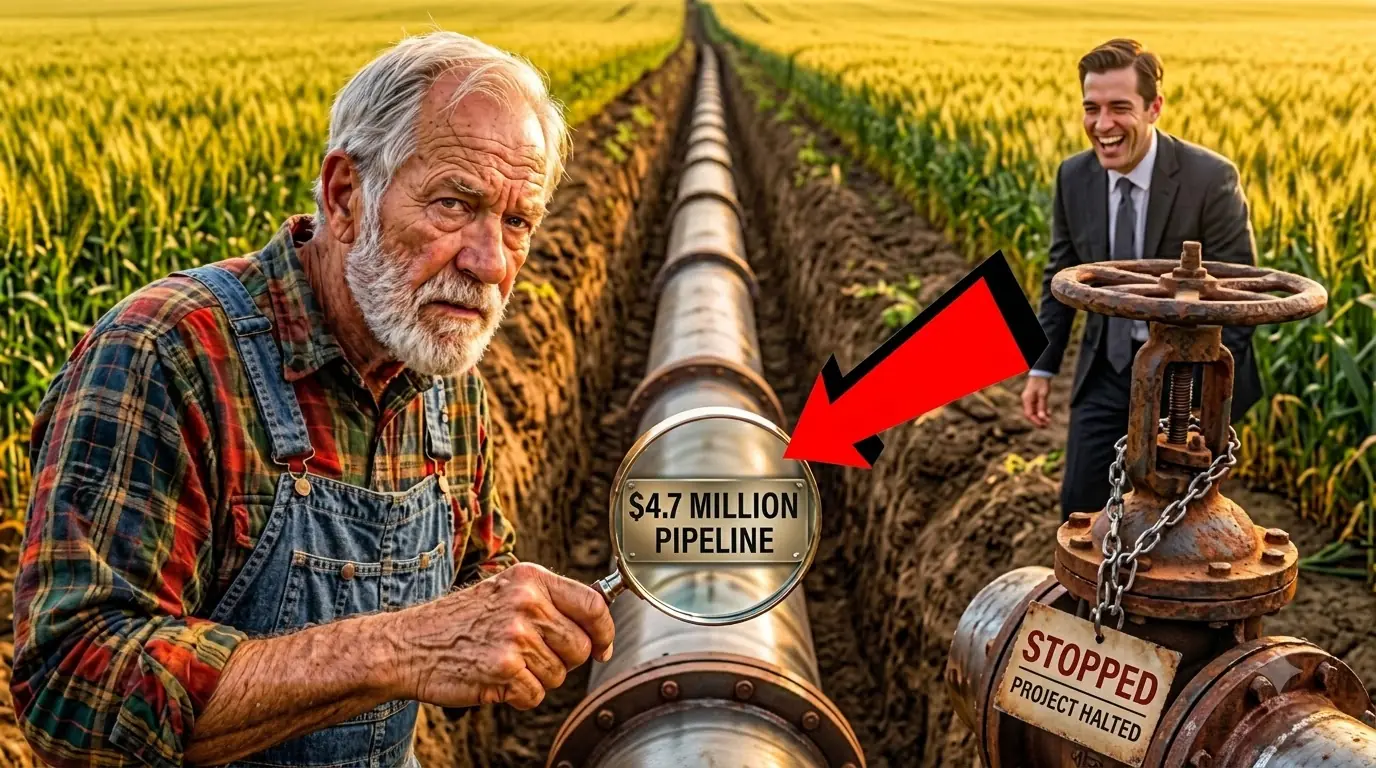
Earl didn’t move. He looked at the man’s polished boots sinking slightly into the soft earth, then at the surveyor’s stakes already driven into his soil without permission, then back at the contractor’s face. “What’s your name, son?” “Brennan. Marcus Brennan. Capital Midstream Energy.” “Marcus, you’re standing on winter wheat that’s nineteen days from harvest. I’d appreciate it if you stepped over to the access road.”
The contractor laughed, actually laughed, with his head tipped back, and the three workers behind him laughed, too, because their boss had laughed first. “Mr. Whitaker, in ninety days this whole quarter section is going to be a construction zone. Worrying about nineteen days of wheat is the least of your problems.” Earl said nothing. He turned and walked back toward his truck, and behind him he heard Brennan call out, “We’ll be back Monday with the final paperwork. Have a pen ready.”
Earl Whitaker was seventy-one years old. He had farmed the same six hundred forty acres in Caddo County, Oklahoma, for forty-three years. The land sat eleven miles southwest of Anadarko on a low rise where the South Canadian River bent east, and every fence post on the property had been set by his own hands or by his father’s before him.
He had bought the original quarter section in 1983, the year he came back from his second tour. The army had given him two things he kept his whole life. The first was a quiet way of moving, a habit of watching before speaking. The second was a deep, unshakeable hunger for something permanent.
His own father had rented dirt his entire life, worked another man’s ground from sunup to sundown, and died at sixty-four in a rented house with three hundred dollars in the bank, and a letter from the landlord raising his widow’s rent. Earl had stood at that funeral and made a promise to himself that whatever else he did with his life, he would die owning the ground he stood on.
He had married Ruth Whitaker the year after he came home. She was a school librarian from Chickasha with hands that could fold a fitted sheet into a perfect square, and a memory that never let go of a single thing. She kept their records the way other women kept photo albums. Every payment, every receipt, every letter from the bank, every survey, every contract, every handshake reduced to writing and dated and filed in metal boxes she stacked in the attic above the kitchen.
Ruth died in October of 2019 from a stroke that took her in her sleep. Earl found her in the morning with her reading glasses still folded on the nightstand, and a library book opened to page seventy-one. He buried her under the bur oak at the south edge of the home pasture, the one her grandfather had planted in 1922, because she had asked for that spot once when they were younger, and she had still believed she would outlive him.