The tarp came off the back of the second cannery truck before the driver had even set his parking brake.
A thick red mixture of tomato pulp, seeds, and torn skins slid toward the tailgate, gathered for a moment against the black plastic, and spilled onto the gravel behind Mary Ann Tovy's old equipment shed.
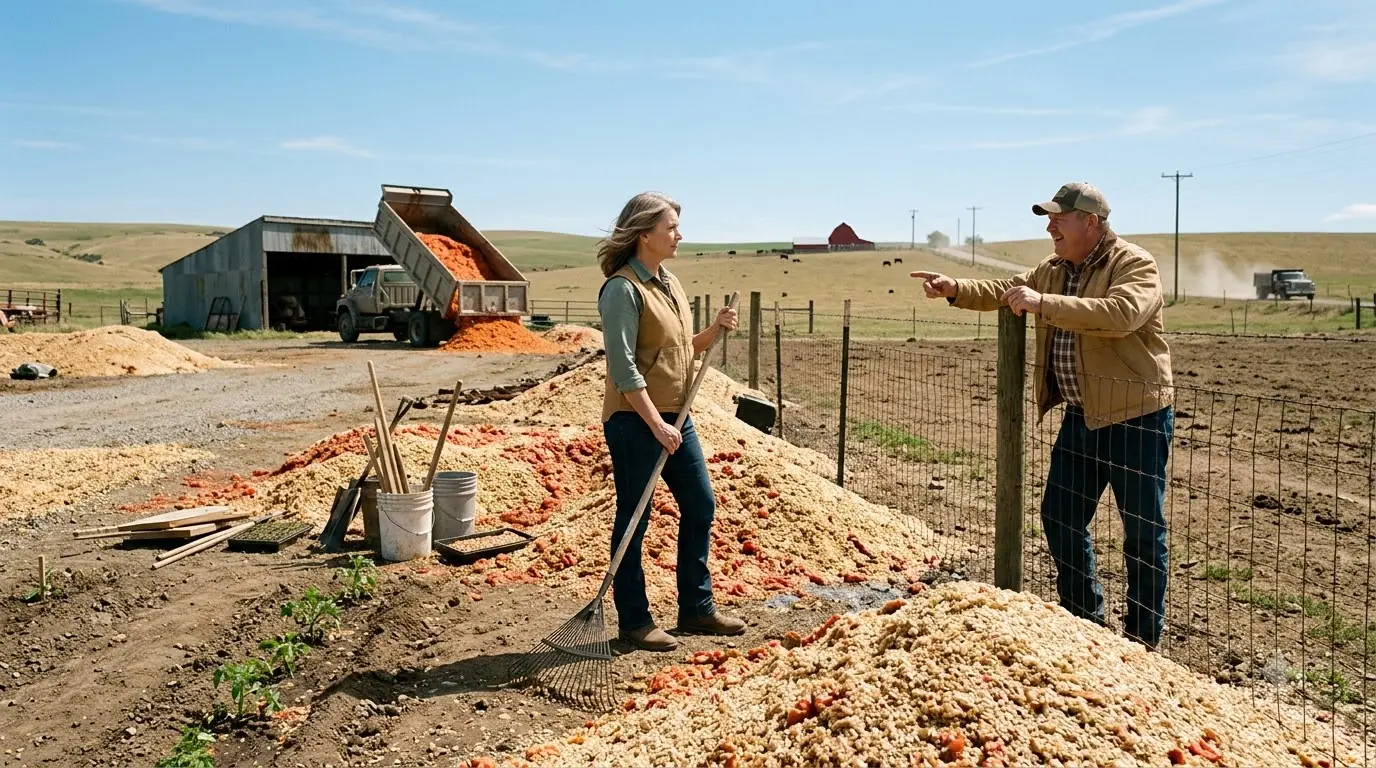
It landed with a wet, heavy sound, then spread into a shallow pool beneath the truck's rear tires.
Before the driver finished securing the tarp, another rig was turning off the county road, its wheels sending pale dust across the weeds. By sundown there would be three loads, enough discarded tomato material to make the air behind the shed smell like an overturned summer garden.
Mary Ann stood beside the fence in rubber barn boots and a faded blue work shirt, her arms crossed, watching the men work. She was fifty-six years old, with sun-darkened forearms, a bad right knee, and hair that had begun turning silver at the temples before she was ready for it. The trucks did not alarm her, although the quantity made her blink. She had been expecting the waste, and the drivers knew exactly where to unload it. What surprised her was how quickly the mound grew when nobody had any reason to save what lay inside it.
The first driver, a young man named Miguel who had been making the route since early spring, leaned from his cab and called, "You sure this is where you want the next one, Mrs. Tovy?"
"Just east of the first pile," she answered. "Leave the ditch open. I don't want anything running toward the creek."
He glanced at the bare strip of earth she had prepared behind the shed. "You planting something?"
"Not yet."
Miguel gave her a doubtful look, then raised a thumb and backed into position. He had spent enough time hauling processing waste to know that most people wanted it gone, hidden, or covered before the neighbors complained. Mary Ann had asked the drivers to keep the loads separated, and once the trucks left she came out with a rake and a shovel. To Miguel, that seemed stranger than letting them dump there in the first place.
Across the road, a pickup slowed at the junction, its driver taking one long look before continuing toward town. Mary Ann recognized the truck belonging to Frank Dillard, who had once grazed cattle on the north side of Walter's pasture. Frank had asked her in March if she was being paid for the dumping. When she told him no, he had laughed, not cruelly, but in a way that made it clear he believed she had stopped caring what happened to the place.
"A person ought to get something for putting up with all that mess," Frank had said.
Mary Ann had answered, "Maybe I am getting something."
He had waited for her to explain. She had not, because at the time she did not know whether the answer was true.