The first truck came down the gravel road at a little after eight on a Tuesday morning, followed by two more carrying the same unremarkable white tanks.
Each vehicle slowed at the bend where the county road passed the abandoned Halverson ponds, then backed through a gate that had hung crooked for the better part of twenty years.
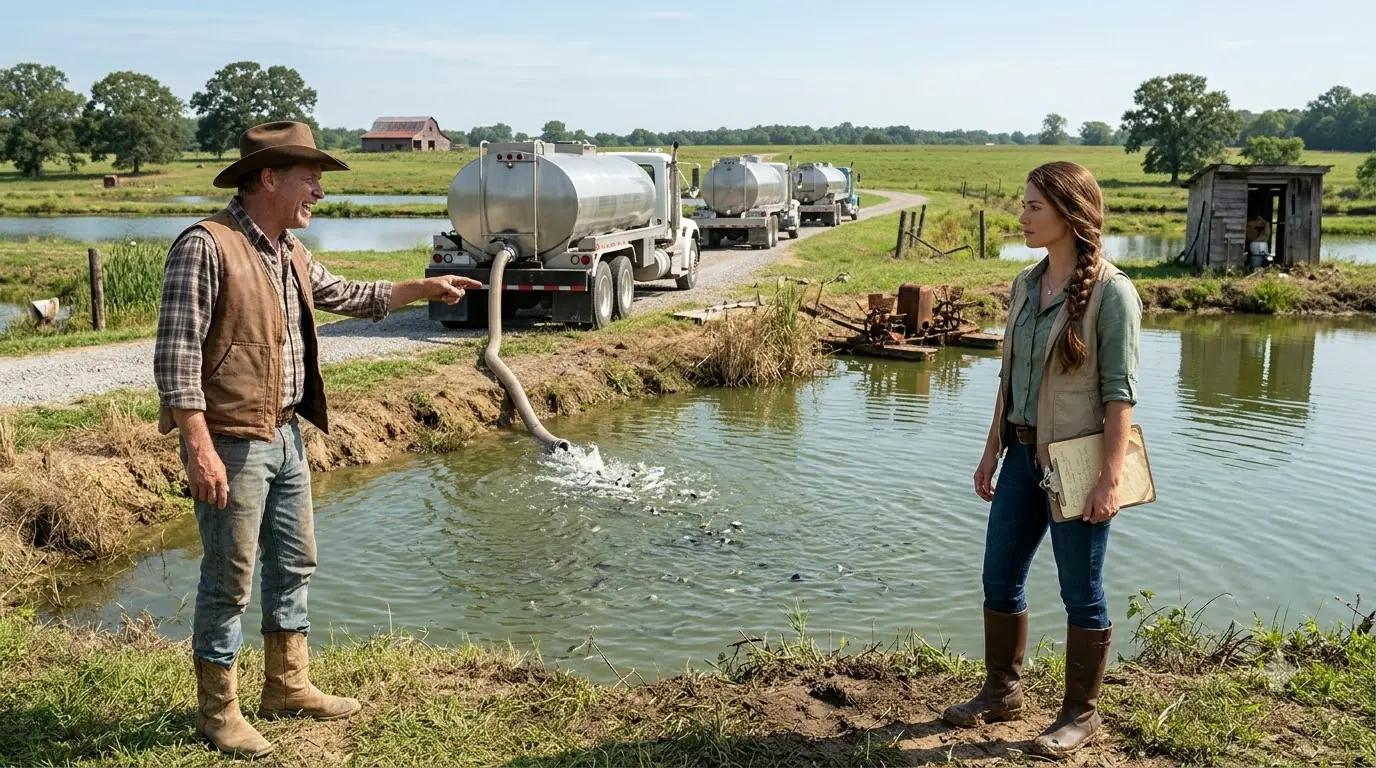
From the neighboring pasture, a man leaned on a fence and watched the drivers unfasten their hoses. By the time the first silver flash disappeared beneath the murky green surface, two pickup trucks had stopped along the road and someone had already begun laughing.
The ponds had been a joke in that part of the county long before Delaney Cross inherited them. Old Mr. Halverson had tried raising catfish there decades earlier, lost a summer's stock after a pump failed, borrowed money to start again, and eventually walked away with debts that outlived his business. Other people had tried stocking the water since, but none of their efforts lasted. The banks cracked, the equipment rusted, and each season left behind another story about how nothing healthy could survive in those holes for long.
Delaney stood ankle-deep in wet clay with a clipboard against her chest, watching the drivers guide a regulated transfer of fingerlings into the enclosed ponds. She had asked for approximately six thousand fish, a mixed batch of channel catfish and hybrid bream that the hatchery had been unable to sell through its ordinary commercial channels. The stock had been checked and cleared for transfer, but it was off-grade, mixed in size and species, and worthless to the buyers who demanded standardized lots. Delaney knew the difference mattered, although she was not yet experienced enough to understand how many other differences would matter before the summer ended.
The oldest driver waited until the last tank was almost empty before pulling her aside. He had been hauling live fish for thirty years, he told her, and had watched people put perfectly good money into perfectly bad water. "Those are rejects," he said, glancing back toward the pond as though he disliked even using the word fish for them. "There's a reason nobody wanted them, and there's a reason nobody's made those ponds pay in a generation."
Delaney thanked him without arguing, which appeared to annoy him more than an argument would have. She checked the transfer sheet, made sure the species and numbers matched the paperwork, and asked when the hatchery expected to have another surplus batch. The driver studied her for a long moment, then shook his head and climbed back into the cab. As the three trucks disappeared toward the highway, the neighbors remained where they were, waiting for the young woman to understand what they believed they already knew.
A year earlier, Delaney could not have distinguished a catfish fingerling from a minnow in a ditch. She was twenty-six, rented a second-floor apartment above a dentist's office in a town two counties away, and spent her working days correcting inventory records for a regional supply company. The job came with steady pay and a manager who rarely remembered her name unless something went wrong. Delaney was good at it, but the work left her with the uncomfortable feeling that her life was being organized into columns she had not chosen.