By the time I realized the lake next door was rising, the top foot of soil beneath eighteen hundred peach trees had already begun to dry out.
That was the detail I remembered later, after the lawyers and the insurance adjusters and the people from the sheriff's office had finished asking me to describe what happened.
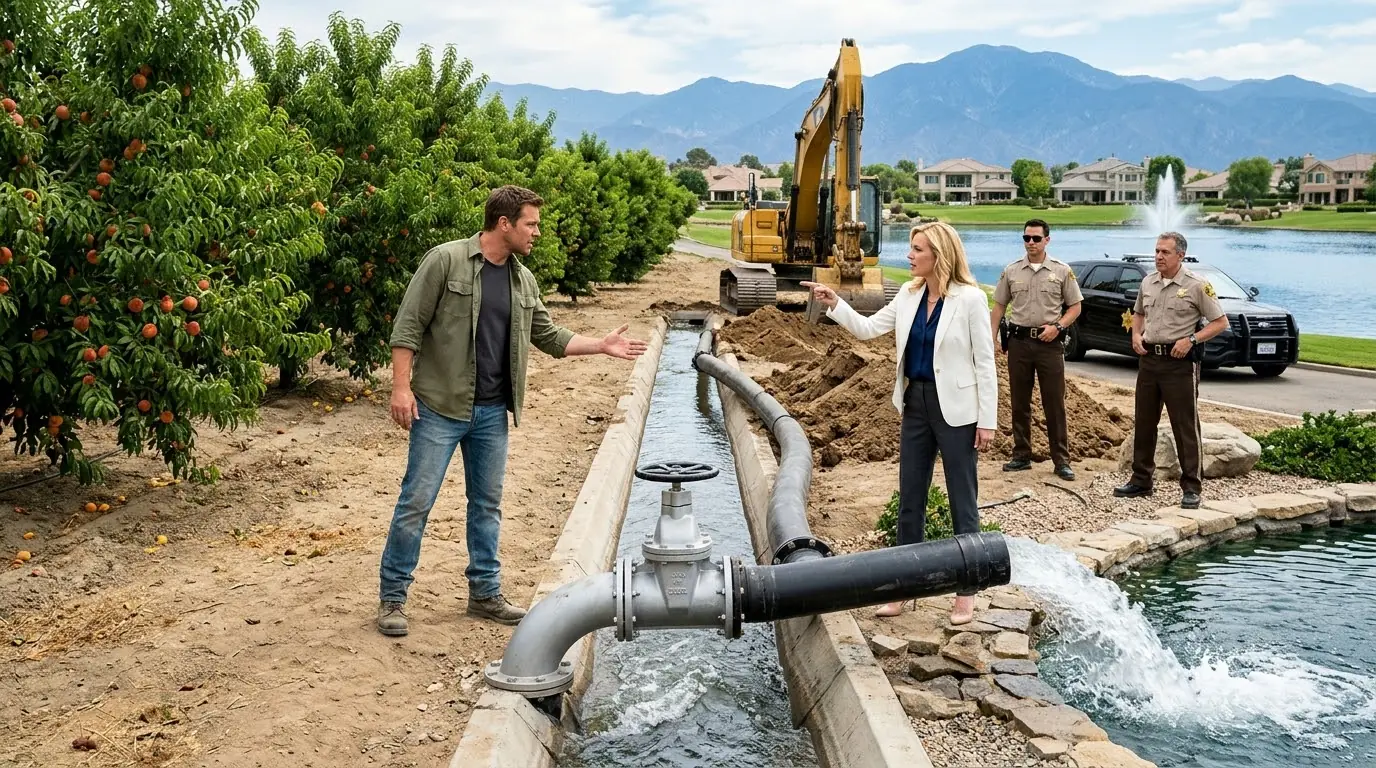
They always wanted the moment I confronted Denise Calder on the dock. They wanted to know what she said when I accused her of stealing water, whether she raised her voice, whether I threatened to call the police.
But my mind went somewhere else first. It went to the feel of powdery soil falling through my fingers in a block that should have been damp, and to the sound a drip irrigation line makes when there is not enough pressure behind it to do its job.
My name is Richard Pierce. I was forty-six that summer, and I operated Pierce Orchard on forty-two acres of irrigated ground outside Palisade, on the western side of Colorado's Grand Valley. Most of those acres carried peach trees, eighteen hundred of them spread across blocks of different ages, with several rows of Honeycrisp apples on the cooler edge of the property. My father had planted some of the oldest peaches. I had planted the young trees myself, and my foreman, Sam Ortega, could identify almost every block by its soil, slope, and particular way of giving us trouble.
People who drove past the property saw neat green rows and a farm store with a hand-painted sign. They did not see the invoices for pruning crews, frost protection, irrigation pumps, insurance, packing, refrigeration, fuel, replacement trees, or the bank loan that came due whether a harvest sold well or not. An orchard is not a field you can abandon for one season and start fresh the next. A tree represents years of investment, and when you lose one you do not simply replace the fruit it would have produced that summer. You replace the tree, and then you wait for it to grow.
Water was the part of that equation I respected most. In our valley, people talked about weather as if the sky were deciding everything, but growers knew that the real decisions were often made in headgates, ditch banks, valves, meters, and the quiet timing of an irrigation delivery. A delay of a few hours could be manageable. A sustained loss at the wrong point in the growing season could follow you all the way to the packing house and into the next year's crop.
That Tuesday in late August began at ninety-four degrees and climbing. It had not rained enough in weeks to make a meaningful difference. By seven in the morning, the west side of the orchard already smelled of warm leaves and dry dust, and Sam had called me from Block Five to say the drip zones were taking too long to build pressure.
"How long?" I asked.
"Long enough that I checked the filters twice. The readings aren't right."