Jackie's death has left millions of Big Bear viewers asking the same question: what happens to Shadow now? After spending years watching the pair build their nest, defend their territory, and raise eaglets together, many people naturally wonder whether Shadow understands what has happened or whether he is still waiting for Jackie to return.
Wildlife biologists caution that answering this question requires separating human emotion from Bald Eagle behavior. There is no evidence that a Bald Eagle understands death in the same way humans do. Shadow does not know that Jackie was transported to a rehabilitation hospital, underwent intensive medical treatment, or ultimately passed away. Those events occurred far from Big Bear, completely outside the territory where the pair spent their lives together.
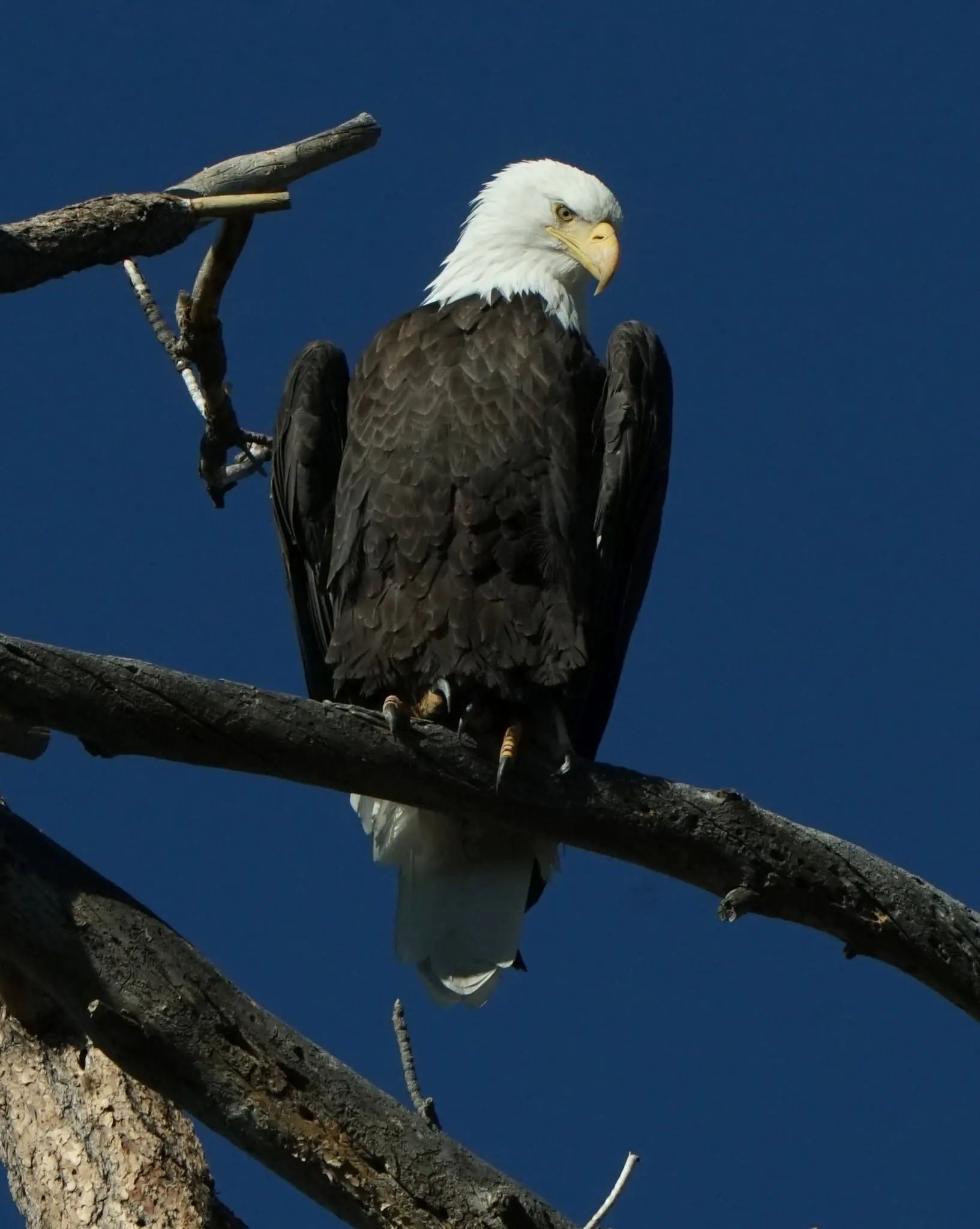
What Shadow does know is much simpler. Jackie disappeared and never came back.
For a Bald Eagle that has shared the same territory with a mate for many years, the sudden absence of that partner represents a significant change. Bald Eagles are strongly territorial birds, and long-term pairs develop highly coordinated routines throughout the breeding season. They share responsibility for defending the territory, repairing the nest, incubating eggs, and raising young. Each bird becomes accustomed to the presence and predictable behavior of the other. When one member of the pair suddenly vanishes, that routine is immediately disrupted.
Field studies of Bald Eagles have shown that surviving mates often continue behaving as though the missing bird may still return. They may remain within the established territory, continue using the traditional nest, perch in familiar locations, and vocalize at times when their mate would normally have been nearby. None of these behaviors necessarily indicate an understanding of death. Instead, they reflect the bird's continued attachment to its territory and the routines established over multiple breeding seasons.
This pattern is consistent with what researchers have documented in many long-term Bald Eagle territories across North America. If one member of a breeding pair disappears because of injury, illness, or another unknown cause, the remaining eagle rarely abandons the territory immediately. Leaving a productive nesting territory would reduce future breeding opportunities, so remaining in place is generally the most successful strategy from a biological standpoint. Shadow's continued presence around the Big Bear territory therefore represents normal Bald Eagle behavior rather than evidence that he knows exactly what has happened to Jackie.
The timing of Jackie's disappearance also influences Shadow's behavior. Because her death occurred outside the active nesting period, Shadow is not simultaneously caring for eggs or dependent eaglets. Instead, his primary responsibilities now involve maintaining the territory and securing food. Wildlife experts expect him to continue using familiar perches, flying regular patrols across the nesting area, and responding to other Bald Eagles that enter his territory. These activities are essential regardless of whether Jackie returns.
Many viewers have commented that Shadow may appear to be searching for Jackie. While it is impossible to determine what an individual wild eagle is experiencing internally, biologists explain that repeated flights around familiar areas, territorial calling, and continued visits to the nest are all behaviors expected from a surviving member of an established pair. They should not automatically be interpreted as grief in the human sense, but neither should they be dismissed as meaningless. They demonstrate that the long-standing partnership has ended abruptly, leaving one bird to continue managing a territory that was maintained by two individuals for many years.
For now, Shadow remains the resident male of the Big Bear territory. The nest still stands, the territory is still valuable, and the instincts that guided his partnership with Jackie remain unchanged. What has changed is that, for the first time in many years, he is carrying out those routines alone. Whether that situation remains temporary or eventually leads to a new chapter in the life of the Big Bear nest is a question that only time—and the natural behavior of wild Bald Eagles—will answer.
The next question is more difficult for many longtime Big Bear viewers: will Shadow eventually accept another female Bald Eagle as his mate? From a biological standpoint, the answer is yes, that is entirely possible. Bald Eagles generally maintain long-term monogamous pair bonds, and established pairs may remain together for many years. However, this does not mean a surviving eagle remains permanently without a mate after its partner dies or disappears. When one member of a breeding pair is lost, the surviving bird can eventually form a new pair bond and continue breeding.
How quickly that happens is difficult to predict. There is no fixed period during which a Bald Eagle must remain alone after losing a mate. In some established eagle territories, replacement mates can appear relatively quickly, particularly where the local population includes unattached adult birds. In other cases, the surviving eagle may remain without a new partner for a longer period. The availability of mature birds, territorial competition, season, and the behavior of the resident eagle can all influence how quickly a new pair forms.
For Shadow, one important factor is that he already controls an established territory. Big Bear provides the essential resources Bald Eagles require, including suitable nesting habitat, reliable food sources, and an existing nest that has been maintained over multiple seasons. From the perspective of another adult female searching for a breeding opportunity, a territory already occupied by an experienced resident male could be attractive. This means Shadow would not necessarily need to leave Big Bear to find another mate. A female could eventually enter his territory and begin interacting with him.
Those first interactions would not automatically mean a new pair had formed. Bald Eagles are territorial, and an unfamiliar female entering the area could initially be treated as an intruder. Researchers and nest observers would need to watch how Shadow responds over time. Repeated tolerance of the same female, shared perching, coordinated territorial behavior, courtship activity, and eventually joint nest work would provide much stronger evidence that a new pair bond was developing.
Nest activity would be particularly important. Established Bald Eagle pairs frequently spend substantial time repairing and preparing their nest before egg laying begins. They bring sticks, rearrange existing material, add softer material to the nest bowl, and repeatedly visit the site together. If Shadow eventually begins allowing another female to participate in those activities, it could represent one of the clearest indications that the Big Bear territory is entering a new breeding chapter.
If a new pair forms successfully, reproduction could eventually follow. Shadow already has years of experience defending a territory, maintaining a nest, incubating eggs, delivering food, and caring for young. A new female of breeding age could potentially join him in those responsibilities. Whether that happens during the next breeding season or later will depend entirely on how events develop in the territory.
For viewers who spent years following Jackie and Shadow, seeing another female beside him may be emotionally difficult. It is important, however, not to interpret a new pair bond through human ideas about loyalty or replacement. If Shadow eventually accepts another mate, it would not mean that his years with Jackie somehow mattered less, nor would it mean that Jackie had been "forgotten." Those concepts require human interpretations that cannot reliably be assigned to a wild eagle.
Biologically, forming another pair would be a normal response to the permanent loss of a mate. Reproduction is one of the fundamental behaviors driving the lives of wild animals, and successful breeding territories are valuable resources. If an adult Bald Eagle loses its partner but survives and retains control of a productive territory, forming another pair allows that territory to continue producing future generations.
The same principle applies to the nest itself. The Big Bear nest was never owned by Jackie and Shadow in the human sense. It is part of an active Bald Eagle territory, maintained and defended because it provides a suitable location for reproduction. Jackie played an enormous role in building and maintaining that nest over the years, but nature does not preserve wildlife territories as memorials. They continue to be used whenever conditions allow.
That distinction may become especially important during the next breeding cycle. Viewers could eventually see another female standing on branches where Jackie once stood, rearranging sticks Jackie helped place or sharing the nest with Shadow. From a human perspective, those images may initially feel uncomfortable. From the perspective of Bald Eagle biology, however, they would indicate that the territory remains healthy and capable of supporting another generation.
There is also no guarantee that the first female observed near Shadow will become his next mate. Multiple adult or subadult Bald Eagles may pass through the area, and territorial interactions can occur before a stable pair is established. Observers will therefore need to avoid drawing conclusions from individual visits. Consistent behavior over time will provide much stronger evidence than a single appearance near the nest.
The most scientifically responsible approach now is simply to observe. Shadow's movements, vocalizations, nest visits, territorial interactions, and responses to other Bald Eagles will gradually provide information about how he is adapting to Jackie's absence. There is no timetable that can reliably predict when another female might appear or when Shadow might establish another long-term pair bond.
What can be said with greater confidence is that Jackie and Shadow's partnership has permanently become part of the documented history of the Big Bear Bald Eagle territory. A future mate cannot change the years they spent together, the nesting seasons they shared, or the young they successfully raised. Those events have already occurred and remain part of the biological history recorded through years of nest-camera observations.
If Shadow eventually forms another pair, the most accurate way to understand it is not as replacing Jackie but as the continuation of a functioning Bald Eagle territory after the loss of one member of an established pair. Jackie belonged to one long and important chapter of that history. Another female may someday become part of the next one.
For now, there is no need to rush that process or predict when it will happen. Shadow remains at Big Bear, and researchers and viewers have an unusual opportunity to observe what happens naturally after a long-term Bald Eagle loses its mate. The coming months may provide valuable insight into territorial behavior, pair formation, and how an experienced male adjusts after the disappearance of a partner with whom he spent many breeding seasons.
If another female eventually joins Shadow, it will almost certainly be an emotional moment for the community that followed Jackie for so long. Scientifically, however, it would also be an encouraging sign. It would mean Shadow remains capable of defending his territory, the Big Bear habitat continues to support Bald Eagles, and the nest that produced so many memorable moments may eventually support another generation.
Jackie's absence will remain visible to everyone who knew the Big Bear nest through her. But for Shadow, the biological demands of life in the wild continue. He must feed, defend his territory, survive changing seasons and, if the opportunity arises, potentially form another breeding partnership. That is not a rejection of the past. It is simply how Bald Eagles continue after the loss of a mate.