What Was Making Daisy So Reluctant to Get Up?
Reader Theme:
Font Size:
24px
or the first several nights Daisy spent with us, her bedtime routine was almost exactly the same.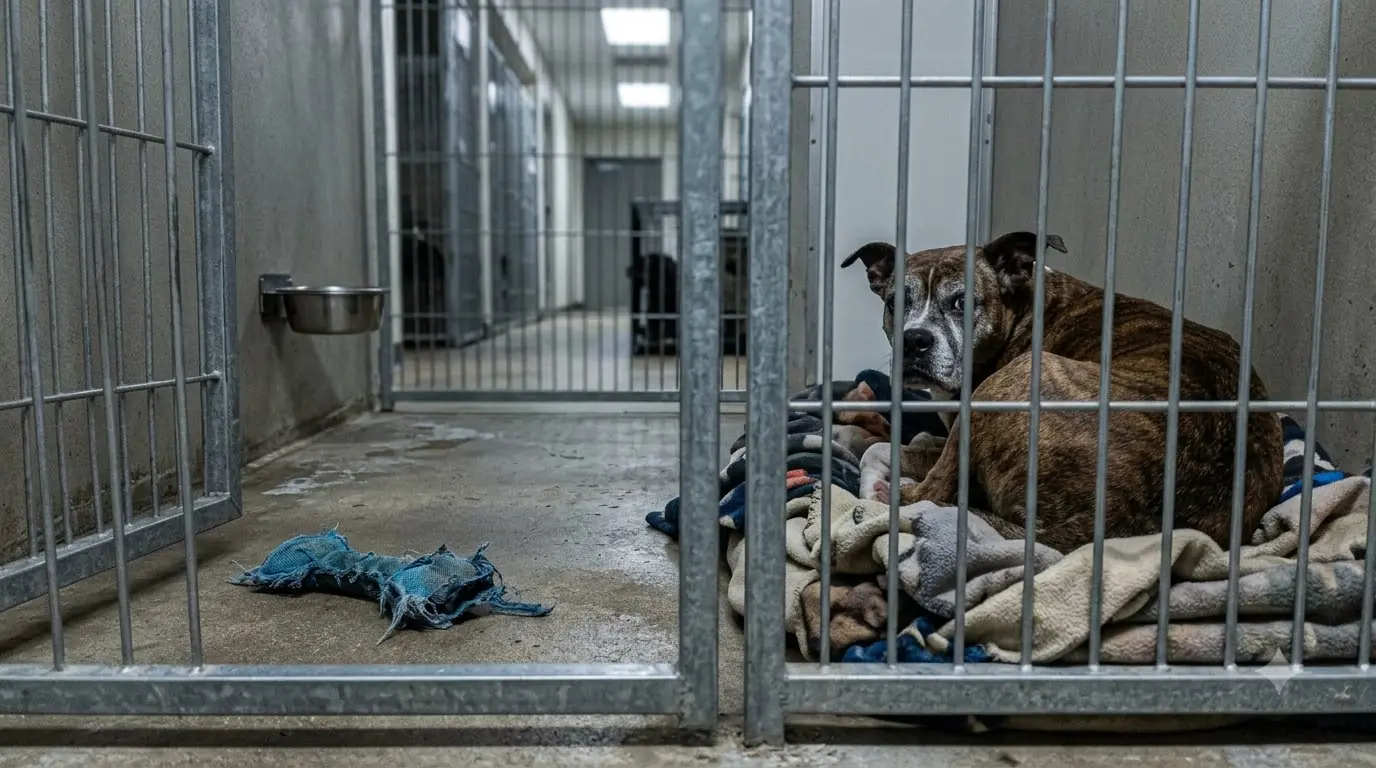
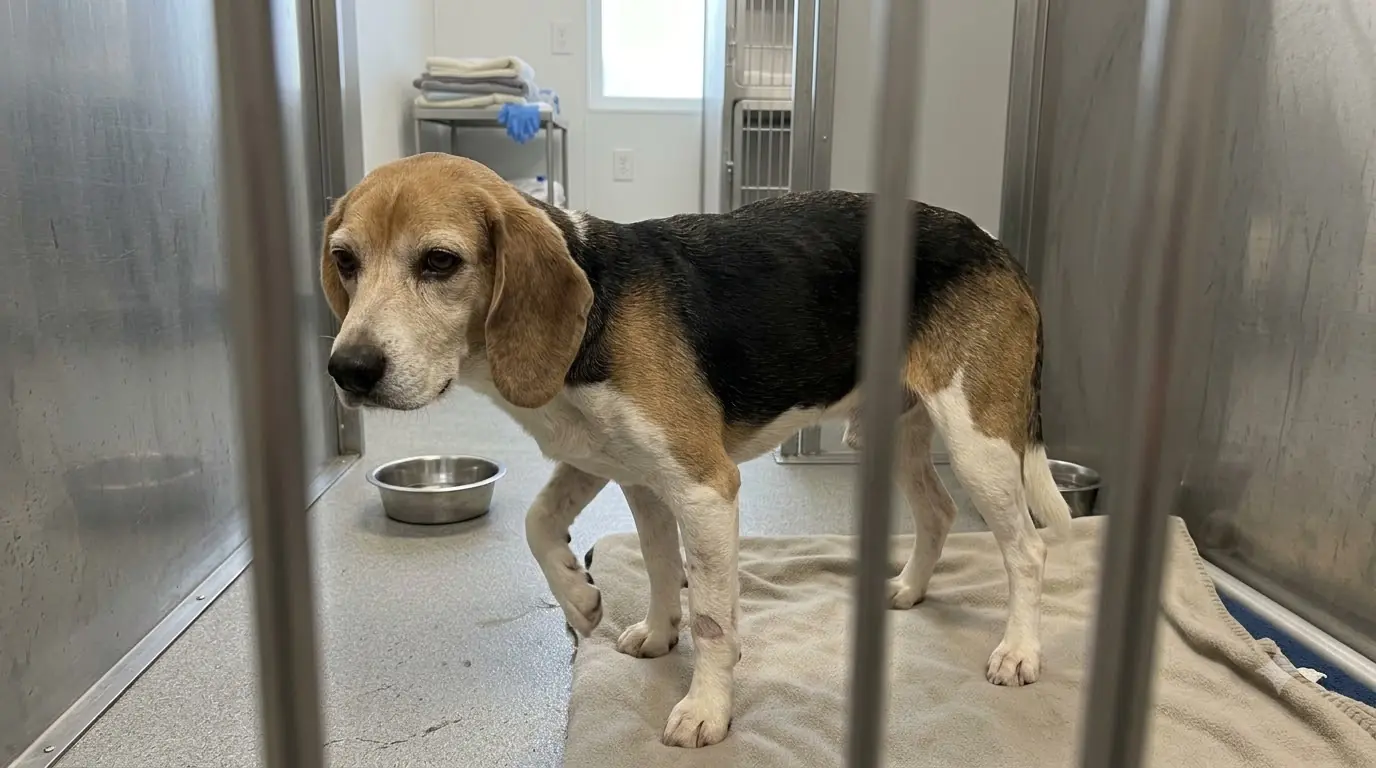
The 8-year-old Boxer mix would wait until activity in the kennel area began to slow. Then she turned toward the blankets in the quietest corner of her enclosure.
First came the nose.
Daisy pushed the blankets forward, stopped, inspected the pile, and pushed again.
Then she used one front paw to pull an edge closer.
She circled several times before lowering herself carefully into the middle.
By the time she finished, she had created a small nest around her body.
One thing never went into the nest.
A toy.
Daisy usually left one toy near the kennel gate. Sometimes it was a soft toy. Other times it was a rubber one selected during enrichment. Whatever she chose, it remained several feet away from where she slept.
When barking suddenly erupted nearby, Daisy's head came up.
She sniffed the air.
Her ears shifted toward the sound.
She listened.
Only after the kennel became quiet again did her muscles begin to relax. Daisy lowered her head, tucked her nose beneath a front paw, and returned to sleep.
At first, that nightly ritual seemed to tell us primarily about Daisy's need for quiet.
Then we started noticing how she got back up.
Daisy Arrived With Very Little History
We did not receive a complete medical or behavioral history for Daisy.
We knew her approximate age and identified her as an 8-year-old Boxer mix based on the available information and her physical characteristics. Beyond that, important parts of her past could not be verified.
We did not know how long she had experienced stiffness.
We could not confirm what kind of home she had previously lived in, how much daily exercise she had received, or whether she had previously been treated for joint discomfort.
We also had no evidence that allowed us to assign a dramatic explanation to her quiet behavior.
A dog choosing the back of a kennel is not proof of mistreatment.
A dog reacting to barking is not proof of a traumatic past.
And Daisy's habit of leaving a toy at the gate did not allow us to know what she was thinking.
Our responsibility was to document what we could actually observe and investigate anything that might affect her health or welfare.
At intake, Daisy was alert but reserved.
She did not rush forward when the kennel door opened. Instead, she watched the person entering and waited.
When given space, she eventually stepped closer and sniffed.
Her tail moved gently once she became familiar with the interaction, but she remained noticeably calmer than many of the dogs around her.
Daisy drank water normally after intake.
She accepted several treats and later ate part of her first meal.
Her body condition was somewhat lean. She was not dangerously thin, but our veterinary team wanted her to gain a modest amount of weight gradually while preserving muscle.
Her coat was generally intact, although it appeared a little dry.
Nothing about her initial appearance suggested an immediate medical emergency.
Her movement, however, deserved a closer look.
The First Sign Was Easy to Miss
Daisy could walk.
She could stand.
She could turn around and move through the kennel without assistance.
That made her stiffness less obvious than a severe limp or an inability to bear weight.
The difference became clearest after she had been lying down.
When Daisy first rose from her blanket nest, she sometimes paused with her front half upright while her hindquarters followed more slowly.
Her first few steps could be short and deliberate.
After moving for a minute or two, her gait usually became smoother.
Staff documented the pattern and passed the observations to our veterinary team.
At eight years old, there were several possible explanations.
Age-related joint disease was one.
A previous orthopedic injury was another.
Muscle loss or deconditioning could contribute.
Pain originating from the hips, knees, lower back, or another area could also produce subtle changes in movement.
We did not want to guess.
Daisy needed an examination.
Her Initial Veterinary Assessment
During Daisy's first complete veterinary examination, the team evaluated much more than her hind legs.
Her temperature was within an expected range.
Her heart and lungs were assessed carefully. Boxers and Boxer mixes can have particular health considerations, but breed alone is never a diagnosis. Daisy's examination did not reveal an immediate cardiopulmonary crisis.
Her eyes were clear.
Her ears had a small amount of debris without severe inflammation.
Her mouth showed dental tartar and mild gum inflammation that would require ongoing attention, but there was no obvious oral emergency.
The veterinarian palpated Daisy's abdomen. It was soft, without an obvious painful response or concerning distention.
Her skin was checked carefully for masses, irritation, parasites, and other abnormalities.
Because Daisy was an older dog, any lumps or bumps would be documented rather than dismissed as simply part of aging.
Then the examination turned to her movement.
The veterinarian watched Daisy walk in a straight line and turn in both directions.
Her paws and nails were checked.
Her knees, hips, and other joints were carefully assessed within Daisy's tolerance.
She showed no evidence of an acute fracture or major unstable injury.
However, there was reduced flexibility and mild discomfort associated with manipulation of her hips, and her hind-limb muscle mass was less developed than ideal.
Those findings supported what staff had observed.
Daisy was not simply "slow because she was old."
Something was making movement less comfortable.
Investigating the Stiffness
Because Daisy's history was incomplete and the examination suggested chronic orthopedic discomfort, our veterinary team recommended additional diagnostics.
Bloodwork was performed first.
A complete blood count and serum chemistry panel helped assess her overall health and provided useful baseline information before considering longer-term medications.
Her laboratory results did not identify a major systemic illness that explained her gait.
Her kidney and liver values were reviewed because organ function can influence which medications are appropriate and how they are monitored over time.
The veterinary team then obtained orthopedic radiographs.
Imaging showed degenerative changes involving Daisy's hip joints consistent with osteoarthritis.
There was no radiographic evidence of a recent fracture.
Her examination and imaging together supported a diagnosis of chronic osteoarthritis as an important contributor to her stiffness.
That diagnosis was significant, but it was not catastrophic.
Osteoarthritis is common in older dogs and cannot simply be "cured" by a few days of medication. Management is generally aimed at reducing discomfort, maintaining mobility, preserving muscle, and supporting a good quality of life.
Daisy's treatment would therefore need to be ongoing and adjusted according to her response.
Treating the Dog, Not Just the X-Ray
Radiographs are useful, but they do not tell us exactly how much pain a dog experiences.
Some dogs with substantial changes on imaging remain fairly active. Others with less dramatic changes can be noticeably uncomfortable.
For Daisy, the clinical picture mattered.
She was stiff after rest.
She took time to rise.
She had reduced hind-limb muscle condition.
She became more fluid after gentle movement.
Our veterinary team developed a multimodal management plan.
A veterinary-prescribed pain and anti-inflammatory medication was started after her examination and laboratory results were reviewed.
The team established an appropriate dose and monitoring plan based on Daisy's individual health status.
Her caregivers were instructed to watch for changes in appetite, vomiting, diarrhea, unusual lethargy, increased thirst or urination, or other symptoms that might warrant reassessment.
Medication was only one part of the plan.
Daisy also needed controlled activity.
Too little movement could allow further loss of muscle and mobility.
Too much strenuous activity could leave her more uncomfortable.
The goal was consistency.
Her Walks Became Shorter but More Purposeful
Daisy's exercise program started gently.
Rather than taking one long walk, she was offered shorter outings at a comfortable pace.
The first few minutes were intentionally slow.
Daisy liked to sniff.
She investigated grass, paused near shrubs, and occasionally stood quietly with her nose lifted into the breeze.
We allowed that.
A walk did not need to become a race to be beneficial.
As her joints warmed up, Daisy's stride often lengthened slightly.
She was not encouraged to sprint, make repeated sharp turns, or perform high-impact activities.
Staff also monitored the surfaces she walked on. Good traction was particularly important for a dog with hind-end stiffness.
After returning indoors, Daisy usually drank some water and settled onto her bedding.
Her response later in the day mattered just as much as her performance during the walk.
If she became substantially stiffer afterward, her activity plan would need adjustment.
Instead, during the early stages of treatment, staff began seeing modest improvement.
Daisy still rose carefully.
But the process looked easier.
Her Weight Required a Careful Balance
Weight management is important for dogs with osteoarthritis because unnecessary excess weight can increase stress on painful joints.
Daisy presented a different challenge.
She was somewhat lean and lacked ideal muscle condition.
Our goal was not simply to make the number on the scale increase quickly.
We wanted to support healthy body condition while rebuilding strength gradually.
Daisy received a complete, balanced diet in measured portions.
Her appetite was recorded.
During the first days, she occasionally left part of a meal when the kennel environment was particularly active.
Once things quieted, she often returned to the bowl.
We experimented with feeding her during calmer periods.
That helped.
Over the following weeks, Daisy's food intake became more consistent.
Her weight began trending upward gradually, and her body condition improved without pushing her toward excess weight.
That distinction would remain important throughout her life.
The Kennel Was Harder Than It Looked
Physically, Daisy was improving.
The shelter environment remained challenging.
She was particularly sensitive to sudden waves of barking.
When one dog began vocalizing, others sometimes joined.
Daisy rarely participated.
Instead, she lifted her head.
If she was standing, she sometimes moved toward the back of her kennel.
If she was resting, she remained alert until the noise subsided.
Her breathing could become slightly faster during particularly loud periods, and her body appeared more tense.
Those observations suggested that environmental noise was stressful for her.
We made changes where possible.
Daisy was housed in a quieter area.
Visual barriers were used appropriately to reduce unnecessary stimulation.
Her daily routine became more predictable.
She was given opportunities to spend time away from the kennel in quieter spaces.
And, importantly, she was allowed to rest.
Older dogs do not need to be constantly engaged simply because humans feel guilty seeing them sleep.
Quality rest was part of Daisy's care.
Her Blanket Routine Continued
Every evening, Daisy still arranged her bed.
Nose first.
Then paws.
Circle.
Adjust.
Circle again.
Lie down.
Staff made sure her bedding was thick enough to provide cushioning while remaining easy for her to step onto without tripping.
A supportive sleeping surface was especially helpful because hard kennel flooring could be uncomfortable for arthritic joints.
The nesting behavior itself was normal canine behavior.
Many dogs circle or rearrange bedding before settling.
What made Daisy memorable was how deliberate she seemed about it.
She almost always selected the same quiet portion of the kennel.
And she almost always left one toy near the gate.
We did not move it into her nest unless necessary for cleaning.
There was no reason to disrupt a harmless routine she had chosen for herself.
The Toy at the Gate
People naturally wanted to assign meaning to Daisy's toy.
Was she leaving it for someone?
Was she waiting for a person?
Did she want another dog to find it?
We simply did not know.
Dogs cannot explain symbolic intentions to us, and projecting a detailed story onto the behavior would not be responsible.
What we knew was much simpler.
Daisy enjoyed toys.
She chose where to put them.
And she repeatedly placed one near the front of her kennel while choosing to sleep farther back.
During the day, she occasionally retrieved the toy and carried it around.
Sometimes she brought it toward a familiar caregiver.
She was not possessive when people approached appropriately, although staff continued respecting her space and never took objects unnecessarily.
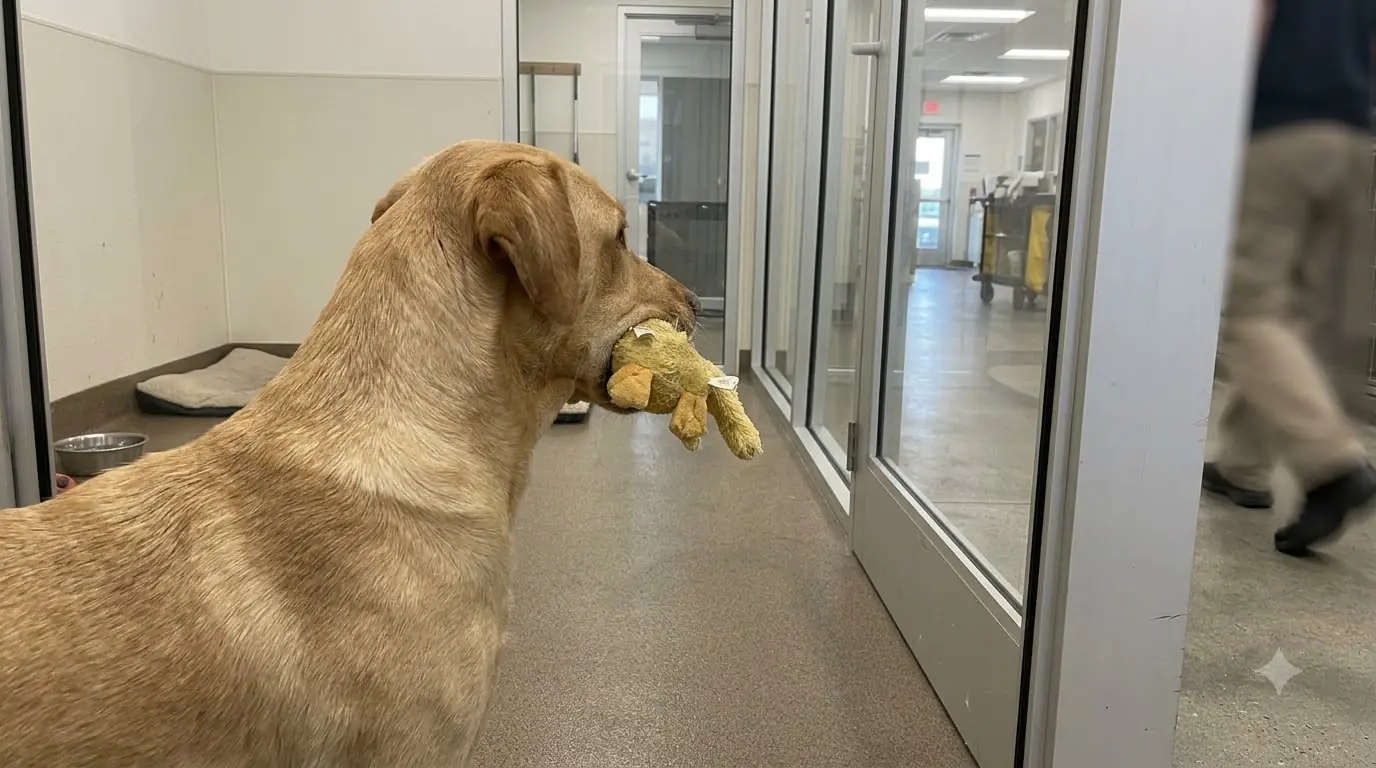
Eventually, Daisy began showing a particularly endearing greeting.
When someone she knew arrived, she sometimes walked to the gate, picked up the toy, and stood with it in her mouth.
She did not jump.
She simply waited.
Learning to Trust Daisy's Signals
One of our priorities was making sure Daisy did not have to become dramatically distressed before people listened.
Her signals were often subtle.
If she was uncomfortable with an interaction, she might turn her head away.
She might lick her lips.
She might shift her weight backward.
Sometimes she simply moved away.
Staff respected those choices.
No one needed to prove that Daisy could tolerate being hugged, crowded, or handled unnecessarily.
Veterinary handling was performed as gently as possible, with breaks when appropriate.
Social interaction followed the same philosophy.
If Daisy approached, people could offer contact.
If she walked away, the interaction ended.
As her trust increased, she began asking for more.
She particularly enjoyed slow scratches along her chest and shoulders.
She sometimes leaned gently against a familiar person's leg.
Her preference was quiet companionship rather than exuberant attention.
Monitoring Her Bathroom Habits
Daisy's urination and bowel movements were tracked as part of her medical care.
She urinated normally during outdoor breaks without persistent straining or obvious discomfort.
Her stool remained generally well formed after she settled onto her regular diet.
This monitoring was particularly important once she began medication.
Gastrointestinal changes can sometimes signal that a treatment needs to be reassessed, so vomiting, diarrhea, loss of appetite, or dark abnormal stool would have prompted veterinary attention.
Fortunately, Daisy tolerated her initial treatment plan well.
She also appeared to have a strong preference for eliminating outdoors.
Staff gave her regular opportunities because asking an older dog with stiff hips to wait unnecessarily long can create avoidable discomfort.
A Rehabilitation Plan Takes Shape
Once Daisy's pain appeared better controlled, we began focusing more deliberately on maintaining strength.
Her rehabilitation was simple and practical.
Regular controlled walking remained the foundation.
On suitable surfaces, Daisy practiced slow, steady movement designed to encourage normal use of all four limbs.
Her caregivers avoided exhausting repetitions.
The goal was not athletic performance.
It was functional mobility.
Could Daisy rise comfortably?
Could she walk outside to eliminate?
Could she navigate a home?
Could she maintain enough strength to continue enjoying ordinary activities?
Those were the outcomes that mattered.
Over several weeks, staff noticed better endurance.
Daisy still had stiffness, especially after longer periods of sleep.
But she no longer paused as frequently after standing.
Her hind legs appeared more stable during ordinary walking.
Her improvement was gradual rather than dramatic, which is exactly what we expected.
A Setback Reminded Us That Arthritis Fluctuates
Progress with chronic joint disease is rarely perfectly linear.
One cool morning, Daisy appeared noticeably stiffer than she had the previous week.
She was reluctant to leave her bed immediately and took several slow steps once standing.
Because changes in mobility should not automatically be blamed on an existing diagnosis, the team reassessed her.
There was no new swelling, acute injury, or neurological deficit identified.
Her appetite remained normal.
She was still bearing weight on all four limbs.
After examination, the episode was considered compatible with a flare in her chronic orthopedic discomfort rather than evidence of a new major injury.
Her activity was reduced temporarily, and her treatment plan was reviewed.
Within the following days, Daisy returned closer to her recent baseline.
The episode provided useful information for her future family.
There would probably be better days and harder days.
Management would require observation and flexibility.
Moving Daisy Into Foster Care
As Daisy's medical condition stabilized, we began considering whether a foster home might be better suited to her needs.
The shelter had kept her safe.
But even a quieter kennel area contained unpredictable barking, doors, cleaning activity, and frequent movement.
A calm foster environment could provide two important benefits.
First, Daisy could rest more consistently.
Second, we could learn how she functioned in a normal home.
An experienced foster caregiver with a relatively quiet household agreed to take her.
We sent Daisy with her regular food, medication, veterinary instructions, bedding, and familiar toys.
The toy she had been leaving beside the kennel gate came too.
Her First Hours in a House
Daisy entered the foster home slowly.
She sniffed the doorway.
Then the wall.
Then the edge of a rug.
Her foster caregiver did not pull her through the rooms or immediately introduce her to every part of the house.
Daisy was allowed to explore a limited area at her own pace.
Traction runners had been placed on slippery flooring to make movement easier on her hips.
Her bed was positioned in a quiet corner where she could see part of the room without being in the middle of household traffic.
Daisy found it within minutes.
Then she began rearranging the blankets.
Her foster caregiver recognized the routine immediately from our notes.
Daisy pushed.
Pawed.
Circled.
Curled up.
The familiar toy was left several feet away.
That night, she slept.
Silence Changed Her
The biggest difference in foster care was not immediate affection.
It was rest.
Without rows of neighboring dogs, Daisy experienced fewer sudden bursts of barking.
She still responded to unfamiliar sounds.
A delivery vehicle outside could make her lift her head.
A dog barking down the street made her listen.
But recovery was faster.
Once the sound disappeared, Daisy relaxed again.
Within several nights, her foster caregiver reported seeing her sleep stretched partially onto her side instead of remaining tightly curled for most of the night.
That mattered for another reason.
Better rest seemed to help her movement.
She still needed a few careful steps in the morning, but she appeared less fatigued during the day.
Daisy Developed a Household Routine
Breakfast became one of her favorite events.
Daisy usually woke, went outside for a bathroom break, and then returned for her measured meal.
Her medication was given exactly according to veterinary instructions.
After eating, she often rested before her first longer walk.
By late morning, she became more interested in following her foster caregiver around the house.
She did not follow constantly.
Daisy seemed to prefer knowing where people were while maintaining her own comfortable space.
If someone worked at a table, Daisy might settle several feet away.
If the person moved into another room, she sometimes followed after a minute.
The behavior was quiet but social.
She was choosing proximity.
Follow-Up Examination
Daisy returned to our veterinary team for a scheduled recheck.
Her weight had increased modestly.
Her body condition was closer to our target, and her muscle condition was beginning to improve with regular controlled activity.
The veterinarian repeated an orthopedic assessment.
Daisy still had reduced hip flexibility consistent with her diagnosed osteoarthritis.
The condition had not disappeared.
That was never the expectation.
What had changed was her functional comfort.
She rose more easily.
Her gait after the first few steps was smoother.
She tolerated appropriate daily exercise.
Her medication plan was continued with ongoing monitoring.
Periodic laboratory testing would be recommended as appropriate for long-term medication management and her overall health.
Her dental disease would also need attention as part of routine senior care.
Preparing for the Future
Daisy's eventual adopter will need to understand that adopting her means accepting an ongoing medical responsibility.
Her osteoarthritis will require management.
That may include veterinary-prescribed medication, maintaining a lean healthy body condition, regular appropriate exercise, good footing inside the home, comfortable bedding, and periodic reassessment.
Her needs may change as she ages.
If she develops a sudden inability to bear weight, severe pain, weakness, loss of coordination, or another significant change, she will need prompt veterinary evaluation rather than assuming every mobility issue is "just arthritis."
Routine senior wellness care will also remain important.
Daisy is eight.
Her future medical needs will not stop with her hips.
The Kind of Home Daisy Seems to Prefer
Behaviorally, Daisy has made her preferences increasingly clear.
She appreciates calm.
She likes predictable routines.
She enjoys affection but does not demand constant physical contact.
She likes having a resting place where she will not be disturbed.
Her future placement will be based on the complete household situation rather than one isolated characteristic.
Any resident animals would require appropriate introductions and compatibility assessment.
Household activity level would also matter.
A family expecting an older dog to participate immediately in strenuous hikes or intense daily exercise would probably not be ideal.
But Daisy is not looking for a life without activity.
She enjoys her walks.
She enjoys sniffing outside.
She sometimes plays gently with her toys.
She wants to be part of what is happening.
She simply seems happiest when participation does not require being at the center of everything.
The Toy Found a New Place
A few weeks after Daisy entered foster care, her caregiver noticed something.
Daisy was still arranging her blankets every night.
That part had not changed.
But the location of her toy had.
At the shelter, it had almost always been left near the kennel gate.
In the foster home, Daisy initially placed it near the doorway of the room.
Later, it began appearing closer to her bed.
One evening, her foster caregiver found it directly beside the blanket pile.
We cannot say why.
Perhaps the placement had never carried any emotional meaning at all.
Perhaps it was simply convenient.
Responsible rescue storytelling requires leaving room for that possibility.
What mattered more was everything else we could measure.
Daisy was sleeping better.
Her appetite was consistent.
Her weight was healthier.
Her mobility had improved with appropriate pain management and controlled activity.
She was seeking people voluntarily.
And the sounds around her no longer kept her alert for as long.
Daisy Today
Daisy remains an older dog with chronic osteoarthritis.
She has not experienced a miracle cure.
Some mornings are still slower than others.
After a long nap, she may take a moment before standing.
Her caregivers continue monitoring her mobility, appetite, weight, gastrointestinal health, medication tolerance, and general behavior.
She will need that same attention in a permanent home.
But Daisy's life is no longer defined by how carefully she rises from the floor.
She walks outside every day.
She investigates scents.
She eats with enthusiasm.
She rests on supportive bedding.
She seeks quiet affection.
Sometimes she even picks up a toy and carries it toward her foster caregiver before settling nearby.
And every night, she still performs her familiar ritual.
She pushes her blankets with her nose.
She catches an edge with her paw.
She circles.
Then she lowers herself into the soft pile she has made.
If a dog barks somewhere outside, Daisy may still raise her head.
She listens.
She sniffs the air.
But now there are no rows of kennels answering back.
The house becomes quiet again almost immediately.
Daisy looks toward the familiar person nearby, lowers her head, and lets her body relax.
Sometimes she tucks her nose beneath her paw exactly as she did at the shelter.
The difference is that she no longer has to choose the quietest corner of a kennel.
She has a comfortable bed in a home, a treatment plan that respects the realities of an aging body, and people learning exactly what she needs.
Her next chapter will still require patience and responsible medical care.
There will be follow-up appointments.
There may be adjustments to her arthritis management.
There will almost certainly be stiff mornings as she grows older.
But there will also be slow walks, warm blankets, quiet rooms, toys left wherever she chooses, and the simple security of being able to sleep without wondering when the next wall of barking will begin.
For Daisy, healing has not looked dramatic.
It has looked like gaining enough comfort to stand more easily.
It has looked like eating a full meal.
It has looked like walking at her own pace.
It has looked like choosing to approach someone because she wants affection.
And, perhaps most of all, it has looked like an older dog building her little nest each night, listening to the world become quiet, and finally feeling safe enough to close her eyes.