“You’re Leaving This Bed to Sit Beside Her Hospital Bed?” I Asked My Husband—and His Answer Changed Everything
PART 1
“You’re leaving this bed to sit beside her hospital bed?”
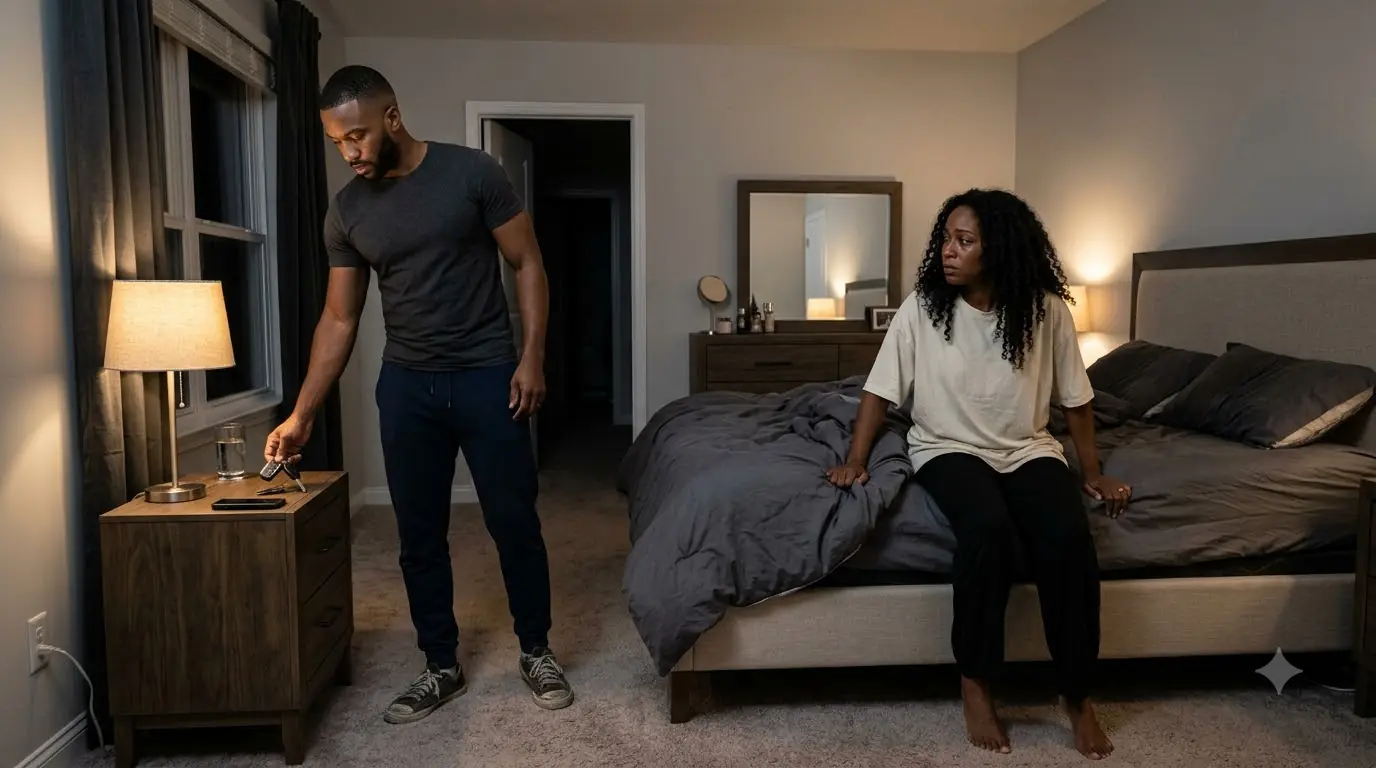
David stopped with one hand on the bedroom door.
He was already dressed.
Jeans.
Gray sweatshirt.
Car keys in his hand.
It was 1:17 in the morning.
He didn’t turn around immediately.
That pause told me more than I wanted to know.
“Emily called,” he finally said.
“I know who called.”
He looked back at me.
“She’s in the hospital.”
“And?”
His face tightened.
“And she asked for me.”
I sat up slowly.
The sheets fell away from my shoulders.
For a few seconds, I just stared at the man I had been married to for seven years.
“You’re serious.”
“Rachel.”
“No. Answer me.”
I pointed at the bed between us.
“You’re leaving your wife in the middle of the night to go sit beside another woman’s hospital bed.”
“She was in a car accident.”
“Is she dying?”
“No.”
“Is she having surgery?”
“I don’t know.”
“Does she have family?”
“Yes.”
“Then why does she need my husband?”
David closed his eyes.
I felt something ugly rise in my chest.
Not just jealousy.
Something older.
Something that had been building for months.
Emily wasn’t a stranger.
That would have been easier.
She was David’s first serious girlfriend.
The woman he had loved before me.
The woman he once planned to marry.
And for the past six months, she had slowly become part of our marriage without ever being invited into it.
David and Emily dated through most of college and for two years afterward.
They broke up when they were twenty-six.
Nothing dramatic.
No cheating.
No screaming.
She wanted to move to New York for graduate school.
David had just started working for his family’s construction company in Richmond.
Neither wanted to give up the life they were building.
So they ended.
At least, that was the story David told me when we first started dating.
I met him three years later.
By then, Emily lived in Boston.
They weren’t close.
Maybe a birthday message.
An occasional social media comment.
Nothing that ever made me uncomfortable.
For almost a decade, she was simply a person from his past.
Then David’s mother got sick.
Breast cancer.
Treatable, but terrifying.
His mother had always loved Emily.
Their families had been close.
When Emily heard about the diagnosis, she called.
At first, I thought it was kind.
She sent flowers.
Checked on David’s mother.
Even called me once to say she was thinking about all of us.
I didn’t feel threatened.
Why would I?
I was David’s wife.
We had a six-year-old daughter named Sophie.
We had a house.
A mortgage.
Sunday morning pancakes.
Arguments about laundry.
Christmas traditions.
A real life.
Emily was history.
Then history started calling more often.
At first, she called David about his mother.
Then she called just to check on him.
Then he started checking on her.
Her engagement had ended the previous year.
She was lonely.
He understood.
One evening, I found David standing on the back porch talking to her.
He came inside almost forty minutes later.
“Everything okay?” I asked.
“Yeah.”
“Your mom?”
“No. Emily.”
I looked up.
“What happened?”
“Bad day.”
“That was a long bad day.”
He gave me a look.
“Rachel.”
“What?”
“She’s going through a hard time.”
“So are we.”
His face changed.
“I know.”
But something about the way he said it bothered me.
Like I had made an unfair comparison.
I let it go.
Then Emily came to Richmond.
David’s mother was having surgery.
Emily told the family she wanted to visit.
I told myself that made sense.
She had known his mother for years.
At the hospital, I watched Emily hug David.
Not romantically.
Not even inappropriately.
But with familiarity.
Her arms went around him.
His hand rested against the middle of her back.
For one second longer than I liked.
Then she whispered something in his ear.
He smiled.
I hated myself for noticing.
That night, I asked him.
“Do you still have feelings for her?”
David stared at me.
“What?”
“You heard me.”
“No.”
The answer came immediately.
“That was quick.”
“Because it’s ridiculous.”
“Is it?”
“Yes.”
“She calls you constantly.”
“She doesn’t call constantly.”
“She calls enough.”
“My mother has cancer.”
“And somehow your ex-girlfriend needs emotional support from you about it?”
His jaw tightened.
“She loves my mom too.”
I felt myself getting angry.
“That’s exactly what I’m talking about.”
“What?”
“You keep talking like she’s still part of your family.”
“She was part of my life for eight years.”
“And I’m your wife.”
“I know that.”
“Do you?”
He stood.
“I'm not doing this.”
“Doing what?”
“Being interrogated because you’re insecure.”
That word stayed with me.
Insecure.
I hated it.
Because once someone calls you insecure, every boundary you try to explain suddenly sounds like fear.
So I became quieter.
For a while.
David’s mother recovered well.
Emily went back to Boston.
I expected the communication to slow down.
It didn’t.
They texted.
Not constantly.
Enough.
I never found anything sexual.
Nothing romantic.
That almost made it harder to explain why it bothered me.
She sent him pictures of restaurants they used to visit.
He sent her updates about his mother.
She asked him for career advice.
He asked about her new apartment.
Then, one night, while we were watching television, his phone lit up.
Emily.
He smiled when he saw her name.
Not a huge smile.
Just a small one.
Automatic.
I looked at him.
“What?”
“Nothing.”
“You smiled.”
“She sent me something funny.”
“What?”
He showed me.
A picture of an old college professor wearing an ugly Christmas sweater at an alumni event.
I stared at the photo.
“You would not find that funny if she hadn't sent it.”
David laughed.
“Okay.”
I didn’t.
He stopped smiling.
“Rachel.”
“Sometimes I feel like there’s a whole version of you she gets that I don’t.”
“That makes no sense.”
“It does to me.”
“What version?”
“The one who remembers being twenty-two.”
He sighed.
“Everyone has a past.”
“I know.”
“So what do you want me to do? Pretend mine didn’t exist?”
“No.”
I looked at him.
“I want to know why she still has this much access to you.”
He stared at me.
“Because she’s my friend.”
I went quiet.
That was the first time he had called her that.
Not my ex.
Not someone from college.
My friend.
I didn’t like how much the word hurt.
Then came the hospital call.
1:03 a.m.
David’s phone rang.
He woke before I did.
I heard his voice in the hallway.
“What happened?”
Pause.
“Where are you?”
Another pause.
“Okay. I’m coming.”
I sat up.
When he came back into the bedroom and started dressing, I asked who it was.
He told me.
Emily had flown into Richmond that afternoon for a client meeting.
On her way back to her hotel, another car hit hers at an intersection.
She had a fractured wrist, bruised ribs, and a concussion.
Nothing life-threatening.
Her brother was driving down from Maryland.
He wouldn’t arrive for several hours.
“She’s scared,” David said.
I stared at him.
“And she called you.”
“Yes.”
“Not her brother.”
“She called him too.”
“Not one of her friends.”
“Rachel.”
“Not me.”
His expression changed.
“What?”
“If this is completely innocent, why didn’t she call both of us?”
“She was in an accident. I don’t think she was organizing a guest list.”
I got out of bed.
“Don't make me sound cruel.”
“I’m not.”
“You are.”
I wrapped my robe around myself.
“I’m not saying she deserves to be alone.”
“Then what are you saying?”
“I’m saying you shouldn’t be the man she calls at one in the morning.”
His eyes hardened.
“What do you want me to do?”
“Stay.”
He went quiet.
That silence hurt immediately.
“You’re actually considering leaving.”
“She’s alone in a hospital.”
“For a few hours.”
“She’s scared.”
“And I’m standing right here telling you this is hurting me.”
“That’s different.”
I felt something inside me crack.
“Of course it is.”
“Rachel, that’s not what I meant.”
“It is exactly what you mean.”
I stepped closer.
“Her fear requires action.”
My voice shook.
“My pain requires patience.”
“That’s not fair.”
“You keep saying that.”
I looked at the keys in his hand.
“Tell me something.”
He waited.
“If this were reversed—”
“It isn’t.”
“I know.”
“If my ex-boyfriend called at one in the morning because he was scared and alone in the hospital, would you be okay with me getting out of our bed and going to sit beside him?”
David’s mouth opened.
Then closed.
There it was.
The answer.
I nodded.
“Exactly.”
He rubbed his forehead.
“Rachel, I understand why it looks bad.”
“It doesn’t look bad.”
My eyes filled.
“It feels bad.”
He softened.
“Nothing is happening between us.”
“I believe you.”
That surprised him.
And me.
I did believe him.
I didn’t think David was sleeping with Emily.
I didn’t think they were secretly kissing.
The problem was harder than that.
“I believe you don’t think you’re doing anything wrong.”
He stared at me.
“But I also think you’ve become emotionally important to each other in a way you’re refusing to examine.”
“She's been through a lot.”
“So have I.”
He flinched.
I continued.
“Your mom got cancer, David. I was there.”
“I know.”
“I took Sophie to school while you sat through appointments.”
“I know.”
“I cooked for your father.”
“I know.”
“I slept in hospital chairs.”
“I know.”
“Then why does it feel like Emily got the emotional version of you while I got the responsibilities?”
His face changed.
That landed.
“You talked to her when you were scared.”
I swallowed.
“You told her things before you told me.”
“That’s not true.”
“It is.”
“When?”
“Your mother’s biopsy.”
He looked confused.
“You told Emily you thought the cancer had spread before you told me.”
His eyes shifted.
“You saw that message?”
“It popped up while your phone was on the kitchen counter.”
“Rachel—”
“I didn't read your phone.”
I stepped closer.
“I saw enough.”
He went silent.
“You told her you were terrified.”
My voice broke.
“And when I asked you that night how you were feeling, you said, ‘I’m okay.’”
His face fell.
“That hurt more than every late-night message.”
I wiped my eyes.
“Because I’m the one sharing your life, but somehow she still gets access to parts of you I have to beg for.”
David sat down on the edge of the bed.
For the first time, his keys went onto the nightstand.
I thought maybe he understood.
Then his phone rang again.
Emily.
We both stared at it.
David didn’t answer.
It stopped.
Five seconds later, a message came through.
He looked.
I watched his face change.
“What?”
He hesitated.
“What did she say?”
He turned the screen toward me.
I'm sorry. I shouldn't have called you. I was scared. My brother is on his way. Please stay with Rachel.
I read it twice.
Something unexpected happened.
My anger at Emily shifted.
Because in one message, she had recognized the boundary David had spent months refusing to see.
I looked at him.
“She knows.”
David stayed quiet.
“She knows this is inappropriate.”
“She was just—”
“No.”
I shook my head.
“Don't protect her from a realization she already had.”
He stared at the floor.
Then I said quietly, “Stay or go.”
His head lifted.
“What?”
“I’m done asking.”
“Rachel.”
“If you believe being there for her tonight is the right thing to do, then go.”
His face tightened.
“But don’t stay just because I forced you.”
I looked at him.
“I need to know what you choose when both of us need something from you.”
Silence.
David stared at the keys.
Then at me.
And finally, he picked them up.
My stomach dropped.
He walked toward the door.
I felt my entire body go cold.
“David.”
He stopped.
I almost begged.
I didn’t.
He turned.
“I’m not going to the hospital.”
I stared at him.
“Then where are you going?”
“To the living room.”
“Why?”
“Because if I stay in this bed right now, I think we’ll pretend this conversation is over.”
He swallowed.
“And it isn't.”
He walked out.
I stood there alone.
Part of me was relieved.
Part of me was furious.
And part of me knew something had changed permanently.
Because the problem was no longer Emily’s hospital bed.
It was the emotional triangle we had all been pretending didn’t exist.
The next morning, David was gone.
His pillow was still on the couch.
His coffee mug was in the sink.
But his truck wasn’t outside.
I grabbed my phone.
No message.
My heart started pounding.
I called.
No answer.
Then I saw an unread text from him sent at 6:12 a.m.
I need to tell you something before you hear it from anyone else. I went to the hospital this morning. Emily’s brother called me. There’s something about the accident you don’t know.
I stared at the screen.
My hands went cold.
Then another message arrived.
And it involves me.
For the first time all night, jealousy wasn’t the thing I felt.
It was fear.
PART 2
David answered on my third call.
“What does that mean?”
No hello.
No good morning.
Just the question.
“Rachel—”
“What about the accident involves you?”
He was quiet.
“I’m coming home.”
“No.”
I paced the kitchen.
“Tell me now.”
“I’d rather—”
“David.”
He exhaled.
“Emily was driving to my parents’ house.”
I stopped.
“What?”
“She was coming to see my mom.”
“At midnight?”
“No. She was supposed to arrive around nine.”
I tried to understand.
“Why?”
Silence.
“David.”
“My mom called her yesterday.”
I stared at the wall.
“Why?”
“She wanted to talk to her.”
“About what?”
He didn’t answer quickly enough.
And suddenly, the fear came back.
Not affair fear.
Something else.
Something worse.
“Tell me.”
“My mom has been asking Emily to move back to Richmond.”
I actually laughed.
“What?”
“She knows Emily’s been thinking about leaving Boston.”
“And why exactly does your mother care where your ex-girlfriend lives?”
“I don't know.”
“That’s a lie.”
“I don’t know everything.”
“Then tell me what you do know.”
David went quiet.
“My mom still thinks Emily and I should’ve ended up together.”
The room disappeared around me.
For several seconds, I couldn't speak.
Then I whispered, “What?”
“She’s said things over the years.”
“And you never told me.”
“I thought it was harmless.”
I almost screamed.
“Harmless?”
“Rachel—”
“Your mother has spent our marriage wishing you were with someone else and you thought I didn't deserve to know?”
“She loves you.”
“Apparently not enough.”
“That’s not fair.”
“Stop saying that!”
My voice cracked.
David went silent.
I lowered my voice.
“Did Emily know?”
“Yes.”
That answer hurt differently.
“Did she encourage it?”
“No.”
“How do you know?”
“Because that's what they argued about last night.”
I froze.
“What?”
“Emily told my mother she needed to stop.”
I sat down.
The kitchen chair felt hard beneath me.
“Explain.”
David took a breath.
“My mom called Emily yesterday afternoon. Told her she heard she might move back.”
He paused.
“She said if Emily came back, maybe everything would finally be where it was supposed to be.”
My stomach turned.
“Oh my God.”
“Emily got angry.”
I covered my mouth.
“She told Mom I was married. That we had a daughter. That whatever happened between us ended years ago.”
I closed my eyes.
“And then she drove to your parents’ house?”
“Yes.”
“Why?”
“To tell her in person to stop contacting her about me.”
I couldn’t speak.
The woman I had spent months resenting had apparently been trying to protect my marriage from my own mother-in-law.
David continued.
“They argued.”
“And then Emily left.”
“Yes.”
“She had the accident afterward.”
“Yes.”
“So your mother feels responsible.”
“Very.”
I stared at the floor.
“Why did Emily call you instead of telling me any of this?”
“She didn't want to drag you into it.”
I laughed bitterly.
“We were already in it.”
“I know.”
“No, David.”
My voice became quiet.
“We were always in it.”
He didn't answer.
“And you knew your mother had been saying these things.”
“Yes.”
“How long?”
“A few years.”
I closed my eyes.
There it was.
The part that finally made sense.
David had not been having an affair.
But he had been allowing an emotional situation to exist because confronting it would have required conflict.
With Emily.
With his mother.
With me.
And David hated conflict.
He preferred managing things quietly.
Keeping everyone comfortable.
Until no one was.
“When are you coming home?” I asked.
“Twenty minutes.”
“Okay.”
He arrived seventeen minutes later.
I knew because I watched the clock.
He walked into the kitchen.
I stayed seated.
He looked exhausted.
“Is Emily okay?”
“Yes.”
“Her brother’s there?”
“Yes.”
“Good.”
I meant it.
That surprised me.
I had been angry at Emily for months.
Now I felt almost ashamed.
Not because every boundary concern had been wrong.
Some hadn't been.
But I had assumed she wanted something she apparently had been actively refusing.
David sat across from me.
“I’m sorry.”
I looked at him.
“For which part?”
He flinched.
“Everything.”
“That’s too easy.”
He nodded.
“You’re right.”
I waited.
He started again.
“I’m sorry I called you insecure.”
My throat tightened.
“I’m sorry I kept defending my friendship with Emily without acknowledging that some of the boundaries had become blurry.”
I stayed quiet.
“I’m sorry I told her things I should’ve told you.”
His voice broke slightly.
“And I’m sorry I let my mother disrespect our marriage because I was too uncomfortable to confront her.”
That was the one.
I looked away.
“Why?”
He seemed confused.
“Why what?”
“Why didn't you stop your mother?”
He rubbed his hands together.
“Because I thought if I ignored it, it would disappear.”
“That sounds familiar.”
He nodded.
“Yeah.”
“Did part of you like hearing it?”
His eyes lifted.
“What?”
“That Emily was the one who got away.”
He looked shocked.
“No.”
I held his gaze.
“Think before answering.”
He went quiet.
I watched him struggle.
Then, finally, his shoulders dropped.
“Maybe.”
That hurt.
But the honesty mattered.
“Not because I wanted her back.”
He continued quickly.
“I need you to understand that.”
“Then why?”
“Because there was something flattering about the idea.”
I stared at him.
“That someone still thought I had this great unfinished love story.”
My chest tightened.
He looked ashamed.
“It made the past feel important.”
“And what did it make me?”
His face fell.
“Rachel.”
“What did it make our marriage?”
“Real.”
I laughed bitterly.
“That's convenient.”
“No.”
He leaned forward.
“What Emily and I had is easy to romanticize because we never had to live the difficult part.”
I stayed quiet.
“We never had a mortgage.”
His voice was softer now.
“Never had a sick parent together. Never raised a child. Never had to decide who stayed home when Sophie had a fever.”
He looked at me.
“We ended before life had enough time to make us ordinary.”
That sentence landed.
“And ordinary feels less romantic.”
“Sometimes.”
He swallowed.
“But ordinary is also real.”
I felt tears gathering.
“You should’ve known that without almost losing me.”
“Yes.”
No defense.
No excuse.
Just yes.
That mattered.
But it wasn't enough yet.
“What happens now?”
David looked at me.
“I set boundaries.”
“With Emily?”
“With everyone.”
I waited.
“My mom first.”
That surprised me.
“She doesn't get to talk about Emily and me like we're some unfinished story.”
“What if she does?”
“I leave the conversation.”
“And if she keeps doing it?”
“Then we limit contact until she stops.”
I stared at him.
He had never spoken about his mother that way.
“And Emily?”
“I think I need distance.”
I nodded.
“Not because you demanded it.”
He continued.
“Because I blurred something.”
My eyes filled.
“I let her become a person I emotionally leaned on when I should've been leaning toward you.”
I looked down.
“And I think she knows that too.”
As if the universe wanted to prove him right, my phone buzzed.
Emily.
I stared at the screen.
David didn't reach for it.
“Why is she calling me?”
“I don't know.”
I answered.
“Hello?”
Her voice sounded weak.
“Rachel?”
“Yeah.”
“I’m sorry to call.”
I looked at David.
“What do you need?”
“Nothing.”
She paused.
“I needed to tell you something.”
I braced myself.
“I’m sorry.”
“For the accident?”
“No.”
Her voice cracked.
“For allowing David and me to become too close again.”
David looked down.
I said nothing.
Emily continued.
“I never wanted him back.”
“I believe you.”
She went quiet.
“Really?”
“Yes.”
And I did.
“But I also knew he was giving me emotional space that probably should have belonged to you.”
That honesty hurt.
“I should have stepped back earlier.”
“Why didn’t you?”
Long pause.
“Because I was lonely.”
There it was.
Human.
Not evil.
Not calculated.
Just lonely.
“He knew me before everything got complicated.”
Her voice shook.
“And after my engagement ended, talking to him made me feel like there was still a version of myself that hadn't failed at everything.”
I understood more than I wanted to.
“But that wasn't fair to you.”
“No.”
“I know.”
We were quiet.
Then she said, “And for what it's worth, I never agreed with what his mother was saying.”
“I know that now.”
“I told her last night that if she kept contacting me about David, I was going to block her.”
I almost smiled.
“Good.”
Emily laughed weakly.
Then groaned.
“Don't laugh. Broken ribs.”
Despite everything, I laughed softly.
It was the strangest moment.
The woman I had spent months imagining as a threat was lying in a hospital bed apologizing for a boundary she understood before my husband did.
Before hanging up, she said one more thing.
“Rachel?”
“Yeah?”
“Last night, when I called David… I shouldn't have.”
I stayed quiet.
“I was scared and I reached for the person who used to make me feel safe.”
Her voice softened.
“But he isn't that person for me anymore.”
I looked at David.
“He's supposed to be that person for you.”
My eyes filled.
“Take care of yourself, Emily.”
“You too.”
The call ended.
David sat silently.
Then I asked, “Did you hear?”
“Yes.”
“All of it?”
“Yes.”
I put my phone down.
“So now what?”
He looked at me.
“I stop treating boundaries like punishment.”
That answer surprised me.
He continued.
“I kept thinking you were asking me to cut off parts of my past because you didn't trust me.”
He shook his head.
“I understand now you were asking me to protect the place you hold in my present.”
My throat tightened.
“That’s closer.”
He almost smiled.
“Therapy?”
“Yes.”
His answer came immediately.
“Couples?”
“And individual.”
“Why individual?”
He rubbed his jaw.
“Because I think I need to understand why I avoid conflict until it becomes betrayal by omission.”
That was the first time he had used the word betrayal.
I noticed.
So did he.
We didn't magically repair everything that day.
David slept in the guest room for two weeks.
Not because I hated him.
Because I needed room to understand whether I was angry enough to leave.
We went to therapy.
David talked to his mother.
That conversation was ugly.
She cried.
She denied meaning harm.
Then she admitted she had always imagined Emily as the daughter-in-law she would eventually have.
David told her something I wish he had said years earlier.
“Rachel is not the woman I chose after Emily.”
He looked directly at his mother.
“Rachel is the woman I chose.”
I cried when he told me.
Still, I didn't move him back into our bedroom that night.
Because good words needed time to become patterns.
Over the next few months, they did.
Emily and David stopped personal communication.
Not dramatically.
No cruel goodbye.
No blame.
Just distance.
She remained in occasional contact with his mother after the apology and clear boundaries.
David told me when she sent a holiday message.
No secrecy.
No emotional triangle.
His mother changed too.
Slowly.
She apologized to me.
A real apology.
Not:
I'm sorry you misunderstood.
Not:
I'm sorry you're hurt.
She said:
“I was disrespectful to your marriage because I was attached to a story that ended before you ever came into David's life.”
I didn't immediately forgive her.
But I appreciated the truth.
Six months after the accident, David and I were lying in bed.
Sophie had climbed between us after a nightmare.
Eventually, she fell asleep with one foot pressed against my stomach and her hand on David’s face.
He looked over her at me.
I smiled.
“What?”
“Nothing.”
He whispered.
“You're staring.”
“I know.”
His eyes softened.
Then he said, “I think about that night sometimes.”
I knew exactly which night.
“Me too.”
“You asking if I was really going to leave this bed to sit beside hers.”
My chest tightened slightly.
“Do you regret not going?”
He thought about it.
“I regret that it became a choice you had to ask me to make.”
That answer mattered more than no.
He continued.
“I should've understood the boundary before you were standing there begging me to see it.”
I reached across Sophie and touched his hand.
“Would you go now?”
“To Emily?”
“If the exact same thing happened.”
He thought about it.
“If she had no one else and it were truly an emergency, I'd tell you immediately and ask whether we should go together.”
I smiled faintly.
“And if she had family coming?”
“I'd stay here.”
He squeezed my fingers.
“Not because I'm afraid you'll be angry.”
“Then why?”
“Because marriage isn't only about being faithful physically.”
His voice was quiet.
“It's also about understanding which emotional roles no longer belong to you once you've committed yourself to someone else.”
That was exactly what I had needed him to understand.
I didn't need David to erase Emily.
I didn't need him to pretend he had never loved her.
She had mattered.
That was real.
But love from the past does not automatically deserve access to the present.
Especially when that access begins costing your partner their sense of security.
And sometimes the most dangerous triangle isn't an affair.
It's one person carrying the emotional intimacy of two relationships while insisting only one of them counts.
David had not physically cheated.
Emily had not tried to steal him.
I had not imagined everything.
All three truths could exist at once.
What nearly broke us wasn't one dramatic betrayal.
It was a thousand small permissions.
One more private conversation.
One more late-night call.
One more vulnerable truth told to the wrong person first.
One more boundary dismissed because nothing physical had happened.
Until one night my husband was standing beside our bed with his keys in his hand, ready to answer another woman's fear while asking me to manage my own.
That was when I finally understood what hurt.
It wasn't simply that he wanted to sit beside her hospital bed.
It was that for too long, he had forgotten whose side of the bed he had chosen to build his life beside.
And after that night, he never forgot again.