The concrete path of Centennial Park was still radiating the heat of the late July sun. Five young men, flushed with cheap beer and unearned confidence, thought they saw an easy mark. A tired guy in a faded work shirt watching a six-year-old in the sandbox. They saw the stooped shoulders and the graying beard. They didn’t see the thickened cartilage of his ears. They didn’t notice the exact balanced way his weight rested on the balls of his feet.
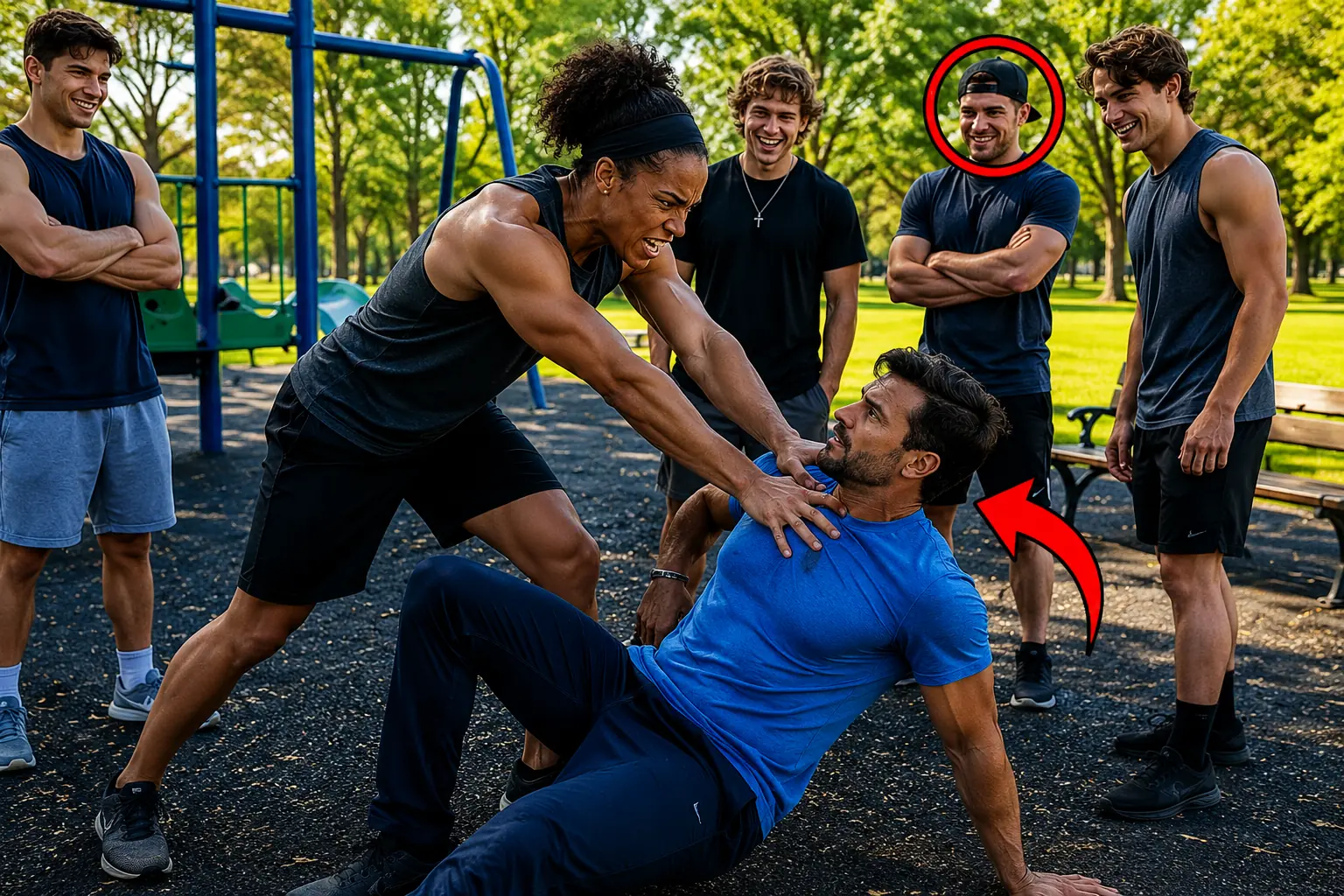
They wanted to feel big. They chose the wrong day, and they chose the absolute wrong father. Agrippa Fisher’s lower back throbbed with a dull, familiar rhythm. It was a metronome of pain ticking away every time he shifted his weight against the unforgiving wooden slats of the park bench. Tuesday evenings were always the hardest. The lumberyard drained whatever vitality he had managed to scrape together over the weekend, leaving him hollowed out, smelling faintly of pine resin and diesel exhaust. But Tuesday was also his evening with Larry, and Larry needed the park.
Agrippa watched his son through eyes narrowed against the fading glare of the sun. Larry was six, small for his age, with a mop of unruly brown hair and an intense, quiet focus. Right now, that focus was entirely dedicated to a bright yellow plastic dump truck, which he was meticulously filling with sand. The boy didn’t play like other children. There was no frantic running, no shrieking. He built. He organized. He found order in the dirt. Agrippa loved that about him, even as it worried him. The world wasn’t kind to quiet things.
Agrippa rubbed his jaw, his thick, calloused fingers tracing the faint, jagged line of scar tissue that hooked under his left eye. A souvenir from a life that felt like it belonged to another man. A man who used to step into steel cages under blinding halogen lights, breathing in the smell of canvas and sweat. A man who understood the brutal mathematics of human bodies. Now, the only math Agrippa cared about was calculating if he could stretch his paycheck to cover Larry’s new winter coat and the rising cost of groceries. He leaned back, stretching his legs. His left knee popped loudly.
The sound was a harsh reminder of his last professional bout seven years ago. A badly checked leg kick that had severed his ACL and essentially ended his career. He didn’t miss the violence. He didn’t miss the promoters, the weight cuts, or the taste of blood in the back of his throat. He just missed the money. The park was relatively empty. A few mothers sat near the swings, engrossed in their phones while their toddlers navigated the rubberized mats. The air was thick with the scent of freshly laid cedar mulch and the distant hum of rush hour traffic on the interstate. It was peaceful. Or at least it was supposed to be.