The first peach Samuel Bennett picked that morning was warm on one side and cool on the other. Dawn had reached the high branches of the orchard but not the ground, where the air still held the dampness of the previous night.
He turned the fruit slowly in his palm, studying the soft russet freckles across its yellow skin.
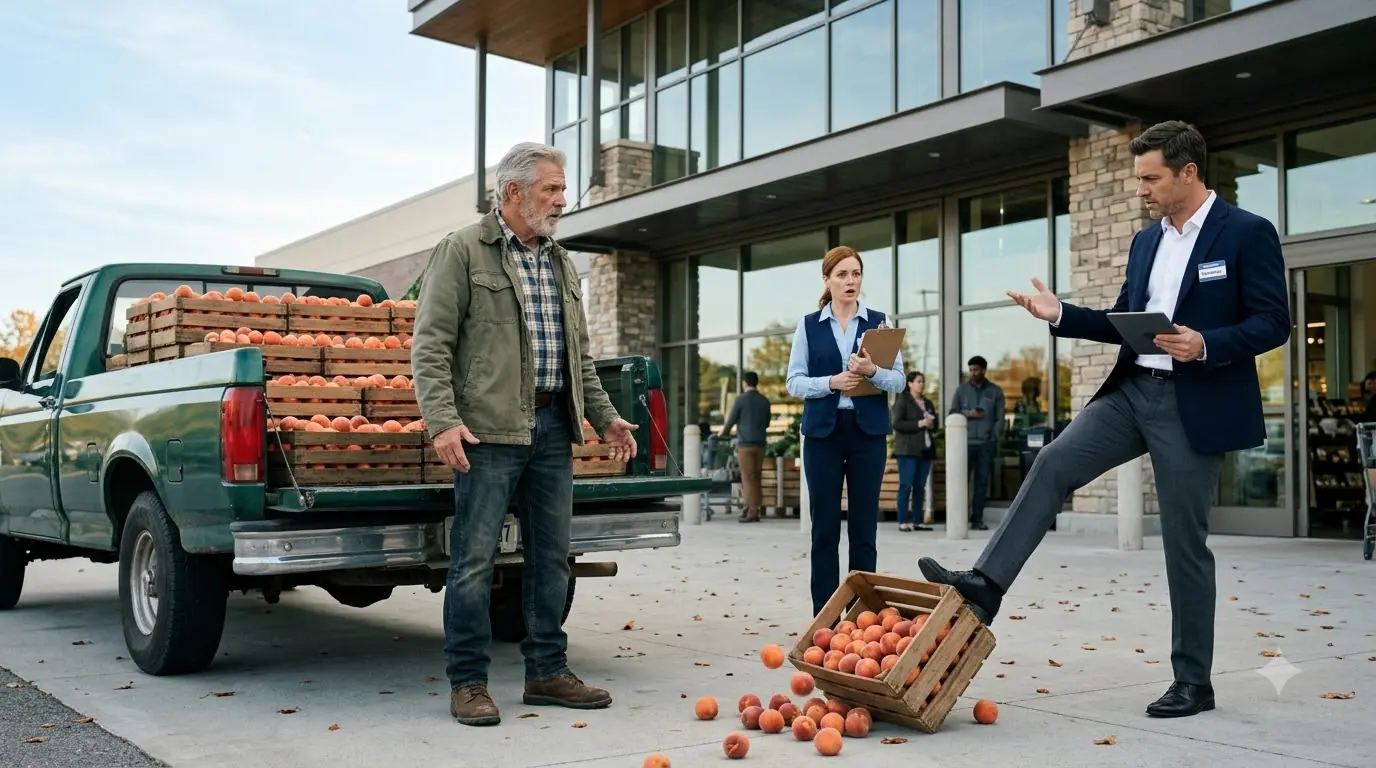
A person unfamiliar with the variety might have called those marks damage, but Samuel knew the difference between a scar left by weather and a wound that had reached the flesh.
He had spent most of his sixty-three years learning differences like that. He knew which branch would bend under a late frost, which trees needed another day before picking, and which workers could tell ripeness by the way a peach separated from its stem.
He also knew exactly how much money he had left to pay the twenty people who would be moving through those rows by sunrise. The amount had been sufficient until Bridgeville Markets deducted $6,800 from Heritage Growers' most recent settlement without giving anyone a clear explanation.
Samuel placed the peach in a small wooden crate rather than the commercial picking bin beside him. A handwritten label on the crate read ELEANOR GOLD, the name his wife had given to a variety they had spent twelve years selecting and refining on their farm. Eleanor had loved the peaches with imperfect skins. She said that fruit worth eating ought to be judged after someone had taken the trouble to cut it open.
She had died in February, just before the first full commercial harvest of the variety that carried her name. The orchard had entered spring without her voice, and Samuel had discovered how many ordinary things a person could miss without warning.
There were the pencils she kept sharpened in a kitchen jar, the precise way she folded packing tissue, and the little notes she used to slip into his jacket pockets when he left for a distant growers' meeting. Some mornings, he still reached for his phone to tell her what he had found on the trees before remembering there was no one to answer.
The orchard was part of Heritage Growers, a cooperative of fourteen family farms that supplied fruit and vegetables to all eighty-three Bridgeville Market stores in the region.
Samuel had helped organize it because small farms could not negotiate freight and shelf space alone without being pushed into prices that barely covered their labor. The cooperative had its disagreements, as any organization did, but its members shared responsibility for trucks, inspections, insurance, and claims. When one farm lost money unfairly, every other farm understood the warning.
That summer, the warnings had begun arriving with unusual frequency. A load would leave a farm in acceptable condition, arrive at a Bridgeville receiving dock, and be accepted according to the driver.
Days later, the settlement statement would list the same load as rejected for supplier fault, with a deduction large enough to erase the margin on several successful deliveries. The growers appealed, and the appeals returned marked resolved without a conversation or an explanation anyone could use.