The cane struck the courthouse floor with a hollow sound that seemed much louder than it should have been. Beatrice May Hayes paused at the gate to courtroom 302, adjusted the sleeve of her navy dress, and looked toward the two men seated beside the defense attorney.
She had spent seventy-two years learning how to keep her face composed when people expected her to break.
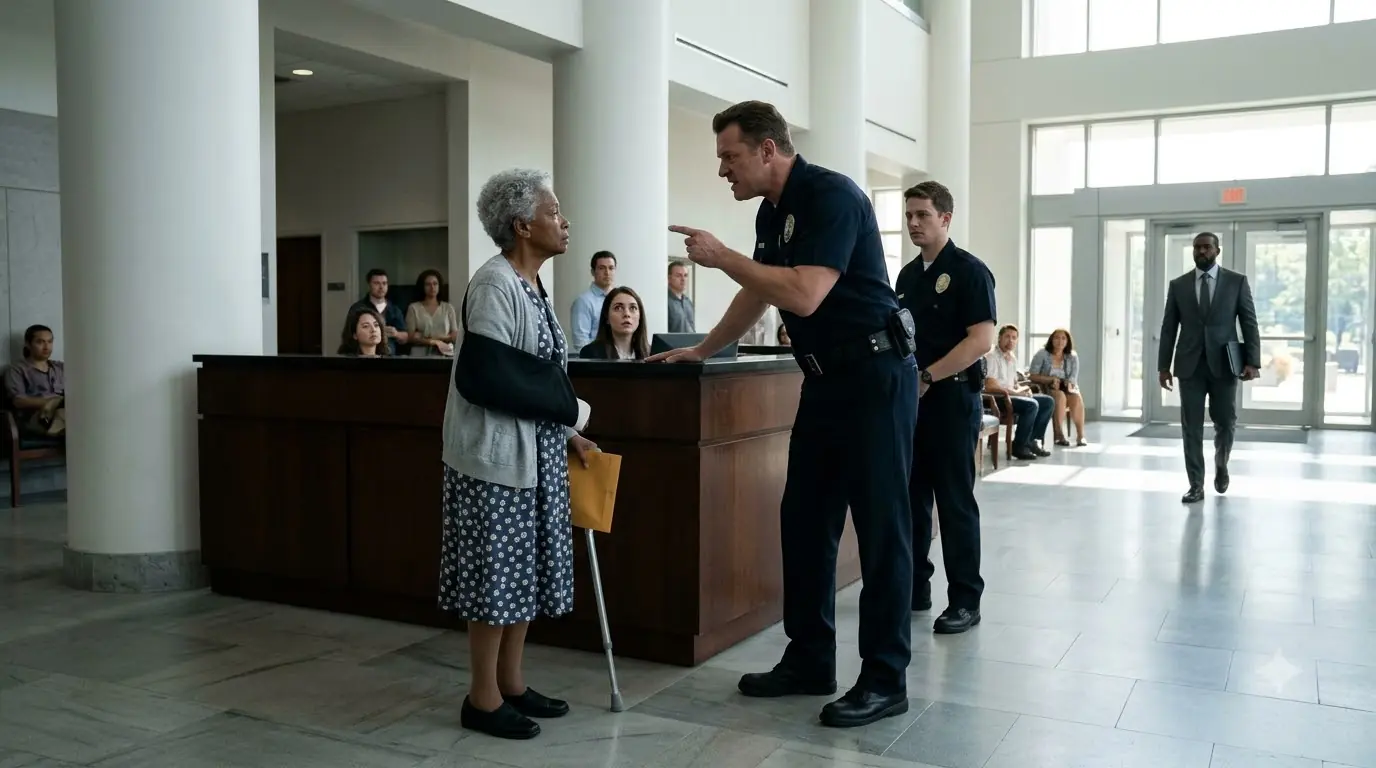
That morning, with a fractured collarbone still aching beneath her cardigan, the lesson had never felt more expensive.
Officer Thomas Stanton wore a charcoal suit that made him look smaller than the uniform Beatrice remembered. Officer David Reed sat beside him, his hands clasped so tightly that his fingertips had turned pale. Their attorney, William Bradley, was arranging documents in perfectly square stacks, while District Attorney Robert Clark searched through a briefcase overflowing with colored tabs. The room was full of reporters, church members, strangers, and people who had come because they wanted to see whether the law would finally look at what had happened on a wet stretch of Fifth Street.
A bailiff named Miller stepped forward and offered Beatrice his arm. She saw the gesture, appreciated it, and took the railing instead because she wanted to manage the single step into the witness box herself. When she sat down, she needed a moment for the pressure beneath her shoulder brace to settle. The microphone made a faint noise as Judge Wallace asked her to state her name, and Beatrice leaned close enough that no one would have to ask twice.
"Beatrice May Hayes," she said. The sound of her own name steadied her more than she expected. She heard a pen click at the defense table and felt a brief, unreasonable urge to turn toward it. Instead, she rested her good hand on the wood and remembered the night when the officers had spoken to her as if her name were not worth learning.
Four months earlier, August had settled over the city with the heavy humidity that made even the trees look tired. Beatrice lived in a narrow brick house on Willow Street, where her husband had planted two pecan trees the year their youngest son was born. The trees had grown tall enough to shade most of the porch, though one had recently begun dropping branches onto her flower beds. Her neighbor offered to cut it down every spring, and every spring Beatrice told him that the tree still had work to do.
Her husband, William, had died seven years earlier after a long illness that taught the family how slowly ordinary life could change. He had worked as a transit mechanic, belonged to Mount Zion Baptist Church, and believed that a person ought to leave a room slightly better than they found it. They had raised four boys in that house, often with too little money and too much noise. Beatrice still found herself setting a fifth plate at the table when all four sons came home for holidays, then stopping with her fingers on the cupboard door.
The oldest, Henry, ran a small roofing crew two counties away and called every Sunday after breakfast. Raymond worked for the school district, Marcus drove a postal route, and Jackson, the youngest, had joined the Army almost twenty-four years before the traffic stop. The brothers loved one another but expressed it differently, usually through arguments about practical matters no one had actually asked them to solve. Jackson was the quietest, the one who could spend an entire afternoon repairing a porch step without saying why he had come.