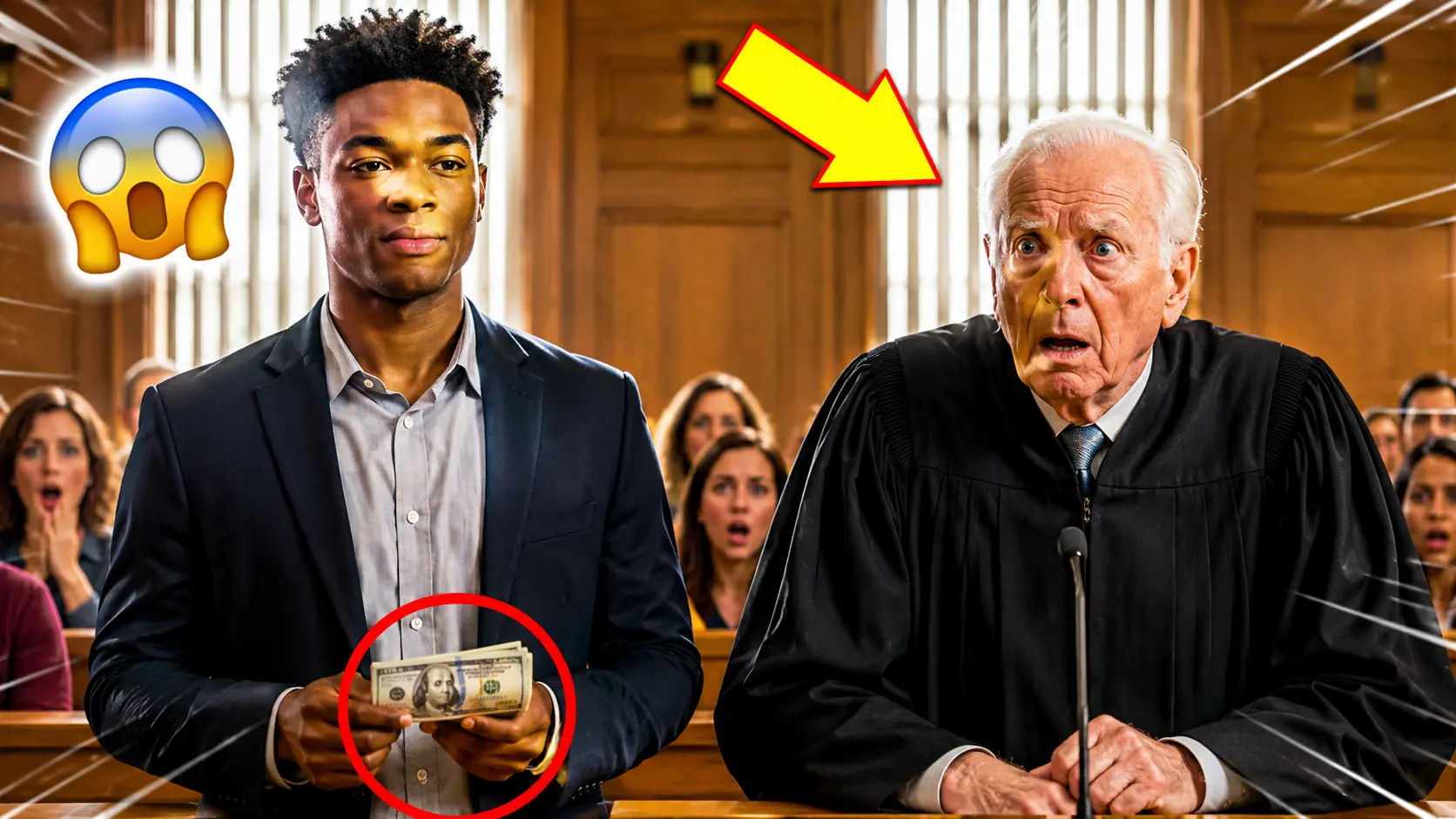
The courtroom froze. Richard Sterling, a partner at the city's most expensive law firm, smirked as he looked at the young man in the oversized gray hoodie standing at the defense table. Everyone, the bailiff, the clerk, and especially Judge Halloway, thought this was a joke. They thought he was a lost defendant from arraignment court, a thug who had wandered into a high-stakes corporate lawsuit. They were wrong. They didn't know that the man in the hoodie was holding a trap that would ruin them all. By the time he opened his mouth, it was already too late.
The air inside courtroom 4B of the Superior Court of Fulton County was stale, smelling faintly of floor wax and old paper. It was the smell of bureaucracy, or as Richard Sterling liked to call it, the smell of money. Richard adjusted the cuffs of his bespoke Italian suit. He glanced at his reflection in the screen of his iPad. At 55, he was the picture of legal dominance, silver hair perfectly coiffed, a jawline that had only softened slightly with age, and a reputation that terrified opposing counsel. He was the lead litigator for Sterling, Lockwood, and Pierce, the firm that handled problems for billionaires.
Today's problem was simple. It was an eviction case technically, but on a massive scale. His client, the Apex Horizon Development Group, needed to clear out a block of low-income housing in the historic West End to build a luxury condominium complex. They had crushed every homeowner in the area. Everyone had sold. Everyone had folded except for one, Mrs. Lucille Banks, an 80-year-old widow who refused to sign the deed to her dilapidated Victorian house.
Are we ready, Mr. Sterling? The young associate next to him whispered. Her name was Sarah, fresh out of Yale, and she looked nervous. Relax, Sarah, Richard said, his voice a smooth baritone. This is a formality. The woman doesn't even have a lawyer. She's claiming to represent herself pro se. It's like watching a toddler try to box with Mike Tyson. Judge Halloway will grant the summary judgment by lunch and we'll be eating steak at Chops by one.
Judge Frederick Halloway was a man who hated wasted time almost as much as he hated poverty. He sat on the bench flipping through the case file with aggressive impatience. He had a golf tee time at 3:00 p.m. and he intended to make it. Call the case, Judge Halloway barked. The clerk stood up. Civil action number 24 CV908, Apex Horizon Development versus Lucille Banks. Richard stood up, buttoning his jacket with a practiced grace. Richard Sterling for the plaintiff, your honor. We are ready to proceed with our motion for summary judgment. Very good, Mr. Sterling. The judge smiled. It was the smile of a conspirator.
And for the defendant? The courtroom was silent. The defendant's table was empty. Richard chuckled softly. It appears, your honor, that Ms. Banks has finally seen the light and decided not to waste the court's time. Typical, Halloway muttered. If the defendant is not present, I am inclined to rule in favor of the plaintiff. The double doors at the back of the courtroom swung open. Every head turned. Walking down the center aisle was not an 80-year-old woman. It was a young Black man, perhaps in his mid-20s. He was wearing faded jeans, scuffed Timberland boots, and a charcoal gray hoodie with the hood pulled partially up, obscuring his peripheral vision. He walked with a loose, rhythmic gait, his hands buried deep in his pockets.
The atmosphere in the room shifted instantly. The tension spiked. Richard Sterling's lip curled in distaste. The bailiff, a burly man named Officer Miller, who had been working this courtroom for 20 years, stepped into the aisle, his hand instinctively dropping to his belt. Hey, son, Officer Miller barked. Wrong room. Arrangements are downstairs in 2B. This is civil court. The young man didn't stop. He didn't even look at the bailiff. He kept walking, his eyes fixed straight ahead on the empty defense table. I said, hold it. Miller stepped in front of him. The young man stopped. He slowly pulled his hands out of his pockets. He wasn't holding a weapon. He was holding a stack of files held together by a rubber band and a beaten-up leather satchel.
I'm not looking for arrangements, the young man said. His voice was quiet, raspy, but clear. Judge Halloway slammed his gavel. Young man, remove that hood in my courtroom immediately, and explain why you are interrupting these proceedings before I have you thrown in a holding cell for contempt. The young man reached up and pulled the hood back. He had short-cropped hair and weary eyes, dark circles underneath them, as if he hadn't slept in a week. He looked at the judge, then at Richard Sterling. I apologize for the attire, your honor, he said. He walked around the bailiff, who looked too confused to stop him, and placed his battered satchel on the defendant's table. My suit is at the cleaners. I didn't expect the hearing to be moved up two hours without proper notice.
Richard Sterling let out a loud, incredulous laugh. Excuse me, who do you think you are? The young man turned to Richard. For a second, the thug persona vanished. His posture straightened, his chin lifted. I am Julian Banks, he said. I am the grandson of Lucille Banks, and I am the counsel of record for the defense. Silence. Absolute heavy silence filled the room. Then Richard Sterling started laughing again. It was a cruel, patronizing sound that echoed off the mahogany walls. Counsel of record? Richard mocked, turning to the gallery where a few junior associates were watching. Your honor, this is absurd. This is clearly a delay tactic. The grandson? Does he even have a law degree, or did he watch a few episodes of Law and Order?
Judge Halloway looked over his spectacles, his face red with irritation. He felt disrespected. In his court, lawyers wore Brooks Brothers, not Fruit of the Loom. Mr. Banks, the judge said, his voice dripping with condescension. This is a court of law, not a community center meeting. You cannot simply walk in here and declare yourself counsel. Unless you are a licensed attorney admitted to the state bar, you are engaging in the unauthorized practice of law, which is a crime. Now step back from the table. Julian didn't move. He opened his leather satchel and pulled out a single crisp piece of paper. State bar number 99 AU 401, Julian recited from memory, not looking at the paper. Admitted to practice in the superior courts, the court of appeals, and the state supreme court as of six months ago. He slid the paper across the polished wood toward the clerk.
The clerk, a middle-aged woman named Brenda, picked it up hesitantly. She typed the number into her terminal. Her eyes widened slightly. She looked up at the judge and nodded. It's active, your honor. Julian Tobias Banks. Good standing. Richard Sterling stopped laughing. He frowned, looking Julian up and down. A lawyer? This kid? He looks like he should be serving Richard coffee, not serving him motions. Affirmative action case, Richard thought immediately. Probably went to some online law school. Fine, Judge Halloway grunted, clearly disappointed he couldn't have Julian arrested. So, you passed the bar. Congratulations. That doesn't excuse your disrespect for this institution. You are improperly dressed.
Local rule 4.2 states that counsel must be dressed in professional business attire, Julian said calmly. However, the urgency of the plaintiff's ex parte motion to expedite this hearing, which was filed at 4:50 p.m. yesterday, made it impossible for me to retrieve my court attire before the 8:00 a.m. start time, unless the court prefers to grant a continuance so I can change. Julian looked at the judge. It was a dare. Delay the case or let me stay. Halloway knew Sterling wanted this done today. Motion for continuance denied, the judge snapped. We are proceeding. But consider yourself warned, Mr. Banks. One step out of line, one breach of protocol, and I will have you removed. Understood, your honor. Julian sat down. He looked small behind the large oak table.
Richard Sterling buttoned his jacket and walked to the podium. He decided to crush the kid immediately. No mercy. Your honor, Richard began, his voice booming. This case is simple. The defendant, Lucille Banks, does not own the land in question. We have submitted a title search dating back 40 years showing a break in the chain of ownership. The land belongs to the city which sold it to my client. Ms. Banks is a squatter, a trespasser. We are asking for an immediate order of ejectment. Richard turned to look at Julian, expecting the young man to be frantically shuffling papers. Julian was sitting perfectly still. He wasn't taking notes. He was staring at Richard.
And Richard added, improvising to humiliate the opponent. Since opposing counsel is new to the profession, perhaps he isn't aware that without a counter-affidavit filed prior to this hearing, he has no standing to argue facts. He forfeited the case before he even walked in the door. Richard smirked. It was a technical trap. Procedural law 101. If you don't file the paper denying the facts by the deadline, you lose. Period. The plaintiff is correct, Judge Halloway said, looking at Julian with a bored expression. Mr. Banks, I don't see a counter-affidavit in the file. Do you have one? I do not, Julian said. Then you have admitted to the plaintiff's facts, the judge said, picking up his pen to sign the order. Case closed. Mr. Sterling, prepare the order.
Wait, Julian said. He didn't shout. He just said it with such authority that the judge's hand froze. Excuse me? Halloway glared. Julian stood up. He picked up the thin stack of files bound by the rubber band. Mr. Sterling cited civil practice rule 56 regarding summary judgment, Julian said, his voice dropping an octave, becoming sharper. But he conveniently forgot to mention rule 56F. If the party opposing the motion cannot present facts essential to justify opposition due to concealment by the moving party, the court must refuse the application for judgment. Richard rolled his eyes. Concealment? Oh, please. What are we hiding? A deed to a shack? No, Julian said. He walked around the table, moving into the center of the well. You're hiding the fact that the city official who sold you the land two months ago didn't exist.
The room went quiet again. Objection, Richard roared. That is slanderous, baseless, and ridiculous. I have the affidavit of the city clerk right here, Julian said, holding up a document. There is no Marcus Thorne employed by the land registry. The signature on the deed of sale to Apex Horizon is a forgery, and under state law, a forged deed conveys no title. Julian dropped the document on the plaintiff's table. It landed with a heavy slap. So, Julian continued, looking up at the judge, his eyes hard as flint. My grandmother isn't a squatter. Your client is the trespasser, and since you filed a motion based on a forged instrument, I believe that's a felony fraud on the court, Mr. Sterling.
Richard Sterling picked up the document. His hands, usually steady as a surgeon's, trembled slightly. He looked at the signature. He looked at Julian. The boy in the hoodie wasn't looking at the floor anymore. He was looking Richard dead in the eye. And for the first time in 10 years, Richard Sterling felt a cold drop of sweat slide down his back. The trap had been set, and he had just stepped right into it. The recess was meant to be 15 minutes, but Richard Sterling managed to drag it out to an hour, claiming he needed to authenticate the documents Julian had slapped onto the table. Judge Halloway, looking less like a conspirator and more like a man realizing his golf game was ruined, granted the time, but warned Richard that his patience was thinning.
Richard stormed out of courtroom 4B, his entourage of three junior associates trailing behind him like terrified ducklings. He didn't stop until they reached the private attorney conference room on the second floor. A glass-walled fishbowl designed for high-end settlements. He slammed the door so hard the glass pane rattled in its frame. How? Richard hissed, turning on Sarah, the Yale graduate. How did a kid in a hoodie find a forgery that we missed? Or worse, how did he manufacture it so quickly? Sarah was shaking. Mr. Sterling, I ran the title search myself. The name on the deed was Marcus Thorne. There is no Marcus Thorne, Richard shouted, throwing his iPad onto the table. That's what the kid just proved. It's a ghost employee, which means the Apex Horizon Group bought that land from a phantom. If that deed is fake, the Banks woman still owns the house. And if we try to evict her based on a fake deed, we aren't just losing the case. We're looking at RICO charges.
He paced the small room, his Italian leather shoes clicking aggressively on the tile. He needed a pivot. He needed to kill the messenger. Get me distinct information on Julian Banks, Richard ordered, pulling out his phone. I want to know where he buys his underwear. I want to know if he has unpaid parking tickets. I want to know if he cheated on a math test in the third grade. He's representing himself as a man of the people. Fine. Let's find the dirt. Richard dialed a number he rarely used. It wasn't a lawyer. It was a man named Saul Vargo, a private investigator who used to be a detective for the NYPD until he was fired for procedural violations, which was a polite way of saying he planted evidence. Vargo, the voice on the other end rasped. It's Sterling, Richard said, watching Julian Banks through the glass wall of the conference room. Julian was sitting on a bench in the hallway, eating an apple, looking entirely unbothered. I have a problem. A gnat. His name is Julian Banks. Young Black male, early 20s, claims to be a lawyer. I need you to rip his life apart. I want to know who really bankrolled his law school. I want to know about drug arrests, illegitimate children, gambling debts. Anything I can use to discredit him before Judge Halloway.
Consider it done, Vargo grunted. Give me an hour. Richard hung up and straightened his tie. He looked at his reflection in the darkened window. He was Richard Sterling. He had destroyed CEOs, senators, and union leaders. He wasn't going to let a grandmother's charity case beat him. He turned to his associates. We go back in there. We delay. We argue that the affidavit he produced is hearsay until the city clerk testifies in person. We drag this out until Vargo finds the smoking gun. Then we bury him. But as they walked back toward the courtroom, Richard felt a strange sensation in his gut. He looked at Julian again. The young man wasn't reading legal briefs. He was just sitting there observing the hallway with a calm, predatory focus. When Julian saw Richard approaching, he didn't look away. He offered a small, polite nod. It wasn't a nod of respect. It was the nod a chess player gives when they know mate is in five, and the opponent just doesn't see it yet.
The afternoon session was a bloodbath, but not the kind Richard expected. Judge Halloway was irritable. He had missed his tee time. Mr. Sterling, the judge groaned, rubbing his temples. Mr. Banks has presented a sworn affidavit from the city clerk stating the signature is a forgery. You have presented nothing, just bluster. Your honor, Richard said, sweating slightly now. We require time to cross-examine this clerk. We believe Mr. Banks may have coerced this statement. Julian stood up. He had taken off the hoodie, revealing a simple white t-shirt underneath. It wasn't professional, but somehow on him it looked like armor. I have no objection to a continuance for the purpose of testimony, Julian said smoothly. However, given the fraudulent nature of the plaintiff's claim, I would ask the court to order the plaintiff to post a bond. If my grandmother is being harassed by a billion-dollar corporation using fake documents, she deserves security. Reasonable, Judge Halloway said. Plaintiff will post a bond of $100,000 to cover the defendant's potential legal fees and damages. We reconvene in 48 hours. Friday morning, 9:00 a.m. Do not be late. The gavel banged.
Richard felt the blood rush to his face. $100,000 was pocket change to his client, but the humiliation was priceless. He had just been ordered to pay a bond to a woman he was trying to evict. As the court adjourned, Richard signaled for his associates to leave. He waited for Julian near the exit. He needed to end this before Friday. If Vargo didn't find dirt, Richard would have to use the universal solvent: money. Julian was packing his battered satchel when Richard approached him. Mr. Banks, Richard said, putting on his best senior partner smile. It was a smile that looked like a shark baring its teeth. Impressive show today. A bit theatrical with the hoodie, but effective. Julian didn't look up. I aim to please. Look, let's cut the crap, Richard said, lowering his voice. You're young. You're hungry. I looked up your grandmother's property. It's worth what? $200,000 on a good day. The house is falling apart. It's a money pit. Richard reached into his jacket pocket and pulled out a checkbook. Apex Horizon is a generous company, Richard lied. They don't want to fight a widow. They just want to build. I am authorized right now to offer you a settlement. We will pay your grandmother $500,000 for the property. That's double the market value. She can move into a nice assisted living facility in Florida. And you? Richard wrote a figure on a separate piece of paper and slid it across the table. It was the number $50,000. This is a consulting fee for you, Richard whispered. For facilitating the deal. You walk away with $50,000, your grandma is rich, and this case goes away. No risk of losing on Friday. No risk of me destroying your career before it starts.
Julian finally stopped packing. He looked at the check. Then he looked at the paper with the $50,000 figure. He picked up the paper. $50,000, Julian mused. That's a lot of money for a guy in a hoodie. It's a starter kit for a real life, Richard pressed, sensing weakness. Buy a suit. Rent an office. Stop playing pretend. Julian smiled. It was a genuine smile which made it terrifying. Mr. Sterling, Julian said softly. You think I'm doing this for the house? Everyone has a price, kid. True, Julian said, but you can't afford mine. Julian took out his phone. He tapped the screen and turned it around to show Richard. It was a recording app. The waveform was moving. State bar rule 8.4, Julian recited perfectly. It is professional misconduct for a lawyer to engage in conduct involving dishonesty, fraud, deceit, or misrepresentation. Offering a side payment to opposing counsel to settle a case without the client's full written consent. That's bribery, Richard. Richard's face went pale. You recorded this in the courthouse? Georgia is a one-party consent state for recording conversations, Julian said, putting the phone back in his pocket. I learned that in 1L. And just so we are clear, my grandmother isn't moving. Not for $500,000. Not for $5 million. Because that house is the only thing she has left of my grandfather, and I promised her nobody would take it. Julian zipped up his bag. See you Friday, Richard. Bring your checkbook. You're going to need it for the sanctions. Julian walked away, leaving Richard Sterling standing alone in the empty courtroom, the hum of the air conditioning sounding like a countdown.
Thursday was a nightmare for Richard Sterling. He sat in his corner office on the 40th floor overlooking the Atlanta skyline. The view usually calmed him, reminding him that he was a god in this city. Today, it just made him feel vertigo. His phone buzzed. It was Vargo, the investigator. Tell me you found something, Richard snapped. Tell me he's a fraud. I found something, Vargo said. His voice sounded unsettled. But it's not what you think. It's weird, Mr. Sterling. Really weird. Spit it out. Okay. So, I ran Julian Banks. Born in Atlanta, raised in the West End. Father died when he was 10. Mother worked two jobs. Poor kid. Smart though. Valedictorian of his high school. He got a full ride to Columbia University in New York for undergrad. Okay, so he's book smart, Richard dismissed. What about law school? Where did he go? Who paid for it? That's the blank spot, Vargo said. He went to Columbia Law, graduated top of his class three years ago. Summa cum laude, Order of the Coif, editor of the law review. The kid was a superstar. But here's the kicker. He didn't take a job. Richard frowned. What do you mean he didn't take a job? Graduates from Columbia Law get courted by every firm in the country. We pay them starting salaries of $215,000 just to breathe. I checked the alumni records, Vargo continued. He had offers from Wachtell, Cravath, Skadden, all the big New York heavy hitters. He turned them all down. Every single one. He fell off the map for two years. Doing what? Nobody knows, Vargo said. But I dug into his bank records. Don't ask me how. For the last two years, he's been receiving a monthly stipend. Not a salary. A stipend from a blind trust listed as the Marshall Foundation.
Richard froze. The name triggered a distant memory from his own law school days. The Marshall Foundation, Richard whispered. You mean Thurgood Marshall? No, Vargo said. Joseph Marshall, the Supreme Court Justice, the one who retired five years ago, the great dissenter, the strictest, most brilliant legal mind of the last century. Richard felt a cold knot tighten in his stomach. Justice Joseph Marshall was a legend. He was known for taking only one clerk every five years. A prodigy he would handpick and mentor in total seclusion. It was an urban legend in the legal world. They were called Marshall's ghosts. Lawyers trained not just to practice law, but to dismantle it and rebuild it. They were weaponized intellectuals. You're telling me, Richard said, his voice trembling, that the kid in the hoodie is a Marshall ghost? I'm telling you that two days ago, Julian Banks received a wire transfer of $10,000 from the estate of Joseph Marshall with the memo line, "Go get them."
The phone slipped from Richard's hand and landed on his mahogany desk. He stared at the device. He wasn't fighting a street lawyer. He wasn't fighting a rookie. He was fighting the secret protégé of one of the greatest legal minds in American history. Julian Banks hadn't wandered into that courtroom by accident. He hadn't worn the hoodie because he was poor. He wore the hoodie to lower Richard's guard, to make Richard arrogant, to make Richard sloppy. It was a hustle, a classic, brilliant hustle. The intercom on his desk buzzed. It was Sarah. Mr. Sterling, the partners are asking for an update. The Apex Horizon executives are here. They want to know why the eviction hasn't happened yet. Richard rubbed his face. He looked 10 years older than he had that morning. Tell them, Richard stammered. Tell them we have a complication. He looked at the court documents on his desk. The forgery Julian had found wasn't just a lucky break. Julian had likely analyzed the entire corporate structure of Apex Horizon before he even filed his appearance. He was five steps ahead. Richard needed a nuclear option. If he couldn't beat Julian on the law and he couldn't bribe him, he had to destroy the client. He picked up his cell phone and dialed Vargo back. Forget the kid, Richard said, his voice dark and desperate. The kid is untouchable. We go after the grandmother. Dig up the tax records on the house, find a code violation, find a gas leak. I don't care what it is. If we can condemn the house as unsafe, the city evicts her for us and the lawsuit becomes moot. That's dirty, Sterling, Vargo said. Even for you. The woman is 80. I don't care, Richard screamed, losing his composure completely. I have a $20 million development deal on the line. Burn the house down if you have to, figuratively speaking. Just find me a reason to get her out before Friday morning. All right, Vargo sighed. I'll make some calls to the code enforcement office. I know a guy who owes me a favor. Inspector Graves. Do it, Richard hissed. He hung up. He walked to the window and looked out at the city. He felt powerful again. The law was just a game, and he knew how to cheat better than anyone. Julian Banks might be a genius, but he was still playing by the rules. Richard Sterling had stopped playing by the rules a long time ago. But Richard didn't know one thing. Down on the street, sitting on a park bench, Julian Banks was listening to the conversation. He took the earbuds out of his ears. He looked at the high-tech directional microphone he had planted in the conference room during the recess. A trick he hadn't learned at Columbia, but from his neighbors in the West End. Julian's eyes were cold. Code enforcement, Julian whispered to himself. Predictable. He picked up his phone and dialed the number. Hey, Grandma, Julian said, his voice instantly softening into warmth. Yeah, I'm coming over for dinner. Listen, I need you to pack an overnight bag. No, nothing is wrong. We're just going to have a slumber party at Aunt Mae's tonight. Trust me. I'm going to catch a rat.
Thursday night in the West End was usually quiet, save for the distant hum of traffic from I-20. But at 2:00 a.m., a dark sedan with no headlights rolled slowly down the street where Lucille Banks lived. Inside the car sat Inspector Graves. He was a man who had long ago traded his conscience for a gambling habit. Richard Sterling paid well, and Graves needed the money. He parked two blocks away and walked to the Victorian house carrying a heavy tool bag. The house looked dark, abandoned. Graves smirked. Easy money, he thought. He hopped the low fence and crept around to the side of the house where the gas meter was located. His instructions were specific. Find a leak. If you can't find one, make one. Graves knelt in the mud. He pulled out a heavy wrench. He wasn't going to cause an explosion. Just enough damage to release the smell of mercaptan, enough to get a reading on his meter that would justify an immediate emergency condemnation order. Once that red sticker was on the door, the fire department would evacuate the premises, and under city Ordinance 114-102, no one could inhabit the structure until repairs were made. Repairs that Apex Horizon would ensure never happened. He clamped the wrench onto the valve. He applied pressure. The metal groaned. Snap. A small hiss of gas escaped. The smell of rotten eggs filled the air immediately. Graves pulled out his gas detector. It beeped wildly. He snapped a photo of the reading with his phone. Then he pulled out the bright orange sticker. Danger. Do not enter. Condemned. He slapped it onto the front door. Job done, Graves whispered. He turned to leave, walking back toward the fence.
Click. A floodlight blinded him. It came from the tree line of the neighbor's yard. Graves threw his hands up, dropping his wrench. Who's there? Silence. Then a second light flicked on from the porch of the house across the street. Then a third from the roof of the Banks house itself. He was illuminated like a performer on a stage. Inspector Graves, a voice projected from the darkness. It wasn't a shout. It was amplified by a speaker system. You just violated Georgia code 16-7-23, criminal damage to property in the second degree. And code 16-5-60, reckless conduct. Graves squinted against the glare. Police? I'm city enforcement. I'm doing my job. No, the voice said. It was Julian. You're doing Richard Sterling's job. From the shadows of the porch, Julian Banks stepped out. He was holding a high-definition video camera. Next to him stood a woman in a police uniform, but she wasn't a patrol officer. She wore the gold badge of the major crimes unit. Detective Holloway, Julian said, gesturing to the officer. Did you get all that? Detective Holloway nodded grimly. Every frame, counselor. Graves panicked. He bolted for the fence. I wouldn't, the detective warned, her hand resting on her holster. We have the perimeter secured. You can come with us quietly and tell us who sent you, or you can take the fall for attempted arson. Your choice, Graves. Graves looked at the fence, then back at the detective. He slumped his shoulders. It was Sterling, Graves spat out, his voice shaking. He said he needed the old woman out by Friday. Julian lowered the camera. He didn't look triumphant. He looked sad. Save it for the judge, Julian said. See you in court. Friday morning, 9:00 a.m.
The atmosphere in courtroom 4B was electric, vibrating with the kind of energy usually reserved for murder trials, not eviction cases. Word had spread through the Fulton County legal grapevine like wildfire. The rumor was that a Marshall Ghost, a protégé of the legendary Justice Marshall, was fighting a partner from Sterling, Lockwood, and Pierce. Every seat in the gallery was filled. Junior associates from rival firms, law students skipping class, and even a few clerks from other courtrooms had slipped in to watch the blood sport. Richard Sterling entered the courtroom like a gladiator entering the Coliseum. He looked rested, his skin glowing from a morning facial, his suit a charcoal pinstripe that cost more than most people's cars. He didn't know about the arrest the night before. Graves had been booked under a John Doe hold to keep the system quiet, a favor Julian had called in from his days interning at the district attorney's office. Richard slammed his briefcase onto the plaintiff's table with a heavy thud, commanding attention. He glanced at the defense table. Julian Banks was there, but the hoodie was gone. Today, Julian wore a navy blue three-piece suit. It was perfectly tailored, hugging his frame with sharp precision. His shirt was a crisp, blinding white, and his tie was a deep crimson silk. He no longer looked like a kid from the neighborhood. He looked like a shark in deep water.
All rise, the bailiff bellowed. Judge Halloway took the bench. He looked tired, his eyes scanning the packed room with suspicion. Civil action 24 CV908. Are we ready to proceed? We are, your honor, Richard said, standing up and buttoning his jacket. He projected an air of sorrowful duty. And I have a preliminary matter that sadly disposes of this case immediately. Richard walked to the bench holding a document high in the air like a weapon. Your honor, as of 2:30 a.m. last night, the property in question was declared uninhabitable by city code enforcement. There is a verified dangerous gas leak. It is a severe public safety hazard. He placed the report on the judge's bench. My client, Apex Horizon, is deeply concerned for the welfare of the defendant, Richard lied smoothly, his voice dripping with fake empathy. We cannot in good conscience allow an 80-year-old woman to live in a bomb. We ask for an immediate order of possession so my client can enter the premises and remediate the hazard. For her own safety, she must be evicted today. Judge Halloway frowned, putting on his reading glasses. He scanned the report. A gas leak? That is serious. Code 114-102 is clear. He turned to Julian, his expression stern. Mr. Banks, your grandmother is living in a death trap. I cannot allow her to stay there. The law requires immediate evacuation. The courtroom held its breath. Richard Sterling smirked at the gallery. It was over. He had won.
Julian stood up slowly. He didn't approach the bench. He didn't look at the judge. He looked directly at Richard. Your honor, Julian said, his voice calm, resonant, and filling the room without a microphone. Mr. Sterling is correct about one thing. There was a gas leak. It was created at exactly 2:15 a.m. Created? The judge looked up, confused. What are you implying? I am not implying anything, Julian said, his eyes hardening. I am stating a fact. The leak was caused by a heavy-duty pipe wrench wielded by city inspector Thomas Graves. Richard Sterling laughed. It was a nervous, high-pitched sound. Objection. This is absurd. Counsel is launching conspiracy theories because he has no case. This is slander against a city official. I would like to call my first witness, Julian interrupted, his voice cutting through Richard's laughter like a knife. Detective Angela Holloway of the Atlanta Police Department, Major Crimes Unit. The double doors at the back of the courtroom swung open with a bang. Detective Holloway walked in, her face grim. But she wasn't alone. She was guiding a man in handcuffs, shuffling in an orange jumpsuit, his ankles shackled. It was Inspector Graves. He looked pale, sweaty, and terrified. A collective gasp swept through the gallery. The stenographer stopped typing, her mouth open. Richard Sterling's face drained of all color. He gripped the edge of the table, his knuckles turning white. What is the meaning of this? Judge Halloway demanded, standing up. Why is a witness in chains? This man, Julian said, pointing an accusing finger at Graves, was arrested last night while sabotaging my client's home. He has confessed to the police. He has confessed to the district attorney. And now he is here to confess to this court.
Julian walked up to the witness box as Graves was sworn in. Mr. Graves, Julian said softly, leaning on the railing, you are under oath. Who hired you to break the gas valve at 1402 Oak Street? Graves looked at Richard Sterling. Richard's eyes were wide, telegraphing a frantic message. Shut up. Don't say a word. I'll fix this. But Graves saw the detective standing by the door. He saw the judge's furious face. He knew Richard couldn't save him. It was him, Graves croaked, his voice shaking. He pointed a trembling finger at the plaintiff's table. Richard Sterling. The room erupted. Lawyers were whispering frantically. People stood up in the back rows to get a better look. Order. Order. Judge Halloway banged his gavel so hard it sounded like a gunshot. He called me on Tuesday, Graves continued, tears welling in his eyes. He said he needed a reason to evict the old lady before the hearing today. He offered me $5,000 to find a violation. When I couldn't find one, he told me to make one. Lies, Richard screamed, losing all composure. He lunged toward the witness box. He's lying. This is a setup. I never spoke to this man in my life. Sit down, Mr. Sterling, the judge roared, or I will have you shackled to your chair. I have proof, Julian said calmly. He turned back to his table and picked up his smartphone. He connected it to the courtroom's AV system. Your honor, I would like to introduce defense exhibit B, an audio recording made two days ago in this very courthouse. A conversation between myself and Mr. Sterling. I did not consent to that, Richard yelled, sweat pouring down his face. That is inadmissible. Georgia is a one-party consent state, Julian countered coldly. Play the tape. The speakers crackled. And then Richard Sterling's voice, arrogant, distinctive, and undeniable, filled the room. We will pay your grandmother $500,000. And you? $50,000. It's a starter kit for a real life. Everyone has a price, kid. The gallery went silent. Richard looked like he was going to be sick, but Julian wasn't done. And defense exhibit C, Julian said. Recorded via directional microphone outside the conference room yesterday. He tapped the screen. Burn the house down if you have to. Just find me a reason to get her out before Friday morning. The silence that followed was heavy, suffocating. It was the sound of a career dying.
Judge Frederick Halloway was trembling, not with fear, but with a righteous volcanic rage. He was a man who believed in the sanctity of the law above all else, and what he had just heard was the ultimate desecration. He slowly took off his glasses. He looked at Richard Sterling with a look of pure disgust. Mr. Sterling, the judge said, his voice dangerously low. In my 20 years on the bench, I have never, never witnessed such a vile abuse of the legal system. You have attempted to defraud this court. You have solicited a felony crime against an elderly woman. You have attempted to bribe opposing counsel. The judge turned to the bailiff. Officer Miller, secure the doors. Officer Miller, the burly bailiff who had tried to throw Julian out on the first day, unclipped the handcuffs from his belt. He walked toward the plaintiff's table. What? Richard gasped, backing away. You can't. I'm a partner at Sterling, Lockwood, and Pierce. You can't arrest me in a civil hearing. I am holding you in direct criminal contempt, Judge Halloway shouted, pointing his gavel at Richard like a weapon. And I'm referring this matter immediately to the district attorney for charges of solicitation of arson, burglary, witness tampering, and racketeering. You are not leaving this room a free man. Richard looked at his associates. They had all backed away from him, terrified of being associated with the blast radius. He looked at the gallery. Hundreds of eyes judged him. Officer Miller grabbed Richard's arm. He twisted it behind his back with practiced force. Click, click. The sound of the handcuffs locking was louder than any shout. Richard Sterling, Officer Miller recited. You have the right to remain silent. As Richard was dragged out of the well, his expensive suit bunched up, his dignity shredded. He looked back at the defense table one last time. Julian Banks was standing there, hands in his pockets, watching the spectacle. He didn't smile. He didn't gloat. He simply looked at Richard with a calm, terrifying intensity. He nodded once. It wasn't a nod of respect. It was the nod of a grandmaster who had seen the checkmate 10 moves ago. The lion was in the cage, and the kid in the hoodie held the keys.
The fall of Richard Sterling wasn't just a stumble. It was a demolition. Two hours after being dragged out of courtroom 4B, Richard sat in a holding cell at the Fulton County Jail. His bespoke suit jacket had been taken, his tie removed to prevent self-harm, and his Italian leather shoes replaced with orange plastic sandals. The man who had dined with senators the night before was now sharing a steel bench with a man arrested for stealing copper wire. He used his one phone call to dial the managing partner at Sterling Lockwood and Pierce. It's a misunderstanding, Richard pleaded into the receiver, his voice cracking. I need bail. I need the firm's PR team. The line crackled with a cold silence. Richard, the managing partner said, his voice distant. The video is already on Twitter. It has 3 million views. The audio of you bribing the kid is playing on CNN. We're holding an emergency vote right now. You're out. Don't call this number again. The line went dead. Richard stared at the phone. For the first time in his life, his money couldn't buy a way out.
By Monday, the story of the hoodie lawyer had gone national. News vans were parked three deep along the street in the West End. Reporters were desperate for an interview with the mysterious legal prodigy who had taken down a titan of the Atlanta bar. They dug into Julian's past, uncovering the truth about his time at Columbia and the Marshall ghost rumors. Headlines splashed across the screens. David in Denim: How a Pro Bono Lawyer Toppled a Giant. The Ghost of the Courtroom: Who Is Julian Banks? The Apex Horizon Development Group, terrified of the public backlash, didn't just pull out of the West End project, they fled. In a frantic press conference, their CEO announced they were donating the land they had already purchased to the city for the creation of the Lucille Banks Community Park. It was a desperate attempt to save their stock price, which had plummeted 15% overnight.
A week later, Julian sat in the office of the district attorney. Across the table sat Richard Sterling, looking gaunt and unshaven. He was there to discuss a plea deal. Solicitation of arson, the DA read from a file. Bribery, racketeering. You're looking at 20 years, Richard. Richard didn't look at the DA. He looked at Julian, who was sitting in the corner, observing as a representative for the victims. Why? Richard whispered. You could have taken the money. You could have joined my firm. You're a genius, kid. You belong in a corner office, not wherever you come from. Julian leaned forward. That's the difference between us, Richard. You used the law as a sword to cut people down. I use it as a shield to protect them. You forgot where the power really comes from. It doesn't come from the 40th floor. It comes from the truth. Richard Sterling signed the plea agreement. He would serve 8 years in federal prison and was permanently disbarred. The shark had lost his teeth.
Two months later, the media circus had moved on to the next scandal, but the West End was changed forever. On a humid Tuesday morning, a small crowd gathered on Martin Luther King Jr. Drive. It wasn't a protest. It was a grand opening. Lucille Banks stood front and center, wearing her Sunday best, a wide-brimmed hat shading her eyes. She held a pair of giant ceremonial scissors. Next to her stood Julian. He wasn't wearing a hoodie, but he wasn't wearing a $5,000 suit either. He wore a simple button-down and slacks, looking every bit the neighbor he was. Above them, a fresh hand-painted sign hung over the door of a renovated storefront. The Banks Legal Clinic. Equal Justice Under Law. Go ahead, Grandma, Julian smiled. Lucille snipped the ribbon. The crowd—neighbors, shop owners, the plumber who fixed the gas line—erupted in cheers. Judge Halloway was there, standing quietly in the back. He had sent a private letter of apology to Julian weeks earlier, and today he simply nodded respectfully before slipping away. He knew the torch had been passed.
As the crowd mingled, eating cake and celebrating, Julian walked into his new office. It was small. The desk was secondhand. The chairs were mismatched, but it felt right. The bell above the door jingled. Julian looked up. A young woman stood there looking terrified. She was clutching a stack of eviction papers, holding the hand of a small child. She looked exactly the way Julian's mother had looked 20 years ago. I don't have any money, the woman stammered, looking at the floor. But I heard about you. I heard you help people. Julian walked around the desk. He didn't ask for a retainer. He didn't check her credit score. He pulled out a chair. Sit down, Julian said gently. My name is Julian. Tell me your story. He opened his notebook. The ghost of Columbia was gone. The Guardian of the West End had arrived.
Years later, legal scholars would study the case of Apex Horizon versus Banks. They would analyze the maneuvers, the trap, and the brilliant use of the forged deed. But in the barbershops and church pews of Atlanta, they didn't talk about the legal precedents. They talked about the day the judge thought he saw a thug but met a king. They talked about the young man who proved that even when the system is rigged, one person with a sharp mind and a brave heart can flip the board. And every time a developer thought about bulldozing a neighborhood for a quick profit, they would remember the name Richard Sterling. They would check the deed twice and they would ask one terrified question. Is Julian Banks on the case?