The first thing Daniel Harris noticed was the way the flight attendant looked at his wife. It was not a stare exactly, and it was not the startled recognition that sometimes followed when someone knew Alana from a conference or a medical journal.
It was a quick inventory, from the neat braids pulled behind Alana's shoulders to the expensive but unassuming leather bag in her hand, followed by a glance toward the first-class boarding passes.
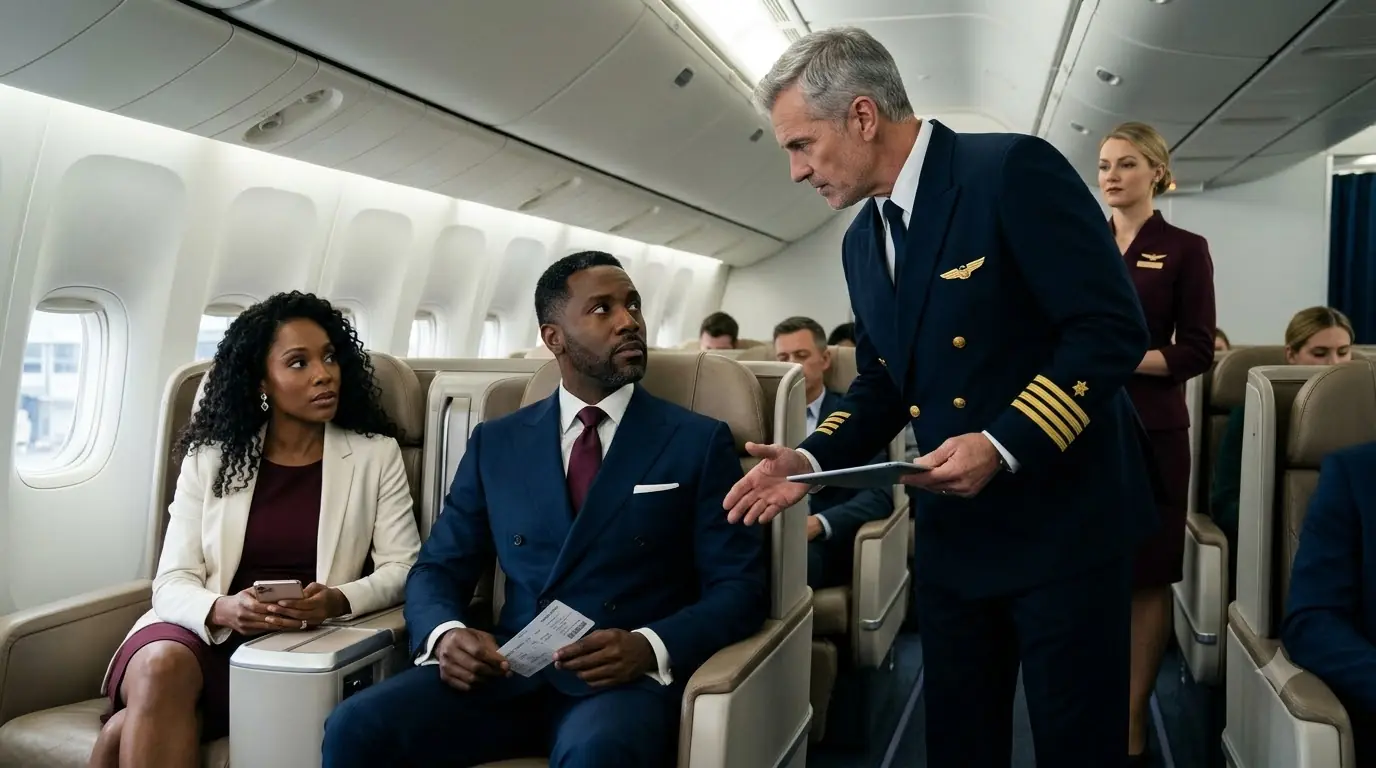
Daniel had spent twenty years learning to notice the moment a professional stopped collecting facts and started believing an assumption. He recognized that moment before the attendant said a word.
They were supposed to be on their way to Paris. The tickets had been paid for, the hotel arranged, and the anniversary dinner reservation confirmed at a restaurant overlooking the Seine. Fifteen years of marriage had earned them something better than a stolen weekend between work emergencies. For two weeks, Daniel had promised, neither of them would answer an office call unless an actual aircraft was in danger. He had even practiced saying no in the mirror, which had made Alana laugh so hard that she nearly dropped her coffee.
At Houston's George Bush Intercontinental Airport, the departure concourse was crowded with families pulling bright suitcases, travelers in business clothes speaking quietly into phones, and airport employees moving with the brisk purpose of people who had learned to read the needs of a room at a glance. Daniel liked airports when he was off duty. He liked the precision of a baggage tug turning neatly beneath an aircraft wing, the measured sequence of ramp signals, and the sight of ground crews performing work most passengers never thought about. Airports reminded him that complicated systems could function beautifully when people respected every part of them. He had devoted his adult life to the uncomfortable truth that the same systems could also fail in ways no instrument panel could predict.
Alana nudged him as they passed a row of windows overlooking the international gates. "You've inspected that baggage loader three times," she said. "Is there something you need to tell me about our vacation?" Daniel slipped his hand into hers and smiled. "I'm appreciating the scenery." She raised an eyebrow.
"The scenery in Paris usually has fewer hydraulic hoses." He laughed, and for a moment he felt as young as he had when he first met her.
They had met at a conference in Atlanta, where Daniel had asked a difficult question about a proposed crew-fatigue model and Alana had answered it without consulting her notes. He was thirty-three then, careful with words, newly promoted, and convinced that anyone who found his work interesting must be as strange as he was. Alana was finishing a research appointment that combined aerospace engineering with medical training, pursuing the difficult intersection of human health and aircraft operations. Afterward, she had found him at the back of the conference room and asked whether he was always that skeptical or only when he liked someone's presentation. He had told her he was skeptical because he liked it, and she had asked him to dinner.