Tiffany looked up. Her eyes traveled from his cap to his jacket to his shoes, slow, deliberate, the way someone scans something they've already decided to throw away.
"What you want?" Not a question, a verdict.
"A cortado, please, and a slice of banana bread."
Tiffany tilted her head. A cortado? She turned to Jenna. He wants a cortado.
Jenna snorted without looking up. Tiffany turned back to him, speaking slowly, the way adults speak to children who aren't theirs.
"Sir, do you know what a cortado is? Or do you just want a regular black coffee? Keep it simple."
Harold felt the heat climb his neck. He kept his voice level. "I know what a cortado is. I'd like one, please."
Tiffany shrugged, punched it in, didn't ask his name, just scribbled BC on the cup. He didn't ask what it stood for. He already knew.
He paid cash. Tiffany took the bills with two fingers like she was pulling a receipt from a wet floor, dropped his change on the counter instead of his hand. Three coins rolled. He picked them up one by one.
He took his cup and the banana bread to a corner table, sat down. The cortado was lukewarm. The banana bread was good. Actually, it was excellent. The best thing on the menu, and he hadn't even known it existed.
He took a bite. And that's when he heard it.
Jenna leaned across the register toward Tiffany. She didn't lower her voice, didn't even glance in his direction, as if he wasn't worth the effort of discretion.
"Yo, did you see him count those coins off the counter? That was painful."
Tiffany laughed. "I don't know why people like that come in here. This isn't a shelter. Go to McDonald's."
"He's just going to sit there all day, watch, take up a table, buy one coffee, never tip. They never do."
"At least he didn't bring his whole family. Last week that one woman brought three kids. Three. And let them run around like animals. I told Craig if we don't start filtering, this place is going to look like a bus station."
Jenna nodded. "For real. We need to protect the vibe. Some people just don't fit the brand, you know?"
Harold set the banana bread down. His hand was steady, but his jaw was locked. He stared at the table. A coffee ring stained the wood. Probably been there for weeks. Nobody had wiped it.
He pulled out his phone, opened the notes app, typed one word, "rot." Then he sat there for another 45 minutes, watched, listened, saw Tiffany greet every young, well-dressed white customer with a smile and a "Hey, babe."
Saw her hand a middle-aged black man his drink without a word or eye contact. Saw Jenna turn away from an elderly woman to take a selfie.
He finished his cortado, left the cup on the table, walked out. Nobody said goodbye. Nobody said thank you. Nobody even noticed he left.
Harold stood on the sidewalk outside his own store. The store with his motto on every cup. "Everyone deserves a seat."
He pulled out his phone and called his VP of operations. "Ray, clear my schedule for next week, all of it."
"Harold, you've got the investor lunch on Thursday." "All of it, Ray. I'm going back in. Not as corporate, not as the founder, as nobody. And I need you to make sure not a single person in that building knows."
That night Harold didn't sleep. He sat in his apartment, a two-bedroom in Capitol Hill, modest for a man who owned 40 stores, and replayed every second. The eye roll. The two-finger bill grab. The coins dropped on the counter. BC on the cup. The word filtering. The laughter that wasn't meant to be funny. It was meant to be a wall.
He'd spent 52 years on the other side of walls like that. He thought he'd built a company that didn't have them. He was wrong.
At 6:00 in the morning, he called Ray. "I need a cover. New hire, transfer trainee from the Springs location. Name in the system, Henry Williams. Can you build that?"
Ray exhaled. "Harold, I can have legal and HR handle this in 48 hours. We pull the tapes, fire the two cashiers, done."
"If I fire two cashiers, I fix one store. I want to know if the whole house is sick, Ray."
Silence. "How long?" "4 days."
"And if someone recognizes you?" Harold almost laughed. "I just spent an hour in my own store. The woman behind the register looked me in the eye and told me to sit on the curb. Trust me, nobody in that building has ever looked at the about page."
He spent the next 2 hours preparing. Trimmed his beard shorter, uneven the way a man looks when he doesn't own a mirror he likes. Went to Goodwill and bought a gray polo, dark jeans, scuffed work shoes.
Then he printed the employee handbook and read all 40 pages for the first time in 2 years. What he found made him sit down. The customer experience protocol was detailed, specific. Greeting standards, service timelines, complaint resolution. All written out.
But there was no enforcement mechanism, no audits, no anonymous reporting channel. The entire protocol relied on one assumption, that people would follow it because it was right.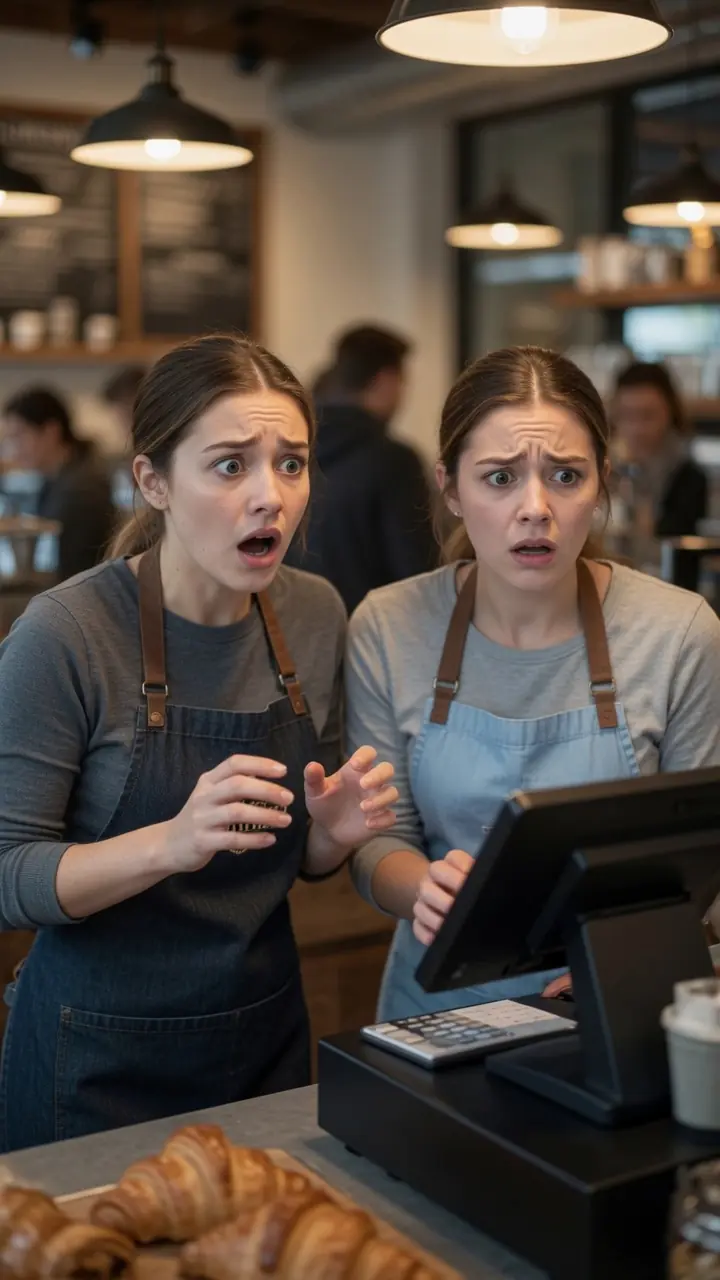
Harold closed the handbook. He thought about his mother, how she used to say, "Good intentions don't survive bad management." She was always right.
He pulled up the flagship shift schedule. Tiffany Grant and Jenna Moore were on every peak shift, Tuesday through Saturday, 10:00 a.m. to 6:00 p.m., the golden hours.
Emma Sullivan was scheduled for 5:00 a.m. to 8:00 p.m., then 9:00 p.m. to close. Every single week for 4 months straight. The earliest mornings and the latest nights. No peak hours, no visibility, no tips worth counting. 4 months of dead zone shifts. That wasn't bad luck. That was a pattern.
Harold put on the gray polo, laced the scuffed shoes. The man in the bathroom mirror didn't look like the CEO of a 40-store chain. He looked like exactly the kind of person Tiffany Grant would tell to sit on the curb. Good.
He drove to the flagship and parked in the alley. The employee entrance was a narrow metal door, paint chipping, no camera. The difference between the Instagram perfect storefront and this neglected back door told him everything about where this company's attention had gone.
The break room smelled like stale coffee and microwave popcorn. A corkboard cluttered with shift notices. And on a shelf in the corner between a stack of napkins and a bottle of sanitizer, a ceramic tip jar, hand-painted. Sunflowers on one side, the Iron Brew logo on the other. Done carefully with love. Nearly empty.