At My Sister’s Engagement Dinner, My Parents Pretended I Didn’t Matter
The engagement dinner was supposed to be about my sister.
I knew that before I walked through the doors.
I had no intention of stealing her moment.
I didn’t wear my uniform.
I didn’t mention my rank.
I didn’t tell anyone that I had postponed an important meeting and driven nearly four hours just to be there.
I wore a simple navy dress, tied my hair back, and sat quietly at the far end of the table.
Yet somehow, before the appetizers had even arrived, my parents found a way to turn me into the evening’s entertainment.
My mother lifted her wineglass and smiled at my sister’s future in-laws.
“You’ve already met our successful daughter, Olivia,” she said proudly. “And this is our other daughter, Emma.”
She gestured toward me as though she had just remembered I was in the room.
“Emma works at the military barracks. She’s basically a janitor there.”
A few people gave uncomfortable smiles.
My father laughed.
“We’ve more or less given up on her.”
The room went silent.
My sister stared down at her plate.
Her fiancé looked horrified.
I could feel twelve pairs of eyes settling on me.
Then the groom’s mother slowly reached into her handbag.
She removed a gold challenge coin and placed it on the table.
The sound it made against the china was soft.
But it cut through the silence like a gunshot.
She looked directly at me.
“Wait,” she said. “Aren’t you Major Emma Carter?”
My mother’s smile disappeared.
My father stopped laughing.
And for the first time in my life, my parents realized they had humiliated the wrong daughter in front of exactly the wrong people.
Growing up, my sister Olivia was the daughter my parents understood.
She liked dresses, dance lessons, school plays, and being the center of attention.
She smiled for photographs without being asked.
She knew how to charm adults.
She was beautiful in the effortless way that made strangers turn their heads.
I was different.
I preferred running shoes to heels.
I joined the debate team instead of the cheerleading squad.
I repaired my own bicycle, read military history books, and spent weekends volunteering at a local veterans’ center.
My parents didn’t know what to do with me.
My mother often said I had “wasted perfectly good features by refusing to be feminine.”
My father believed success was measured by how impressive your life sounded at a dinner party.
To him, respectable careers included lawyer, surgeon, executive, and business owner.
Anything involving public service was something people did when they lacked ambition.
When I told them I wanted to attend a military academy, they laughed.
Not cruelly at first.
They genuinely thought I was joking.
My father leaned back in his chair and said, “You don’t even like camping.”
My mother asked whether I was trying to rebel.
Olivia, who was fourteen at the time, told me the uniforms looked ugly.
I applied anyway.
When I received my acceptance letter, my parents refused to help with the paperwork.
My mother said she didn’t want to encourage a phase.
My father said I would be home within six months.
At graduation, I stood among hundreds of cadets searching the audience for familiar faces.
My parents weren’t there.
They had attended Olivia’s regional dance competition instead.
She placed fourth.
For years afterward, my mother displayed the photograph of Olivia receiving a participation ribbon on the mantel.
My academy graduation photograph stayed inside a drawer.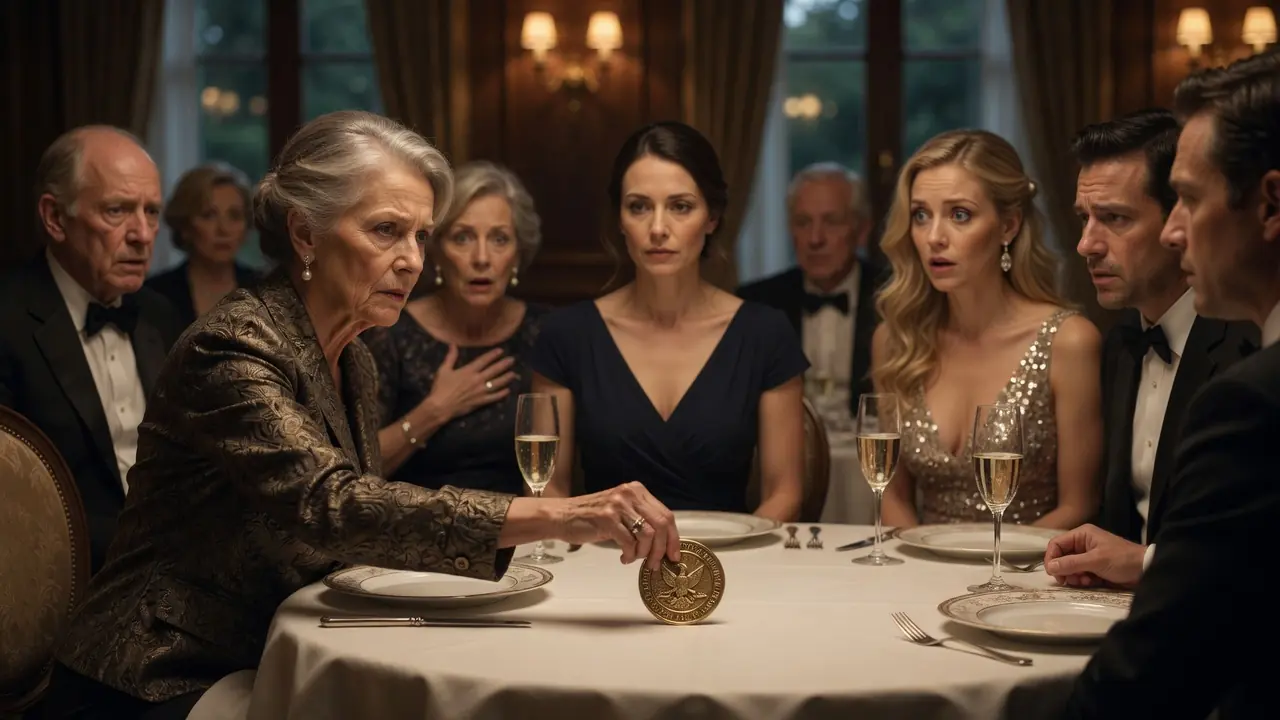
My parents knew I had joined the military.
They simply never tried to understand what I did.
In their minds, military life consisted of marching, cleaning, taking orders, and living in ugly buildings.
Whenever I explained that I worked in logistics and operational planning, my father’s eyes glazed over.
When I was promoted, he said, “That’s nice.”
When I completed advanced training, my mother asked whether the base cafeteria was still serving terrible food.
When I was assigned to oversee a complex infrastructure operation involving several hundred personnel, my parents told their friends I was “helping out at a barracks.”
At first, I corrected them.
Eventually, I stopped.
It was exhausting trying to convince people to respect something they had already decided was beneath them.
Olivia never openly mocked my career.
But she never defended it either.
She floated through our family dynamics by staying agreeable.
When Mom made insulting comments, Olivia changed the subject.
When Dad laughed at me, she stared at her phone.
She had learned that life was easier when their disappointment was directed at someone else.
Usually me.
I loved her anyway.
Or at least, I kept telling myself I did.
Three months before the engagement dinner, Olivia called me crying.
I was in my office reviewing a supply report when her name appeared on my screen.
“Emma,” she said, “Daniel proposed.”
She sounded so happy that I stood up from my desk.
“That’s amazing.”
“He did it at the botanical gardens. There were lights everywhere, and his mother helped him plan it.”
I smiled.
Olivia had always dreamed about a beautiful proposal.
“I’m happy for you.”
“You’ll come to the engagement dinner, right?”
“Of course.”
She hesitated.
“Mom’s organizing it.”
That was the warning.
Our mother never organized a small event.
She produced performances.
Every birthday, anniversary, graduation, and holiday became an opportunity to display the family she wanted people to believe we were.
Olivia fit perfectly into that display.
I did not.
“What does she have planned?” I asked.
“A private dining room at Bellamy House.”
Bellamy House was one of the most expensive restaurants in the city.
My parents had celebrated their anniversary there several years earlier and talked about the bill for months.
“Daniel’s parents are coming,” Olivia continued. “His sister too. Mom wants everything to be perfect.”
“I’ll behave.”
“That’s not what I meant.”
“It sounded like what you meant.”
She sighed.
“Can you just not argue with Dad?”
“I never start those arguments.”
“I know. But you always correct him.”
“Usually because he says something untrue.”
“Emma, please. It’s one night.”
That sentence stayed with me.
It was one night.
Her night.
So I promised myself I would smile, avoid sensitive topics, and leave early if necessary.
I even requested permission to attend in civilian clothing because I knew my mother would accuse me of trying to draw attention if I arrived in uniform.
The week before the dinner, my commanding officer scheduled an operational briefing for the same afternoon.
I considered canceling.
Then Olivia sent me a photograph of her dress and wrote:
You’re still coming, right?
I rearranged the briefing.
I drove through heavy traffic.
I arrived seven minutes late.
My mother still greeted me as if I had interrupted the ceremony.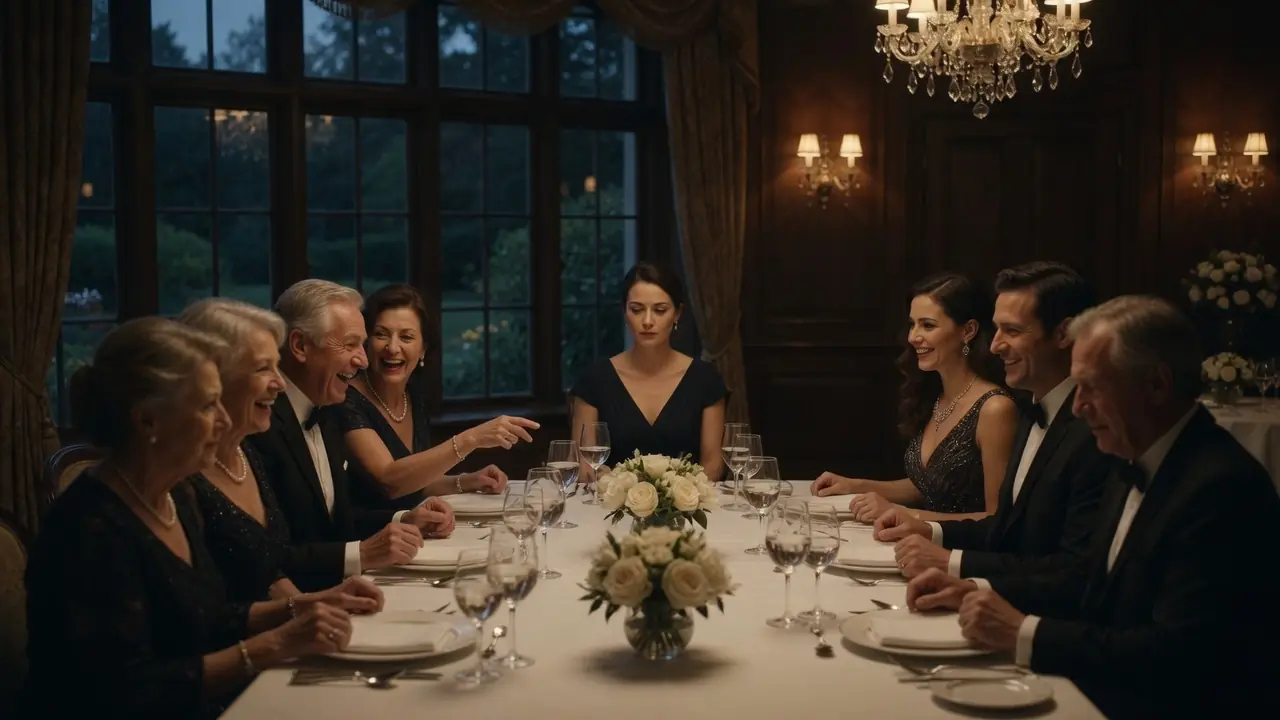
Bellamy House had marble floors, white tablecloths, and waiters who seemed trained to appear before you realized you needed something.
The private dining room overlooked a garden lit with tiny golden lights.
Olivia looked beautiful in a pale green dress.
Daniel stood beside her, holding her hand.
He was taller than I expected, with an easy smile and slightly nervous posture.
“Emma,” Olivia said, hugging me. “You made it.”
“I said I would.”
Daniel shook my hand.
“I’ve heard a lot about you.”
I glanced at Olivia.
“Hopefully some of it was good.”
He laughed.
“Olivia said you work for the military.”
“That’s one way to put it.”
Before he could ask more, my mother appeared.
She looked me up and down.
“You wore navy?”
“It’s a dress.”
“It’s very severe.”
“It was either this or camouflage.”
Daniel laughed again.
My mother didn’t.
She pulled me aside.
“Please remember tonight is about Olivia.”
“I’m aware.”
“Daniel’s family is extremely accomplished.”
“And?”
“And your father and I would like to make a good impression.”
I stared at her.
“What exactly are you worried I’ll do?”
She lowered her voice.
“Just don’t make every conversation about the military.”
“I rarely talk about work.”
“You become defensive.”
“Usually after someone insults my career.”
My mother smiled tightly.
“See? Defensive.”
Then she walked away.
Daniel’s parents arrived a few minutes later.
His father, Richard Hale, was a retired federal judge.
His mother, Margaret, was elegant without seeming cold. She wore a dark red jacket and carried herself with the calm confidence of someone who never needed to announce her importance.
Daniel’s younger sister, Sophie, worked as a civil engineer.
The introductions began.
My mother spoke about Olivia’s work as a luxury real estate agent.
She mentioned the properties Olivia had sold, the clients she represented, and the awards her agency had given her.
My father talked about Daniel’s legal career and how proud he must make his parents.
When it was my turn, my mother said only, “This is Emma.”
Margaret smiled and shook my hand.
“Daniel mentioned you serve.”
“I do.”
“In what capacity?”
Before I could answer, my mother interrupted.
“Nothing glamorous. She works on a military installation.”
Margaret looked at me again.
“What kind of work?”
“Operations and logistics,” I said.
My father waved his hand.
“She moves supplies around.”
I didn’t correct him.
I had promised Olivia.
We took our seats.
I was placed near the end of the table beside Sophie.
Olivia and Daniel sat in the center with our parents and his.
The seating arrangement looked accidental.
It wasn’t.
For the first twenty minutes, the evening went smoothly.
We talked about the wedding, possible venues, and whether Olivia wanted a spring or autumn ceremony.
My mother described a historic estate she had already chosen.
Olivia said she and Daniel had not decided yet.
My father ordered an expensive bottle of champagne without asking anyone.
Sophie asked me about military logistics.
She was genuinely interested.
I explained that my team coordinated personnel, equipment, transportation, and emergency readiness across multiple facilities.
“That sounds incredibly complicated,” she said.
“It can be.”
“How many people are under your command?”
I hesitated.
Before I could answer, my father leaned across the table.
“Emma doesn’t command anyone.”
I looked at him.
He smiled as though he were correcting a child.
“She works behind the scenes.”
Sophie frowned.
“Operations officers usually have significant responsibility.”
My father shrugged.
“She likes to exaggerate.”
I felt the familiar heat rise behind my eyes.
I took a drink of water.
Across the table, Olivia gave me a pleading look.
Don’t react.
So I didn’t.
Dinner arrived.
My mother spent most of the main course comparing Olivia and me.
She spoke about how Olivia had always been social.
How she had built a successful career through charm and intelligence.
How she understood people.
Then she described me as “independent to a fault.”
My father said that was a polite way of calling me stubborn.
Daniel tried to change the subject.
“So, Emma, where are you currently stationed?”
My mother answered for me.
“At some barracks outside the city.”
“It’s a regional command center,” I said.
She laughed.
“That sounds much fancier than it is.”
Margaret stopped cutting her food.
Her eyes moved from my mother to me.
I noticed, but I didn’t understand why.
My father continued.
“Emma always did enjoy making simple things sound important.”
“Dad,” Olivia said softly.
“What?” he replied. “We’re family. We can be honest.”
Honest.
That word nearly made me laugh.
My parents had spent years telling people a fictional version of my life because the truth didn’t fit their idea of success.
My work had taken me across the country and overseas.
I had coordinated evacuation support during a major natural disaster.
I had managed emergency supply routes when normal infrastructure failed.
I had helped redesign readiness procedures that were later adopted across multiple installations.
Two years earlier, I had received a commendation for leadership during a severe operational crisis.
My parents knew almost none of that.
Not because it was classified.
Because they never asked.
During dessert, my mother stood to make a toast.
She praised Daniel.
She praised the Hale family.
She called Olivia “the daughter every parent dreams of.”
Then she looked toward me.
I should have known what was coming.
“And of course,” she said, smiling, “Olivia’s sister Emma is here too.”
A few people turned toward me.
My mother continued.
“She works at the military barracks. Mostly maintenance and support.”
My fork stopped halfway to my plate.
“That isn’t accurate,” I said quietly.
She ignored me.
“She’s basically a janitor there.”
Daniel’s expression changed.
Sophie stared at my mother.
Olivia’s face went pale.
My father laughed loudly.
“We’ve basically given up on her.”
My mother gave him a playful tap on the arm.
“Oh, stop.”
But she was smiling.
They both were.
It wasn’t an accidental insult.
It was a performance they had rehearsed for years.
Only this time, they had a new audience.
My father lifted his glass.
“At least one of our daughters turned out well.”
No one laughed.
The silence spread across the table.
I placed my fork down carefully.
I could have corrected them.
I could have listed every promotion, every qualification, every person who trusted me with their safety.
But I suddenly felt tired.
I had spent nearly two decades defending my life to people who had no interest in understanding it.
So I did something they weren’t expecting.
Nothing.
I picked up my napkin, placed it beside my plate, and prepared to leave.
That was when Margaret Hale reached into her handbag.
The challenge coin was gold, with a dark blue edge and an eagle engraved in the center.
She placed it on the table.
My eyes dropped to it immediately.
I recognized the insignia.
Three years earlier, I had led a multi-unit coordination team during a training operation involving civilian emergency agencies.
Margaret had been part of a federal advisory delegation observing the exercise.
At the closing ceremony, senior personnel had been given commemorative coins.
I remembered meeting her.
Briefly.
She had asked several precise questions about evacuation planning and interagency communication.
At the time, I assumed she was simply another observer.
Now she looked at me with sudden recognition.
“Wait,” she said.
The room was completely still.
“Aren’t you Major Emma Carter?”
My mother’s mouth opened.
My father’s glass remained frozen in his hand.
I glanced at the coin.
“Yes, ma’am.”
Margaret leaned closer.
“I knew it. You commanded the emergency logistics group during Operation Northbridge.”
“I coordinated the joint support element.”
“You rebuilt the entire movement plan after the primary route failed.”
“We had a good team.”
Margaret shook her head.
“My husband and I attended the final briefing. General Walters specifically recognized your leadership.”
Richard Hale looked at me with interest.
“You’re that Major Carter?”
My father set his glass down.
“What do you mean, that Major Carter?”
Margaret turned toward him.
“She was responsible for coordinating thousands of personnel and critical supplies across three operational zones.”
The color drained from my father’s face.
My mother laughed nervously.
“There must be some confusion.”
“There isn’t,” Margaret said.
Her tone was calm, but every word landed sharply.
“I remember Major Carter very well.”
She looked back at me.
“You were promoted afterward, weren’t you?”
“Several months later.”
Sophie stared at me.
“You’re a major?”
“Yes.”
“How many people do you oversee?”
“Directly and indirectly, it varies. Currently, a little over four hundred.”
My mother gripped the back of her chair.
“Four hundred?”
I nodded.
Daniel looked at Olivia.
“Did you know this?”
Olivia didn’t answer.
That was answer enough.
My father recovered first.
“Well,” he said, forcing a smile, “the military gives out impressive titles.”
Richard Hale raised an eyebrow.
“A major is not a decorative title.”
“I’m only saying civilian work is different.”
“Of course it is,” Margaret replied. “Most civilian executives are not responsible for operational readiness or human lives.”
My father’s smile collapsed.
My mother sat down.
She leaned toward me.
“Why didn’t you tell us?”
I stared at her.
“I did.”
“No, you didn’t.”
“I told you when I was promoted.”
“You said you’d received a new position.”
“I said I had been promoted to major.”
She looked confused.
“I thought that was just another internal level.”
I almost laughed.
“You never asked.”
My father looked around the table.
“Emma has always been very private.”
“That’s not true,” I said.
His eyes narrowed.
I continued.
“I invited you to my academy graduation. You didn’t come.”
My mother looked embarrassed.
“Olivia had a competition.”
“I invited you to my first promotion ceremony. You said military events were boring.”
“We were busy.”
“I sent you the article about the emergency operation. Dad replied with a thumbs-up emoji.”
Daniel lowered his eyes.
Olivia began twisting her engagement ring.
My mother whispered, “This is not the time.”
“You introduced me as a janitor.”
“I was making a joke.”
“No,” I said. “You were making sure everyone at this table understood which daughter you believed was worth respecting.”
Olivia finally spoke.
“Emma, please.”
I looked at her.
She had tears in her eyes.
“Please don’t ruin tonight.”
The words struck harder than I expected.
I had driven four hours to support her.
I had rearranged an operational briefing.
I had sat silently while our parents mocked me.
And somehow, my refusal to accept more humiliation was what threatened to ruin the evening.
“I’m not ruining anything,” I said.
“Mom made a stupid joke.”
“She has been making that joke for fifteen years.”
“She didn’t know.”
“You knew.”
Olivia went still.
Daniel turned toward her.
“You knew she was a major?”
Olivia swallowed.
“Yes.”
The entire table became quiet again.
Daniel looked genuinely shocked.
“Why didn’t you tell me?”
“It never came up.”
“You told me she cleaned barracks.”
My heart dropped.
I hadn’t known that.
Daniel continued.
“You said your sister had joined the military after failing to find a real career.”
Olivia’s face crumpled.
“I was repeating what Mom says.”
“That doesn’t make it better.”
My mother reached for Olivia’s hand.
“This night is about you, sweetheart. Don’t let Emma turn it into a trial.”
Margaret’s expression hardened.
“Your daughter isn’t turning it into anything.”
My mother looked offended.
“I beg your pardon?”
“You publicly degraded her in front of strangers. Now you’re blaming her because the truth embarrassed you.”
Richard gently placed his hand over Margaret’s.
But he didn’t disagree.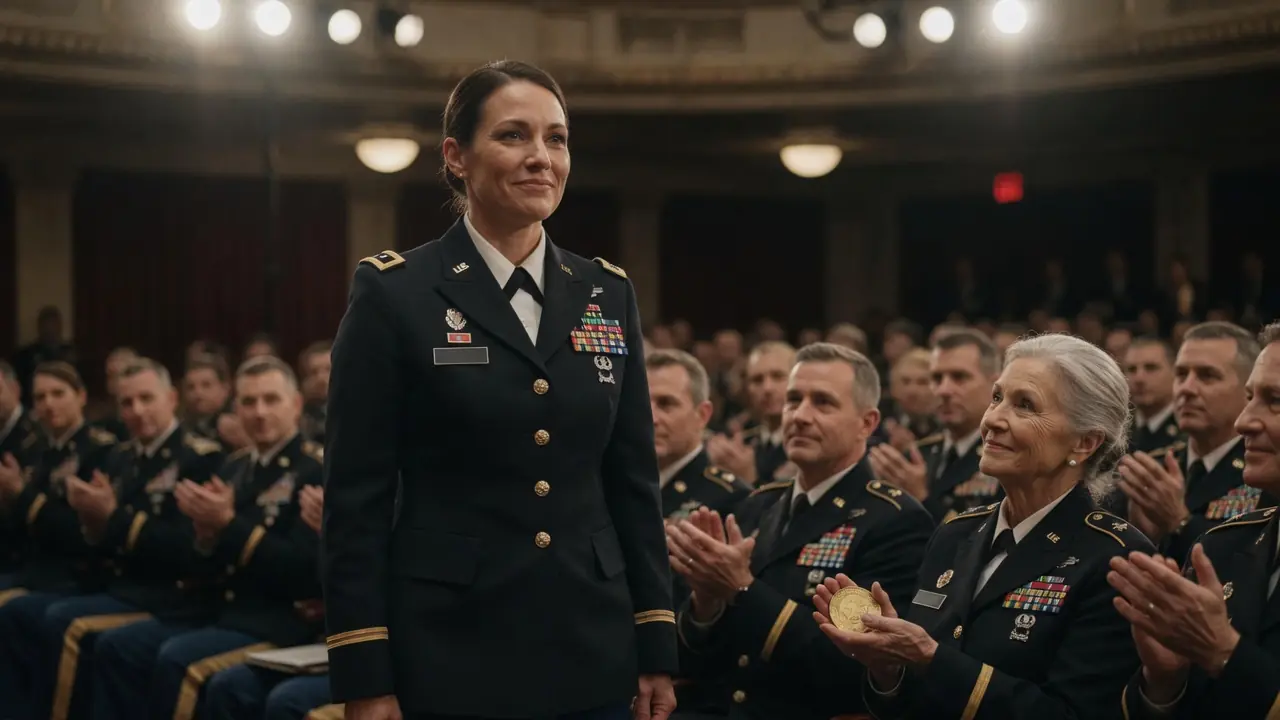
My father stood.
“I think everyone is overreacting.”
I remained seated.
He looked at me.
“Fine. You’re a major. Congratulations. Is that what you wanted?”
“No.”
“You could have corrected us privately.”
“I corrected you for years.”
“You always have to prove you’re the smartest person in the room.”
“This has nothing to do with intelligence.”
“You enjoyed this,” he said. “You enjoyed letting us look foolish.”
That accusation finally broke through my restraint.
“I didn’t make you look foolish. You did that yourself.”
He stared at me.
“You sat there and allowed your mother to say something inaccurate.”
“She’s an adult.”
“She was trying to make conversation.”
“She called me a janitor and said you’d given up on me.”
“It was a joke.”
“No one laughed.”
My father looked around the table, perhaps hoping someone would rescue him.
No one did.
The waiter appeared in the doorway carrying a tray of coffee.
He took one look at the room and quietly backed away.
For a moment, the absurdity of it almost made me smile.
My parents had wanted the perfect engagement dinner.
They had chosen the restaurant, the wine, the seating arrangement, and even the topics they wanted discussed.
But they had made one mistake.
They believed everyone else would accept their version of me.
Margaret picked up the challenge coin.
She turned it between her fingers.
“Major Carter,” she said, “my nephew served under one of the units supported during that operation.”
I looked at her.
“He was trapped after the main access road was cut off,” she continued. “Your team rerouted medical supplies and transportation through the northern corridor.”
“I remember the route.”
“He came home because that corridor stayed open.”
My throat tightened.
“I’m glad he made it.”
“He did. And our family remembers the people who made that possible.”
My mother stared at the table.
My father slowly sat down.
The room no longer felt triumphant.
It felt painfully honest.
I stood and picked up my purse.
Olivia looked frightened.
“You’re leaving?”
“Yes.”
“But we haven’t cut the cake.”
I stared at her.
She looked so much like the little girl who used to crawl into my bed during thunderstorms.
For years, I had protected her.
I took the blame when she broke Mom’s jewelry box.
I drove through the night when her college boyfriend abandoned her at a party.
I lent her money when her first apartment deposit fell through.
I listened to her cry after every failed relationship.
Yet she had allowed Daniel to believe I was a failure because that version of me made her look brighter.
“I hope you have a beautiful wedding,” I said.
“Emma, don’t do this.”
“I’m not doing anything to you.”
“Can we talk outside?”
“No.”
Her voice cracked.
“You’re my sister.”
“Yes,” I said. “I’ve spent my entire life acting like yours. You should try it sometime.”
Then I walked out.
I had almost reached the parking lot when I heard footsteps behind me.
It was Daniel.
He had left his own engagement dinner to follow me.
“Emma.”
I stopped.
He looked embarrassed.
“I’m sorry.”
“You didn’t do anything.”
“I believed what Olivia told me.”
“You had no reason not to.”
He looked back toward the restaurant.
“My family doesn’t care about titles. But lying matters.”
I didn’t know what to say.
He continued.
“Was tonight normal?”
The question was painfully direct.
“For my family?”
He nodded.
“Yes.”
“Does Olivia usually participate?”
I looked toward the restaurant windows.
“She usually stays quiet.”
“That wasn’t what I asked.”
I met his eyes.
“Tonight was the first time I learned she had repeated their version of my career to other people.”
Daniel exhaled.
“I need to think.”
“You should.”
He nodded.
Then he returned to the restaurant.
I drove home alone.
My phone began ringing before I reached the highway.
First Olivia.
Then my mother.
Then my father.
I ignored all three.
My mother sent a message:
You embarrassed us in front of Daniel’s family.
My father sent:
Hope humiliating your sister was worth it.
Olivia sent several messages in a row.
Daniel is furious.
His parents left early.
He says I lied to him.
You could have corrected him before tonight.
The last message almost impressed me.
Somehow, even after everything, they had transformed themselves into the victims.
I turned off my phone.
For three days, I heard nothing.
Then Daniel called.
He apologized for contacting me directly.
He said he and Olivia had postponed the wedding.
Not canceled.
Postponed.
He had discovered that Olivia had lied about more than my career.
She had exaggerated her income.
She had hidden credit card debt.
She had told him our parents were paying for most of the wedding when they had never agreed to do so.
None of those problems were impossible to resolve.
But the way she handled the engagement dinner frightened him.
Whenever he asked why she had lied about me, she said she wanted his family to see her as the successful sister.
Daniel said, “I don’t want a marriage built on competition with someone who isn’t even competing.”
I told him their relationship was none of my business.
He agreed.
But before hanging up, he said something I never forgot.
“You didn’t destroy the dinner. You just stopped protecting the illusion.”
My parents reacted badly to the postponed wedding.
My mother said I had sabotaged Olivia’s future.
My father accused me of being jealous.
They demanded that I call Daniel and explain that Olivia had only repeated a harmless family joke.
I refused.
They threatened to stop speaking to me.
I said that was their choice.
For the first time, their disapproval didn’t feel powerful.
It felt small.
They had spent years reducing my accomplishments because acknowledging them would have required admitting they had been wrong.
That was no longer my burden.
Six months later, Olivia came to see me.
She arrived at my apartment without warning.
I almost didn’t open the door.
She looked exhausted.
She had lost weight.
The engagement ring was gone.
“Daniel ended it,” she said.
“I’m sorry.”
She laughed bitterly.
“No, you’re not.”
“I’m sorry you’re hurting.”
She sat on my couch.
For several minutes, neither of us spoke.
Then she said, “I hated you.”
I waited.
“Not because you did anything,” she continued. “Because you never needed what I needed.”
“What did you need?”
“Mom and Dad’s approval.”
I sat across from her.
“You had it.”
“I had it as long as I stayed impressive.”
She looked down at her hands.
“If I wasn’t the beautiful one or successful one, I didn’t know who I was. And every promotion you got made me feel like I was losing the only thing I had.”
“You could have been proud of me.”
“I know.”
“You could have told Daniel the truth.”
“I know.”
“You could have defended me once.”
Tears filled her eyes.
“I know.”
For once, she didn’t ask me to forgive her.
She didn’t blame Mom.
She didn’t blame Dad.
She didn’t call it a misunderstanding.
She simply sat there and admitted what she had done.
That didn’t repair our relationship.
But it was the first honest conversation we had ever had.
My parents never apologized.
Not really.
My mother eventually said she was sorry that “the joke came out wrong.”
My father said he had always been proud of me, but I had been too sensitive to notice.
I stopped attending family dinners.
I called on birthdays.
I visited at Christmas for exactly two hours.
When my mother introduced me to people afterward, she suddenly mentioned my full rank.
Sometimes she exaggerated my responsibilities in the opposite direction.
I found that almost as irritating.
But I no longer corrected her.
Her stories were about her.
My life was mine.
A year after the engagement dinner, I attended a formal military ceremony.
This time, I wore my uniform.
My name and rank were announced as I stepped forward to receive an award for leadership and service.
The audience applauded.
In the front row sat Margaret Hale.
She had been invited as part of a civilian advisory group.
After the ceremony, she approached me and handed me the same gold challenge coin.
“I believe this belongs with you now,” she said.
“I can’t accept this.”
“You can.”
She pressed it into my palm.
“My family remembers what you did. Maybe yours will someday.”
I looked down at the coin.
For years, I had believed the pain came from my parents not understanding my accomplishments.
But that wasn’t the real wound.
The real wound was that they had never tried.
They didn’t need to know the details of every mission.
They didn’t need to understand military ranks or operational structures.
They only needed to believe that the daughter standing in front of them had built a life worth respecting.
They had chosen not to.
And once I accepted that, I stopped waiting for their approval.
I keep Margaret’s challenge coin in a wooden box on my desk.
Not because it proved I outranked anyone at that dinner.
Not because it embarrassed my parents.
And not because it helped expose my sister’s lies.
I keep it because it reminds me of the exact moment I understood something important.
People who truly respect you don’t need to be impressed by your title.
And people determined to diminish you will ignore every achievement until someone they respect forces them to see it.
My parents had introduced me as their disappointing daughter.
A janitor.
Someone they had given up on.
They expected me to sit quietly while everyone judged me.
Instead, one small gold coin landed on the table.
And suddenly, the woman they had spent years treating like a failure was revealed as the highest-ranking officer in the room.
Their faces turned white.
But I didn’t feel victorious.
I felt free.
Because I finally understood that their approval had never measured my worth.
It only measured their ability to recognize it.