Youth is a disease of arrogance. You get a little muscle, a little height, and suddenly you think the world owes you its lunch money. You look at an old man on a park bench and see brittle bones, a victim, a punchline for a viral video. You don’t look at the cauliflowered cartilage of his ear. You don’t notice how he plants his feet, perfectly balanced. But some kids have to learn the hard way. Some kids have to bleed to understand respect.
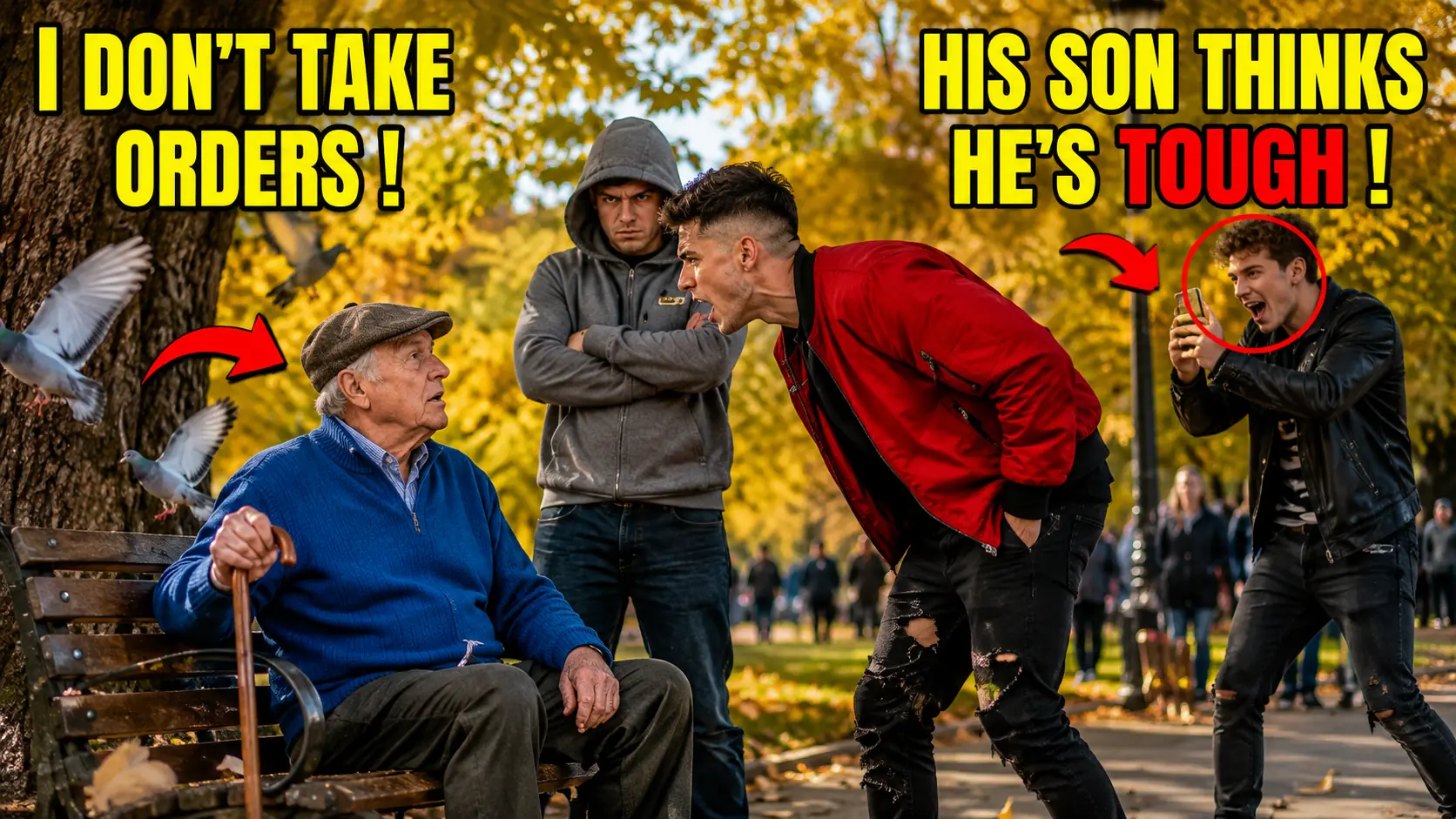
Victor Lawson woke up every morning at five a.m. He didn’t need an alarm clock. His body was a ledger of old debts, and every sunrise the pain came to collect. He sat on the edge of his narrow mattress, staring at the faded linoleum floor. For ten minutes he just breathed—in through the nose, out through the mouth, a steady, rhythmic hiss. He placed his hands on his thighs and pushed himself up. His left knee, stripped of cartilage since a brutal night in Detroit forty years ago, popped like a dry twig. He didn’t wince. Wincing was an admission of defeat. He just shuffled to the kitchen.
Victor was seventy-two years old. To the world, he was invisible—a shuffling artifact in a faded tweed coat and a flat cap haunting the produce aisle of the local grocery store, checking the prices of canned beans. He lived in a cramped one-bedroom apartment above a dry cleaner. There were no trophies on his shelves, no framed photographs of his arm raised in victory under the glaring Madison Square Garden lights. The only evidence of his past lived in the meat and bone of his body. His knuckles were swollen, looking like crushed walnuts hidden beneath thin, liver-spotted skin. His nose had been broken three times and set poorly twice, leaving it with a slight permanent leftward hook. His eyes, though—his eyes were sharp. They were the color of wet slate, perpetually scanning, processing, analyzing distance and weight.
He poured himself a cup of black coffee. It was cheap, bitter, and tasted like burned dirt. He drank it standing up. By seven a.m., Victor was walking down Fourth Street toward Centennial Park. The city was waking up full of noise and friction. Commuters rushed past him, bumping his shoulders without apologizing. A jogger clipped his elbow and yelled at him to watch his step. Victor just kept walking. He didn’t get angry. Anger was a fire that burned through your oxygen. He had learned a long time ago to keep his internal temperature ice cold.
Centennial Park was a rectangle of tired green grass and cracking concrete paths, hemmed in by towering apartment blocks. It was a place for dog walkers, exhausted mothers, and old men who had outlived their usefulness. Victor had his spot—the third bench from the east entrance, positioned beneath the sprawling arms of a dying oak tree. It offered a clear view of the playground, the walking path, and the street. He never sat with his back to a blind spot. Muscle memory dictated his geometry. He sat down, resting his worn leather cane between his knees. From his coat pocket, he pulled a plastic bag filled with torn pieces of stale sourdough. The pigeons knew him. They fluttered down from the oak branches, a churning mass of gray and iridescent green feathers. Victor fed them slowly. He didn’t throw the bread in handfuls. He tossed small, deliberate pieces, watching how the birds moved. He watched the aggressive ones push to the front. He watched the timid ones hang back.
He liked the park because it allowed him to be a ghost. Society had agreed to look right through him, and Victor welcomed the erasure. When you are invisible, you can see everything. He watched a businessman favoring his right ankle, probably a sprain. He watched a teenager carrying a heavy backpack leaning back to compensate for the weight, exposing his center of gravity. Victor couldn’t help it. His brain still processed the world in terms of balance, vulnerability, and striking distance. He was a retired mechanic of violence. He’d spent fifteen years of his life taking men apart with his hands, dismantling their consciousness with precise concussive force. He tossed a final crust of sourdough to a pigeon with a mangled foot. “Survival is just taking the hits and standing back up,” Victor murmured to the bird. He leaned back against the hard wooden slats of the bench, tipping his flat cap down to shield his eyes from the weak morning sun.
For an hour, it was peaceful. The rhythmic rumble of the city traffic felt like a distant ocean. He closed his eyes, listening to the wind rattle the dead leaves above him. He just wanted to be left alone. That was all he asked of the world now—just a quiet bench, a bag of bread, and the dignity of silence. But silence in this city was a luxury that rarely lasted. They came into the park like a storm of cheap cologne and unearned arrogance. There were three of them, nineteen, maybe twenty years old. They had the chaotic, twitchy energy of young men fueled by energy drinks, nicotine vapor, and a profound lack of consequence. They were loud. They wanted everyone to know they were there. Victor heard them before he saw them. He didn’t open his eyes or move his head, but his heart rate slowed down, settling into a heavy, deliberate thud. The perimeter had been breached.