Chapter 2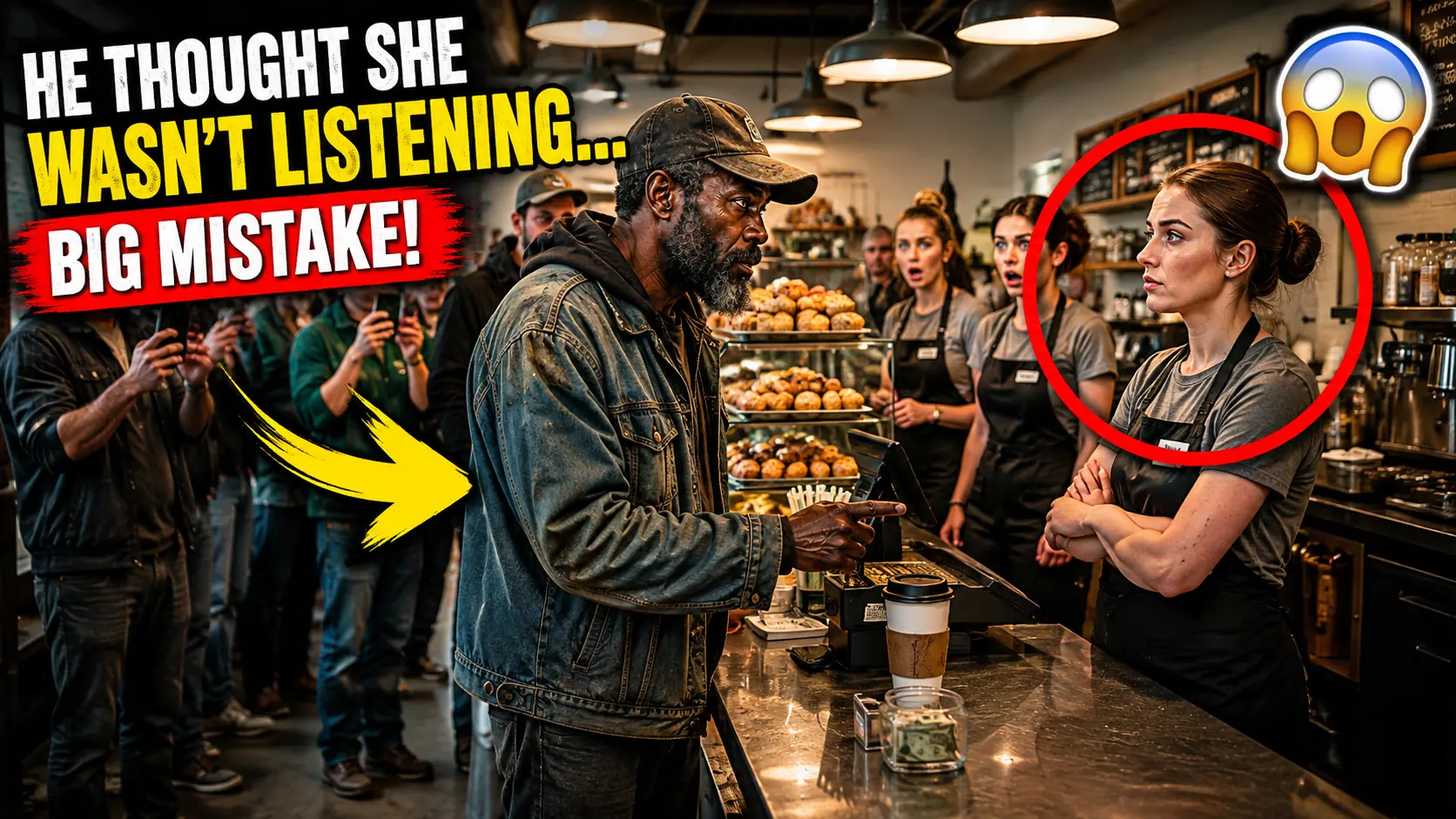
At 6:00 in the morning, he called Ray. “I need a cover. New hire, transfer trainee from the Springs location. Name in the system, Henry Williams. Can you build that?” Ray exhaled. “Harold, I can have legal and HR handle this in forty-eight hours. We pull the tapes, fire the two cashiers, done.” “If I fire two cashiers, I fix one store. I want to know if the whole house is sick, Ray.” Silence. “How long?” “Four days.” “And if someone recognizes you?” Harold almost laughed. “I just spent an hour in my own store. The woman behind the register looked me in the eye and told me to sit on the curb. Trust me, nobody in that building has ever looked at the about page.”
He spent the next two hours preparing. Trimmed his beard shorter, uneven the way a man looks when he doesn’t own a mirror he likes. Went to Goodwill and bought a gray polo, dark jeans, scuffed work shoes. Then he printed the employee handbook and read all forty pages for the first time in two years. What he found made him sit down. The customer experience protocol was detailed, specific. Greeting standards, service timelines, complaint resolution. All written out. But there was no enforcement mechanism, no audits, no anonymous reporting channel. The entire protocol relied on one assumption: that people would follow it because it was right. Harold closed the handbook. He thought about his mother, how she used to say, “Good intentions don’t survive bad management.” She was always right.
He pulled up the flagship shift schedule. Tiffany Grant and Jenna Moore were on every peak shift, Tuesday through Saturday, 10:00 a.m. to 6:00 p.m., the golden hours. Emma Sullivan was scheduled for 5:00 a.m. to 8:00 a.m., then 9:00 p.m. to close. Every single week for four months straight. The earliest mornings and the latest nights. No peak hours, no visibility, no tips worth counting. Four months of dead zone shifts. That wasn’t bad luck. That was a pattern. Harold put on the gray polo, laced the scuffed shoes. The man in the bathroom mirror didn’t look like the CEO of a forty-store chain. He looked like exactly the kind of person Tiffany Grant would tell to sit on the curb. Good.
He drove to the flagship and parked in the alley. The employee entrance was a narrow metal door, paint chipping, no camera. The difference between the Instagram-perfect storefront and this neglected back door told him everything about where this company’s attention had gone. The break room smelled like stale coffee and microwave popcorn. A corkboard cluttered with shift notices. And on a shelf in the corner between a stack of napkins and a bottle of sanitizer, a ceramic tip jar, hand-painted. Sunflowers on one side, the Iron Brew logo on the other. Done carefully with love. Nearly empty. And taped to the front, a sticky note in bubbly handwriting. “All tips go through Tiffany. See her before adding to jar.” Harold photographed the note, photographed the jar, set it back down gently. Then he clocked in as Henry Williams and walked onto the floor.
Day one, morning shift. Harold was assigned to shadow the opening crew. The shift lead was Emma Sullivan, twenty-eight, Latina, hair pulled back tight, apron already stained by 5:15 a.m. She moved behind the counter the way musicians move on stage. No wasted motion, every step deliberate. Pulled shots, steamed milk, restocked cups, wiped the bar in a continuous loop that never broke. To her, he was Henry, the new transfer who didn’t know where the lids were. “Lids are under the second sink, not the first,” she said without looking up. “First sink is sanitizer. Mix those up, you’ll taste bleach in your espresso for a week.” At 6:40 a.m., an elderly black man walked in. Tall, slow-moving, wool coat too heavy for the season. Emma’s face softened. “Walter, oat milk cortado extra warm?” Walter smiled like she’d handed him something he’d lost. “You remember.” “Every day for three years. Sit down, I’ll bring it over.” She brought it to his table with both hands. Walter looked up. “Emma, you’re the only reason I still come here.” Emma smiled. It didn’t reach her eyes. She went back to work. Harold waited for a gap between customers. “How long have you been here?” “Four years.” “You like it?” Long pause. Her hands kept moving, wiping, sorting. She didn’t look at him. “I like the coffee.” That pause told Harold more than any Glassdoor review.
Day one, afternoon. At 10:00 a.m., the shift changed. Tiffany and Jenna walked in. The air in the store tightened like someone turned a dial. Emma went quiet, moved to the back without being told, started restocking shelves that didn’t need it. Tiffany didn’t greet her, just “Did you pre-stock the oat milk? I’m not doing it again.” “It’s done.” “It better be.” Then, like flipping a switch, Tiffany became a different person. A young white couple walked in. She lit up. “Hey guys, have you tried the autumn maple cortado? Literally the best thing we’ve ever made.” Harold blinked. The autumn maple cortado, Iron Brew’s number three seller last quarter. He didn’t know who created it. A middle-aged woman in a cleaning uniform approached next. Tiffany’s smile vanished. Flat voice. “What do you want?” Made the drink without a word, set it down. No name, no have a nice day. Harold opened the register drawer to get change. Inside, wedged between the receipt paper in the bill tray, a folded index card. Two columns, one with hearts, one with X’s.
Day two. The index card. Harold waited until Tiffany went on break, pulled the card out. Hearts: Tech guy Jake, always tips $5. Instagram girl at Molly Brew, tags us, free extra shot. Blond couple, good vibe. X’s: Old guy Walter, just sits, nurses one drink. Lady with three kids, messy, don’t encourage. Flannel man, doesn’t fit. Flannel man. That was him. The day he walked in as a customer. They’d written him down, put an X next to his existence. On the back, in Tiffany’s handwriting: if they’re not brand fit, slow service. They’ll leave on their own. Don’t make a scene, just make it clear they’re not welcome. Harold put the card back exactly where he found it. Hands steady, jaw not. This wasn’t two young women having a bad day. This was a system.
Day two, break room. Harold sat with Emma during the afternoon break. She pulled out a small notebook and started flipping through it. Pages of recipes, seasonal drinks, pastry twists, flavor notes in the margins. Needs more cinnamon. Try with brown sugar syrup. She stopped on a page. The Autumn Maple Cortado. “You created this?” She nodded. Gave it to Ron last fall. He said he’d submit it through regional. And went on the menu, sold like crazy. “Your name on it?” No. Ron listed it as his initiative. She turned more pages. Summer Berry Cold Brew, Holiday Spice Latte, Banana Pecan Bread, all hers, all credited to Ron. “I stopped writing my name on them.” She closed the notebook. “What’s the point?” Harold typed under the table: Emma Sullivan, four recipes confirmed, zero credit, zero raise.
Day three, Ron Hadley visits. Harold smelled him before he saw him. Cologne, sharp, expensive, too much. Employees stiffened, conversations stopped. Ron Hadley, regional manager, forty-eight, tall, tan, perfect haircut. He walked in like he owned the store. Ironic, considering the actual owner was standing three feet away in a gray polo. Ron high-fived Tiffany. “Hey, superstar. Place looks great.” Walked past Emma without a glance. She was restocking cups six feet away. Invisible. Ron spotted Harold. “You’re new? Just stick with Tiffany. She’s the heartbeat of this store.” Emma was right there. Her hands didn’t stop moving. She didn’t flinch. She’d heard it before. Harold pushed. “What about the seasonal menu? Who’s idea was the maple cortado?” Ron grinned, wide, proud. “That was mine. Regional initiative Q3 last year.” Harold nodded, slowly, didn’t blink. Emma’s hands paused. One second. A cup tilted. She caught it, kept going.
Day three, the tip situation. End of day. Harold offered to count tips. Tiffany shut it down. “I handle tips.” “Store policy says equal split, right?” “Policy is policy. Real life is real life. People up front earn the tips. Emma’s support staff. She gets support staff share.” Harold checked the POS when Tiffany stepped away. Tiffany and Jenna, eighty percent. Emma and two others, twenty percent. Same hours. A fifth of the money. He photographed the screen.
Day four. Patricia. A woman walked in around 2:00 p.m. Black, mid-fifties, hospital lanyard, still in scrubs. Ordered a vanilla latte and a muffin. Tiffany served her the way she served everyone without hearts next to their name. Dead eyes, flat voice, wrong name on the cup. Her name was Patricia. The cup said, “Pat.” “Excuse me, my name is Patricia, not Pat.” Tiffany didn’t look up. “Same thing.” Patricia took her coffee, sat down, took one sip, stood up, and walked out. Harold followed her. She was on the bench outside, cup in her hands, staring at it. He sat beside her. “Are you okay?” She looked at him, eyes tired, not from one bad experience, but from a lifetime of them. “I just wanted a cup of coffee in a nice place. That’s all.” Harold’s chest tightened. “You deserve that.” Patricia almost smiled, didn’t get there. She threw the cup away and walked off. Harold sat on that bench a long time, then texted Ray. “It’s worse than I thought.” “One more day, then legal, HR, and the conference room. Friday morning. Every employee present.” Ray replied in four seconds. “What are you going to do?” “My job.”
Day five. Thursday, before dawn. Harold arrived at the flagship at 4:30 a.m. The store didn’t open until 5:30. He had one hour alone with the back office. He used his corporate login, masked through the IT system as a routine audit check. Ray had set it up the night before. No fingerprints, no alerts, just access. He sat in the cramped manager’s office, a windowless room behind the break room, barely big enough for a desk, a filing cabinet, and a printer that looked like it hadn’t been serviced since the store opened. The chair squeaked when he sat down. The desk smelled like old coffee and dust. He started with the tip distribution records, twelve months. Every weekly payout logged digitally through the POS system. Harold pulled the numbers into a spreadsheet on his phone and ran the math. Tiffany and Jenna’s combined weekly tips averaged four hundred ten dollars. Across all forty Iron Brew locations, the average two-person front-of-house tip split was ninety-five dollars. Four times higher. Not twice. Not a little more. Four times. Emma Sullivan’s tip share had decreased every month for nine consecutive months. From sixty-two dollars per week down to eleven. The same period Tiffany had been on staff. Harold screenshotted every page.
Next, Ron Hadley’s quarterly innovation reports. Harold pulled them from the regional shared drive. Four regional menu initiatives submitted over the past fourteen months. Each one credited to Ron as the originator. Autumn Maple Cortado, submitted October last year. Summer Berry Cold Brew, submitted June. Holiday Spice Latte, submitted December. Banana Pecan Bread, submitted March this year. Harold opened the photographs he’d taken of Emma’s notebook. Page by page, date by date. Autumn Maple Cortado, Emma’s notebook entry, August, two months before Ron’s submission. Summer Berry Cold Brew, Emma’s entry, April, two months before Ron. Holiday Spice Latte, October, two months before Ron. Banana Pecan Bread, January, two months before Ron. Every single recipe created by Emma, submitted by Ron. The same gap every time, two months. Just long enough to look like independent development, just short enough to ride her creativity in real time. Harold sat back in the chair. It squeaked again. He stared at the screen. Four ideas, four best sellers, all hers, all stolen.
He opened the employee complaint log next, the flagship store’s internal HR file. Three formal complaints filed by Emma Sullivan over the past eighteen months. Complaint number one, schedule fairness. Emma requested rotation into peak hour shifts. Status: reviewed, no adjustment needed. Current scheduling reflects operational needs. Signed, Ron Hadley. Complaint number two, tip distribution. Emma reported unequal tip allocation and requested a transparent audit. Status: reviewed, tip policy is at store level discretion, no action required. Signed, Ron Hadley. Complaint number three, credit for menu contributions. Emma requested formal recognition for the Autumn Maple Cortado and three other recipes she originated. Status: reviewed, menu development is a regional function. Individual contributions are noted internally. No further action. Signed, Ron Hadley. Three complaints, three dismissals, same signature, same dead end. Harold opened one final file, Tiffany Grant’s employee record. He scrolled past the hire date, the W-4, the direct deposit info, stopped at the emergency contact field. Emergency contact: Ron Hadley. Relationship: uncle. Harold exhaled, slow, controlled, the way a man breathes when the last piece of something ugly clicks into place. Uncle. Tiffany was Ron’s niece. Ron shielded Tiffany. Tiffany ran the floor. Jenna followed Tiffany. Emma filed complaints, and Ron buried them. Ron stole Emma’s recipes, and Emma had no one above Ron to report to. A closed loop. A machine built to protect itself.
Harold closed the laptop, stood up, walked to the break room. The ceramic tip jar was still on the shelf. Sunflowers. The Iron Brew logo painted with care. He picked it up, turned it over. On the bottom, in small handwriting, faded but legible: for the team, E. S. Emma Sullivan. She’d painted this jar herself. For the team. And the team she’d made it for had emptied it, shelved it, and put a sticky note on it that said all tips go through the person who was stealing them. Harold set the jar back down. Gently. Like it was evidence. Because it was. He pulled out his phone, called Ray. “Legal and HR, are they confirmed for tomorrow?” “Confirmed. Conference rooms booked. Every Flagship employee will be there at 8:00 a.m.” “One more thing. I want the big screen set up. I’m going to show them something.” “What are you going to show them?” “The truth.” Harold hung up. He stood in the break room alone, surrounded by bags of coffee beans and the faint smell of bleach. He looked at the tip jar one more time. The sunflowers, the careful brush strokes, the initials on the bottom. Then he turned off the light and walked out. Tomorrow, he was going back through the front door.