Chapter 2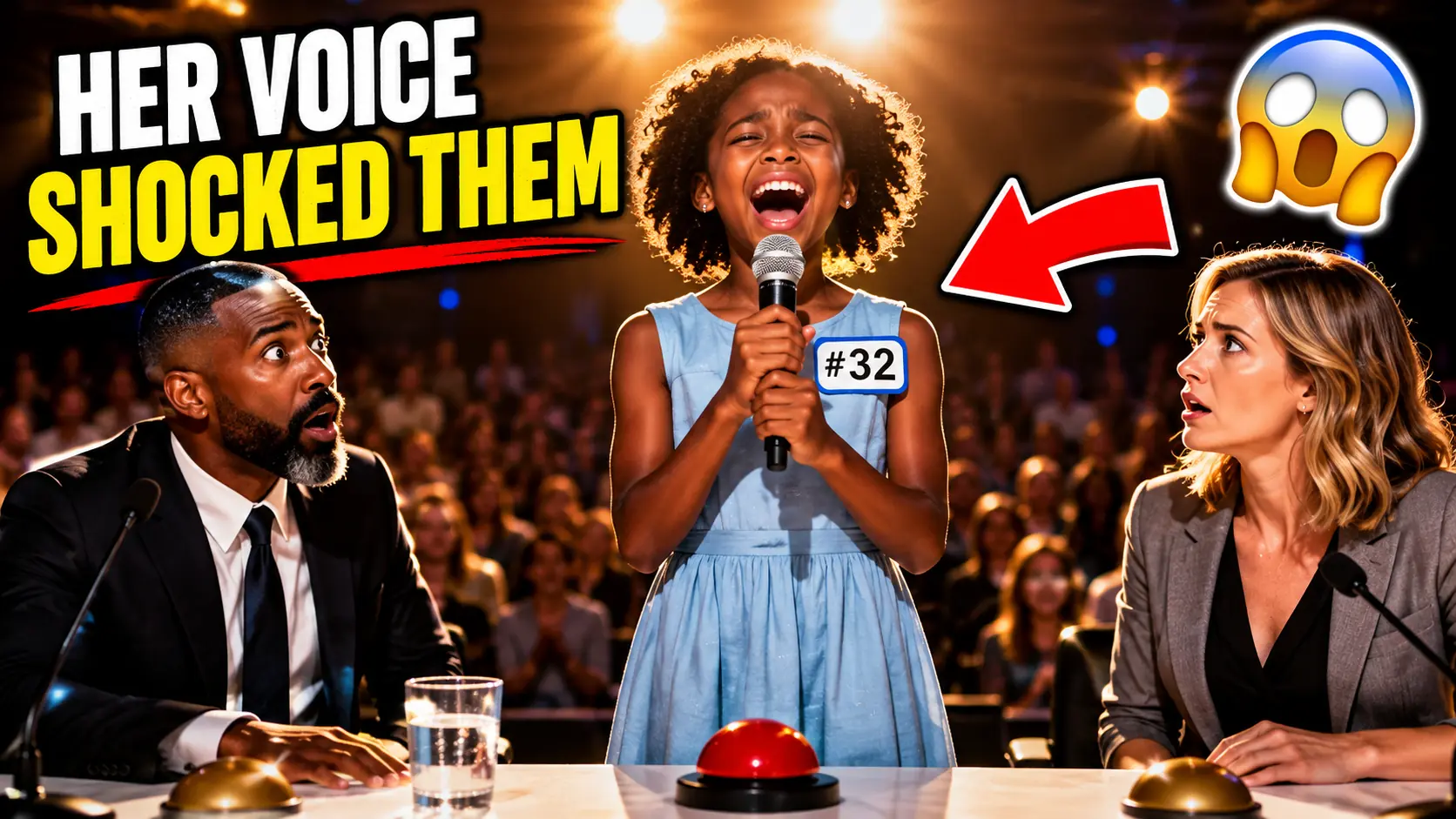
The next three days passed in a blur. Tiana practiced everywhere. In the hospital stairwell during her mama’s shifts. In the empty church sanctuary after school. In the corner of the grocery store parking lot where her mama worked. She sang “Rise Up” until the lyrics lived in her bones, until she could feel every word in her chest. Carol Bennett, the Black nurse who’d been watching Tiana sing to the pediatric patients for years, found her Wednesday evening in the hospital stairwell. Tiana was crying, her voice cracking on the high notes. “Baby girl, what’s wrong?” “What if I’m not good enough? What if I mess up? What if—” Carol sat down beside her on the cold concrete steps. “Listen to me. You know what you have? Anointing. That’s not talent you can buy with lessons or coaches. That’s a gift from God himself.” She pulled a twenty-dollar bill from her purse. “It’s not much, but when you’re up there singing, I want you to remember you’re not just singing for your mama. You’re singing for every little Black girl who got told she wasn’t enough. You hear me?” Tiana nodded, unable to speak. “Now.” Carol stood, pulling Tiana up with her. “You walk on that stage tomorrow like you already won. Because in my eyes, baby girl, you already have.”
Thursday evening, the Riverside Community Center auditorium filled with families, the air thick with perfume and nervous energy. Thirty contestants crowded the backstage area, some with vocal coaches doing last-minute warm-ups, others with parents adjusting costumes and makeup. Madison Mitchell, contestant number 12, Victoria’s thirteen-year-old daughter, held court in the corner, surrounded by a professional styling team. Her dress probably cost more than Tiana’s mama made in two months. Tiana sat alone on a folding chair, wearing her eight-dollar thrift store dress, breathing slowly like Carol had taught her. No coach. No entourage. Just her and the marker words on her palm that were starting to smudge. The judges sat at a long table facing the stage. Mr. Harrison, the local music teacher with kind eyes. Victoria Mitchell, whose smile looked painted on. And Christopher Hayes, the celebrity A&R executive, who hadn’t stopped fidgeting since he sat down.
Victoria stood to address the contestants backstage, her voice dripping with false sweetness. “We have quite the range tonight. Real talent and… well, everyone gets participation, right?” Her eyes landed on Tiana. “Some people just need to learn the difference between dreaming and reality.” A few parents laughed. Contestant number 12 was called. Madison took the stage in a swirl of expensive fabric and calculated confidence. She performed “Somewhere Over the Rainbow” with piano accompaniment, backup tracks, and choreographed hand movements that looked rehearsed in a mirror a thousand times. Technically perfect. Emotionally empty. The audience applauded politely. Parents recorded dutifully. Victoria leaned toward the microphone. “Stunning. Simply stunning. That’s what years of proper training looks like.” She held up her scoring card. 9.5. Mr. Harrison nodded. “Very polished for her age.” 8.0. Christopher Hayes stared at his blank scoring card for a long moment. “Good technical control.” 8.0. Madison’s average: 8.5. Solid. Safe. Forgettable.
Contestants 13 through 31 passed in a blur of varying competence. Some good. Some mediocre. None exceptional. The clock ticked toward 7:00 p.m. Backstage, Victoria paused by Tiana’s chair. “Still here? You know, stage fright is nothing to be ashamed of, honey. You’re just a child. You can forfeit. Get half your fee back. Save yourself the embarrassment.” Tiana looked up. “I’m not embarrassed.” Victoria’s laugh was sharp. “You will be.” 7:02 p.m. The coordinator’s voice crackled over the backstage speaker. “Contestant 32, Tiana Turner, you’re up.” Carol Bennett, sitting in the third row in her nurse’s scrubs, squeezed Diane’s hand. Diane looked so frail in her seat, but her eyes were fierce. Tiana stood. Her legs felt like water. The walk from backstage to center stage was maybe thirty feet. It felt like thirty miles. The spotlight hit her face, too bright, making her blink. The microphone stand towered over her. Someone had to adjust it down to her height. Four hundred faces stared. Victoria’s voice cut through the silence. “No accompanist?” She made a show of checking her notes. “How brave. Or unprepared.” Scattered laughs. Tiana’s worn Goodwill sneakers squeaked on the stage floor. The sound carried through the silent auditorium. Mr. Harrison leaned forward. “Name and song choice, sweetheart.” Tiana’s voice came out smaller than she wanted. “My name is Tiana Turner. I’m ten years old.” She swallowed hard. “I’m singing ‘Rise Up’ by Andra Day.” The auditorium went completely still. Someone in the back whispered, “She’s only ten.” Victoria’s smile turned condescending. “That’s quite an ambitious choice for someone your age, honey. And you’re performing a cappella? This is a professional competition, not show-and-tell.” Tiana looked directly at her. “I know. That’s why I’m here.” A ripple of reaction. Gasps. Murmurs. This child had backbone.
Christopher Hayes sat rigid in his judge’s chair, both hands gripping the table edge so hard his knuckles had gone white. Something about the angle of Tiana’s jaw, the set of her shoulders, the defiance in her eyes—that was pure Diane. It hit him like a physical blow. Tiana closed her eyes, touched her chest where the marker words lived under the fabric, took one breath, two, then she sang. The first note filled the auditorium like a physical presence—pure, powerful, impossible from a ten-year-old’s small frame. No backing music. No safety net. Just her voice, raw and aching and somehow ancient, like she’d lived a hundred years in ten. “You’re broken down and tired of living life on a merry-go-round.” The audience went completely silent. Phones started coming up, recording. “And you can’t find the fighter, but I see it in you. So we going to walk it out.” Front row. A white woman who had pulled her daughter away from Tiana earlier now had her hand over her mouth, tears streaming. “And move mountains.” Victoria’s smirk began to fade. “We going to walk it out.” Mr. Harrison leaned forward, mouth slightly open. “And move mountains.” Christopher Hayes’s eyes filled with tears. He didn’t blink, didn’t breathe, just stared at this child—his child—pouring survival into sound. Tiana’s voice cracked on the bridge. Not a mistake. Real emotion breaking through. She was singing about rising despite being broken. And she knew what broken meant. She’d watched her mama break every day for months. “I’ll rise up. I’ll rise like the day. I’ll rise up. I’ll rise unafraid.” Her voice built. Built impossibly higher. The hospital stairwell practice was paying off. Her tone had a natural resonance that no amount of money could buy. “I’ll rise up and I’ll do it a thousand times again.” Diane Turner sat in the front row, tears streaming down her face, one hand pressed to her mouth. Her baby. Her beautiful, brave baby. Carol gripped her other hand, whispering, “Yes, baby. Yes.” Christopher’s shoulders began to shake. Tears fell openly down his face. He didn’t wipe them. Couldn’t move. His lips formed words silently. Oh my God. That’s my daughter.
The final chorus. Tiana opened her eyes, looked directly at her mama, and let everything go. Every fear. Every hungry night. Every night wondering if morning would come and her mama would still be breathing. “And I’ll rise up high like the waves. I’ll rise up in spite of the ache.” She hit the final note and held it. Ten seconds. Eleven. Twelve. Pure, sustained, heartbreaking power from a ten-year-old child who had been singing in hospital stairwells to survive. When she released the note, the auditorium fell into absolute silence. Five full seconds of stunned quiet. Then eruption. The entire auditorium on its feet, screaming, crying, stamping, a standing ovation that shook the walls. Carol Bennett was shouting, “Yes, baby! Yes!” Diane tried to stand, but her legs wouldn’t hold her. Carol caught her, held her up. Victoria sat frozen, face cycling through shock and something that looked like fear. Mr. Harrison had his hands in the air, tears streaming. “Good Lord. Good Lord above.” Christopher Hayes stood, applauding so hard his hands hurt, face completely broken open, tears unchecked. He’d spent twenty years in the music industry. He’d heard every kind of talent. This wasn’t talent. This was something else entirely. Tiana stood on the stage breathing hard, confused by the reaction. She looked for her mama in the front row, found her. They locked eyes. Diane mouthed, “I love you.” Tiana mouthed back, “I love you more.” Christopher watched this exchange, and something inside him shattered.
The scoring began. Victoria forced to judge, her voice tight. “It was adequate. For what it was. For a child.” 7.0. The audience booed. Actual boos in a community talent show. Someone shouted, “That’s racist.” Mr. Harrison turned to Victoria, genuinely angry. “Are you kidding? That was a 10. A perfect 10. That child is a miracle.” Christopher stood, voice breaking. “I’m giving this an 11. I don’t care if that’s not protocol.” He paused, struggling. “That performance was the most honest thing I’ve heard in twenty years in this industry. That little girl has a gift from God.” 10.0. Average score 9.3. First place after preliminaries. The auditorium exploded again. Tiana, small and overwhelmed, was being hugged by Carol and her mama and strangers. People were crying. Phones everywhere, already posting, already sharing. Victoria stood abruptly and left the judge’s table, her face white. Backstage, she pulled aside Brian Michaels, the competition coordinator. They disappeared into an office. Through the small window, people could see them talking intensely. Victoria showing Brian something on her phone. Nobody noticed except Christopher Hayes, who had followed them. He stood in the hallway outside the office listening. Victoria’s voice carried through the door. “She’s been posting covers online since she was seven. No licensing. That’s copyright infringement. File the ethics complaint. We can disqualify her before finals.” Christopher’s hands curled into fists. Finals were scheduled for next Thursday, seven days away. Diane’s surgery was scheduled for eighteen days away. And Christopher had just heard Victoria plot to destroy his daughter’s only chance to save her mother’s life—the mother he had abandoned, the woman he’d left with nothing. He pulled out his phone and started making calls.
The video hit the internet before Tiana even left the building. “10-year-old stuns judges with emotional performance,” read the first headline. Then another: “Child’s voice makes celebrity judge cry.” Within an hour, three different angles of Tiana’s performance were circulating on TikTok, Instagram, YouTube. By midnight, the main video had 500,000 views. By morning, 2.3 million. #RiversideGirl started trending. Then #Master10YearOldPowerhouse. Then someone made the connection. #WaitIsRiverKid. The anonymous SoundCloud singer people had been following for years. The comments came in waves. Who is this child? Someone sign her now. I’m literally sobbing at my desk. The judge crying—Christopher Hayes never shows emotion like that. Wait, she’s been practicing since age seven? That’s dedication. This is what raw talent looks like. No coaching, no production, just soul. Tiana woke up Friday morning to find her shared SoundCloud account had jumped from 50,000 followers to 420,000. At school, kids she’d never spoken to mobbed her in the hallway. Teachers cried. The principal called her to the office, not for punishment, but because the school phone had been ringing all morning with media requests. Madison Mitchell found her after school, eighth graders parting to let her through. “Enjoy the attention while it lasts,” she said, voice dripping with practiced sweetness. “Finals are different. That’s where trained performers separate from lucky flukes.” Tiana said nothing, just walked away. That night, Diane’s GoFundMe page saw a surge of donations. Strangers sending ten, twenty, fifty dollars. The total climbed from $3,200 to $12,500. Still not enough. Not even close. But it was hope. Real tangible hope. Diane cried herself to sleep that night. One hand holding Tiana’s, the other pressed to her chest where the tumor was growing. Fourteen days until surgery. Seven days until finals. Victoria Mitchell wasn’t crying. She was planning.
Saturday morning, she sat in her pristine kitchen, scrolling through Tiana’s SoundCloud account on her phone. Fifty-three cover songs posted between ages seven and ten. Not a single licensing agreement in sight. She texted Brian Michaels. “We need to talk. Now.” They met in his office at the community center. Victoria slid her phone across the desk. “She’s been posting copyrighted covers for three years. No licenses. Her mother clearly wasn’t supervising her internet activity. It’s an ethics violation.” Brian stared at the screen, uncomfortable. “Victoria, she’s a kid. Those are practice videos.” “Rules are rules. Section 7.3 of the competition guidelines. Contestants must demonstrate ethical conduct and legal compliance. If we file a complaint, she’s disqualified. Madison wins by default.” “That little girl made me cry.” “That little girl broke the law.” Victoria’s voice went cold. “Madison has trained for eight years. We’ve invested thousands—tens of thousands—in her coaching, and some child from Section 8 shows up with no training and steals it with one emotional performance. No. File the complaint.” “This feels wrong.” “Do you want to remain coordinator next year?” Brian looked at her for a long moment, then he sighed and opened his laptop. “Fine. I’ll draft the ethics complaint. But I’m noting for the record: this is cruel.” “Cruel is letting an untrained child steal opportunities from dedicated performers.” What they didn’t know: Christopher Hayes stood in the hallway outside, having arrived early to drop off some paperwork. He’d heard every word. His phone was already out, already recording.
That night, Christopher sat in his hotel room, hands shaking, staring at photos on his phone. He’d found Diane’s Facebook, barely used, but there. Profile picture of her and Tiana, dated two months ago. Diane’s head was wrapped in a bright scarf, her smile tired but genuine. Tiana hugged her from behind, both of them laughing at something off camera. The caption: “My whole heart. Tiana’s first day of fourth grade. So proud of my baby girl.” Christopher zoomed in on Tiana’s face. His eyes. His bone structure. His smile. His daughter. He clicked through to Diane’s GoFundMe page. The description made him physically ill. Single mom diagnosed with stage 3 breast cancer. Need surgery within 3 weeks or tumor becomes inoperable. Insurance denied claim. Cost $52,000. My daughter Tiana, 10, is trying to help by competing in talent show. Any support deeply appreciated. God bless. Posted photo: Diane, bald from chemotherapy, so thin her hospital gown hung off her shoulders. Tiana beside her, small hand holding her mama’s, trying to smile for the camera. Christopher had abandoned them eleven years ago. Left them to poverty. Left them to struggle. And now his daughter—his ten-year-old daughter—was singing to save her mother’s life because he’d been too much of a coward to pay child support. The memory hit him like a fist. Diane at twenty, standing in his apartment doorway. “Chris, I’m pregnant. Eight weeks.” His face: panic, not joy. “I can’t do this. I just got signed to the label. This is everything I’ve worked for. A kid will destroy it all.” “I’m not asking you to give up music. Just be here. Be a father.” “I can’t. I won’t.” Her face breaking. “So you’re just leaving?” “I’ll send money.” He never did. Christopher looked at the GoFundMe total. $14,800 of $52,000 raised. He looked at the recording on his phone. Victoria plotting to disqualify Tiana. He looked at his bank account balance. Then he started typing emails.
By Monday, Tiana’s preliminary performance had hit 4.2 million views across all platforms. News outlets picked up the story. “10-year-old’s viral performance has America in tears.” Local ABC and NBC affiliates called requesting interviews. A radio station in Chicago played her SoundCloud covers during morning drive time. #LetTianaSing started trending nationally when someone posted about her mother’s cancer, her GoFundMe, her eight months saving lemonade money for the entry fee. The narrative was too perfect, too heartbreaking, too real. Poor Black girl singing to save her dying mother, almost dismissed by a racist coordinator, proving everyone wrong with pure talent. America loved an underdog, especially an underdog this small and this brave. Celebrity musicians started weighing in. A Grammy winner retweeted her video. “This child has more soul in one note than most artists have in their entire career.” Tiana’s SoundCloud followers hit 500,000. Diane’s GoFundMe climbed to $18,200. Still not enough, but closer. So much closer. At the hospital pediatric ward Tuesday afternoon, Tiana sang to the children like always, but this time parents recognized her, asked for photos, asked for autographs. One mother broke down crying. “My son watches your video every night before bed. It helps him forget the pain.” Carol found Tiana in the stairwell afterward, looking overwhelmed. “You okay, baby?” “I just wanted to help mama. I didn’t want all this.” “I know. But you know what you did? You gave people hope. That matters.” That evening, Tiana received a direct message on the SoundCloud account from an anonymous user. “You have a rare gift. Don’t let them silence it. No matter what happens at finals, you are already a singer. Stay strong.” Tiana showed it to her mama. “Who do you think it’s from?” Diane stared at the message for a long time, something shifting behind her eyes, but she just kissed Tiana’s forehead. “Someone who sees your light, baby.” Wednesday night. Eleven days until surgery. Two days until finals. Tiana practiced in front of their bathroom mirror, her reflection looking back with Diane’s determination and someone else’s eyes. She was ready. She had no idea that tomorrow morning Victoria would try to destroy everything.
Thursday morning, 9:00 a.m. Day of finals. Diane’s phone buzzed with an email notification. The subject line made her stomach drop. Urgent ethics violation complaint. Response required by 2:00 p.m. Her hands shook as she opened it. Contestant number 32, Tiana Turner, age 10, engaged in copyright infringement through unlicensed cover songs posted on SoundCloud under alias RiverKid from ages 7 to 10. Per competition rules section 7.3, contestants must demonstrate ethical conduct and legal compliance. Additionally, evidence suggests lack of parental supervision of minor’s online activity. Recommend immediate disqualification pending documentation of proper licensing for all posted content. Deadline for documentation 2 p.m. today, June 15th. Finals begin 7:00 p.m. Signed Brian Michaels, competition coordinator. Diane read it three times, each time understanding less and more simultaneously. They were using her baby’s practice—three years of a child finding her voice—as a weapon. She called Tiana’s school immediately. “Emergency. I need my daughter now.” Twenty minutes later, they sat at their small kitchen table. Tiana crying. Diane trying to stay calm while her own hands trembled. “Mama, I didn’t know. I was just practicing. I never made money. I just wanted—” “Baby, I know. I know. This isn’t your fault.” But Diane’s mind was racing. How did they even find out? Who looked up a ten-year-old’s practice videos? Who cared enough to destroy a child’s chance? She knew the answer. Victoria.
Diane called the competition office. Brian answered on the third ring, his voice guilty before he even said hello. “Miss Turner, look, it’s policy.” “She was seven when she started posting. A child. She was practicing.” “I understand, but the rules require proper licensing for all posted content. You have until 2 p.m. to provide documentation proving all 53 covers were legally licensed or she’s disqualified. I’m sorry.” “You’re not sorry. Victoria put you up to this, didn’t she?” Silence on the line. Then: “I have to follow the rules, Miss Turner.” “This is because she’s Black and poor and she beat your favorite. Don’t lie to me.” “2 p.m., Miss Turner. Documentation required.” He hung up. Diane stared at her phone. It was 9:47 a.m. She had four hours and thirteen minutes to obtain legal documentation that didn’t exist, couldn’t exist, for a child’s practice videos posted before she even understood what copyright meant. She called free legal aid. Voicemail. Three-week wait for appointments. She searched Google frantically. “Child posted covers online legal help.” The results were contradictory, confusing, useless. She posted in three Facebook mom groups. “Urgent. My 10-year-old being disqualified from talent competition over covers she posted as a 7-year-old practicing. Is this legal? Please help.” Responses trickled in. They’re technically right but morally wrong. You need a lawyer. This happens. Competitions protect their favorites. That’s so wrong. Where’s the competition? I’ll come protest. But nobody had solutions. Nobody had documentation. Nobody could help.
Victoria sat in her pristine living room texting Madison. “Crisis averted. Honey, you’ll be competing for first place tonight unopposed. Start getting ready.” Madison stared at her phone, something uncomfortable squirming in her chest. “Mom, what did you do?” “I simply enforced the rules, sweetheart. Some people think they can bypass years of proper training and investment with one emotional performance. Not on my watch.” “She’s 10, Mom. And she was incredible.” “She’s 10 and her mother let her break the law online for three years. Consequences, darling. Welcome to the real world.” Madison didn’t respond. She’d watched Tiana’s video seventeen times, had cried during twelve of them. She knew what real talent looked like. This wasn’t fair. But her mother’s word was law. 11:30 a.m. Three and a half hours until deadline. Mr. Harrison, the judge and music teacher, heard about the complaint from another teacher. He immediately called Christopher Hayes. “Chris, did you hear about the Turner girl? They’re trying to disqualify her over childhood practice videos. It’s Victoria. She’s protecting Madison.” Christopher was already in his car, already driving. “What’s the deadline?” “2 p.m. She needs documentation she can’t possibly have.” “What’s the office address?” “Chris, what are you—” “Send me the address now.” Twelve minutes later, Christopher pulled into the community center parking lot, tires screeching. He’d been up all night. His eyes were red. His suit was wrinkled. He looked half crazy. He felt half crazy. Because somewhere in that building, his ten-year-old daughter was about to lose her only chance to save her mother’s life. And he’d be damned if he’d let her face this alone twice.
1:35 p.m. Twenty-five minutes until deadline. Christopher burst through the community center office door without knocking. Diane and Tiana sat in plastic chairs against the wall, both looking defeated. Tiana’s eyes were swollen from crying. Diane held her daughter tight, one hand stroking her hair, whispering something Christopher couldn’t hear. Victoria stood by Brian’s desk, arms crossed, victorious smile on her face. They all turned when Christopher entered. “I’m halting this disqualification,” Christopher said. His voice was cold, controlled, deadly. “Effective immediately.” Victoria’s smile faltered. “Excuse me? This is an internal competition matter. You’re a guest judge. You don’t have authority.” “I’m also a lawyer.” Christopher pulled out his phone, opened a folder of documents his assistant had emailed him at 3:00 a.m. “Entertainment law, UCLA Law School, member of the California Bar. Let me educate you on what you’re attempting here.” He turned to Brian, ignoring Victoria completely. “Non-commercial cover songs posted by minors for practice purposes fall under fair use provisions. 17 USC section 107. No licensing required if no monetization occurred, which it didn’t.” Brian opened his mouth. Christopher cut him off. “Applying adult contract law standards to a child aged seven to ten: legally indefensible, ethically reprehensible. She was seven. She couldn’t legally consent to terms of service even if she’d tried.” He pulled up another document. “Selective enforcement. You didn’t vet other contestants’ childhood social media. That’s discriminatory practice. Actionable under civil rights law.” Victoria’s face started going pale. “Filing ethics complaints without proper investigation that specifically target a Black contestant—” Christopher’s voice went quieter, more dangerous. “That’s grounds for federal discrimination lawsuit. I will personally fund it. I have five attorneys on retainer and unlimited resources.” He held up his phone, hit play on the recording. Victoria’s voice filled the office. “Rules are rules. Madison has trained for eight years. File the complaint.” Victoria’s face went white. “You recorded? That’s illegal.” “California is a two-party consent state, but there’s an exception for documenting illegal activity. Discrimination is illegal. Congratulations. You documented yourself.” He turned back to Brian. “I have my law firm on speed dial. I’m prepared to file federal discrimination suit, contact every competition sponsor with this recording, and alert national media that this competition is targeting a ten-year-old Black girl for practicing music online as a child.” His eyes were ice. “Your arts council funding: gone by Monday. Your reputation: destroyed. Every sponsor pulled. This community center liable for millions in damages.” Tiana watched this stranger defend her, confusion clear on her small face. “Who are you?” Christopher looked at her. For one moment, his controlled facade cracked. Pain flashed across his face. “Someone who should have been here a long time ago.” Before Tiana could ask what that meant, Christopher turned back to Brian. “Withdraw the complaint now or I start making calls.” The silence in the office was suffocating. Brian’s hands shook as he clicked his mouse. “Complaint withdrawn. Contestant 32 is cleared to perform tonight.” “In writing.” Brian typed frantically, printed, signed, handed the paper to Diane with trembling hands. “I’m sorry, Ms. Turner. I’m truly sorry. I should never have—” “You should never have listened to a racist,” Christopher said flatly. He turned to Victoria. “If you attempt any further interference with this contestant, I will end you professionally, personally, legally. Are we clear?” Victoria said nothing. Just grabbed her purse and fled. Christopher watched her go, then turned to Diane and Tiana. Up close, the resemblance was undeniable. Tiana had his eyes, his chin, his exact bone structure. Diane looked older, harder, worn down by years of struggle, but still beautiful, still fierce. Diane stared at him. Really stared. Her eyes narrowed. “Christopher.” He froze. “Mama?” Tiana looked between them, confused. “You know him?” Diane’s face cycled through shock, recognition, rage. “Get out.” “Diane—” “Get out.” Her voice shook. “You don’t get to do this. Not now. Not after—” She couldn’t finish. Just held Tiana tighter. Christopher looked at his daughter one more time. “Your performance was extraordinary,” he said softly. “Good luck tonight.” Then he left before he fell apart in front of them. Outside in the hallway, he pressed his back against the wall and tried to breathe. His hands were shaking so hard he could barely hold his phone. He’d just saved his daughter. But he still hadn’t told her who he was.
>>>NEXT CHAPTER 3: Poor Black Girl Sings at Talent Show to Pay Mom's Surgery - Unaware the Judge Is Her Father<<<