CHAPTER 2
Only fiction repeats itself cleanly. There you are, Miles said softly to the empty study. He checked the clock, 11:20. Court resumed at 9:00 sharp. Whatever he was going to build, he had to build it before morning.
And a retired man with a library card could only reach so far. Certified copies, sealed dockets, personnel complaint indexes. Those doors needed keys, and he had surrendered his keys with his robe. But 20 years is a long time to run a building, and a man like that does not leave empty-handed. He leaves with something better than keys.
He leaves with people. Miles picked up the telephone, the old corded one Ruth had refused to throw away, and dialed the number he still knew by heart. It rang twice. Hello? Marjie, it's Miles.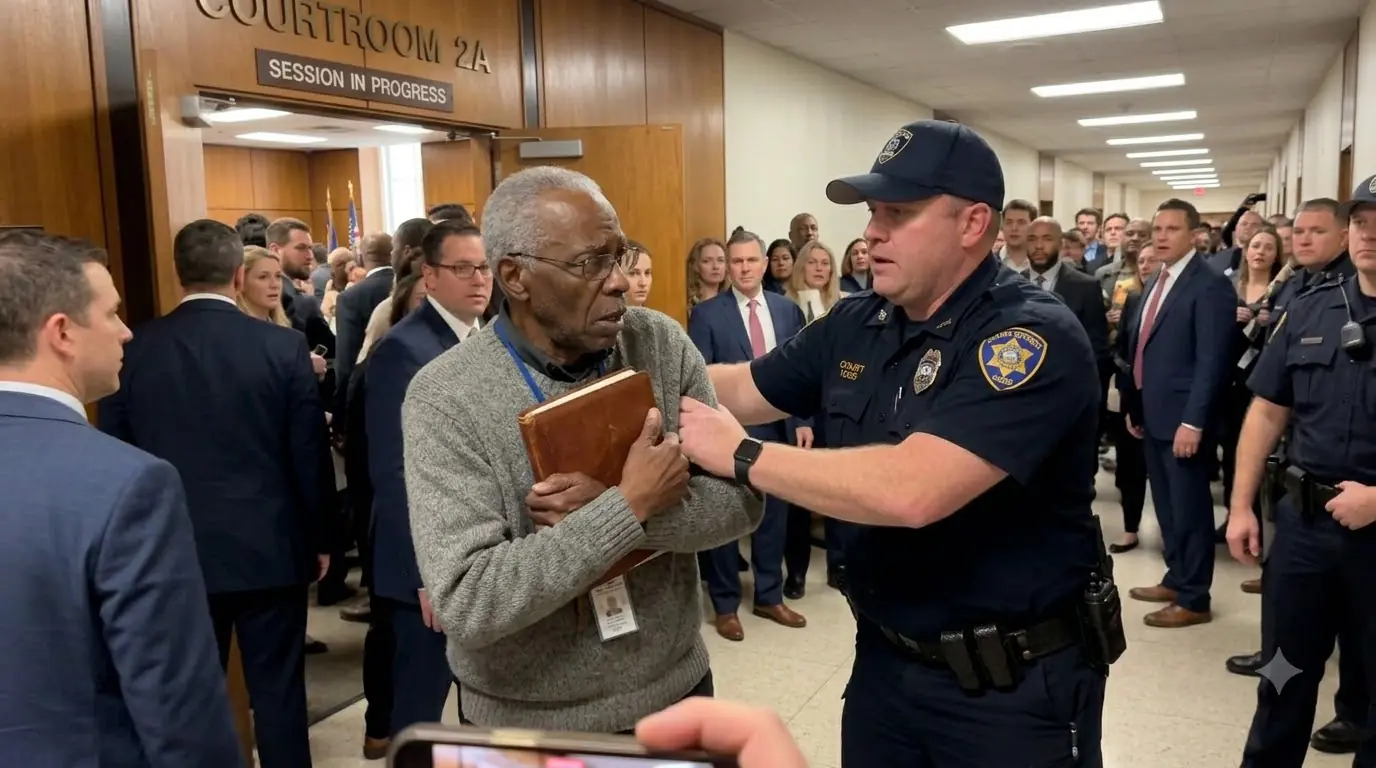
A pause, then a sound between a laugh and a gasp. Judge Keller, Lord above, 3 years and not a postcard. I know. I'm sorry. Grief makes poor correspondents.
He turned the pencil over in his fingers. Marjie, are you still clerk of records? Senior clerk now. Why do I feel like you're about to ruin my evening? Because you know me.
He looked at the names the screen. Six young men, six case numbers. I need certified copies of six case files by morning. Arrest reports, plea records, and every citizen complaint ever filed against badge number 8312. I need the originals matched against what was entered into evidence.
The line went quiet. Margie Doyle had spent 30 years around courtrooms. She could hear the shape of a thing before it was named. This is about the Brooks trial, she said. Courtroom four.
It is. That officer testified today. Word in the building is the kid's done for. The word is wrong. Another pause, then briskly the sound of a drawer opening.
Certified copies by eight. I'll bring them myself. She stopped. Welcome back, Your Honor. Miles set down the phone and looked at Ruth's photograph through the study door.
20 years of silence had just ended with one phone call. 11:00 found him still working. He never noticed midnight at all. Margie Doyle arrived at 7:50 in a raincoat the color of strong tea, pulling a document box on a luggage cart. She found Nora Whitfield at a corner table in the courthouse cafeteria, and she set the box down like an offering.
Certified copies, six case files, complaint index, and one extra item nobody asked me for. Margie tapped a thin folder on top. The hardware store on Carver Street got robbed two years ago. After that, the owner mounted a camera over his door. The county served him a preservation notice this morning at 6:00.
He was very cooperative. Apparently, he doesn't care for Officer Voss, either. Nora opened the folder, read the single page inside, and felt her heartbeat change gears. "Who are you people?" she whispered. "I'm a records clerk." Margie smiled.
"The gentleman in the gray sweater, you'll have to ask him yourself." At 9:00 sharp, courtroom four came to order. The state rested. And Nora Whitfield, who had walked in yesterday like an apology, stood up like a different woman. "Your Honor, before the defense begins, we move to admit the complete body-camera recording from Officer Voss's unit, together with its original metadata. We received the file from the county evidence server this morning." Calloway rose.
"Objection. The relevant portions are already in evidence." "The relevant portions," Nora said, "are exactly what we intend to establish." Judge Vance considered for a moment. Then nodded. "I'll allow it. Proceed." The screen on the side wall flickered to life.
The footage began in the patrol car. Dashboard lights. The radio murmuring. Then the picture jumped. One moment the cruiser was rolling past a laundromat.
The next moment, Elijah Brooks was already on the ground. Wrists behind him. Shouting that he had done nothing. Nora let the silence sit. Then she turned to the jury.
"The county's own logs show this camera records continuously. Yet the file in evidence skips from 9:36 to 9:41. Four minutes are missing. The four minutes that matter." She lifted a page. "And here is the metadata.
The original file was accessed and exported again at 2 minutes past 11:00 that same night from workstation 12 in the patrol annex. The workstation assigned to officer Derek Voss. The gallery made a sound like a kettle starting. Vance's gavel came down once. Voss was recalled to the stand.
The pressed uniform was the same, but the man inside it had changed sizes overnight. He kept his chin up. His thumb kept finding his belt looking for something to hook on to. Officer Voss, Nora said, "Why was the file exported from your workstation at 11:02 p.m.?" I don't handle the servers. The system glitches all the time.
Ask the techs. We did. The county technician certified there was no system fault that night. Export requires a logged user. The logged user was you.
Then somebody used my login. He smiled at the jury asking them to stay with him. Fewer of them smiled back this time. Look, I wrote my report. The camera does what it does.
I told you what happened out there. You did, Nora said. You testified the stop occurred around 9:15. The dispatch log, which we are now admitting, shows you called the stop in at 9:38. Dispatch does not glitch either, officer.
Which time would you like the jury to believe? It was dark. Times blur. Times blur, Nora repeated slowly, letting each word find a seat in the jury box. But your written report from that night says 9:40.
So your memory was sharp until this trial began, and then it moved 25 minutes in the direction that helped you. Calloway did not object. He sat very still with the expression of a man doing math he did not enjoy. In the back row, Miles Keller watched the young lawyer work and allowed himself a small private satisfaction. The questions were hers now.
She had stopped reading them off the page an hour ago. Then came Brennan. Voss's partner walked to the stand like a man waiting upstream. He had heard the morning's testimony from the hallway. Everyone could see he had heard it.
The thin ice from yesterday had cracks in it now, spreading. "Officer Brennan," Nora said gently. "Yesterday you testified that the defendant struck your partner. Today you've seen the missing 4 minutes and the altered export. I'll ask you once more and I remind you that you are under oath.
Did you see Elijah Brooks strike Officer Voss?" The pause was longer this time, 5 seconds, 6. Brennan looked at the rail in front of him. He did not look at Voss and that was the loudest thing he had ever done. "I did not see that," he said finally. "I was at the car.
When I turned around, the kid was already going down." "Did your partner appear injured?" "No, ma'am." "Did you ask him what happened?" Brennan's jaw worked. "He told me what to write." The kettle sound rose again and this time the gavel had to fall twice. Elijah's mother had both hands over her mouth. Voss sat in the second row with his neck going red above his collar, a man watching his own concrete crack in public. But Nora was not finished.
"Your Honor, the defense has one more exhibit, security footage from the hardware store at the corner of Carver Street, recorded the night of the arrest, produced this morning under subpoena with the owner's affidavit. "Objection." Calloway said, but his heart had left the word before it landed. "Overruled." The screen lit again. A high angle over a shop door. Streetlight.
Timestamp running in the corner, 9:37. And there was Elijah Brooks walking. Earbuds in. A paper bag in one hand. There was the cruiser sliding to the curb.
There was Voss getting out, pointing, shouting something the camera could not hear. And there was Elijah Brooks setting the bag down and raising both hands. Both hands. Open. Empty.
Shoulder high for three full seconds. Nobody in courtroom four breathed. The boy on the screen stood perfectly still, palms out. And the officer crossed the distance and shoved him into the wall of the hardware store. Then a knee, and the ground, and the wrists, and the shouting.
At no point, at no frame, did the boy swing. The camera across the street had no badge to protect. It just told the truth at 30 frames per second. Someone in the gallery began to cry. It was not Elijah's mother.
It was a stranger. An older woman in the third row. And somehow that was worse. Elijah himself stared at the screen like a drowning man watching a rope arrive. 19 years old.
Three years of his life on the table. Saved by a shopkeeper's $70 camera. Judge Vance watched the screen until the clip ended. Then she took off her glasses, folded them, and looked at the prosecution table for a long, terrible moment. Mr.
Calloway, I'm going to call a recess. I suggest you use it to confer with your office. Her voice could have frosted the windows. Court stands in recess until 1:00. The gavel fell.
The room exhaled, and as the gallery rose around him buzzing like a struck hive, Miles Keller sat quietly in the back row and looked at Derek Voss across the emptying benches. The officer was already looking at him. Nobody laughed in that hallway now. The recess hallway was crowded, and Derek Voss came through it like a storm front looking for a coastline. He found Miles Keller by the window drinking water from a paper cone.
You. The word arrived before he did. I don't know what you did, old man, but I know you did it. The records request, the camera, that little lawyer suddenly asking questions she's not smart enough to ask. She was always smart enough, Miles said.
She was only short on time. You think this is funny? Voss stepped in close, voice dropping into something uglier. I'm one radio call from arresting you for interfering with a police matter. You're nobody.
You're a bag of old clothes that wandered into my courthouse. I want you out of this building, or I swear I will drag you out in front of everybody. Phones were rising around the hallway now. The same hungry lenses from yesterday smelling a different meal. Go ahead, son, Miles said quietly.
Touch me. Add one more case file to the stack. Voss's hand actually moved. 2 in, maybe 3, toward the old man's collar. And that was when a voice cut across the hallway, flat and hard as a dropped beam.
Officer, step away from him. Now. Gus Halloran was crossing the corridor with his limp forgotten, and his face had gone pale in the way faces do when 40 years of memory finally finish their arithmetic. He stopped in front of Miles, and the old bailiff did something no one in that hallway could decode. He straightened his back, tucked his thumbs to the seams of his trousers, and stood at attention.
Good morning, Your Honor, Gus said. It took me 2 days. I'm ashamed of myself. The hallway went still. Voss blinked.
What did you call him? 11 years I worked his courtroom. Gus did not look at Voss. He could not seem to stop looking at Miles. I carried his calendar.
I saw him every morning at that stone bench. Your Honor, we thought you'd left the state. I left the third floor, Gus, Miles said gently. It's not the same thing. A door opened down the hall.
Judge Eleanor Vance stepped out of chambers, robe unzipped over street clothes, reading glasses still in one hand. Someone must have called her, or maybe 20 years of instinct had. She took five steps into the corridor, saw the old man by the window, and stopped as if the floor had ended. It is you, she said. I sat sidebar this morning telling myself I was imagining it.
She crossed the hallway, and a sitting judge of the county circuit, in front of clerks and lawyers and one paralyzed police officer, inclined her head. Chief Judge Keller, you hired me as your clerk in my first year out of law school. You taught me how to read a witness." Her voice caught, then leveled. "I sit in your courtroom, Your Honor, every day." The words went through the corridor like current through water. Chief Judge Keller.
The name on the brass plate outside courtroom four for two decades. The portrait hanging on the third floor landing, the one with the gray robe and the steady eyes. The one Derek Voss had walked past every single morning without once looking up. 3,000 mornings on that bench. The man who had run this entire courthouse for 20 years.
Sorted into the trash by a patrolman who never read the walls. The hallway phones caught everything. They caught Voss's face doing something complicated. Arrogance trying to hold a structure that was liquefying under it. They caught the half-step backward.
They caught the swallow. "Sir," Voss said. The word came out cracked, a syllable he had never once offered this man. "Sir, I didn't. Nobody told me you were." "You're standing in his courtroom, Officer," Gus said.
"You've been standing in it all week." Voss looked from the bailiff to the judge to the old man in the gray sweater, and you could watch the arithmetic land. The loiterer he had shoved, the grandpa he had mocked on camera, the bag of old clothes. He had spent two days feeding his own gallows one plank at a time. Miles folded the paper cone, dropped it neatly in the bin, and met the officer's eyes. "Wait outside," he said.
Down the hall, the clock ticked toward 1:00, and court came back into session. At 1:00, courtroom four was standing room only. Word travels fast in a small county, and faster in a courthouse with phones. Judge Vance took the bench and paused before calling the session to order. Her eyes found the back row, where the old man sat in the same gray sweater.
"The court notes the presence of the Honorable Miles Keller, retired chief judge of this circuit." Her voice was formal, but something warm ran underneath it. "Your Honor, there is a seat available at the front, should you prefer it." "The back row has been very educational, Judge." Miles said, "but thank you. I'll come forward." He walked up the aisle he had walked 10,000 times, in a robe, now in a cardigan. And the gallery watched him pass in absolute silence. He took the observer's chair beside the clerk's desk, 20 ft from the witness stand, close enough for Voss to feel it.
Nora rose, and this time she carried Margie's certified files. "Officer Voss, you remain under oath. I want to read you a sentence." She lifted the first report. "The subject became combative and struck me in the chest with a closed fist, at which point I employed department-approved control techniques." "Did you write that?" "Sounds like standard report language. It does sound standard." She lifted a second report.
"Because you also wrote it 3 years ago, about a different man, on a different street, word for word. 26 words in identical order. A third report. And 14 months ago, word for word. A fourth.
And here. And here. Six reports. One copied sentence. Zero coincidences.
The jury was leaning forward now, all 12 of them. "Officers use templates," Voss said. "Everybody knows that. Templates describe procedure." "This sentence describes an event." "Six different young men, officer, and every single one of them swung at your chest the exact same way?" "In the exact same words?" She set the files down. "Memory wanders.
Fiction repeats." "Who taught you that sentence? Or did you compose it yourself?" "I'm not answering that." "You just did." Nora said quietly. "Nothing further on the reports." "One last question." "You testified this morning that times blur." "Yet 2 days ago, you told this jury 9:15 with complete confidence." "Today, the dispatch log says 9:38." "When you change a time by 25 minutes, officer, the camera gap you created stops looking like a glitch. It starts looking like a plan." "Objection," Callaway said, half rising out of habit more than hope. "Withdrawn," Nora said.
The jury heard it anyway. Vance's gavel hovered but did not fall. Some sentences deserve their echo. Voss left the stand a different size than he had entered courtroom four 2 days earlier. He walked past the observer's chair on the way to his seat.
And for one moment, his eyes met the old man's. Miles did not gloat. He simply looked at him the way he had looked at a thousand defendants with a terrible patient sadness. Somehow that was worse than anger. Voss sat down and stared at his own hands.
At the back of the courtroom, the doors opened without sound. Chief Patricia Lawson stood against the rear wall. She had not been announced. She had come alone in full uniform, arms folded, face carved from quarry stone. She watched her officer for a long moment.
20 years of careful career sat in that stare weighing 30 seconds of decision. Calloway rose slowly. Your Honor, in light of today's evidence, the state requests a brief conference with defense counsel. The conference took 11 minutes. The gallery counted every one of them.
When the lawyers returned, Calloway stood with the posture of a man performing surgery on his own case. Your Honor, the state moves to dismiss the charge of assault on a law enforcement officer. A breath ran through the room. The state is also referring the matter of Officer Voss's testimony and the evidence file to the District Attorney's office for review. "Noted," Vance said, "and granted.
We will hear closing argument on the remaining count tomorrow at 9:00." Her gaze moved to Voss, then to the chief by the back wall. "I expect everyone who testified this week to be present." The gavel came down clean. Voss stood and found his own chief watching him and learned what cold really was. Tomorrow, there would be a verdict. Tonight, somewhere in the patrol annex, a third drawer was waiting to be opened.
The officer's story had collapsed, his identity had been exposed, and the courtroom now knew who Miles Keller truly was. But one final judgment still remained.
>>>>>>NEXT CHAPTER 3: The Ruling Outside the Courtroom <<<<<<