Chapter 3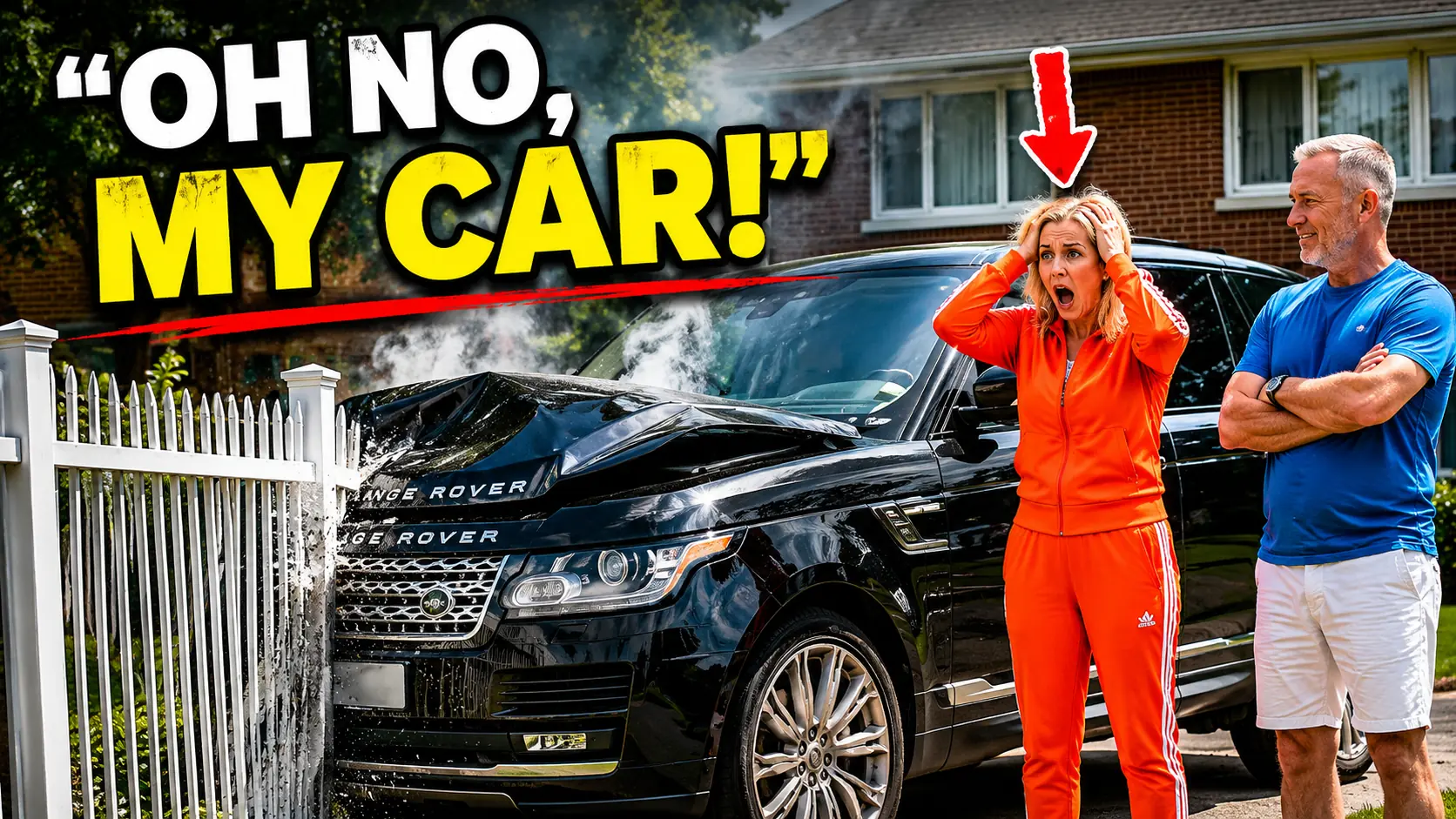
It didn’t take long for Karen to shift from humiliation to fury. If there’s one thing an HOA queen can’t stand, it’s being laughed at. She stood there surrounded by neighbors snickering into their phones, her Range Rover bleeding fluids onto the street, and me leaning smugly against my fence. Her face twisted like she’d just bitten into a lemon soaked in vinegar. “This is an outrage,” she screamed, pointing at me as if I’d personally pushed her SUV into the steel posts. “He set a trap. This is a violation of every HOA regulation. He’s endangering the entire neighborhood.” The crowd didn’t buy it. If anything, their laughter grew louder. But Karen wasn’t one to back down. She pulled out her phone and barked into it like she was ordering an airstrike. Within minutes, I saw a familiar figure striding down the sidewalk. Richard Langley, the HOA president. Now, Richard was a tall, thin man in his 60s who always looked like he’d been ironed that morning. Perfectly pressed khakis, polo tucked just right, clipboard in hand like it was surgically attached. Normally he carried himself with the calm authority of a man who enjoyed being in charge of petty neighborhood disputes. But as he approached the chaos unfolding in front of my house, I could see the beads of sweat forming at his temples.
Karen rushed to him, clutching his arm dramatically. “Richard, thank God you’re here. This lunatic has turned his fence into a death trap. Look at what he’s done to my car. You have to fine him. Expel him. Something.” Richard blinked, adjusting his glasses as his eyes moved from Karen’s mangled SUV to my perfectly intact fence. Then he looked at me, still leaning casually against the boards, arms folded like I was posing for a victory portrait. “Mark,” he said carefully. “What exactly happened here?” I smiled politely. “What happened is Karen drove through my property again. Except this time, the fence didn’t roll over and die. It stood its ground. And before you ask, yes, I have the paperwork.” I pulled a folder from under my arm—the same folder I’d kept ready for weeks—and handed it over. Inside were the permits, receipts, and a copy of the HOA’s own bylaws with the relevant section highlighted in neon yellow. Richard flipped through the pages, his frown deepening with each turn. Karen was practically vibrating beside him. “Don’t listen to him. He built this on purpose to hurt me. This is sabotage. You have to fine him. Richard, he’s in violation.” Richard sighed, rubbing the bridge of his nose. “Karen, did you drive through his fence?” Karen blinked, stunned that he would even ask. “That’s not the point. He shouldn’t have built something so dangerous.” “That is the point,” I cut in smoothly. “That fence is on my property. It’s legal. It matches the community aesthetic, and I have security camera footage of her plowing through it. Would you like me to show it to everyone here?” I tapped the phone in my pocket. I didn’t even need to pull it out. The threat alone was enough. The neighbors murmured eagerly, some holding up their own phones, already filming this HOA soap opera like it was the season finale of their favorite drama. Karen’s jaw dropped. For once, she was speechless.
Richard cleared his throat. “Mark is correct. Homeowners are allowed to reinforce their fences as long as they maintain outward appearance. And Karen, if you’ve been driving through his property—” “He provoked me,” Karen blurted, her voice shrill. “He’s been targeting me, setting me up. This whole thing is entrapment.” The word “entrapment” nearly made me laugh out loud. She sounded like a criminal caught on a sting operation, not a suburban tyrant who thought she could drive wherever she pleased. “Entrapment?” I said, raising an eyebrow. “No one forced you to aim two tons of SUV at my fence, Karen. That was all you.” The crowd chuckled again. Someone whispered, “She’s really losing it.” Karen whirled on them, shouting, “Shut up, all of you. This is harassment.” But the more she screamed, the less power she seemed to have. For once, the neighbors weren’t cowering. They were enjoying the show. Richard finally raised his hand for silence. “Enough. Karen, I’ll need a written statement from you. Mark, I’ll review your documents in detail, but at first glance, everything looks compliant.” Compliant. The sweetest word I’d ever heard. Karen’s face turned crimson. She stomped her foot like a toddler denied candy. “This isn’t over. You’ll regret this, Mark. You’ll all regret this.” But even as she ranted, the authority had slipped from her voice. She wasn’t the queen anymore. She was the jester, and the whole neighborhood was laughing. I leaned toward her, lowering my voice just enough for only her to hear. “Funny thing about fences, Karen. Sometimes they keep people out. Sometimes they keep people in. Either way, yours just trapped you.” Her eyes widened, lips trembling with rage, but she had no comeback. Not this time. As Richard walked away with my paperwork, neighbors clapped me on the shoulder, whispering things like, “About time someone stood up to her” and “Well played, Mark.” For the first time, I wasn’t the victim anymore. I was the man who had turned the tables. And deep down, I knew this was only the beginning. Karen wasn’t the type to lick her wounds quietly. No, she’d come back swinging. But for now, for now, I savored the victory. The queen had been dethroned.
The wrecked Range Rover didn’t stay a private embarrassment for long. By Monday morning, the whole neighborhood was buzzing. You couldn’t walk past the coffee shop on the corner without hearing snippets. “Did you see the video?” “She really thought she could win against a fence.” “Best HOA drama since the pool incident of 2019.” And oh yes, there were videos. At least half a dozen neighbors had captured the crash from different angles, and clips were already circulating in group chats, on Facebook, even on TikTok. One of them even set it to dramatic opera music. And I’m not ashamed to admit, I laughed so hard I nearly spilled my coffee. Karen, of course, was furious. She tried to do damage control, storming around with her head held high, barking at anyone who so much as chuckled in her direction. But the more she raged, the more powerless she looked. The image of her stumbling out of her mangled SUV, thorns stuck to her blouse, had burned itself into everyone’s memory. By midweek, the insurance adjuster showed up. A short man in a crisp suit, clipboard in hand. He circled the Range Rover, which still sat in Karen’s driveway like a monument to her hubris, clicking his tongue. I watched from my porch, coffee mug in hand, trying not to look too obvious. Karen was right there beside him, gesturing wildly toward my fence. “He did this. He built it like a trap. You have to mark it as vandalism so I can file the claim.” The adjuster raised an eyebrow. “Vandalism, ma’am? With respect, it looks like you drove your vehicle into a reinforced fence.” Karen’s voice shot up an octave. “He tricked me. He built it to cause damage.” The adjuster crouched down, ran his hand along the bent metal undercarriage, and sighed. “Ma’am, your policy doesn’t cover intentional trespass. And from what I hear, this isn’t the first time you’ve done this.” I nearly spit out my coffee. Insurance adjusters talk to people. People talk to neighbors. And neighbors—oh, they’d been waiting for this moment. Sure enough, by the end of the day, Mrs. Jenkins from across the street was chatting with the adjuster, waving her hands as she recounted the countless times she’d seen Karen cut across my property. Then Mister Lopez chimed in, describing how his kids had to stop playing in my yard because Karen’s SUV was a constant hazard. Testimony after testimony piled up, and soon it wasn’t just gossip. It was evidence. Karen’s little empire of intimidation crumbled faster than that bumper.
At the next HOA meeting, she tried to reassert control. She marched in with her usual designer outfit, though the scratches on her arms were still faintly visible. She slammed her binder down on the table and demanded action against me. “This man is a menace,” she declared, pointing at me like she was accusing me of treason. “He deliberately sabotaged his fence to cause damage. He’s a danger to the community.” I simply opened my folder again, sliding across the receipts, bylaws, and just for fun, a USB stick with the footage from my security cameras. “Everything I did was legal,” I said calmly. “And here’s proof of exactly what happened. Karen drove into my property again.” The murmurs in the room were deafening. I glanced around and saw neighbors nodding, some even smirking. A few months ago, no one would have dared cross her, but now they smelled blood in the water. Richard, the HOA president, adjusted his glasses. “Karen, based on the evidence, it appears Mark has acted within his rights. Furthermore, repeated trespassing is itself a violation of HOA rules.” Karen’s jaw dropped. “You’re taking his side? After everything I’ve done for this community?” Someone from the back piped up. “Yeah, like fining us for leaving holiday lights up too long.” Laughter rippled through the room. Karen tried to shout over them, but the tide had turned. Her allies on the board shifted uncomfortably, unwilling to go down with her sinking ship. She wasn’t the queen anymore. She was a liability. And then came the cherry on top. A letter from the insurance company circulated among the board stating that Karen’s claim was being denied due to negligent and repeated trespass. Worse, they flagged her account for potential fraud because she’d initially reported it as vandalism. The look on her face when that was read aloud? Priceless. I leaned back in my chair, arms crossed, and let the silence stretch before I said, “Funny how rules work when you actually follow them.” The neighbors chuckled again. This time, no one hid it. Karen sputtered, tried to rally, but the more she spoke, the more ridiculous she sounded. The woman who once silenced a room with a glare was now being openly mocked by the very people she used to lord over. Every testimony, every laugh, every shake of the head stripped away another layer of her authority. By the end of the meeting, Richard closed his folder and said flatly, “This board will not be pursuing action against Mark. In fact, we’ll need to discuss your conduct further, Karen.” Her cheeks burned crimson. She grabbed her binder, hissed at me under her breath something about regret and lawsuits, and stormed out, heels clicking furiously against the floor. I watched her go, a slow smile spreading across my face. Because this wasn’t just about a car anymore. It wasn’t just about a fence. Karen had built her power on intimidation, on silencing dissent, on bending the rules until they broke. But now the rules were bending back. And the community that once feared her was starting to laugh at her instead. And there’s no coming back from that.
If there’s one thing I learned about Karen Whitmore, it’s that humiliation doesn’t humble her. It feeds her rage. After the insurance debacle and the HOA meeting where she was essentially hung out to dry, she walked around the neighborhood like a volcano ready to blow. Her usual smug air was gone, replaced by an almost frantic energy. She barked at delivery drivers for parking too long, scolded kids for riding bikes on the sidewalk, and snapped at anyone who dared greet her with anything less than reverence. But the neighborhood had changed. People weren’t afraid anymore. Instead of scurrying away, they smirked. They whispered. They pulled out their phones. And every sideways glance, every chuckle pushed Karen closer to the edge. It finally happened on a hot Thursday afternoon. I was out front watering the lawn, enjoying the quiet, when I heard the unmistakable growl of her Range Rover’s engine. She pulled out of her driveway—not toward the grocery store, not toward the community center. No, she came straight for me. Her SUV screeched to a halt right in front of my yard. She climbed out, face red, sunglasses askew, and stomped across the grass. “This is your fault,” she screeched, pointing at me as if the world was waiting for her to deliver a final verdict. I set down the hose and raised an eyebrow. “Karen, you’ve been saying that for weeks. You might want to come up with some new material.” Her hands shook, her lips trembled, and then in one swift motion, she marched over to my mailbox—the sturdy government-issued one I’d had since I bought the house—and ripped it clean out of the ground. Concrete base and all. For a moment, time froze. The sight was almost surreal. There she stood, clutching my mailbox like a trophy, dirt and concrete crumbling from the base, her chest heaving like she’d just slain a dragon. And then reality hit her—along with everyone else. Gasps erupted from across the street. Curtains twitched. Phones came out. Within seconds, at least three neighbors were recording. Mrs. Jenkins shouted, “That’s a federal offense, you lunatic!” Karen spun around, eyes wild. “He deserved it. He’s been tormenting me. He’s making a mockery of this neighborhood.” I couldn’t help myself. I smiled, calm as ever. “Karen, you just committed a federal crime in broad daylight on camera. Congratulations.” She blinked, her grip tightening on the mailbox. “No, I—I was provoked. This is self-defense.”
Before I could even respond, flashing blue and red lights lit up the street. Two squad cars rolled up, sirens cutting through the summer air. Apparently, someone had called 911 the moment they saw her storm out of her SUV. The officers stepped out, hands resting casually near their belts. One of them, a tall woman with mirrored sunglasses, looked from Karen to the mangled mailbox in her hands. “Ma’am,” she said flatly. “Is there a reason you’re holding a federal mailbox?” Karen froze, caught like a deer in headlights. “He—he set me up,” she sputtered, pointing at me again. “He’s been harassing me. This is entrapment.” The officer tilted her head. “Ma’am, destroying a mailbox is a federal crime. You’re under arrest.” Gasps turned into cheers. Neighbors clapped. Someone even whistled. And Karen? She shrieked as the officers moved in, dropping the mailbox with a heavy thud. “You can’t do this to me. I’m on the HOA board. I’ll have your badges.” The officer didn’t even flinch. She pulled out the cuffs with a metallic click. “Ma’am, place your hands behind your back.” Karen flailed, screeching about her rights, about conspiracies, about how the neighborhood was out to get her. But it didn’t matter. Within seconds, her wrists were cuffed and she was being led to the squad car while the entire cul-de-sac filmed the spectacle. I almost felt sorry for her. Almost. As they pushed her into the back seat, she locked eyes with me through the window. Her face was a mask of fury, tears mixing with mascara, lips curled into a snarl. She mouthed, “This isn’t over.” But we both knew it was. Because this wasn’t just a neighborhood squabble anymore. This was the law. HOA bylaws might bend. Insurance companies might hedge. But federal crimes? That’s the endgame. As the squad cars drove off, mailbox still lying in the dirt like a slain monument, neighbors gathered around me, clapping me on the back. Jenkins grinned ear to ear. “Mark, I’ve lived here 30 years, and I’ve never seen justice so sweet.” I chuckled, shaking my head. “Funny how sometimes all it takes is a fence and a mailbox to bring down an empire.” The neighborhood erupted in laughter. Kids cheered. Phones buzzed as footage spread faster than wildfire. And me? I stood there, arms folded, watching the flashing lights disappear down the street, savoring the moment I’d been waiting for. Karen had finally lost. Not just her car. Not just her reputation. But her crown. And the neighborhood? It would never be the same.
Karen’s arrest was the talk of the neighborhood for weeks. You’d think people would eventually get bored, but no. This wasn’t just gossip. It was a saga—the downfall of a tyrant—and folks couldn’t stop replaying it. Every time I walked down the street, someone would stop me to relive the moment. “Did you see her face when the cuffs clicked?” “I still can’t believe she ripped out a mailbox.” “That’s going viral for sure.” And viral it did go. By the following week, footage of her meltdown had made its way online. Millions of views. Headlines on local news blogs: “HOA board member arrested for mailbox meltdown.” Even the city paper ran a column about the dangers of HOA power trips. For once, Karen’s fame wasn’t self-declared. It was earned—and not in the way she liked. Of course, her arrest wasn’t the end of it. If anything, it was just the beginning of her real punishment. The HOA convened an emergency meeting the very next week. For once, it wasn’t me in the hot seat. No, this time the board members sat stiffly while Richard read aloud the charges: destruction of property, attempted insurance fraud, trespassing, and of course, the big one—tampering with a federal mailbox. Karen wasn’t present, of course. She was too busy lawyering up and screaming about conspiracies. But the board didn’t need her there to make their decision. They voted unanimously. Karen was stripped of her board position, banned from ever holding office in the HOA again. The news spread like wildfire. I caught snippets from passing neighbors. “Finally, we can plant flowers without her approval.” “Guess we won’t be getting any more of those threatening letters about garbage cans.” Relief was in the air. It was like the neighborhood had collectively exhaled for the first time in years.
But the punishments didn’t stop at HOA politics. Her insurance company officially denied her claim, citing negligence and misrepresentation. Her premium skyrocketed. Repairing the Range Rover was going to cost tens of thousands out of pocket. Then came the fines: city citations for reckless driving, HOA penalties for property destruction, legal fees piling higher than the fence she hated so much. And the neighbors? Oh, they weren’t forgiving. People she once ordered around now avoided her. Friends stopped coming by. Her so-called allies on the board wouldn’t even make eye contact. She became a pariah in her own kingdom, walking the streets with her head down, sunglasses hiding eyes that once glared with superiority. It all came to a head a month later when the for-sale sign went up in front of her house. Big red letters. Price reduced. I’ll admit, I popped a bottle of champagne that night. Quietly, of course. I wasn’t about to throw a parade. But watching Karen pack up her oversized SUV with boxes, slamming doors, muttering curses under her breath—it was better than fireworks. As for me, I rebuilt the fence one final time, not because it needed it, but because I wanted to make a statement. I sanded the boards smooth, painted them bright white, and hung a custom wooden plaque on the section where Karen’s car had met its fate. Burned into the wood in neat block letters were the words: “Karen’s Last Crash.” Neighbors loved it. They laughed, took photos, shared it around. It became a symbol not just of my little victory, but of the community finally standing up to her tyranny. For once, the HOA didn’t fine me. In fact, Richard himself stopped by, shook my hand, and muttered, “Good work, Mark. You did what the rest of us couldn’t.” And I’ll admit, it felt good. Vindicating. I wasn’t just the guy with the broken fence anymore. I was the guy who beat Karen at her own game—and did it legally, publicly, and permanently.
But beyond the jokes, beyond the satisfaction, there was something else. A lesson. Because the truth is, Karen’s downfall wasn’t about fences or bylaws or even cars. It was about arrogance. About what happens when someone believes they’re above the rules, untouchable—until reality smacks them in the face, or in this case, in the front bumper. Karen learned the hard way that entitlement has consequences. And the rest of the neighborhood learned that sometimes all it takes is one person standing firm, one fence standing tall, to change everything. At the end of the day, this story isn’t really about a car wreck or a mailbox or even Karen herself. It’s about what happens when someone abuses power and how patience, persistence, and a little creativity can turn the tables. I could have lost my temper months earlier. I could have yelled, cursed, maybe even gotten myself into real trouble. But instead, I waited. I studied the rules. I played the long game. And when the moment came, Karen walked straight into her own trap. That’s the thing about people who think the rules don’t apply to them. They create their own downfall. They get so blinded by arrogance that they can’t see the wall in front of them, even when it’s painted bright white.