Chapter 3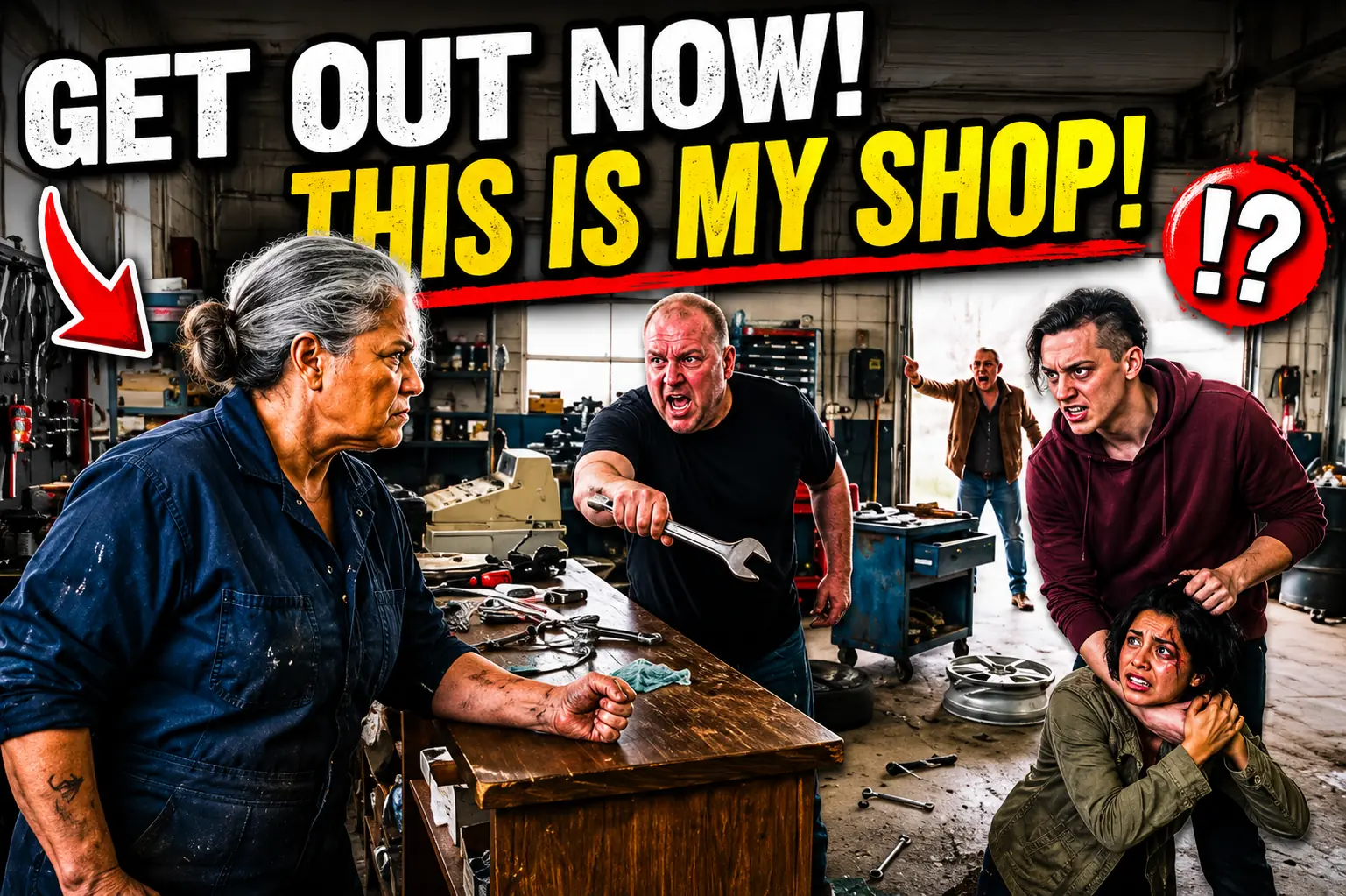
By the time the police finally arrived—called by half the regulars Ruth had sent home earlier that morning—there was nothing left in that garage but broken glass, dark stains on the concrete, and one old woman sitting on an overturned crate with a split lip and a shop rag pressed against the back of her skull. Dean Ror was arrested at the scene along with six of his crew who could still stand well enough to be walked out in handcuffs. The investigation that followed turned up months of extortion records, security footage from half the businesses along that stretch of road, and sworn statements from shop owners who’d been waiting a long time for somebody to ask them the right questions. The Copperhead crew collapsed within the month. The hardware store stopped paying inside a week. The feed store’s owner walked down personally and told whoever was left running things that he was finished paying anybody anything and got no argument back. Dean went to prison still owing real money to real people he’d never get the chance to pay back.
Two years into his sentence, he wrote Maya a letter. Ruth never read it, but Maya kept it folded in a drawer behind the parts counter for the rest of her life. What she said once years later was that the letter hadn’t asked her for anything. It had just said he was sorry—plainly, without trying to make the apology smaller than it actually was. That was the first time in Maya’s life that anybody who’d hurt her had said sorry without also handing her a reason it wasn’t really their fault. As for who Ruth Callaway really used to be, the town mostly let it lie. A handful of the older residents had recognized the name the moment it surfaced, and they understood in their own quiet way why a woman who’d once been what Ruth Callaway had been might want to spend the second half of her life changing oil and pouring coffee for truckers and never once raising her voice at another living soul. The investigators who came through Ruth’s garage over the following two weeks asked her the same handful of questions in a dozen different ways. And she gave them the same handful of answers every time—plain and short, the way Frank always used to talk to strangers. She never once mentioned the steel box or the patch or the name Otis Greeter had said out loud in a body shop across town. As far as the official record was concerned, an old woman had defended herself and her employee against an extortion crew, and that was the whole of it.
Otis Greeter surprised everyone, including himself, by walking into the police station on his own two feet nine days after the ambush and telling them everything—every name, every payment, every threatened business along that stretch of road. When one of the detectives asked him why, after riding with men like that for the better part of a decade, he only said that he’d looked an old woman in the eye through a garage window that night and understood for the first time in a long while exactly which side of his own life he wanted to be standing on when it ended. Dean Ror’s trial ran through most of that winter. Ruth attended two sessions, sitting quietly near the back, never once approaching him, never once looking away when he glanced toward her. Maya went with her both times and held her hand through the parts neither of them wanted to hear again. Dean pleaded guilty in the end to nearly everything, and the judge handed down a sentence long enough that most of the men who’d ridden with him would be old themselves before he saw daylight again.
The town of Mil Haven Ridge took its time deciding what to make of the whole thing. For a while, half the county seemed to know somebody who claimed to have seen the garage that morning, and the story grew a little wilder with every retelling until it barely resembled what Ruth and Maya had actually lived through. Ruth let the stories run their course without correcting a single one of them. She’d learned a long time ago that the truth eventually settles its own weight without anybody’s help. By spring, the envelopes stopped appearing on Friday mornings up and down that stretch of road, and the businesses that had spent a season paying strangers for the privilege of staying open finally started keeping every dollar they earned. The hardware store owner drove past the garage most weeks after that just to wave. He never said much. He didn’t need to. Sometimes the most dangerous people in the world want more than almost anything else to be left alone in peace. They’ve already seen exactly where the other road goes, and they know better than anyone alive that it doesn’t lead anywhere good.
Maya stayed. She put the patch back into its steel box herself and handed it to Ruth with both hands. Neither of them talked about that day much afterward, but something between them had shifted permanently in a way that never required words to be real. Maya had seen the woman underneath the coverall now, and what she felt afterward instead of fear was something closer to what a daughter feels for a mother who has finally let her see the whole of her. She understood why Ruth had never once asked where she’d been running from before she showed up at that garage door. A woman like Ruth didn’t need to ask a question like that. She’d spent a good part of her own life running from something too. And she’d finally found a place worth stopping in, right up until the day somebody tried to take it from her. The garage reopened three days after that morning. New glass in the bay door. The same faded photograph still hanging above the parts counter. The regulars came back and brought friends. And for a good long while, that little roadside garage in Mil Haven Ridge stayed busier than it had been in all eighteen years combined. Ruth never cared much for the fuss. She poured the coffee, waved off the thanks, and slowly the fuss wore itself down into something closer to normal. Life went back to being quiet, exactly the way Ruth preferred it.
Think back for a moment to where this whole thing started. A motorcycle knocked onto its side. A young woman forced down onto her knees in front of a room full of strangers. An old woman setting down a wrench, slow and careful, like it mattered. It looked in that very first moment like a mismatch nobody could survive. It looked like the world doing exactly what the world does too often—the strong taking from the weak, the young rolling over the old. But that’s the thing about quiet women the world keeps forgetting to be afraid of. The quiet isn’t weakness. Sometimes the quiet is a choice made by somebody who has already been everywhere violence can take a person and decided on purpose to come back from it and pour coffee instead. Dean Ror looked at Ruth Callaway that first morning and saw an easy mark. What he should have seen was a woman who’d set down a heavy burden a long time ago and who would pick it back up exactly once for exactly the right reason and then set it down again for good.
Ruth Callaway ran that roadside garage for another eleven years after that morning. She finished the motorcycle under the canvas cover the following spring, rode it exactly once around the block with Maya standing in the driveway watching, and then put it back under its cover for good. Because some things are better finished than used. Maya finished her own apprenticeship two years after that morning and never once thought about leaving. She learned the business the way Ruth had learned it from Frank—one quiet lesson at a time—until she could read an engine the way Ruth read a room. She kept the same hours Ruth kept, 6:00 sharp every morning, because by then it wasn’t Frank’s habit anymore or Ruth’s habit anymore. It was simply how the garage ran. The photograph above the parts counter stayed exactly where it had always hung. Ruth and Frank in leather, flanked by names Maya never once heard spoken out loud, not even after everything. Some mornings, sweeping up before the first customer arrived, Maya would stop in front of it for a moment and try to picture the two of them young. Before any of it. Before the road and the losses and the promise made over a grave two towns over. She never quite managed it. To her, they would always be exactly what they’d become. Two people who’d chosen quiet and paid for it fairly, and never once asked anybody to feel sorry for the cost.
Ruth passed away quietly in her sleep in the small apartment above the garage where she’d lived the whole time since burying Frank. Half the town turned out for the funeral. Maya, who by then had taken over running the place herself, kept Ruth’s stool empty behind the parts counter for years afterward and never let a single person sit in it. And somewhere in a steel box in the back office, there’s still an old leather patch frayed at every edge that nobody has ever needed to take back out again. Because by then, everyone who needed to know already knew exactly who Ruth Callaway had been and exactly who she’d chosen to become instead.