Cooper is still very tired, but today we can finally say that we are seeing small, encouraging changes.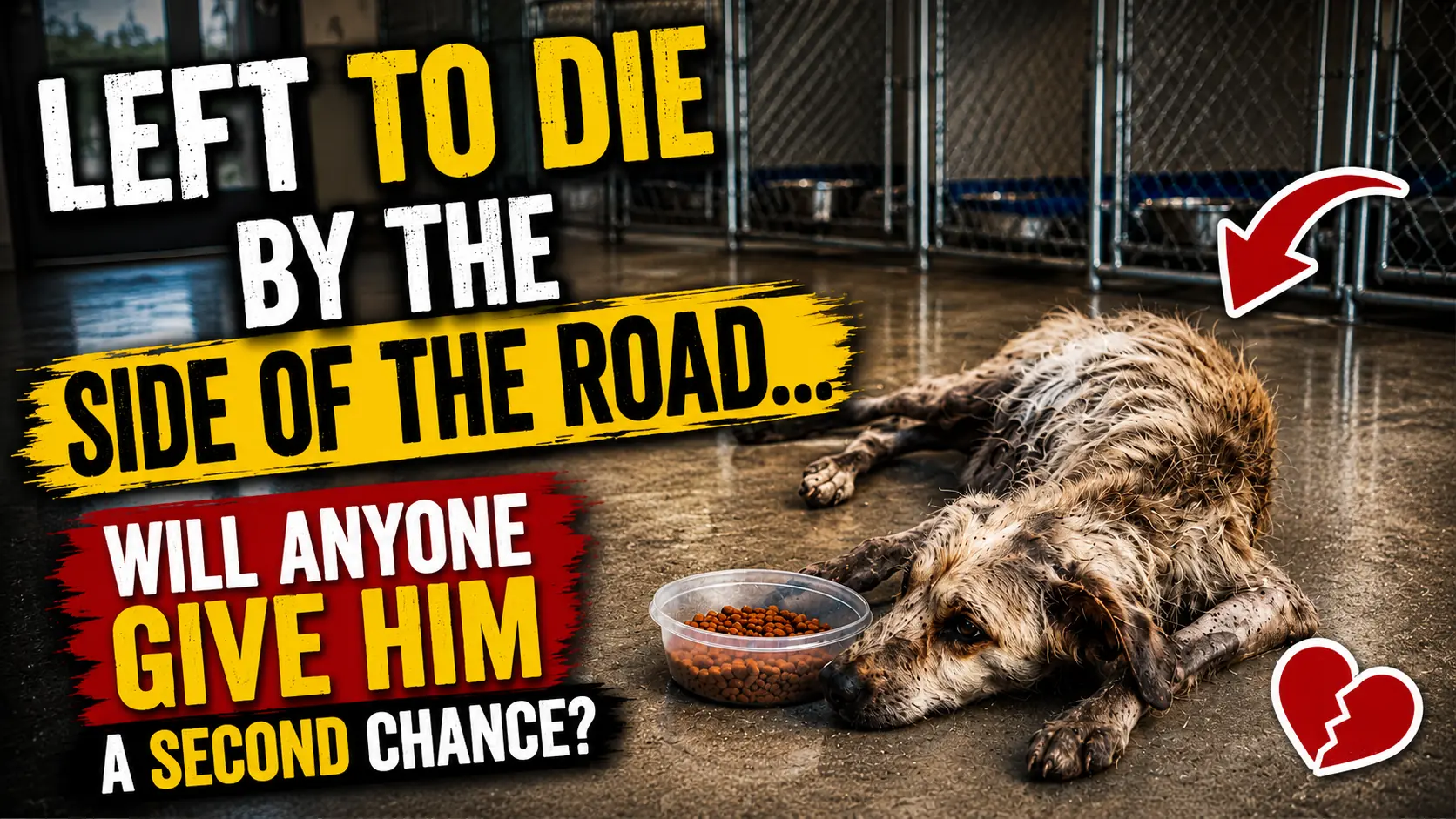
He remains under close veterinary supervision because his condition when he arrived was concerning. He was weak, dirty, dehydrated, and noticeably underweight beneath his rough coat. Most troubling was how little energy he seemed to have.
Even standing for long periods appeared difficult.
During his initial examination, our veterinary team checked carefully for injuries, infection, pain, gastrointestinal problems, and other possible causes of his weakness.
Fortunately, we did not find an obvious major traumatic injury.
His condition appears more consistent with prolonged neglect of basic needs, poor nutrition, dehydration, skin irritation, and physical exhaustion, although we are continuing diagnostic testing and monitoring rather than assuming we know his complete history.
His heart and lungs are being monitored, and blood work was performed to look for anemia, infection, organ abnormalities, and other conditions that could contribute to his fatigue.
Some values reflected the physical stress his body has been under, but at this stage our veterinarians believe supportive care, nutrition, rest, and continued observation are appropriate while we evaluate how he responds.
Cooper's appetite is one of the things we are watching most closely.
On his first day, he showed interest in food without having enough stamina to eat a normal meal.
He would smell the bowl.
Lift his head.
Take a few pieces.
Chew slowly.
Then stop.
Instead of removing the food or encouraging him too aggressively, caregivers allowed him to rest and offered small portions at appropriate intervals.
That approach has helped.
Cooper is now eating more consistently, although he still does not finish every serving.
Some meals are better than others.
This morning, he lifted his head as soon as the food bowl was placed nearby.
He ate several bites without assistance.
Then he paused.
His eyes became heavy again, and he slowly lowered his head beside the bowl.
A caregiver remained sitting several feet away.
Cooper looked toward her.
And his tail moved across the floor.
Once.
Then again.
A few slow movements.
For a healthy dog, a wagging tail might be completely ordinary.
For Cooper right now, we notice every one.
Not because a tail wag automatically means a dog is happy, but because Cooper is beginning to respond more consistently to familiar voices and gentle attention despite how physically depleted he still feels.
His hydration has improved since intake.
He has received supportive fluid therapy as needed, and fresh water remains easily accessible without requiring him to walk across the kennel.
We are also being careful with nutrition.
When a dog arrives significantly underconditioned, simply providing unlimited food is not always the safest approach.
Cooper's meals are measured and divided into manageable portions so his veterinary team can increase his intake according to how his body responds.
We want steady recovery.
Not rushed recovery.
His skin and coat will also require time.
The photograph shows how rough and dirty his coat was when he arrived. Once he was medically stable enough, staff began gently cleaning him in stages rather than putting him through a long, stressful grooming session.
There is irritated skin beneath some areas of the coat, and our veterinary team is treating those areas appropriately while watching for secondary infection.
Already, Cooper seems more comfortable.
But he is still spending much of his day resting.
We have moved him away from the busiest part of the shelter whenever possible so he can sleep without constant barking and foot traffic.
He has soft bedding now, although during the earliest stage of his care he sometimes chose the cool floor instead.
We let him choose.
Eventually, Cooper began using the bedding more often.
Yesterday evening, one of our caregivers found him sleeping with his entire body stretched across a blanket.
That was new.
Previously, he often remained curled tightly or rested with his head low while still watching the room.
Now we occasionally see him fall into deeper sleep.
His body relaxes.
His breathing becomes slow and regular.
His eyes stay closed even when someone quietly enters.
Rest is part of his treatment too.
Emotionally, Cooper is proving to be an exceptionally gentle dog.
He does not demand attention.
He does not have enough energy for that yet.
Instead, he watches.
When a familiar caregiver approaches, his eyes follow.
Sometimes his head comes up.
And increasingly, his tail begins moving.
One staff member has developed a routine with him.
She sits on the floor near his bedding without immediately touching him.
For the first few days, Cooper simply watched her.
Then he began shifting slightly closer.
Yesterday, he stretched one front paw toward her.
She moved her hand close enough for him to sniff.
Cooper rested his muzzle against her fingers.
They stayed that way for several minutes.
Those quiet interactions are how we are building trust.
We do not know what Cooper experienced before he reached us.
We cannot say that he never had someone who loved him.
But right now, he behaves like a dog who needs time to understand that care will continue tomorrow.
So we are giving him repetition.
The same gentle voices.
The same feeding schedule.
Fresh water.
Clean bedding.
Medication when needed.
A quiet hand offered without forcing contact.
Then we do it again the next day.
His mobility is also slowly improving.
Initially, Cooper preferred not to stand unless necessary.
When he did rise, his movements were slow and his endurance was poor.
Now he is standing more frequently on his own.
He can walk short distances for bathroom breaks and then return to rest.
We are intentionally keeping those outings brief.
This is not the time to build endurance aggressively.
His body needs nutrition and recovery before longer exercise becomes appropriate.
When Cooper becomes stronger, our veterinary team will reassess his muscle condition and determine whether gradual conditioning or rehabilitation exercises would benefit him.
For now, success might mean standing without hesitation.
Walking a little farther.
Eating several additional bites.
Holding his head up for another minute.
Those are the milestones we celebrate.
There was one especially encouraging moment this week.
A caregiver entered with his meal.
Cooper was lying down.
Usually, she would place the bowl directly beside him.
This time, before she reached his bedding, Cooper pushed himself upright.
He remained standing.
His tail gave several small wags.
Then he walked the short distance toward her.
It was only a few steps.
But nobody in the room treated those steps as ordinary.
After eating, Cooper returned to his bedding and slept for nearly two hours.
Recovery often looks exactly like that.
A little effort.
A little progress.
Then a lot of rest.
We are also beginning to see more awareness of the world around him.
He notices when the kennel door opens.
He lifts his head when food is prepared.
He watches other dogs pass at a distance.
Sometimes he sniffs a soft toy placed beside his blanket, although he has not shown much interest in playing yet.
That is perfectly fine.
Cooper does not need to perform happiness for us.
He needs to heal.
The toys will still be there when he is ready.
Our next medical steps will depend partly on his continued blood work and response to treatment.
His weight will be checked regularly.
His skin will continue to be treated.
His hydration, appetite, stool, temperature, energy level, and mobility are being documented so our veterinary team can identify even subtle changes.
If his fatigue persists despite improved nutrition and hydration, additional diagnostic testing may be necessary.
So although we are encouraged, Cooper is not completely out of concern yet.
He is improving.
That is different from being fully recovered.
We want people to understand that distinction.
The encouraging signs are real.
So are the challenges ahead.
What gives us hope is that Cooper continues trying.
He tries to eat.
He tries to stand.
He tries to follow a familiar person with his eyes.
And somehow, even when he seems too tired to do much else, he often finds enough energy for those few gentle movements of his tail.
Eventually, we hope those tail wags will happen somewhere very different.
Not on a shelter floor beside a plastic food bowl.
In a home.
Maybe beside a kitchen table while breakfast is being prepared.
Maybe from a comfortable dog bed when his person walks through the front door.
Maybe from the couch when he realizes someone has returned from work.
Cooper deserves the ordinary things that make a dog part of a family.
A bowl with his name known even if it isn't written on it.
A favorite sleeping spot.
A leash hanging beside the door.
Someone who knows which treats he likes.
Someone who notices when he isn't feeling well.
Someone whose footsteps he recognizes.
Most of all, someone who stays.
We do not know whether Cooper has ever experienced that kind of permanence.
But we know he is capable of forming connections.
We can already see it happening.
His body may still be weak, but he has begun recognizing the people caring for him.
When they enter, his eyes change.
Sometimes his head rises.
Sometimes that tail moves.
For now, that is enough.
Cooper does not need to find a family today.
Today he needs to eat.
He needs to sleep.
He needs to regain strength.
Tomorrow, hopefully, he will eat a little more.
Then perhaps he will walk a few more steps.
Eventually, we hope the tired dog lying beside his bowl becomes the dog waiting eagerly for breakfast.
And when that day comes, we want a family waiting for him too.
A family that understands they are not simply taking home a dog.
They are giving Cooper the chance to discover what it feels like to be expected at breakfast, missed when he leaves the room, covered with a blanket when he sleeps, and loved simply because he belongs there.
Tonight, Cooper is still resting.
His food is beside him.
His caregivers are nearby.
And occasionally, when someone speaks his name, his tired eyes open and his tail gives those few slow wags against the floor.
He is not home yet.
But he is safe enough to begin healing.
And we hope that one day soon, Cooper will finally discover the warmth of a family that chooses him—and keeps choosing him for the rest of his life.