Malcolm Grant had read the same two words eight times, and each time they bothered him more. Unfounded allegation.
The phrase appeared at the bottom of every complaint file resting across his lap while Terrence Walker drove west toward Ridgedale County.
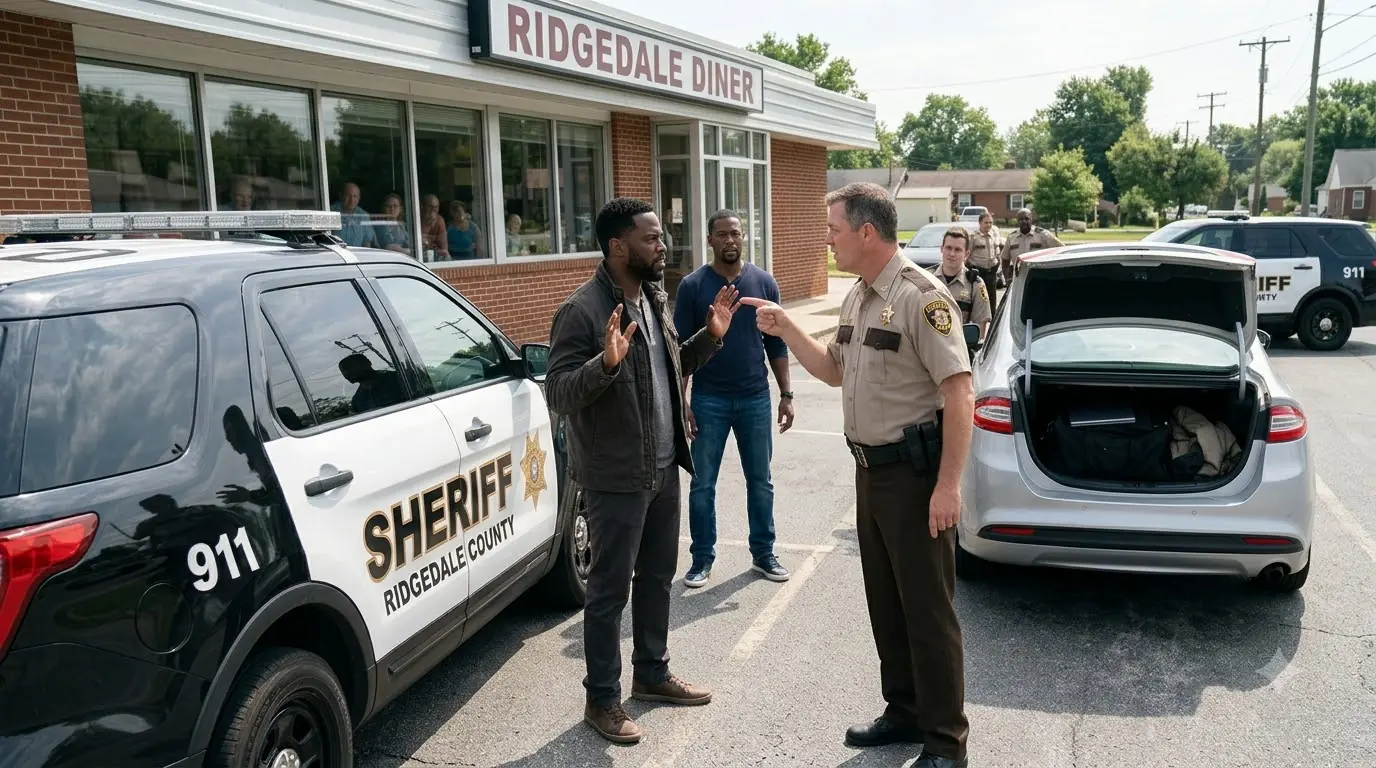
The rented sedan carried no government plates, no Bureau markings, and nothing that would identify either man as an investigator. That was deliberate.
For the next two days, Malcolm and Terrence were supposed to look exactly like what they appeared to be. Two black men traveling through a small county. Malcolm closed the first folder, then opened the second one again. The complainants were different. One had been a delivery driver, another a college student, while two others had been families passing through on separate weekends.
Their descriptions were not identical, and Malcolm did not expect them to be. Memory rarely arrived in matching sentences. What interested him was the sequence beneath the language. Ordinary contact began with a question. A generalized suspicion followed.
Identification was requested. The initial check produced little or nothing meaningful. Then, instead of ending, the contact expanded. In one complaint, Sergeant Dale Hutchins searched a vehicle after a routine traffic warning. In another, he held two passengers beside a convenience store while requesting additional records unrelated to the original stop.
A third complainant described being questioned about recent property thefts, although the incident report listed no specific connection between him and those crimes. Each file had eventually reached the same conclusion.
The reviewing officer accepted Hutchins's explanation, noted insufficient corroboration, and closed the complaint. Malcolm turned another page while sunlight moved across the windshield in long bands. Terrence glanced toward the folders without taking his eyes from the highway. "Anything new?"