The first thing Marcus Bell heard that Thursday morning was the soft, accusing scrape of a kitchen chair across the floor. He had been awake for nearly an hour, but the noise still made him glance toward the clock above the stove.
Six forty-three, twelve minutes before his daughter was supposed to come downstairs. He found Zoe standing in the doorway in her pajamas, holding one pink hair ribbon and wearing the expression of someone who had discovered a serious breach of an international agreement.
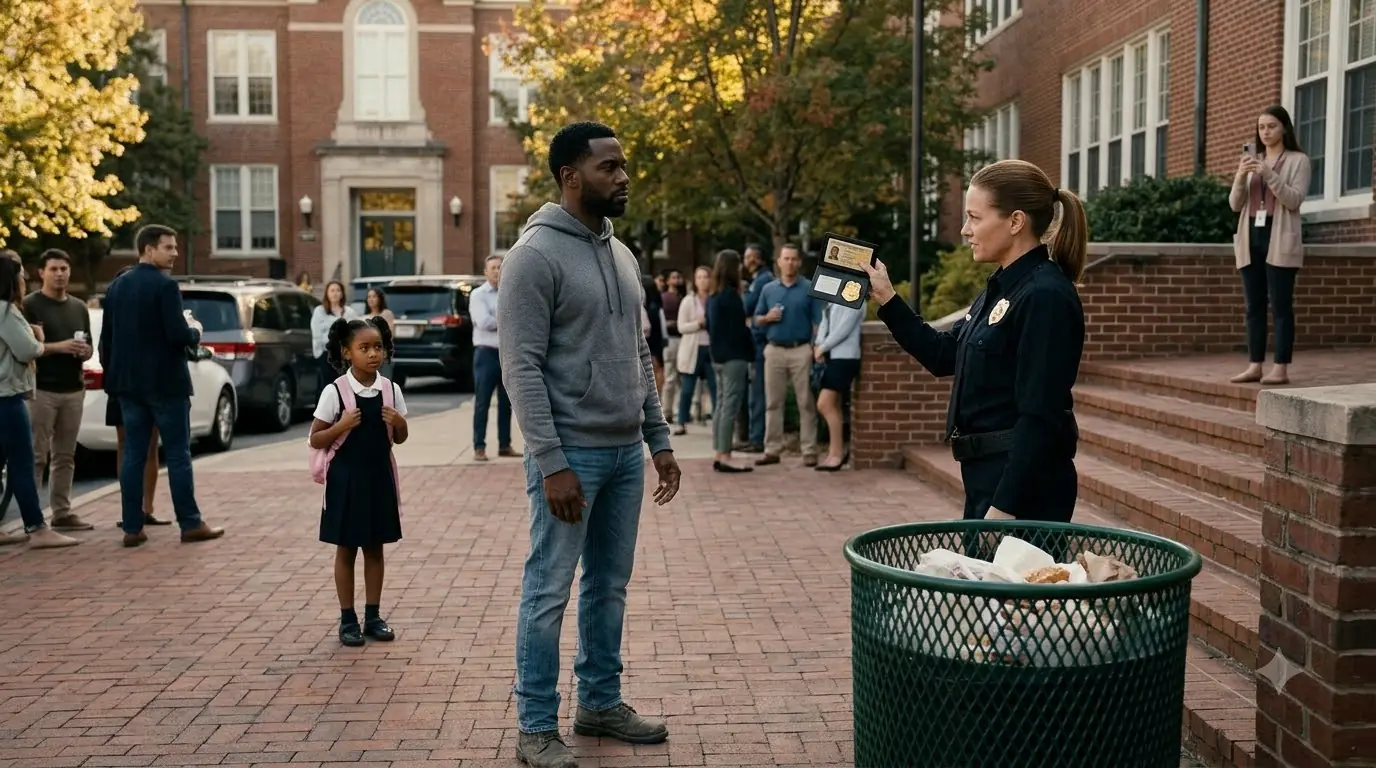
“You promised the sandwiches would be squares today,” she said.
Marcus looked down at the peanut butter sandwich on the cutting board. It was already divided neatly into four triangles, with every trace of crust removed. “I promised I would consider squares,” he said. “After careful consideration, the committee has decided triangles are more structurally dependable.”
“The committee is you.”
“An excellent committee.”
Zoe climbed onto a stool and inspected the sandwich as if she might appeal the ruling. At nine, she had inherited her mother's wide smile and her father's habit of studying a problem from every angle before making up her mind. Her two thick puffs of black hair had come loose overnight, and the ribbon in her hand was knotted from yesterday's attempt to tie it herself. She pushed the lunchbox toward him, then pointed to the small space beside the apple slices.
“You forgot the note,” she said.
Marcus took the yellow sticky pad from the counter and wrote, in letters Zoe would be able to read even when she was impatient, YOU ARE BRAVER THAN YOU THINK. He folded the note and slid it beneath her sandwich. She pretended not to notice how carefully he did it, but he saw the little smile she tried to hide. There were things about their mornings that had become rituals because neither of them was willing to admit how much they needed the reassurance.
Their house stood on a quiet street in Ashford County, Virginia, between a retired postal worker who grew tomatoes and a young couple with a baby who seemed to sleep only when Marcus was trying to sleep. It was smaller than the houses near Zoe's school, and its porch railing needed paint, but the mortgage was manageable and the kitchen got good morning light. A magnolia tree leaned over the fence in the backyard. Camille had chosen the house because she said a child ought to grow up somewhere she could see a tree from her bedroom window.
The window over the sink held a framed photograph of Camille holding Zoe just after she was born. Camille's hospital bracelet was visible on her wrist; she was exhausted, laughing, and so beautiful that Marcus sometimes had to look away from the photograph before his coffee finished brewing. She had died three years earlier after eighteen months of treatment and diminishing hope, leaving Marcus with bills, an empty half of the bed, and a daughter who still sometimes asked to hear stories about her mother's voice. They had been married eleven years. He could now get through most mornings without crying, which was not the same as getting through them without grief.