Duke Turned Around on the Ninth Morning—Then His Legs Began to Fail
Reader Theme:
Font Size:
24px
Duke Turned Around on the Ninth Morning—Then His Legs Began to Fail
PART 2 — CURRENT CONDITION UPDATE
Duke is now recovering in a medical foster home after receiving treatment for his roadside injuries and a chronic spinal condition.
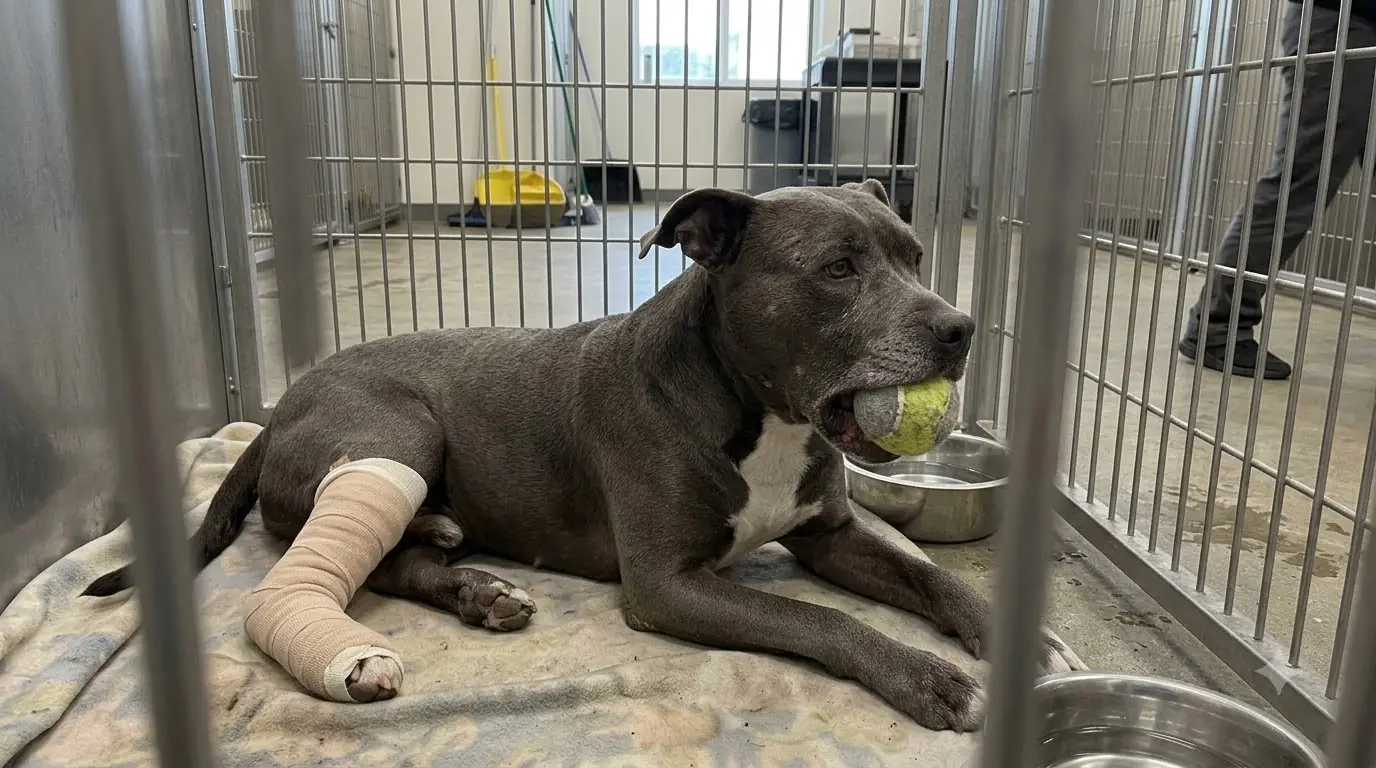
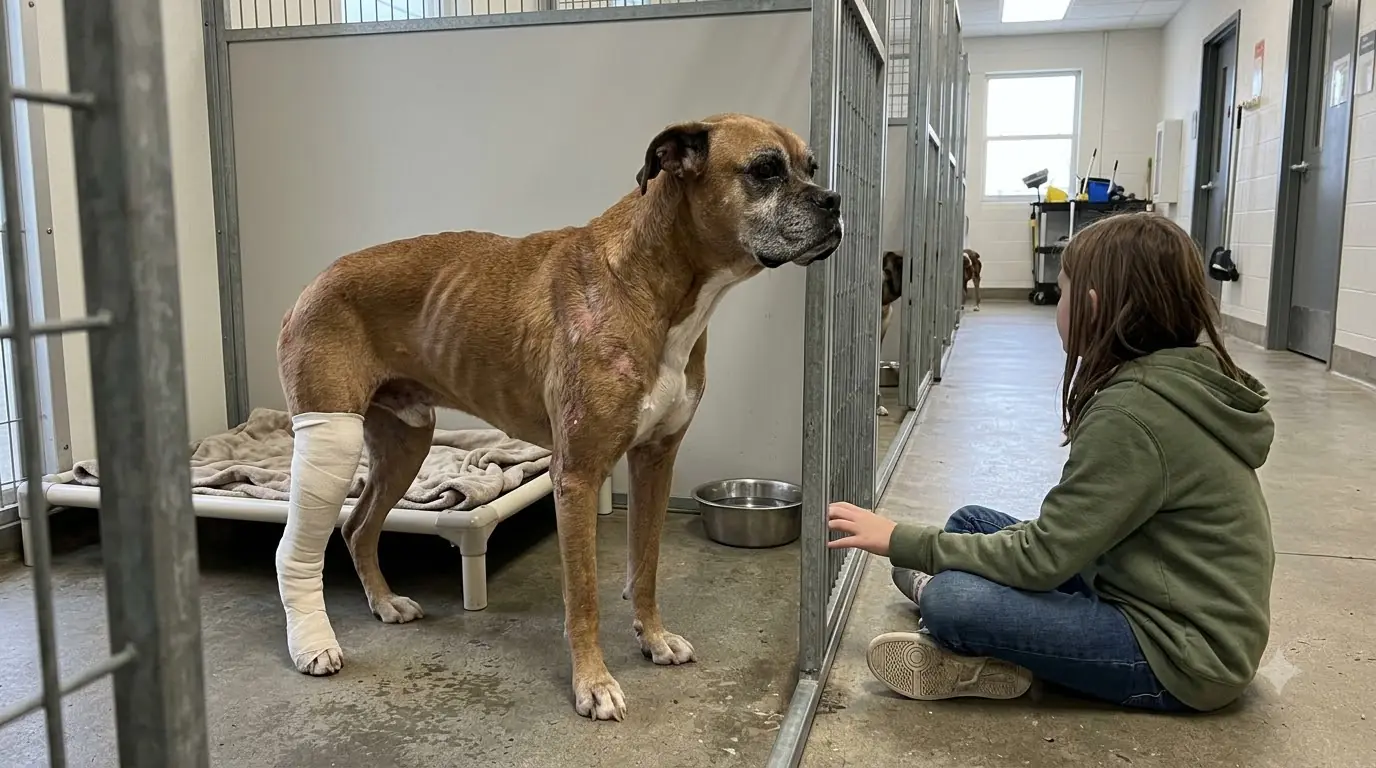
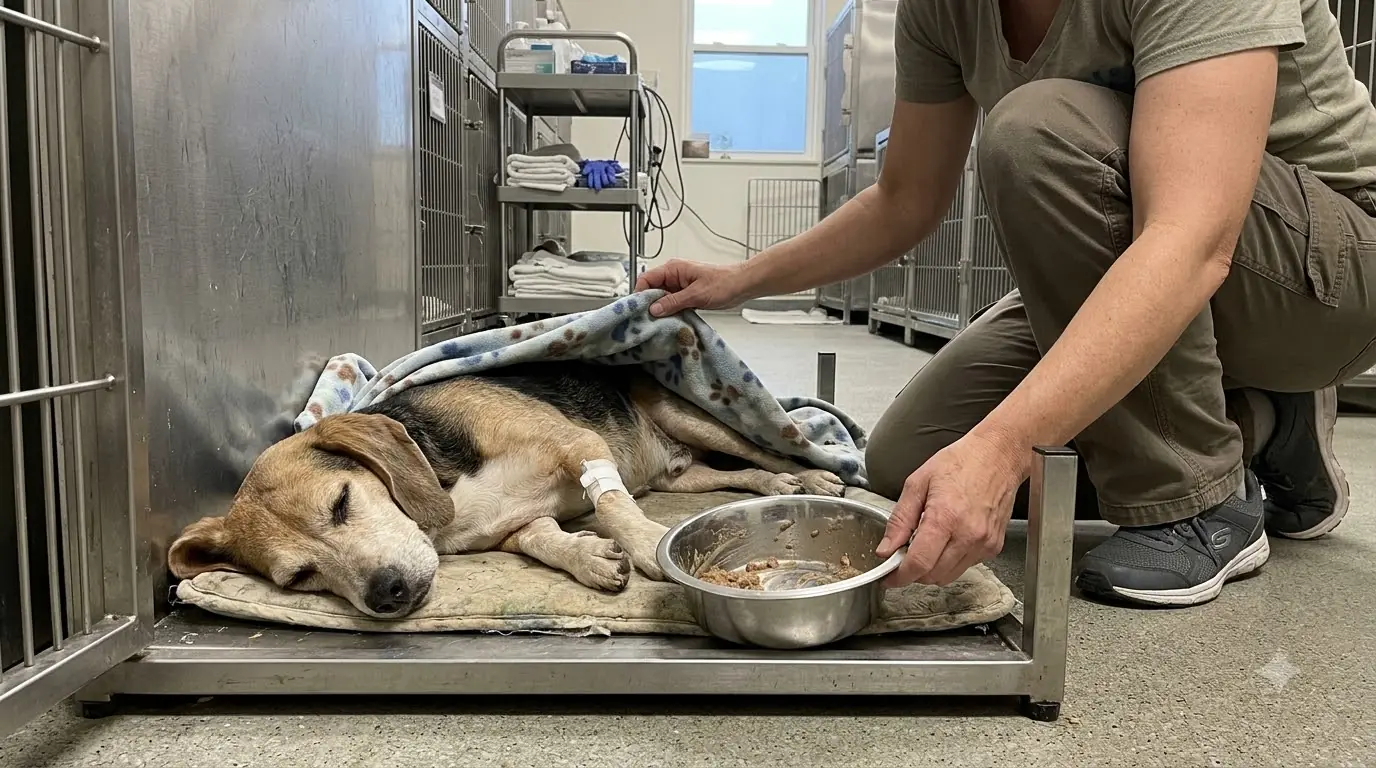
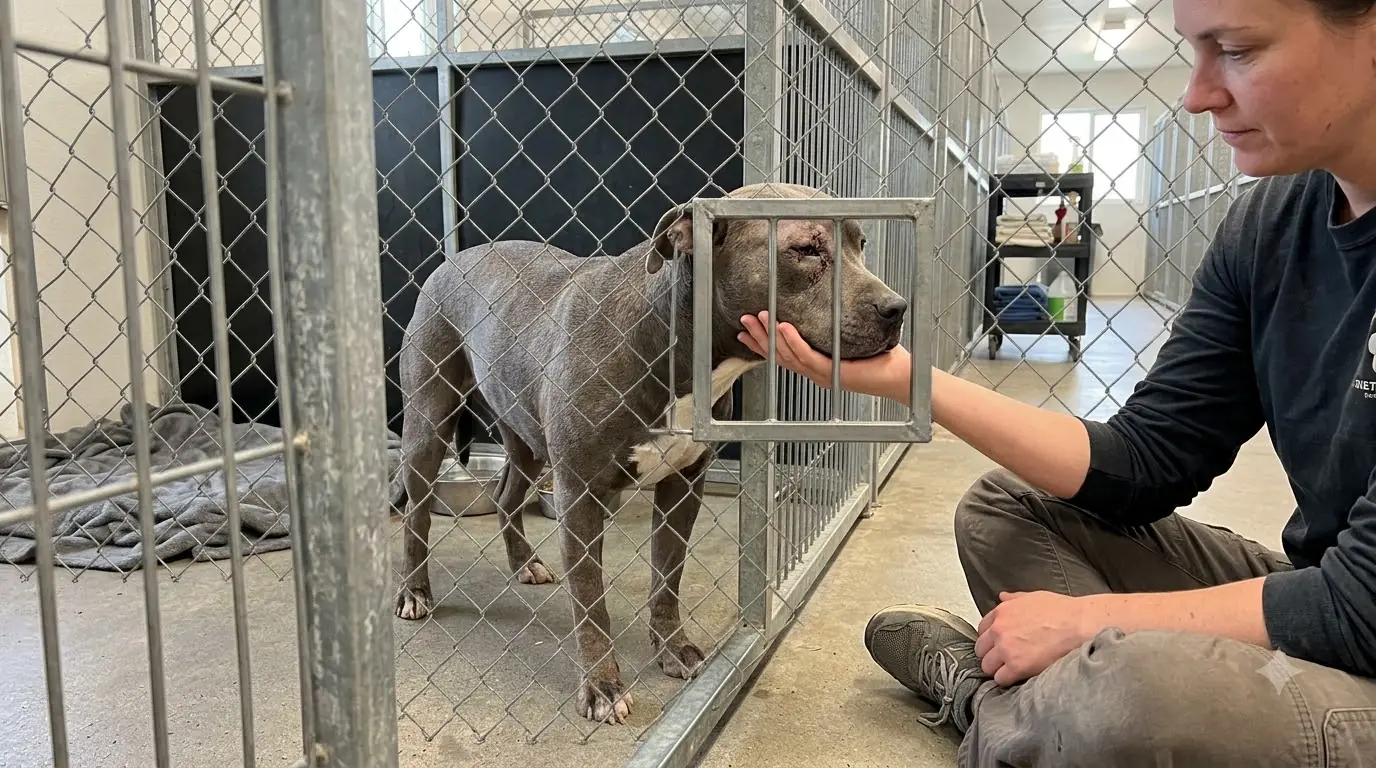
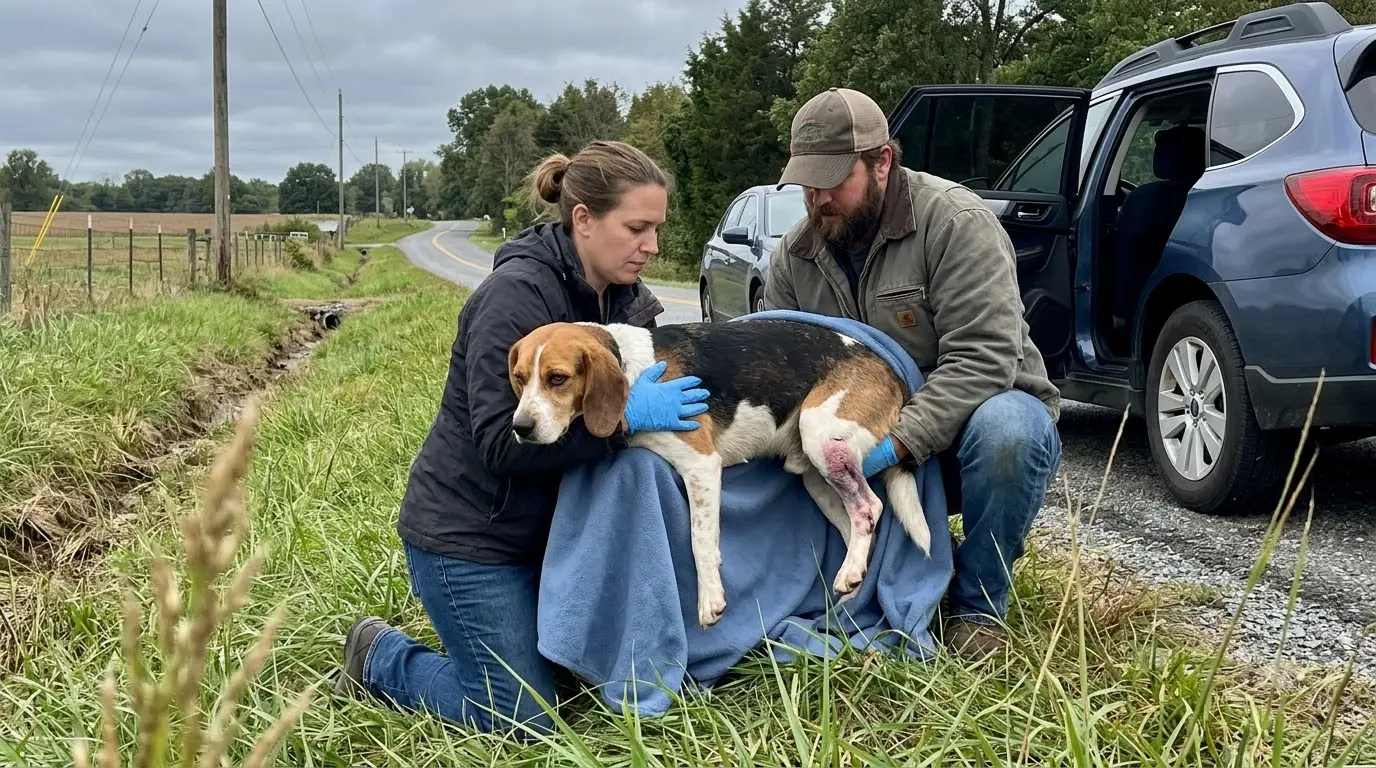
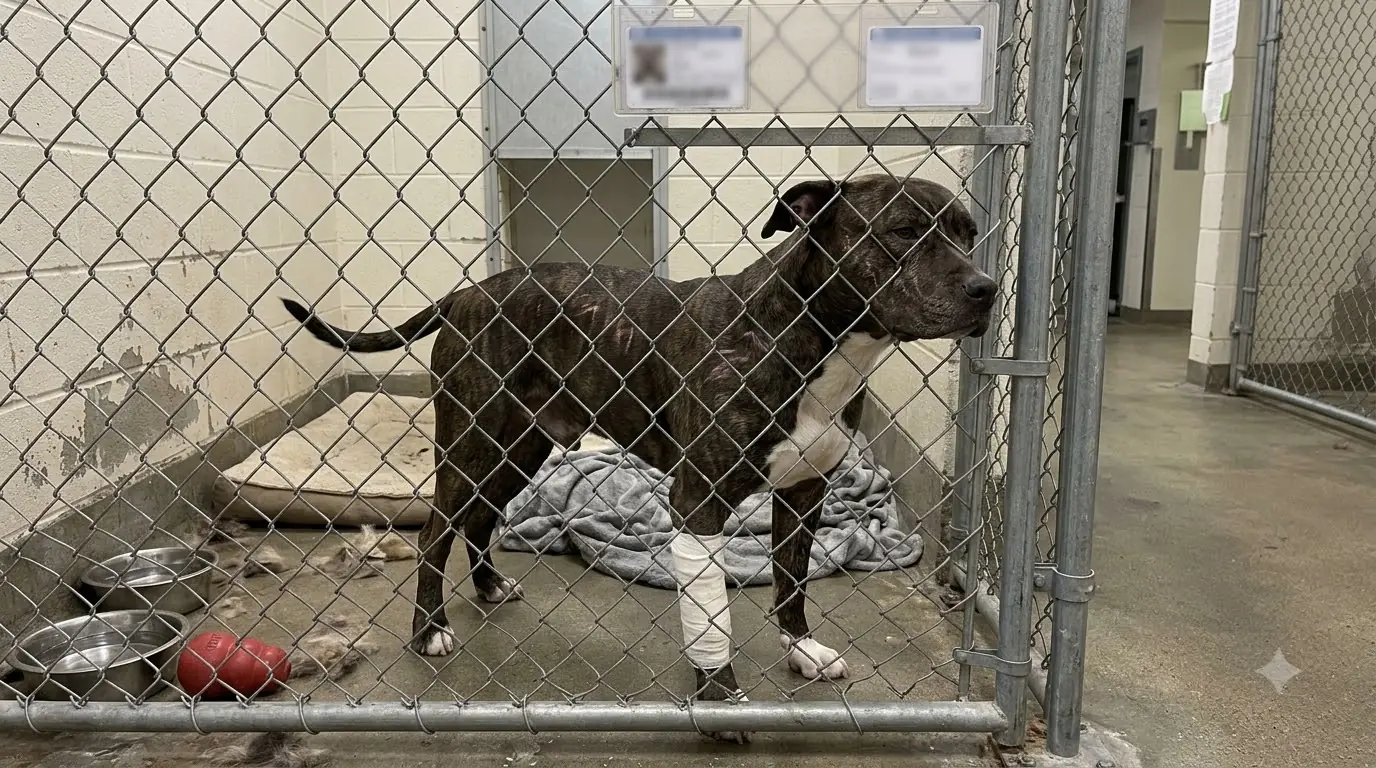
His wounded ear required cleaning, several sutures, and antibiotics. The bandaged front leg had deep abrasions but no fracture. Both injuries are healing normally.
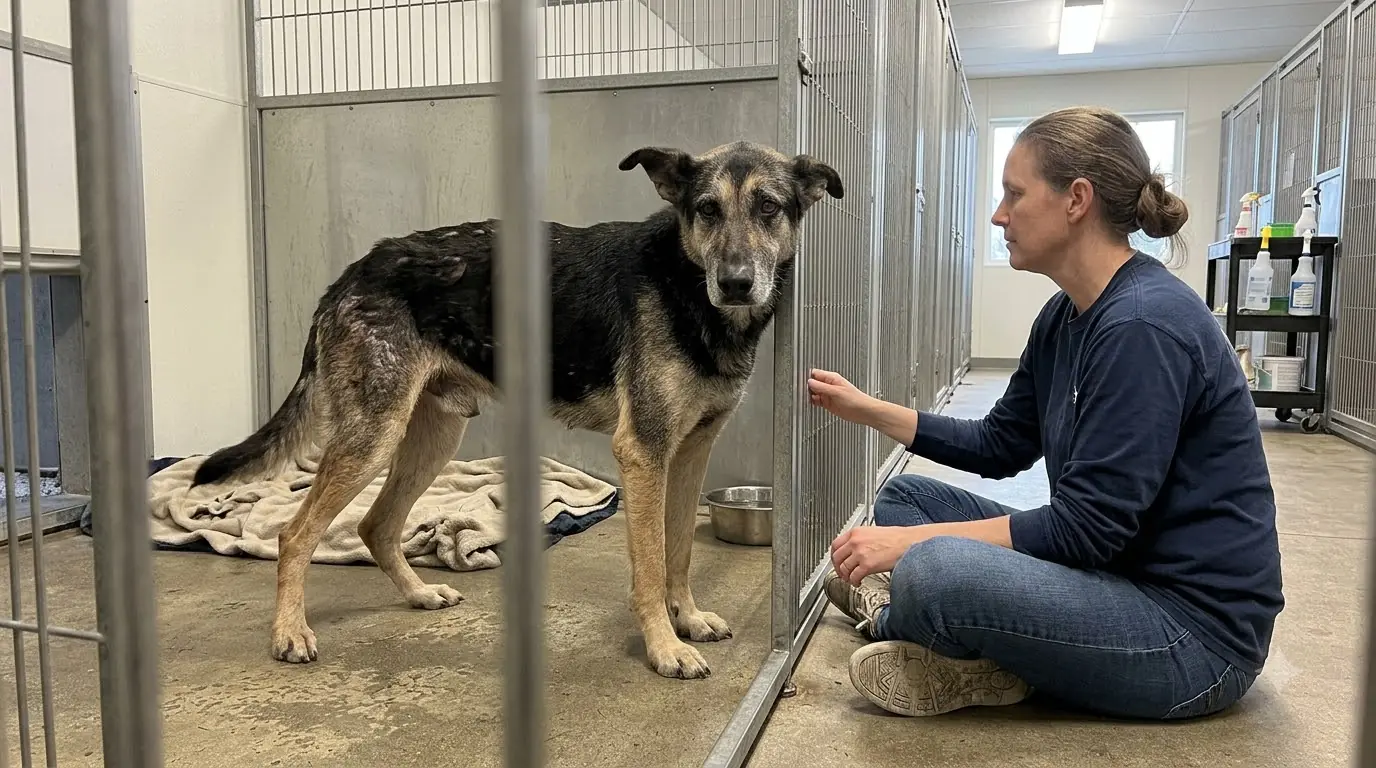
The greater concern was Duke’s hind-leg weakness. A neurological examination found delayed paw placement, reduced reflexes, and pain in his lower back. Advanced imaging revealed degenerative lumbosacral stenosis, a condition in which arthritic and disc-related changes narrow the space around important nerves near the base of the spine.
The condition appeared chronic and was not caused solely by the roadside incident. The trauma and resulting inflammation may have made previously subtle symptoms more noticeable.
Because Duke could still walk and control his bladder, the veterinary neurologist began with medication, restricted activity, weight management, and supervised rehabilitation. Surgery remains an option if his pain or neurological function worsens.
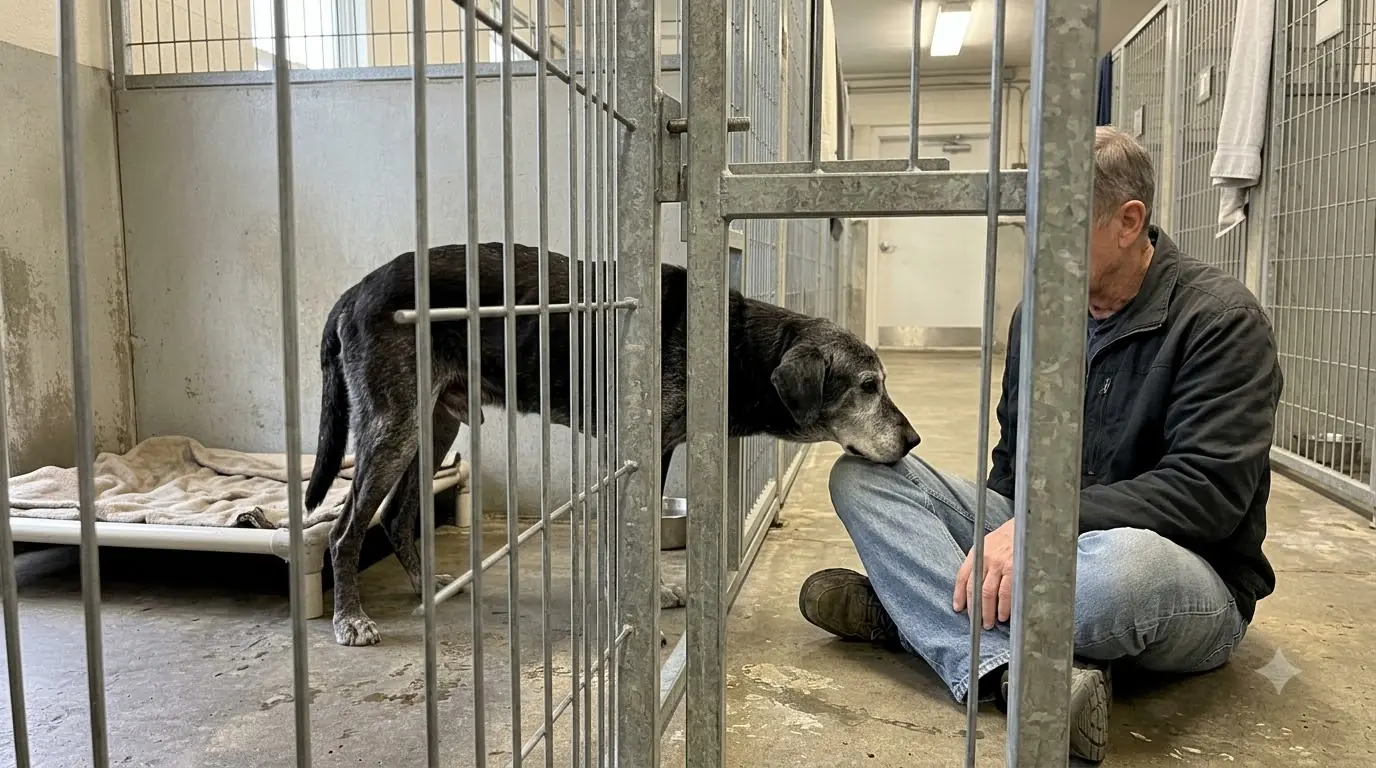
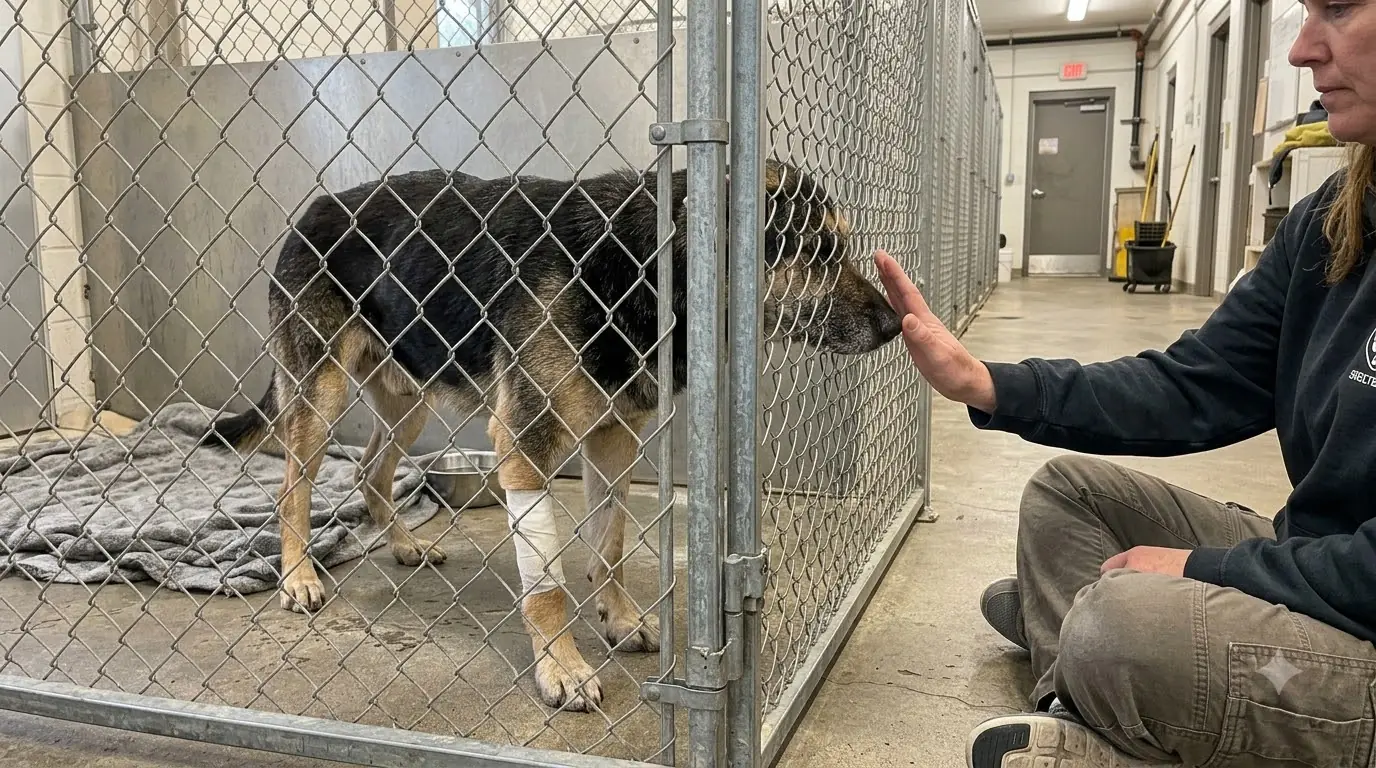
Duke’s foster caregiver is Emily, the shelter worker who sat outside his kennel.
During his first days in her home, Duke chose a bed facing the corner and watched her from a distance. Emily continued the same routine she had used at the shelter. She sat nearby without reaching for him and allowed him to initiate contact.
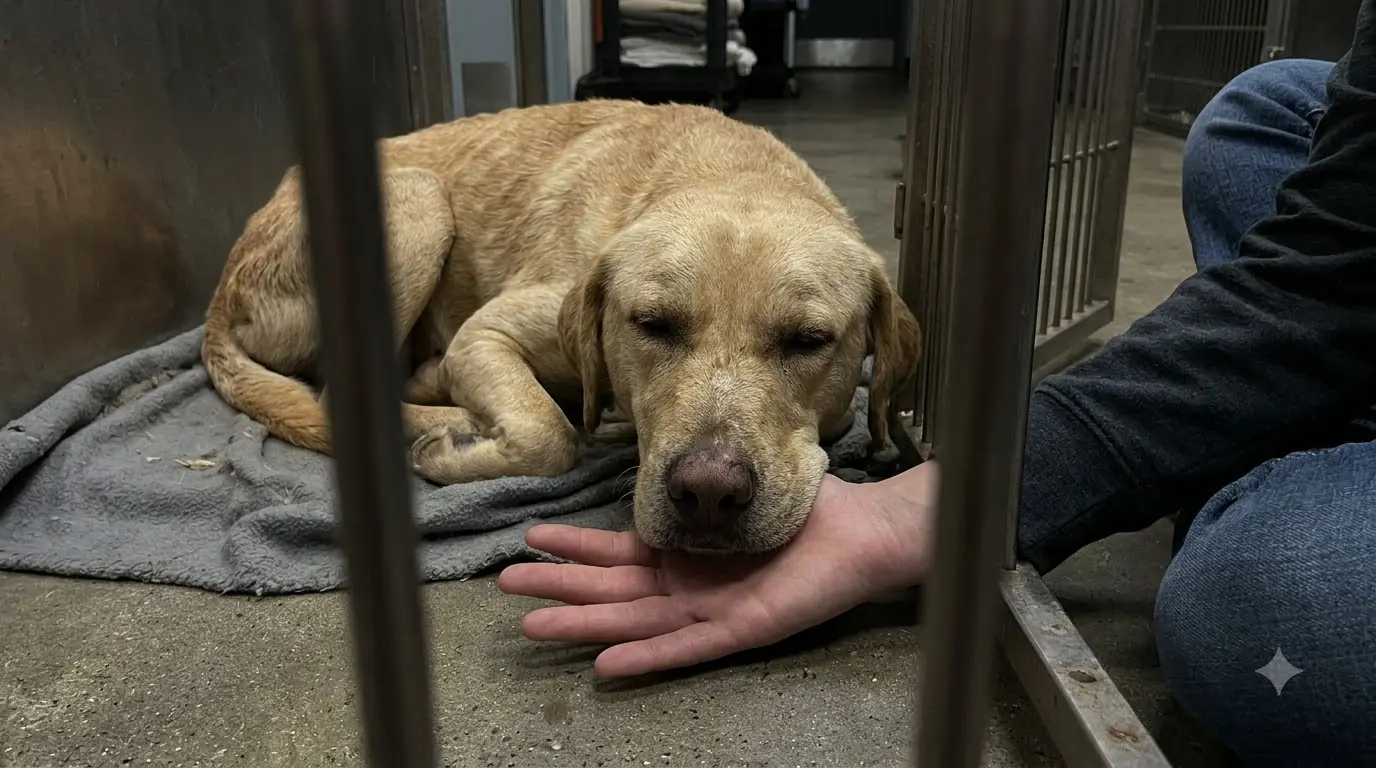
Duke now approaches her each morning and places his nose beneath her hand. He accepts gentle strokes along his chest but still moves away if someone reaches over his head.
His appetite has improved, and he finishes two measured meals daily. He drinks normally and has gained a small, appropriate amount of weight. No vomiting or medication-related complications have occurred.
Nonslip runners help him move through the house. A support harness is used on bathroom trips, and gates prevent access to stairs. His rehabilitation sessions include controlled standing, gentle weight shifts, and short walks on level ground.
Duke’s right rear paw still drags when he becomes tired, but he corrects it more quickly than he did at intake. He can walk from his bed to the yard with only light support.
His ear sutures have been removed, and the front-leg wound no longer requires a full bandage.
Duke remains cautious around unfamiliar people. Visitors sit sideways and ignore him until he chooses to approach. No one forces physical contact or punishes him for retreating.
He will remain in medical foster care until the neurology team can evaluate his long-term mobility. Emily has expressed interest in adopting him if his needs can be managed safely.
Each night, Duke still sleeps facing the wall.
But now, when Emily enters the room in the morning, he turns around before she sits down. Then he walks carefully across the rug and places his nose into the same open hand that waited nine mornings for him.