Duke is home now, and the first thing we want everyone who followed his story to know is that he is doing well.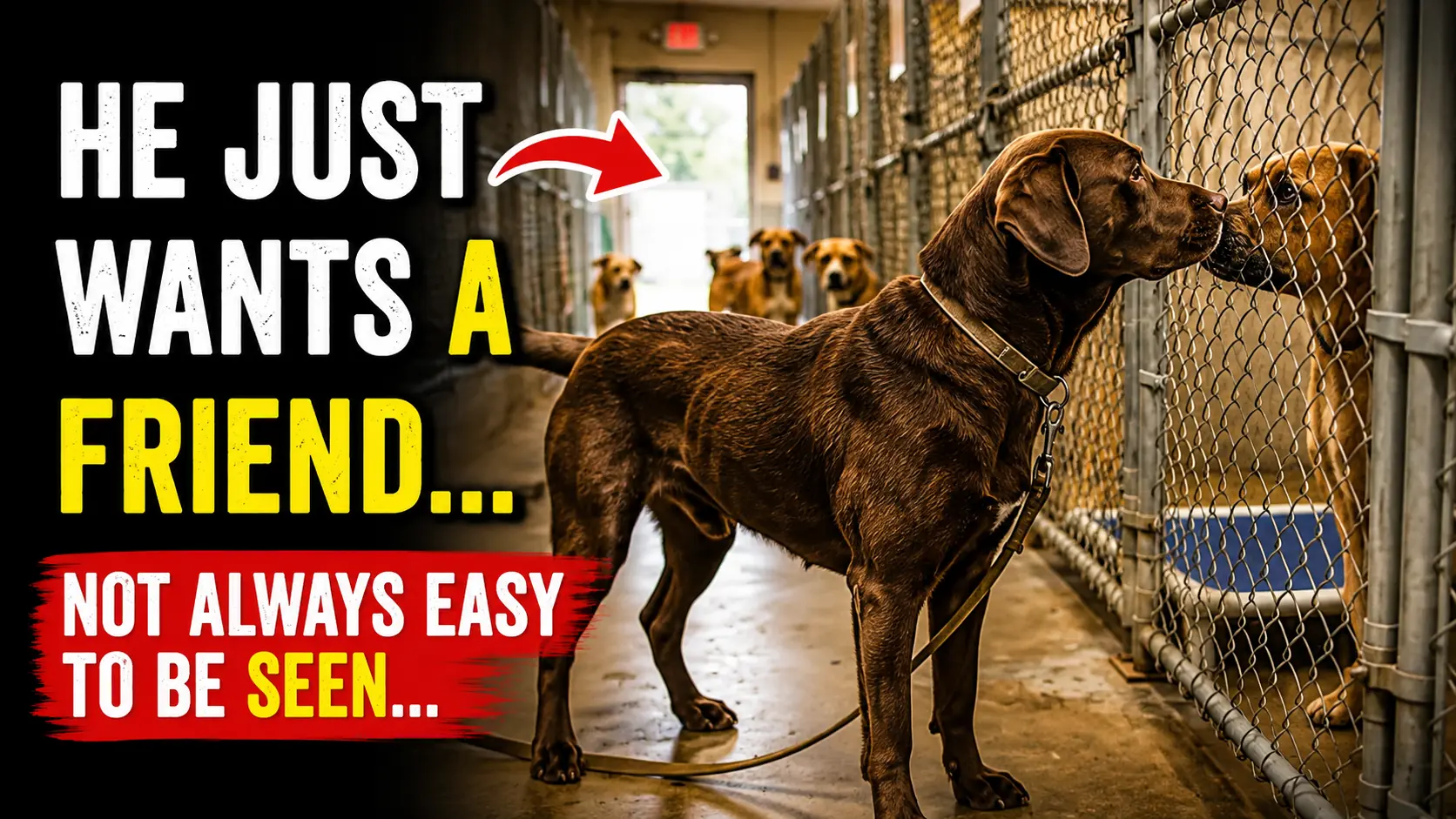
The abnormal blood result discovered during his final shelter examination did not prevent his adoption. Duke was comfortable, eating normally, drinking appropriately, and showing no signs of an immediate medical emergency. After discussing the finding with his new family, our veterinary team felt comfortable allowing him to leave as planned, provided that follow-up testing was completed.
The value that concerned us was related to his kidney function. One marker was mildly elevated, while the rest of his examination was relatively reassuring. In an older dog, a single abnormal result can have several explanations. Mild dehydration, recent stress, diet, medication, or early changes in kidney function can all influence laboratory values.
For that reason, we did not want to make assumptions based on one test.
Duke's family scheduled a follow-up appointment with their veterinarian, where repeat blood work and a urine test could provide a clearer picture.
In the meantime, his job was much simpler.
Go home.
Rest.
Eat.
And begin learning what life outside a shelter feels like.
For a dog who spent two years surrounded by kennel noise, the transition has been remarkably gentle.
Duke's first evening was quiet. His family did not invite visitors over or overwhelm him with new experiences. They showed him his water bowl, his bed, the backyard, and the rooms he would be allowed to explore.
Then they let him decide what happened next.
Duke walked slowly through the house.
He sniffed the corners of the living room, investigated the kitchen, and spent several minutes standing near the back door. Eventually, he returned to the living room and lowered himself onto the rug beside his new family's couch.
They had purchased a large dog bed for him.
Duke ignored it.
For the first night, apparently, the rug beside his people was exactly where he wanted to be.
His appetite remained good after adoption.
That was especially reassuring because changes in appetite can be an important indicator when veterinarians are evaluating senior dogs with possible kidney concerns.
Duke ate his first dinner slowly but finished the entire bowl.
The following morning, he was already standing in the kitchen when breakfast was prepared.
His family is keeping his diet consistent while the veterinary evaluation continues rather than making unnecessary changes immediately after adoption.
His water intake is also being monitored.
So far, Duke is drinking regularly without the excessive thirst his family was asked to watch for. His bathroom habits have remained normal, and there has been no vomiting, diarrhea, or obvious discomfort.
Those are all encouraging signs, although they do not replace follow-up testing.
His repeat veterinary appointment brought more reassuring news.
The previously elevated kidney value was still slightly outside the ideal range but had improved. His urine concentration and other laboratory findings did not indicate an immediate crisis.
At this point, his veterinarian wants to monitor the change rather than label Duke with a serious condition prematurely.
Another recheck is planned after he has had more time to settle into his home.
That means Duke's family has a simple medical plan: keep his diet consistent, make sure fresh water is always available, monitor his appetite and bathroom habits, and return for repeat testing as recommended.
Emotionally, Duke's adjustment has been just as important.
During his first few days, he appeared to carry some of his shelter routines into the house.
He paid close attention to doors.
Whenever someone picked up keys or put on shoes, Duke raised his head and watched.
When his family walked from one room to another, he sometimes followed several steps behind.
He did not appear panicked.
He simply seemed determined to know where everyone was.
That behavior makes sense for a dog who spent two years watching people arrive and leave.
His family has responded with consistency rather than constant reassurance.
Meals happen at predictable times.
Walks follow a familiar route.
His bed stays in the same place.
People leave the house normally and return normally.
Little by little, Duke is learning that someone walking through a door does not mean they are disappearing from his life.
One of the most encouraging changes happened on his fourth night.
Until then, Duke had slept lightly.
Small household noises caused him to lift his head. If someone got up for water, he immediately watched them cross the room.
That evening, Duke climbed onto his dog bed for the first time.
He circled twice.
Then he lay on his side.
A few minutes later, he was asleep.
His family said he remained there for several hours without getting up to check the house.
For Duke, deep sleep may be one of the clearest signs that home is beginning to feel permanent.
His walks have also become a favorite part of his new routine.
At the shelter, walks were valuable but limited by schedules, volunteers, and the needs of many other dogs.
Now Duke gets to take his time.
He stops at trees.
He investigates mailboxes.
He stands in patches of grass and seems perfectly content to spend several minutes examining a single scent.
His family does not rush him.
Perhaps that should not surprise us.
These are the same people who stood patiently in a shelter hallway while Duke stopped at fifteen kennels.
They waited for him then.
They are still waiting for him now.
Duke has begun showing a playful side that many shelter visitors never saw.
A few days after adoption, his family rolled a soft ball across the living room.