Eight Armed Men Rode Onto Her Ranch — And Told the Widow to Hand Over the Only Evidence She Had
Chapter 5
Reader Theme:
Font Size:
24px
August 9. He said six days. Clara said Fredericksburg courthouse tomorrow's convening the full proceeding. Federal jurisdiction, which means Croft is out.
He paused. He's summoning Vance. He's summoning Croft. He's requesting the presence of all parties with documented interest in the Eastern Canyon parcel.
He received everything, Clara said. Everything filed, everything from the Marshal's office. Elias looked at the letter again. He mentions Doyle Marsh by name.
He's calling him as a federal witness. Clara sat with that for a moment. Doyle Marsh, who had stood on a canyon ledge and watched Thomas die and had been walking around with that in his chest for four weeks until it finally broke him open. She did not know this man.
She did not know what had driven him into that San Antonio office, or what he had looked like when he did it, or whether he had been afraid. She knew only that he had done it, and that it had mattered, and that Thomas, with his careful ledger, and his letter in Pruitt's pocket, and his wire to the Pinkerton office, had somehow made it possible for a stranger to find the courage to tell the truth. "I need to write to Margaret," Clara said. "I'll ride over this afternoon," Elias said.
"Tell her in person. " Clara nodded. She looked at the letter one more time. Federal Court, August 9th.
six days. six days to hold steady. She had held steady for five weeks. She could manage six more days.
Vance made one more move before the 9th. She had expected it. Elias had expected it. What neither of them had expected was the form it took.
On the Thursday before the hearing, Sheriff Len Burquette rode out to Thorn Ridge alone. No deputies. Late morning unhurried with his hat in his hands before he even dismounted which told Clara something important about the purpose of the visit before he opened his mouth. She met him in the yard.
Mrs. Thorne, he said he looked uncomfortable in the specific way of a man who knows he has been wrong for a long time and has finally run out of road to avoid acknowledging it. I came to tell you something. Say it, Lynn, she said.
He looked at her. First time in their acquaintance that he had looked at her directly. Silas Vance came to my office yesterday. He wants me to file an obstruction complaint against your brother-in-law.
Says Elias interfered with a lawful entry onto the property the other night. He paused. He wants me to have Elias detained before the hearing. Clara felt something cold move through her.
And and I told him no. Burquette said. The yard was very quiet. I told him no.
Burquette said again as if he needed to hear himself say it twice to be sure it was real. I told him there was no lawful entry. I told him two men tied to a fence post and a third who exited through a broken window were not conducting a lawful entry. And I told him he stopped, cleared his throat.
I told him I had been aware for some time that Thomas Thorne's death did not sit right and that I had not done enough about it and that I did not intend to compound that failure by helping him prevent a federal proceeding. Clara looked at the man who had told her he knew things but couldn't act on what he knew who had given Thomas's widow the shape of nothing and called it sympathy. And she felt the particular complicated feeling of watching a person do the right thing years too late. Not gratitude, not quite forgiveness, but something adjacent to both.
Something that acknowledged the reality of what had changed without minimizing the cost of what it had taken to change it. Thank you, Len, she said. I should have. Yes, she said.
You should have, but you're here now. He put his hat back on. He looked at the porch at the house at the lane. Thomas was a good man, he said.
He was the best man, Clara said. Burquette nodded once and rode out. Elias appeared at the corner of the barn. He had heard it all.
He said nothing and Clara said nothing and they went back to work. The night before the hearing, Clara could not sleep. She lay in the dark and she talked to Thomas. Not out loud.
She was not the kind of woman who spoke to the dead aloud because she felt that the dead deserve the same honesty you'd give the living. And she was not entirely sure she could be honest with Thomas at full volume. But in the quiet in the particular interior space that existed between wakefulness and sleep, she talked to him. She told him about the letter from Morrow.
She told him about Burquette coming out. She told him about Elias sitting in his chair in the mornings watching the light come up over the ridge. About the way Elias had fixed the south fence post that had been loose since spring without being asked about the way the ranch felt different with another person in it. Not the same as it had felt with Thomas.
Nothing would ever be the same as that, but different in a way that was not entirely empty. She told him she was going into the courtroom tomorrow and she was going to finish what he had started and she was going to do it as well as he would have wanted it done. She told him she was still angry at him for keeping it from her. She told him she loved him.
Then she got up at 4 in the morning and dressed and made coffee and sat at the kitchen table with Thomas's ledger open in front of her and went through it one more time. Not because she needed to. She had memorized every entry, but because it was his handwriting, and his handwriting was the closest thing she had to his voice, and she wanted to go into the day with that in her. Elias came into the kitchen at 5 and did not comment on the fact that she had clearly been up for hours.
He poured himself coffee and sat across from her and looked at the ledger and said, "Ready? " "Yes. " Clara said she meant it. The Fredericksburg courthouse had never held so many people for a proceeding in its history.
Clara knew this because Walter Pruitt told her so in a low voice when she arrived, and found people lined along the wall, three deep and overflowing, onto the steps outside. Word had moved through Kendall County. The way words move in a place where everyone knows everything and has been holding their breath about something for a long time. Fast, electric, with the particular energy of a community that has needed permission to say out loud what it has been thinking in private.
Vance was already in the room when Clara entered. He was seated at the respondents table with two lawyers she did not recognize. Men brought in from San Antonio. She guessed from the quality of their coats, and he looked at her when she came in with an expression that she had learned to read over the past five weeks.
Not the pleasant surface anymore, not the flat cold of the night on the porch. Something else, something that recognized finally that the ground had shifted in a way he could not shift back. Croft was not at the judicial bench. He was seated at a table to the side alone with a lawyer of his own and the specific stillness of a man who understands that the next several hours are going to determine the shape of the rest of his life.
Judge Abel Morrow was 65, spare and gray-haired with a face that had the quality of a man who had spent decades listening to people lie to him and had developed an extremely accurate instrument for detecting it. He entered without ceremony, took his seat, looked at the room over his glasses, and said, "This court is in session. We will have order, and we will have brevity. I have read the filings.
I have significant questions. We will begin. " Clara sat at the petitioner's table beside the federal marshal's representative, a young lawyer from Austin named Henry Cole, who had the organized intensity of someone who believed deeply in the work. And she put her hands flat on the table in front of her and she breathed.
Morrow opened with the land grant records. He had Pruitt take the stand first and Pruitt, who had clearly not slept the night before and was carrying the weight of months of compounded conscience, testified with the particular relief of a man who has been waiting for exactly this opportunity. He walked through the original Thorne Grant, the Vance filing the discrepancy in the survey numbers Thomas's visit in February, and the letter Thomas had left with him. He answered every question without flinching.
Vance's lawyers objected four times. Morrow sustained none of them. When Pruitt was done, Morrow looked at the courtroom over his glasses and said, "I want to address something before we proceed. " The original land grant filed in this county in 1871 places the eastern boundary of the Thorn parcel at a point 412 feet east of the boundary claimed in the 1886 Vance filing.
Those two numbers do not represent a surveying error. They represent a deliberate alteration. He looked at Vance's table. I will be giving all parties the opportunity to account for that.
We will begin with the petitioner's witness. Henry Cole stood. The petitioner calls Doyle Marsh. The room went very still.
Clara had imagined this moment many times in the past week. She had imagined a man who would be small somehow diminished. Guilt-worn, frightened. What came through the door was a lean man in his 40s with a weathered face and the hands of someone who had worked outdoors his whole life and the particular expression of someone who has made a decision that cost them something significant and has made peace with the cost.
He sat in the witness chair. He looked at the room. He did not look at Vance. Cole said, "Mr.
Marsh, were you employed by Silas Vance in the summer of 1888? " "Yes," Marsh said. "Were you present in the vicinity of the Eastern Canyon on the Thorne-Vance boundary on the morning of July 3 of this year? " "Yes," Marsh said.
"Tell the court what you witnessed. " Doyle Marsh put his hands on his knees and looked at nothing in particular and told the truth. He told it plainly, without embellishment, with the spare directness of a man who had rehearsed it enough times in his own head, that the performance had worn off, and only the fact remained. He had ridden to the canyon that morning with two other Vance men.
Thomas Thorne had been there with his surveying equipment. There had been a confrontation. Thomas had refused to leave. One of the Vance men, he named him, Cole Parrish, who had since left the county, had moved on Thomas from behind.
Thomas had gone over the ledge. It had not been an accident. The room did not make a sound. Clara sat at the petitioner's table and listened to a stranger describe the last minutes of her husband's life, and she held herself together with everything she had, every piece of discipline and composure she had built over five weeks of practice.
And she thought, "Thomas, I'm here. I heard him. It's going into the record. " Vance's lead lawyer stood for cross-examination and spent 20 minutes trying to find a crack in Marsh's account and did not find one because the truth has a particular structural integrity that a constructed story does not.
And Morrow watched the attempt with the expression of a man watching something he has seen before and is not impressed by. When it was over, Morrow looked at his notes for a long moment. Then he said, "The court will hear from Judge Croft. " What happened next was the thing Clara had not allowed herself to anticipate because anticipating it would have meant hoping for it and she had learned that hope was a thing you had to hold carefully or it became a wait rather than a buoy.
Croft's own lawyer stood up before Croft was called. He said, "Your Honor, my client wishes to address the court directly outside the formal examination procedure if the court will permit. " Morrow looked at him. On what subject? the lawyer said on the subject of his role in the preparation and notarization of the 1886 Vance Land filing.
The room moved. Not physically nobody got up, but something shifted in the air, a collective intake, a realignment. Morrow said, "The court will permit it. " Croft stood.
He was still silver-haired, still bearing still the man who had walked into the land office four days ago with a deputy at his side and the assumption of immunity written into every line of his posture. But something was different now. The assumption was gone. What remained was just a man of 60 standing in a federal courtroom with no more road left.
In the spring of 1886, Croft said, "Silas Vance approached me regarding the boundary dispute on the Eastern Canyon parcel. He represented to me that the original survey had contained an error and that a corrected filing was a matter of administrative accuracy. He paused. I did not personally verify the survey numbers.
I accepted Vance's representation and notarized the filing. Another pause longer. I was subsequently made aware that the representation was false. I did not act on that awareness.
I allowed the filing to stand and I allowed subsequent pressure to be applied to Thomas Thorne to prevent him from challenging it. He stopped. I am prepared to provide a full account to this court and to cooperate with any federal investigation. He sat down.
The room broke open. Morrow called for order three times before he got it. And when he got it, he looked at Vance's table with an expression that required no interpretation and said, "Mr. Vance, your attorneys will advise you that the next 15 minutes are among the most consequential of your life.
I would suggest you use them wisely. " Vance looked at Croft. It was the look of a man watching something he built collapse watching it with the particular cold fury of someone who had always understood that every structure he erected was built on something rotten and had simply gambled that the rot would hold long enough. It had not held long enough.
His lead lawyer leaned in and spoke quietly. Vance listened. His face did not change. Then he said to the room to no one in particular in a voice that was almost conversational.
"I want to note for the record that I dispute every material claim made in this proceeding. " Morrow looked at him over his glasses. "Noted," he said, "and irrelevant to what I am about to say. " He looked at the full courtroom at all the people three deep against the walls who had come because they had been holding something in for a long time and needed to be present when it came out.
Then he looked at the petitioner's table. The Eastern Canyon parcel, Morrow said, reverts to the Thorn Estate effective immediately pending the formal order which I will sign before I leave this building today. The 1886 Vance filing is voided in its entirety. All cattle fencing or improvements placed on the parcel by the Vance operation since 1886 constitute trespass and are subject to remedy.
He looked at the federal marshal's representative. I am referring the matter of Thomas Thorne's death to the federal marshal's office for criminal investigation with the testimony of Doyle Marsh entered as formal record. He looked at Croft's lawyer. Your client's cooperation will be noted.
His conduct will be investigated. He looked at Vance one last time. "Mr. Vance, I would not leave this county.
" He stood. The room stood with him. The way rooms stand when something has just happened that people will tell their grandchildren about. And the sound that came up was not applause.
It was something lower and more complicated than applause. The sound of a community exhaling, something it had been holding for a very long time. Clara sat at the petitioner's table after the room began to empty. She did not move right away.
She needed a moment in which nothing was required of her. No composure, no steadiness, no careful calibrated management of what she showed and what she kept inside. She needed 60 seconds in which she was just a woman sitting in a chair in a courthouse with her husband's name spoken into a federal record and justice beginning finally to take the shape it should have taken months ago. Henry Cole shook her hand.
Pruitt came to the table and held her hand in both of his and said something she didn't fully hear. Margaret appeared from the crowd and sat in the chair beside her and put an arm around her shoulders and didn't say anything at all, which was exactly right. Elias stood at a small distance, giving her the space she needed, watching her the way he had watched the three men at the fence line on that first morning with complete, steady, patient attention. When she was ready, she stood.
She looked at Elias. He crossed the room and stood in front of her and held out his hand. Not in the formal way, just offered it. Open the way you offer a hand to someone you intend to walk with.
She took it. They walked out of the courthouse together into the August heat of Fredericksburg, and the street was loud and bright, and the people on the steps parted for them without being asked, and Clara looked up at the sky, the same Texas sky that had been beautiful and merciless and indifferent for five weeks. The sky. Thomas had loved the sky she had stood under, the morning she became a widow, and she thought, "All right, all right.
" The formal order arrived at Thorn Ridge on a Thursday. Clara signed for it at the door and carried it to Thomas's desk and read it through from beginning to end. Every line, every notation, every legal formality, she read it with the same care she had brought to the ledger entries and the survey document and the letter in the Bible. Because Thomas had taught her, not in so many words, but in everything he had shown her over 11 years, that the details mattered, that the precise language of a thing was the difference between something solid and something that could be undone.
It was solid. She put it in the deed box. She locked the deed box. She put the key in the pocket of her dress.
Then she went out to where Elias was working on the south fence line, and she stood and watched him for a moment. The way he worked steady and unhurried. The way he handled the tools with the competence of a man who had grown up on a ranch and never entirely left it behind, no matter how far he ranged. "It's done," she said.
He looked up. "The order came," she said. "The canyon is ours. The Federal Marshal's office confirmed the investigation is open.
" Croft signed his full cooperation statement yesterday. She paused. Cole Parrish was arrested in San Antonio this morning. Elias straightened.
He held the fence tool in one hand, and he looked at her with the particular expression she had come to know best on his face. Not the almost smile, not the controlled calm, but the thing underneath both of those, the thing that was simply him, simply Elias, the man Thomas had known better than he had ever shown. "Thomas did that," Elias said. "He built every piece of it.
" "We finished it," Clara said. He looked at her for a moment. "Yes," he said. "We did.
" She sat down on the fence rail and looked out at the canyon ridge in the distance. Her canyon ridge, her land, the land Thomas had surveyed and documented and died trying to protect. And she felt the August heat on her face and the solid wood of the fence rail under her and the particular quality of ground that belongs to you that has always belonged to you that no one can take because the record of it is now in a federal courthouse and in three separate locations and in the testimony of a man who chose truth over silence. Elias, she said he went back to the fence, methodical, steady.
That story you were going to tell me, she said, about why you left after the boy in New Mexico. He worked for a moment without answering. You said after the trial, she said. The trial's over, he said.
Yes, she said. He set down the tool. He put his forearms on the fence rail beside her and looked out at the same canyon ridge, the same sky, the same heat. After New Mexico, he said, I spent 3 years telling myself I was the wrong kind of man for a settled life, that the things I'd done and the things I was willing to do made me unsuitable for this.
He gestured a small motion that encompassed the fence, the ranch, the sky, all of it. Home, roots, belonging to a place. "And now? " Clara said.
He was quiet for a moment. Now, I think I was using the boy in New Mexico as a reason for something I was afraid of for other reasons, he said. And I think Thomas knew that. And I think that's why he kept writing all those years.
Not because he needed anything from me, because he knew I needed a door left open. Clara looked at the canyon ridge. "He left a lot of doors open," she said. That was Thomas.
He always knew which ones mattered. Elias picked up the fence tool and went back to work. And Clara sat on the rail in the August heat and watched the canyon that was hers, that had always been hers. And she thought about Thomas, who had planted seeds in February, knowing he might not live to see August, who had left letters and Bibles and documents in hearths and wires to Pinkerton offices, and a door open for a brother who needed one who had loved her better than he had sometimes shown and known her better than she had sometimes felt.
She thought about what it meant to finish something a person you loved had started. Not to replace them, not to move past them. Not to put their absence behind you, like a thing to be escaped, but to carry what they built forward into ground. They never reached to tend what they planted, to keep what they kept, and to stand on the land they died for, and say, "This is ours.
This is real. This is not going anywhere. " She thought about Elias at the fence staying. She thought about Margaret riding two miles east in the dark to hide a document under a hearthstone.
She thought about Walter Pruitt with a pen in his hand and a judge in his doorway saying, "These are public records and I am authorized to produce them. " She thought about Doyle Marsh walking into an office in San Antonio with the weight of a dead man on his conscience and putting it down. She thought about all the small, ordinary, unremarkable acts of courage that had built this outcome. Not the dramatic ones, not the confrontations on the porch or the standoffs in the yard, but the quiet ones, the choosing right ones, the ones that happened in the moment between doing nothing and doing something.
When a person looked at what was easy and what was true and chose true, she thought about Thomas, who had chosen true, all the way to the end. The fencework sounds continued behind her steady and real, and the canyon ridge held its ground in the distance, and the deed was in the box with the key in her pocket. And the investigation was open, and the order was signed, and the land was hers. And Clara Thorne sat in the August sun on the fence rail of the ranch she had kept, and the land she had fought for, and the life she was not finished with.
And she knew with the same bone-deep certainty, with which she had always known the things that mattered, that Thomas Thorne had not died for nothing. He had died for this and this was going to
END
News in the same category

Twin Black Belt Brothers Humiliated a Single Dad at the Gym — They Never Saw His Elite Training Coming

A Rich BJJ Prodigy Challenged a Quiet Delivery Guy — Never Knowing He Was an Elite Fighter
Cops Target a Black Man and His Family During a Traffic Stop — Then Freeze After Seeing His Identification
Smiling Agent Rips a Black Woman’s Passport at the Counter — What She Pulls Out Makes Everyone Step Back
Cops Pull Over a Black Man’s Family for “Looking Suspicious” — Then Go Pale When They See His ID
She Framed the Black Chef for a $4 Million Necklace — Then Slapped Him Where No Guest Could See
The Boss’s Son Waited for Him in the Empty Parking Garage — Then Forced Him to Fight
The Cop Cornered Her in a Parking Garage — Then Mocked Her Like She Had No Power
She Cut the Maid’s Hair to Humiliate Her — Then Her Husband Walked In

Walter Finds a Family After Being Abandoned in His Senior Years

The Dojo Bully Choked the Quiet New Guy After He Tapped — Then Tried to Break Him in Front of the Whole Class

Mason Finally Finds a Home After Waiting So Long for Someone to Choose Him

FULL: Karen Called the Police Because I Was Sitting on My Own Property — So I Revealed What She Never Wanted Anyone to Know
Karen Reported Me to the Police for Relaxing on My Own Porch — Then I Uncovered Her Biggest Secret
FULL: Karen Called the Cops on Me for Sitting on My Own Porch — So I Exposed the Secret She’d Been Hiding
Mason Finally Goes Home After Waiting for Someone to Choose Him

FULL: A Cocky Black Belt Called a Black Girl “Too Small” in Front of a Crowd of 800 — Then She Removed Her Jacket and Everything Changed
A Black Belt Ridiculed a Black Girl’s Small Size in Front of 800 Spectators — Then She Took Off Her Jacket, and His Hand Started Shaking
The Prison Bully Slapped the Quiet New Guy in Front of 300 Men — Then Kept Pushing Him for a Reaction
News Post
Twin Black Belts Mocked a Quiet Single Dad at the Gym — Unaware of His Hidden Training Past

At 72, I Thought My Best Years Were Behind Me—Then I Changed These 8 Ordinary Habits
Twin Black Belt Brothers Humiliated a Single Dad at the Gym — They Never Saw His Elite Training Coming

Most Men Over 50 Don’t Need 20 Exercises to Build Muscle—Focus on These 5 Things Instead

No Ozempic. No Starving Myself—7 “Boring” Things I Do to Keep 48 Pounds Off After Retirement

At 72, I Thought My Best Days Were Behind Me—These 10 Habits Changed How I Think About Aging
A Rich BJJ Prodigy Challenged a Quiet Delivery Guy — Never Knowing He Was an Elite Fighter
Cops Target a Black Man and His Family During a Traffic Stop — Then Freeze After Seeing His Identification
Smiling Agent Rips a Black Woman’s Passport at the Counter — What She Pulls Out Makes Everyone Step Back
Cops Pull Over a Black Man’s Family for “Looking Suspicious” — Then Go Pale When They See His ID
Injured Pit Bull Mix Rescued With a Tennis Ball He Refused to Leave Behind
Rescued Beagle Mix Was Too Weak to Finish Meals Until One Morning Changed Everything
Senior Golden Retriever Mix Rescued After Months of Waiting Beside His Shelter Gate
She Framed the Black Chef for a $4 Million Necklace — Then Slapped Him Where No Guest Could See
Oliver's Recovery After Being Found Beside Discarded Furniture
# Luna's Recovery After Being Found Living in an Abandoned Shopping Cart
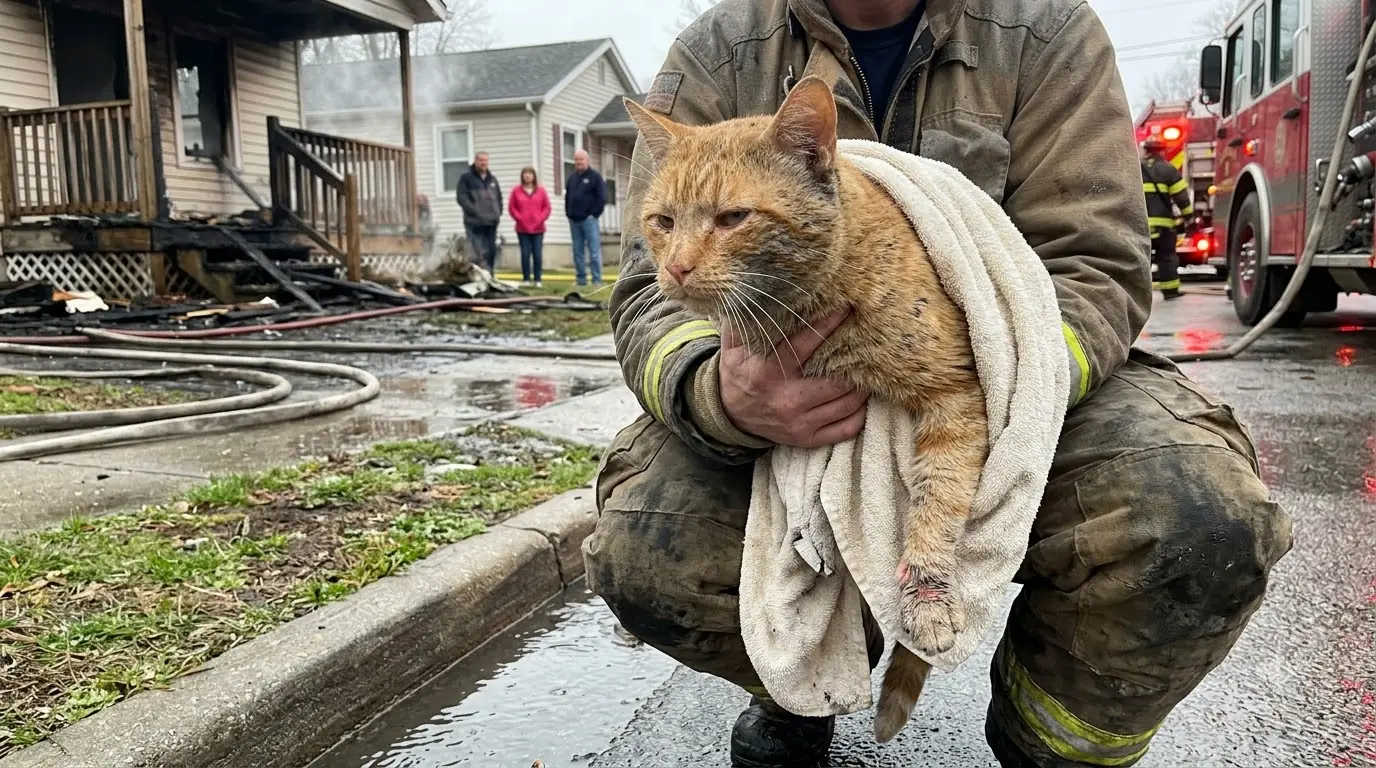
# Murphy's Recovery After Being Found Beneath a Burned Porch
The Boss’s Son Waited for Him in the Empty Parking Garage — Then Forced Him to Fight
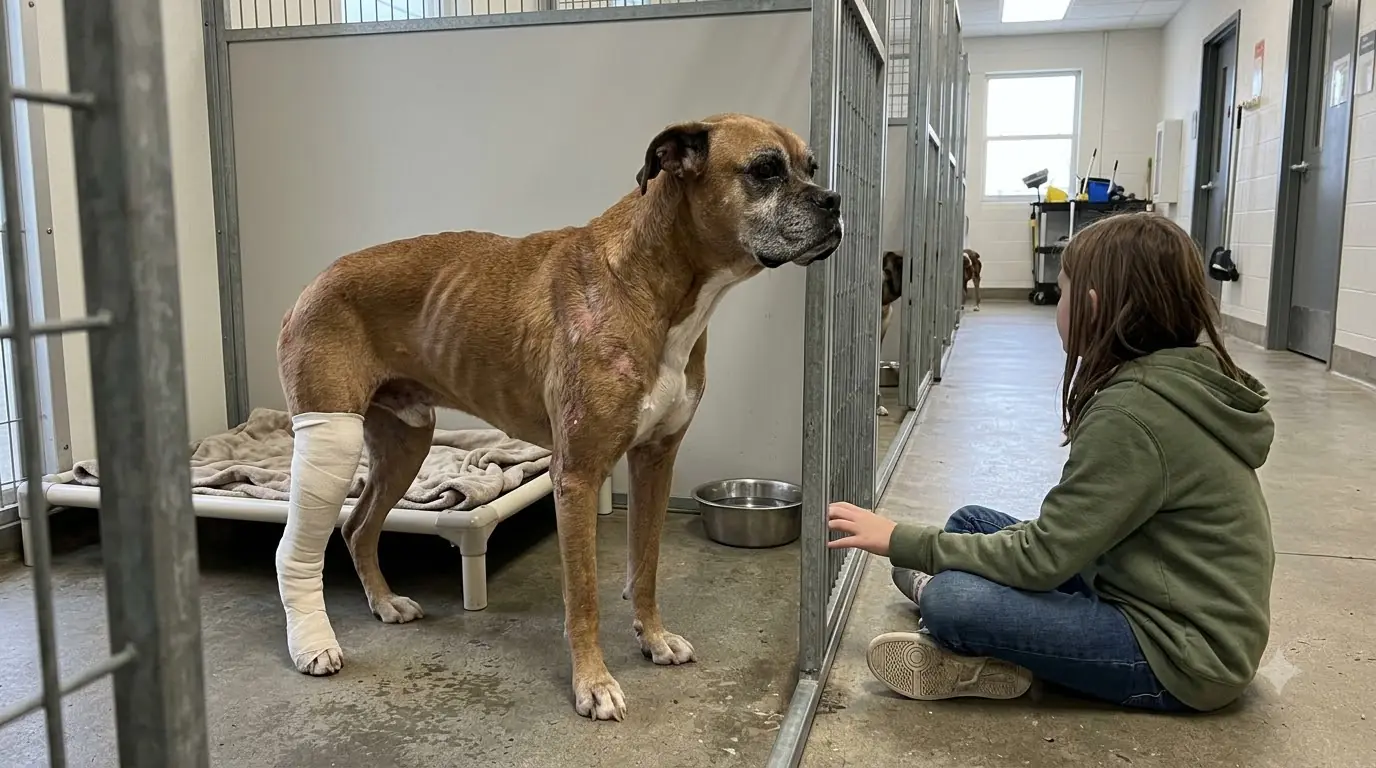
Injured Boxer Mix Rescued With a Painful Leg After He Could No Longer Greet Shelter Visitors
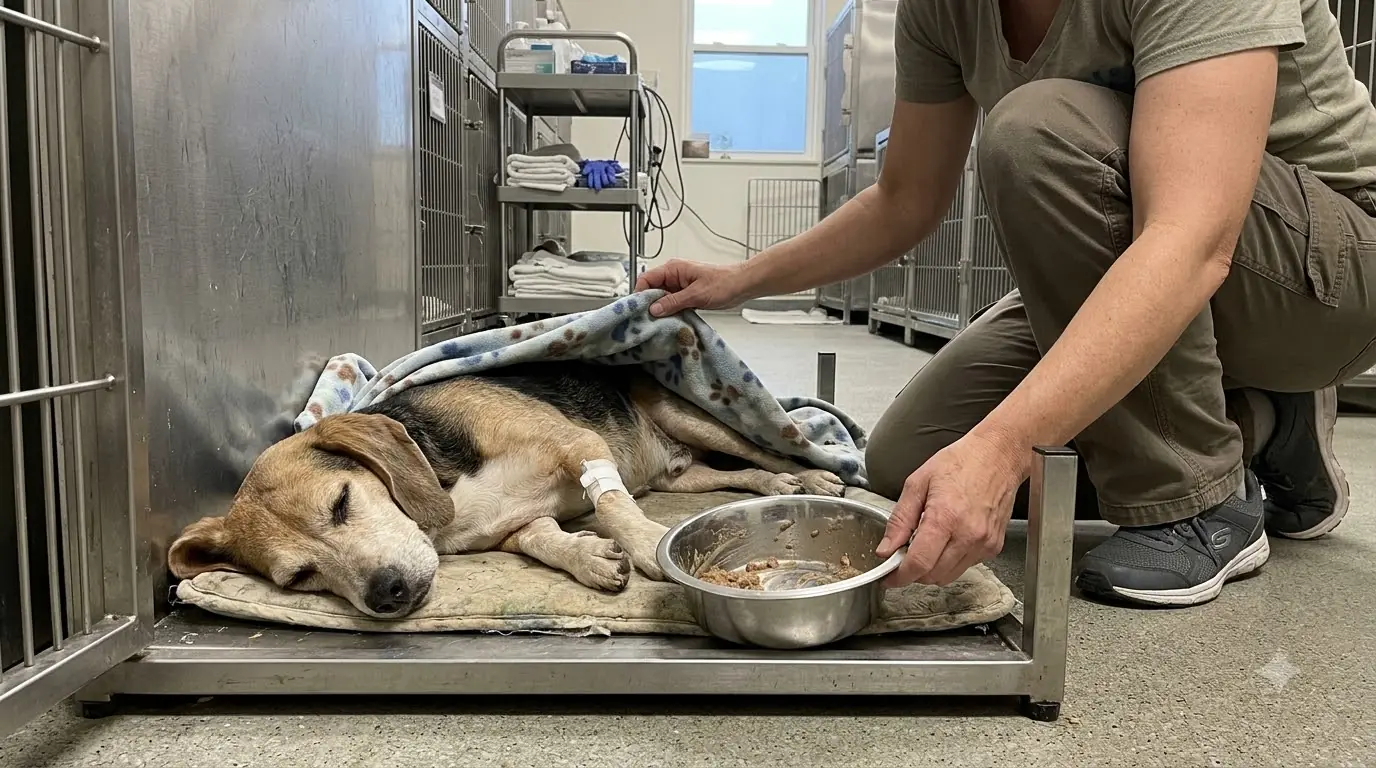
Sick Beagle Mix Rescued After Becoming Too Weak to Finish Her Meals
Eight Armed Men Rode Onto Her Ranch — And Told the Widow to Hand Over the Only Evidence She Had
5 Part