Three hundred and twelve miles of razor wire, concrete towers, and a silence so thick it pressed against your eardrums. No one had ever walked out of Ironridge free. The walls were thirty feet of poured concrete. The fences hummed with enough voltage to drop a bull moose. The cameras never blinked, and the dogs never slept. And yet, on a rain-lashed night in late October, four men crawled out of a storm drain into the black woods beyond the perimeter, their clothes soaked in mud, sweat, blood, and the unmistakable sticky-sweet smell of tomato ketchup.
This is how it happened.
Elias Crowe had been Inmate 47291 for four years, seven months, and eleven days when he decided they were going to leave.
He was forty-one years old, lean as a blade, with quiet gray eyes that never seemed to settle on one place for long. The other inmates said he had “stage eyes” — the kind that could make you look left while the real move happened on the right. Most of them didn’t know why. Elias never talked about the before. He just did small things that made the days less heavy. A coin that vanished from a closed fist. A playing card that traveled from one man’s pocket to another without being touched. A cigarette that lit itself when no one was looking.
They called him Prestige behind his back. To his face they just said “E.”
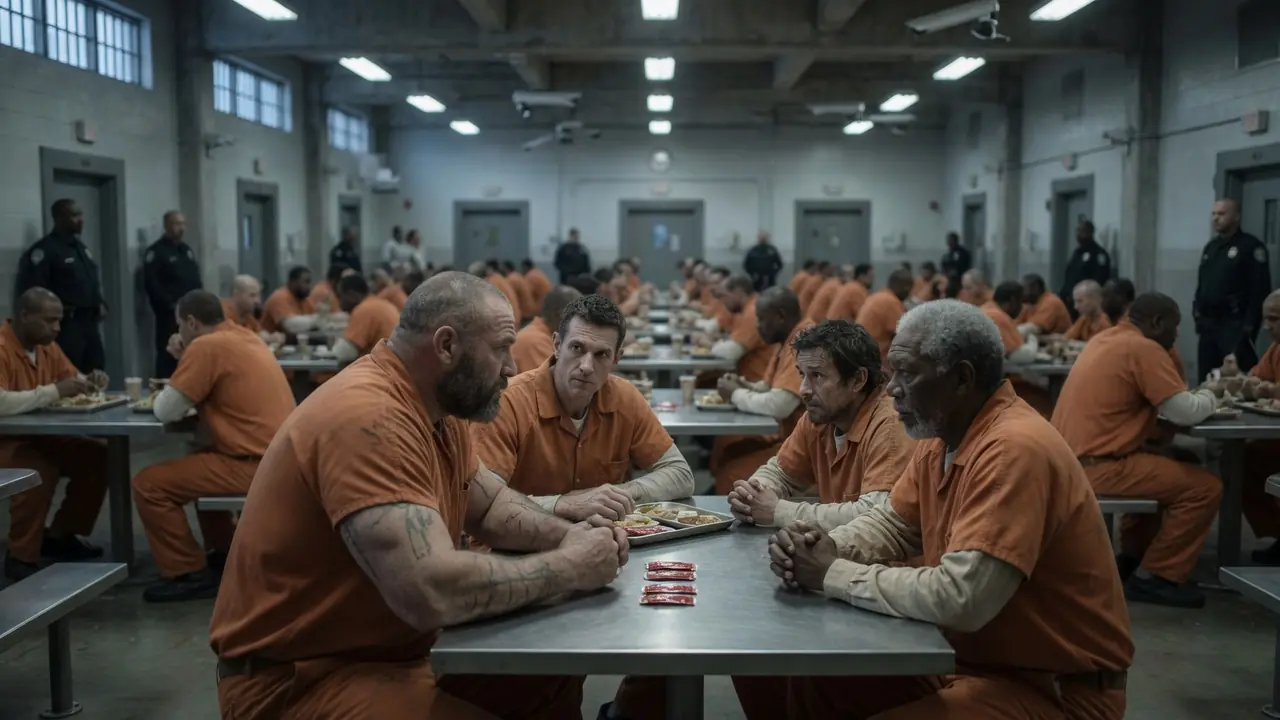
The day the plan truly began was a Thursday in March, in the chow hall. Elias sat at the usual corner table with the three men who had become his brothers.
Jax Boone — six-foot-four, former Marine Force Recon, arms like bridge cables, wrongfully convicted of aggravated assault after he broke three of a fentanyl dealer’s bones for selling to kids on his old block in Detroit. Quiet. Loyal. Could bench-press a small car and still make it look easy.
Theo Alvarez — small, quick, fingers that could open anything that had a lock. Ex-safecracker from Miami. The only man in Ironridge who could pick a high-security padlock with a paperclip, a paperclip, and a prayer. He smiled too much for a place like this, like he knew a joke the rest of the world hadn’t heard yet.
And Rico Patel — everyone called him Doc. Former ER surgeon from Boston who had written one too many prescriptions for painkillers to dying veterans who couldn’t afford the real thing after the VA failed them. Kind eyes. Steady hands. The only man Elias trusted to stitch a wound without flinching or asking questions.
They were eating the same gray meatloaf as always when Elias casually slid four unopened ketchup packets across the table under his tray.
Jax frowned, his voice a low rumble. “You collecting again, E? Last time you had enough of those damn things to open a diner.”
“Not collecting,” Elias said quietly, eyes scanning the room. Two guards by the far wall, one near the serving line. “Stockpiling.”
Theo raised an eyebrow, already grinning. “For what? A ketchup fight with the Aryan Brotherhood? Because I got dibs on the front line.”
Elias leaned in just enough. The usual roar of three hundred men chewing and cursing covered their voices.
“There’s a grate,” he said. “North exercise yard. The old storm drain that runs under the east wall. It’s been there since the place was built in ’78. Solid iron. Heavy as sin. Covered in forty years of industrial paint and rust. Everyone walks over it every single day. No one looks at it twice.”
Doc leaned forward, tray forgotten. “And what about it?”
“Ketchup eats rust. Slowly. Thoroughly. The acetic acid from the vinegar, plus the citric and other acids in the tomatoes. Same stuff people use to clean old tools and rusty locks back in the world. I’ve been testing it for six weeks on a piece of scrap metal I found in the laundry room. Daily applications. The metal is soft enough now that I can bend it with my bare hands.”
Silence fell over the table like a dropped curtain.
Jax’s eyes narrowed. “You’re saying we paint a grate with ketchup for months… and then just walk out like it’s nothing?”
“Not walk,” Elias corrected. “Crawl. The drain pipe is twenty-eight inches across at its widest. Tight. Long. Cold. It dumps into the creek three hundred yards past the outer fence, on the other side of the tree line. After that, woods for two miles. Then the river. Then a truck I already have waiting.”
Theo laughed under his breath, a sharp, disbelieving sound. “You son of a bitch. You’re actually serious.”
“Deadly serious.”
Jax stared at the four little red packets like they might explode. “How many we need?”
“Every single one we can get our hands on. Every meal. Every day. For the next seven months minimum. We hide them. We empty some into a sealed jar that Doc will keep in the infirmary under ‘medical supplies — topical experimental.’ We use the empty foil packets later to make shims and conductive strips if we need them. And every night after lights-out, one of us goes to that grate with a toothbrush and a packet and paints the bars where the rust is worst. Quiet. Careful. No heroics.”
Doc shook his head slowly, but there was something like hope flickering behind his eyes. “This is insane, E. Even for you.”
“No,” Elias said, and for the first time his voice carried the old stage cadence, low and certain. “This is magic. The best kind. The kind that uses what everyone ignores because it’s ordinary. No one ever searches a ketchup packet. No one ever thinks a free condiment could take down a maximum-security prison.”
He looked at each of them in turn, holding their gazes the way he used to hold an audience.
“I used to make elephants disappear in front of two thousand people in Vegas. I used to walk through walls that weren’t walls. This… this is just a longer trick. And the misdirection is already built in.”
That was the first time any of them heard Elias speak of his old life. They didn’t ask more. Not then. But the air around the table had changed.
They began the next morning.
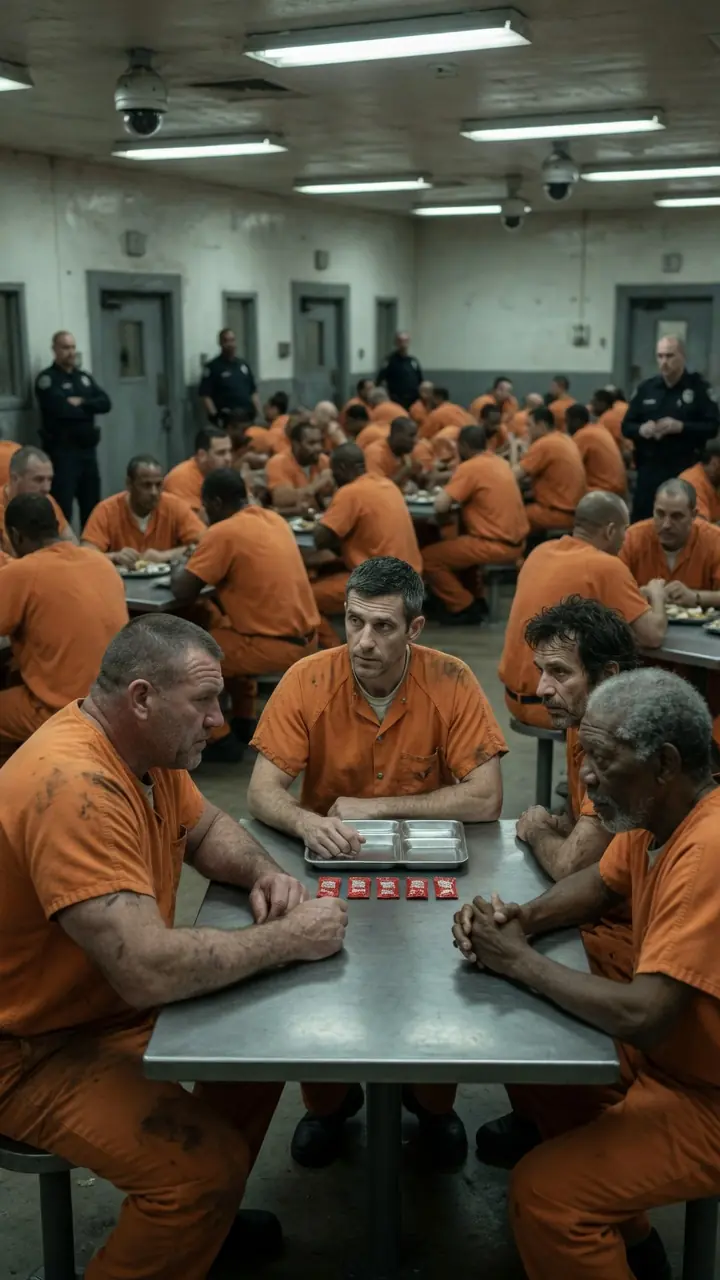
Every man in Ironridge got two ketchup packets with breakfast and two with dinner if they wanted them. Most guys squeezed them onto their trays and threw the empty plastic away without a second thought. Elias’s crew never did. They slipped the unopened packets into their waistbands, their socks, the hollowed-out spines of library books, the false bottoms of soap dishes Theo had carved with a smuggled razor blade.
Jax, who had scored a permanent spot in the kitchen after “saving” a cook from a scalding accident (staged, of course), started “accidentally” ordering extra cases of ketchup. The kitchen boss, a fat man named Reynolds who only cared about free food and not getting shanked, never noticed. One more box of ketchup was nothing in a place that went through pallets of the stuff every month.
Theo, who had laundry duty twice a week, sewed tiny hidden pockets into the hems of their pants and the linings of their jackets. He worked at night under a smuggled penlight, fingers flying.
Doc kept a mason jar labeled “Topical Antiseptic — Experimental Batch #7” in the very back of the infirmary cabinet, behind the expired antibiotics. Inside was a thick, dark red paste — pure ketchup that he had slowly reduced over a hot plate when no one was looking, concentrating the acids. Every few nights he would thin a little of it with sterile water and hand it off to whoever had yard duty that week, hidden inside a fake tube of antibiotic ointment.
The application became almost a ritual.
At 9:40 p.m., after the last formal count, the yard lights dimmed to half power. One man would walk the track as if stretching his legs after a long day. When he reached the northwest corner, near the two dead cameras that always “glitched” during rain or fog, he would drop to one knee, pretend to tie his shoe, and with a toothbrush hidden in his sleeve paint a thin, even layer of the red paste onto the four thickest bars of the grate where they met the concrete frame. Then he would stand, stretch his back, and keep walking like nothing had happened.
They did this for two hundred and nineteen nights.
At first nothing visible happened.
Then, in late June, Theo reported during a whispered conversation in the library that the thick industrial paint was blistering and peeling in small curls.
By mid-August the rust was flaking off in thick orange sheets every time rain hit the grate. The metal underneath looked pitted, almost spongy in places.
In early September Jax tested it with a short piece of rebar he had stolen from a construction detail on the new laundry wing. One solid pry with both hands. A soft, wet crack that made all four of them freeze. The bar bent half an inch and stayed bent.
They were ready.
But ready is not the same as free.
The months of waiting were the hardest part.
There were close calls.
One night in July a new guard named Kelso almost caught Theo mid-application. Theo had just finished painting when Kelso’s flashlight beam swept across the yard. Theo froze, heart hammering, then did the only thing he could: he started dry-heaving violently, pretending to be sick from the meatloaf. Kelso cursed, told him to get his ass to the infirmary, and walked on. Theo made it back to the cell block with the empty packet still in his sock and a new respect for how thin the line was.
Another time, in August, a surprise shakedown hit the entire block. Guards tore through mattresses, books, everything. Elias had sixteen packets hidden in a hollowed-out copy of The Count of Monte Cristo. When the guard opened the book, Elias did a classic force: he “accidentally” knocked over a cup of water onto the guard’s boots at the exact moment the man was about to flip the pages. In the cursing and mopping that followed, Elias palmed the book, switched it with an identical clean one Theo had prepared, and the packets survived.
They talked in fragments, never all four together for long.
One night in the rec yard, under the pretense of a card game, Jax finally asked the question they had all been carrying.
“You really used to do that magic shit for real? Like… Vegas?”
Elias shuffled the worn deck without looking up. “Yeah. Headlined at the MGM Grand for three years. Closed the show every night with the Metamorphosis. Trunk. Curtain. Thirty seconds. Me and my partner switching places in front of two thousand people who swore they never took their eyes off us.”
Theo whistled low. “What happened?”
Elias’s hands never stopped moving. Cards appeared and disappeared. “I made the wrong man disappear. A casino owner named Victor Lang. He was laundering money for the wrong people and framing magicians who got too curious. I was going to expose him on stage with a little trick involving a marked deck and a hidden camera. He found out. Framed me for the murder of my own partner instead. The evidence was perfect. The jury took forty minutes. Life without parole.”
Silence.
Doc spoke softly. “And you never told anyone.”
“Who would believe a magician?” Elias smiled without humor. “Besides… I needed the time. Time to watch. Time to learn this place. Time to find the right brothers.”
Jax nodded once, solid as stone. “Well. You found us.”
The night they chose was October 27th.
A nor’easter was rolling up the coast. Rain like nails on a coffin lid. Wind that howled through the razor wire like the ghosts of every man who had died inside those walls. Perfect cover for noise. Perfect cover for scent hounds. Perfect cover for four desperate men.
The diversion had to be perfect. Elias planned it like the final act of a show.
At dinner, the four of them sat at their usual table near the back. Theo had spent three weeks carving a “shiv” from a melted plastic cafeteria tray — soft enough not to kill, sharp enough to look terrifying under the harsh fluorescent lights. Doc had filled six empty ketchup packets with a mixture of real ketchup and a carefully drawn measure of his own blood (he had taken it the night before with a smuggled syringe). The packets were heat-sealed with a lighter and hidden in Theo’s socks and waistband.
When the signal came — Elias tapping his fork three times against the edge of his tray — Theo stood up, “argued” with Jax about an old card debt in a voice loud enough to draw eyes, and then drove the plastic shiv into his own side with a scream that could have cracked concrete.
The packets exploded on impact.
Bright arterial red sprayed across the table, the floor, Theo’s shirt, Jax’s face, the man sitting three seats away. Theo screamed the way only a man who has practiced screaming for weeks in the dark of his cell can scream. Real pain, because the plastic had cut deeper than planned into the muscle, but the blood was mostly ketchup and it looked perfect. Wet. Fresh. Horrifying.
Chaos detonated like a bomb.
Men scrambled over tables. Trays went flying. Guards shouted into radios. Alarms began to wail from every corner of the building. The entire mess hall became a red, roaring animal of panic and flying fists.
In the confusion, Elias, Jax, and Doc melted into the stream of bodies being herded toward the exits by screaming officers. Theo was “dying” on the floor in a spreading pool of red, Doc “treating” him with dramatic, shouting urgency — “He’s bleeding out! Get a stretcher! Move, damn you!” — buying them the forty-five seconds they needed to slip out the side door into the rain-lashed yard.
They hit the open ground at a dead run through the downpour.
The grate was waiting, black and glistening under the half-power lights.
Jax had the rebar lever hidden in his pants leg. Two hard, desperate yanks. The corroded bars screamed and snapped like wet wood. The grate lifted with a wet suction sound. A black mouth opened in the earth, rain pouring into it.
One by one they dropped in.
The pipe was worse than any of them had imagined in their darkest nightmares.
Twenty-eight inches at the mouth, narrowing in places. Pitch black. Running with ice-cold water and decades of sludge that smelled like death and old grease. The walls scraped skin raw immediately. They moved on their bellies, pulling with their elbows, pushing with their toes, faces inches from the filthy water.
Elias went first, then Theo (bandaged tightly under his shirt and already pale from blood loss and pain), then Doc, then Jax bringing up the rear, dragging the broken grate back into place behind them as best he could so the yard would look normal at a glance.
Halfway through — maybe a hundred and fifty yards — the pipe narrowed sharply.
Theo got stuck.
His shoulders jammed. For thirty terrifying seconds he couldn’t move forward or back. Water rose around his face. He started to panic, thrashing, breathing in muddy water.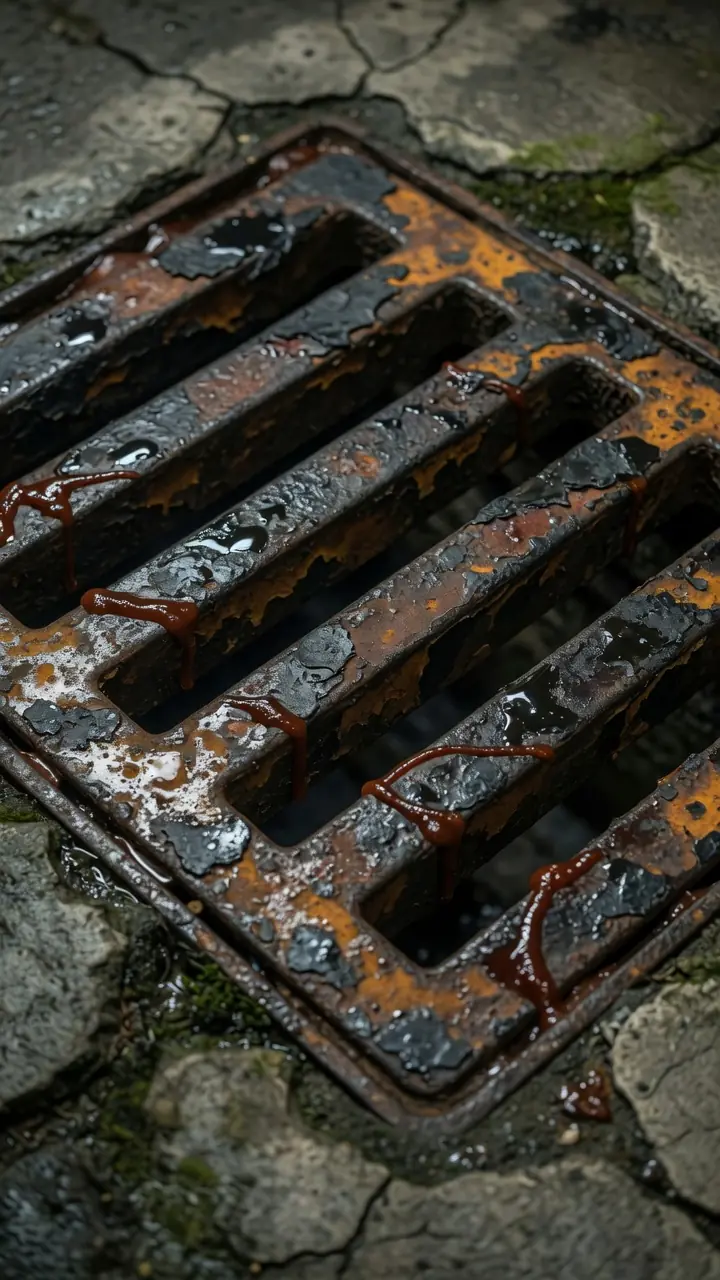
Elias twisted around in the darkness with impossible flexibility, ripped open the last four ketchup packets he had saved specifically for this moment, and smeared the thick, greasy red paste all over Theo’s shoulders, back, and the pipe walls around him.
“Push, Theo,” he whispered, voice calm even here. “It’s lubricant now. Same way I used to make a girl slide out of a regulation straitjacket in six seconds flat on stage. Trust the paste. Push.”
Theo pushed with everything he had left.
He slid free with a wet, obscene shlick and a muffled sob of relief.
They crawled for what felt like hours. Time lost meaning in the black. Every inch was pain. Jax’s broad shoulders bled freely. Doc’s hands were raw. Elias’s elbows were ground down to the meat. But they kept moving because the alternative was dying in a pipe under a prison.
Then, suddenly — cold night air. Rain on their faces. The sound of the creek rushing.
They were out.
They half-crawled, half-staggered through the woods for three miles in the storm, following the map Elias had drawn from memory of old county surveys he had studied for months in the prison library. At the river they found the aluminum boat Theo’s cousin had left chained under a willow three weeks earlier, exactly as planned. They crossed in silence, the current taking them south under a sky that offered no stars.
On the far bank a battered blue Ford pickup waited under a heavy tarp. Keys under the mat. Fake IDs, cash, dry clothes, and four bus tickets to different cities in the glove box. A first-aid kit. Water. Protein bars.
They changed in the rain, hands shaking. They burned the prison clothes and the last of the ketchup-stained bandages in a small, careful fire under a rock overhang. They drove with the headlights off until they hit the highway.
At a rest stop two hours later, under a buzzing sodium light that made everything look sickly yellow, they finally stopped shaking long enough to look at each other properly.
Jax started laughing first. Deep, rolling, almost sobbing laughter that bent him double.
“Ketchup,” he gasped. “We beat Ironridge Maximum with fucking ketchup packets.”
Theo, leaning against the truck with Doc’s fresh bandage around his middle, held up a trembling middle finger. “And a plastic knife. Don’t forget my beautiful plastic knife.”
Doc just smiled, eyes closed, rain still dripping from his hair, and whispered, “Never again.”
Elias sat on the tailgate, staring out into the dark, and for the first time in almost five years he let himself feel the full weight of it.
Free.
They split up the next morning at a truck stop in Pennsylvania, as planned.
Jax went north to Montana, where an old Marine buddy had a cabin, a dog, and no questions. He works construction now. Quiet. Solid. Free.
Theo disappeared into the Southwest, already planning a quiet life fixing locks and safes for people who paid in cash and didn’t ask for licenses. He still smiles too much.
Doc headed to a free clinic in rural Oregon that didn’t check backgrounds too hard. He still writes prescriptions for people who need them. Carefully. Kindly. He sleeps better now.
Elias kept driving east alone.
Six months later, a thin man with quiet gray eyes and careful hands opened a small magic shop in a coastal town in Maine. He called it Prestige & Co. He taught kids how to make coins vanish and cards fly. He never charged the ones who couldn’t pay. On quiet nights he would sit on the back porch with a single beer and watch the fog roll in off the Atlantic, and sometimes he would take out an unopened ketchup packet from the bottom drawer of his workbench, turn it over in his fingers, and smile the old stage smile.
The Twist
Eighteen months after the escape, the story finally broke into the world.
Not because any of them talked.
Because Elias mailed a single plain package to the investigative desk of the Boston Globe.
Inside was a USB drive, a long notarized letter, and a small plastic evidence bag containing four empty ketchup packets, carefully labeled with dates in Elias’s precise handwriting.
The letter explained everything in calm, clinical detail.
How the grate had been weakened over two hundred and nineteen nights. How the diversion had been staged with plastic and blood and ketchup. How four wrongfully convicted men had simply crawled out of an “inescapable” maximum-security prison using the one thing every guard and every camera ignored: the free condiment packets on every meal tray.
But the real payload was the evidence.
For four years Elias had been collecting. Tiny pieces, one misdirection at a time. A guard’s recorded conversation caught on a smuggled micro-recorder during one of Elias’s “magic shows” for the staff Christmas party. A ledger page stolen from the warden’s office while every eye was on a vanishing bird. Photographs. Bank records. Phone logs. Proof that Warden Hargrove and three senior officers had been running a sophisticated drug and protection racket for years — and that the four men had been deliberately framed or over-sentenced to keep them quiet and useful as examples.
The Globe ran the story on a Sunday above the fold.
By Monday morning the FBI was at the gates of Ironridge.
By Wednesday Warden Hargrove was in handcuffs on the evening news, face pale as milk.
By Friday the four men received formal notices that their convictions were under emergency federal review.
Jax’s assault charge was reduced to time served; the “victim” had been the one selling fentanyl to middle-school kids, and new witnesses came forward.
Theo’s old safecracking sentences were vacated after ballistics evidence the original prosecutor had buried finally surfaced.
Doc’s medical license was quietly reinstated with minor restrictions; the veterans he had helped all those years ago wrote letters that filled a binder.
And Elias Crowe — once the most wanted escapee in the state — received a full gubernatorial pardon and a short handwritten note from the governor himself:
“I don’t know whether to arrest you for the method or hire you for the state police. Either way… damn fine trick, Mr. Crowe. Damn fine.”
They never went back to prison.
Sometimes, on the anniversary of the escape, the four of them meet at a quiet diner somewhere in the middle of the country — always a different one, always paid in cash. They order burgers. They ask for extra ketchup, just for the hell of it. And they laugh until their sides hurt and the waitress starts giving them looks.
Because the greatest escape in modern American history was pulled off by a former stage magician and three brothers he found in the dark… using nothing more than patience, absolute trust, a little real blood, a plastic shiv, two hundred and nineteen nights of painting iron with tomato ketchup, and the oldest principle in magic:
The audience never sees the real move… until it’s already far too late.
And the best part?
It worked.
Exactly as designed.