At 8:43 on the morning of March 7, 2012, a dark green company SUV turned off Main Street in Tribune, Kansas, and rolled across the gravel lot outside the Greeley County Farmers Cooperative. Its tires made the familiar dry crunch of a western Kansas morning, and a small cloud of dust followed it almost to the front steps.
The driver, Brandon Cowell, had made the same trip often enough over the past eleven months to know which patch of gravel held water after a storm and which office window belonged to Calvin Mercer.
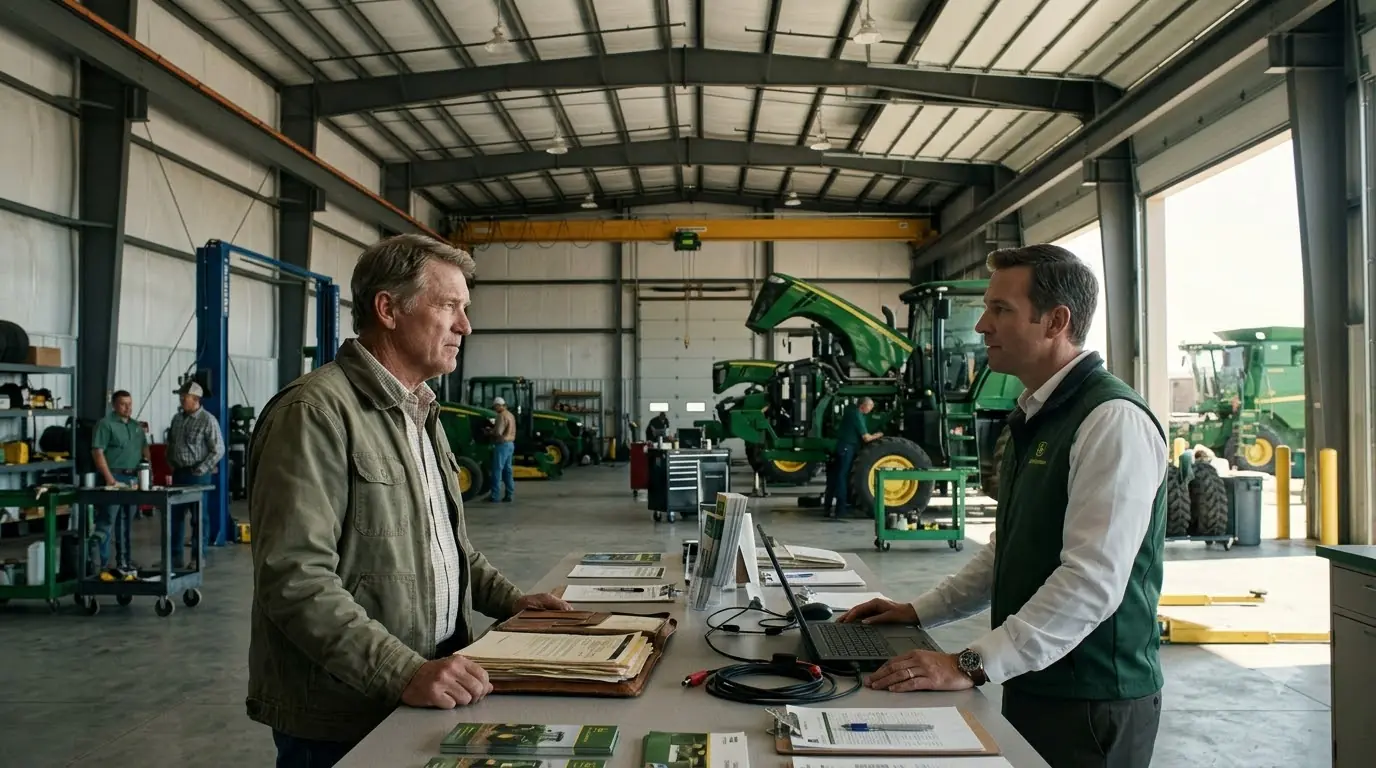
He parked beneath that window, shut off the engine, and allowed himself a satisfied breath before reaching for the leather portfolio on the passenger seat.
Inside the portfolio were forty equipment specifications, financing schedules, delivery commitments, and signature pages marked with small yellow tabs. Forty brand-new John Deere machines, including tractors, combines, and specialized agricultural equipment, were waiting for the formal approval that would convert an eleven-month sales effort into a $12.4 million order. It was the largest equipment transaction anyone at Brandon's regional office could remember pursuing in Greeley County. His manager had already included the expected revenue in the quarterly forecast, and Brandon had already imagined the commission paying for the unfinished basement in his Garden City home, where his little daughter wanted a room for painting when her birthday came in June.
That private expectation embarrassed him a little, so he had never mentioned it to Calvin. Good salesmen, he believed, were supposed to look excited about meeting a customer's needs rather than their own. He had spent months learning the cooperative's equipment rotations, asking farmers about troublesome hydraulic systems, bringing lunch to field meetings, and listening while Frank Odell, the fleet manager, explained why the older combines needed replacing before another heavy harvest. Brandon genuinely believed the machines he was selling would solve those problems, and he could imagine no reason the cooperative would withdraw now. There had been arguments about options and warranties, but those were the ordinary details of a sale that was already functionally done.
At 8:44 he walked inside, greeted receptionist Elaine Morris, and asked whether Calvin was ready. Elaine had worked in the building for twenty-two years and had an expression that made hurried people lower their voices before they knew why. She told Brandon the conference room was prepared and offered him coffee, which he declined because his stomach was already full of the restless energy that came before a big signature. The folders were laid out when he entered; so were the twelve printed pages of revised service projections that he had brought as reassurance in case the board wanted one more explanation. The room smelled faintly of furniture polish, paper, and the coffee pot in the next office.
From the second-floor window, Calvin Mercer watched Brandon shut his SUV door and straighten his tie in the reflection of the glass. Calvin had been with the cooperative long enough to remember when forty new machines would have seemed as fantastic as owning forty farms. He knew the salesman was diligent