"You have no idea what you're doing, Daniel. This is a nine-million-dollar infrastructure project. You are not shutting down my construction site."
Margaret Collins stood six feet from my western gate with a fleet of utility trucks waiting behind her. She was wearing the same mustard-yellow blouse she had worn the first time she tried to bully me off my own property, though the confidence that had once seemed effortless was now held together by anger.
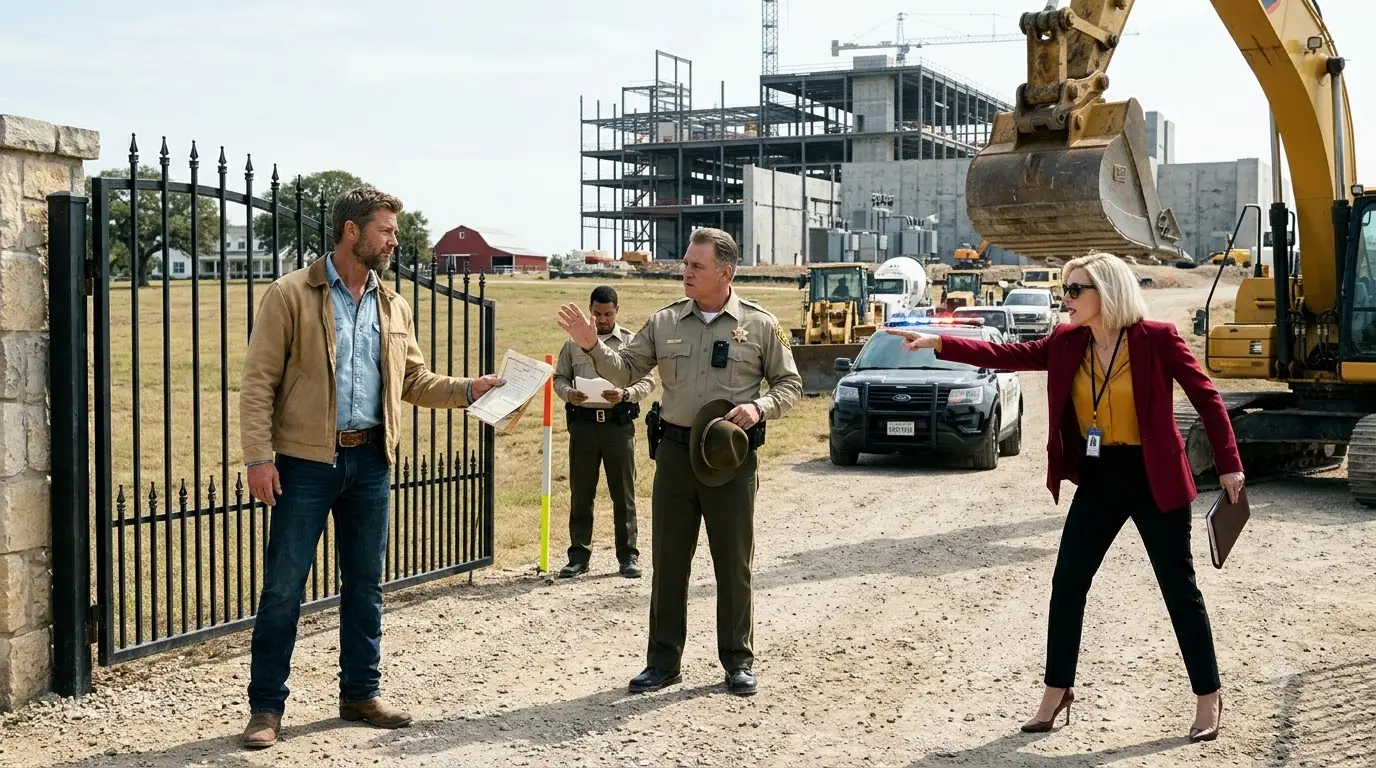
Beyond her shoulder, an excavator idled beside a trailer loaded with heavy cable. Two contractors watched us from their cab windows as if they wished the morning would end before anyone asked them to choose a side.
"I'm not shutting down your site," I told her. "I'm stopping you from crossing my land. Those are two different things."
"This project is approved," she said. "The HOA approved it. The county approved it. Our attorneys approved it."
I held up the deed my grandfather had passed to my father and my father had passed to me. "Which one of those people owns these hundred and forty acres?"
For one brief moment, Margaret looked past me instead of at me. She seemed to expect the gate to open simply because enough vehicles had gathered behind her, the way doors opened in office buildings when someone important approached. It was a kind of confidence I had seen in cattle buyers and bank managers and people who spent their lives mistaking a signature on their own paperwork for permission from everybody else.
Beside me, Sheriff Daniels had his hands resting loosely at his sides. His deputy, Marcus Hill, stood near the boundary stake that a licensed surveyor had set into the ground. Neither officer was there to run a construction company out of business or to decide a complicated property lawsuit on the spot. They were there because I had asked for help preventing an unauthorized entry after giving clear notice that the property was private. That was a much simpler question than the one Margaret wanted to argue.
The foreman finally climbed down from his truck. He looked at the gate, looked at Margaret, and then looked at the sheriff. "Ma'am," he said quietly, "our office still hasn't given me a recorded easement. I can't put my people through there on somebody's promise."
Margaret turned on him with a face I would remember for a long time. "We're losing thousands of dollars an hour because you are afraid of a fence."
"No," I said. "You're losing money because you planned a power route across land you never bothered to secure."
Three months earlier, I had never heard the words regional digital infrastructure facility. I had no reason to know what a medium-sized data center cost or how much electricity its cooling equipment consumed. I had never attended a Northridge Estates board meeting, because I did not live in Northridge Estates and had never agreed to belong to its homeowners association. I was a rancher with a long fence line, a stack of bills, and an ordinary desire to finish each day with the gates closed where I had left them.