The first thing I noticed that morning was the water.
My pond had always been a quiet place. When the sun came over the western ridge, the surface usually held the trees in one long, trembling reflection, broken by an occasional bass rising near the cattails or the silver movement of a trout under the dock.
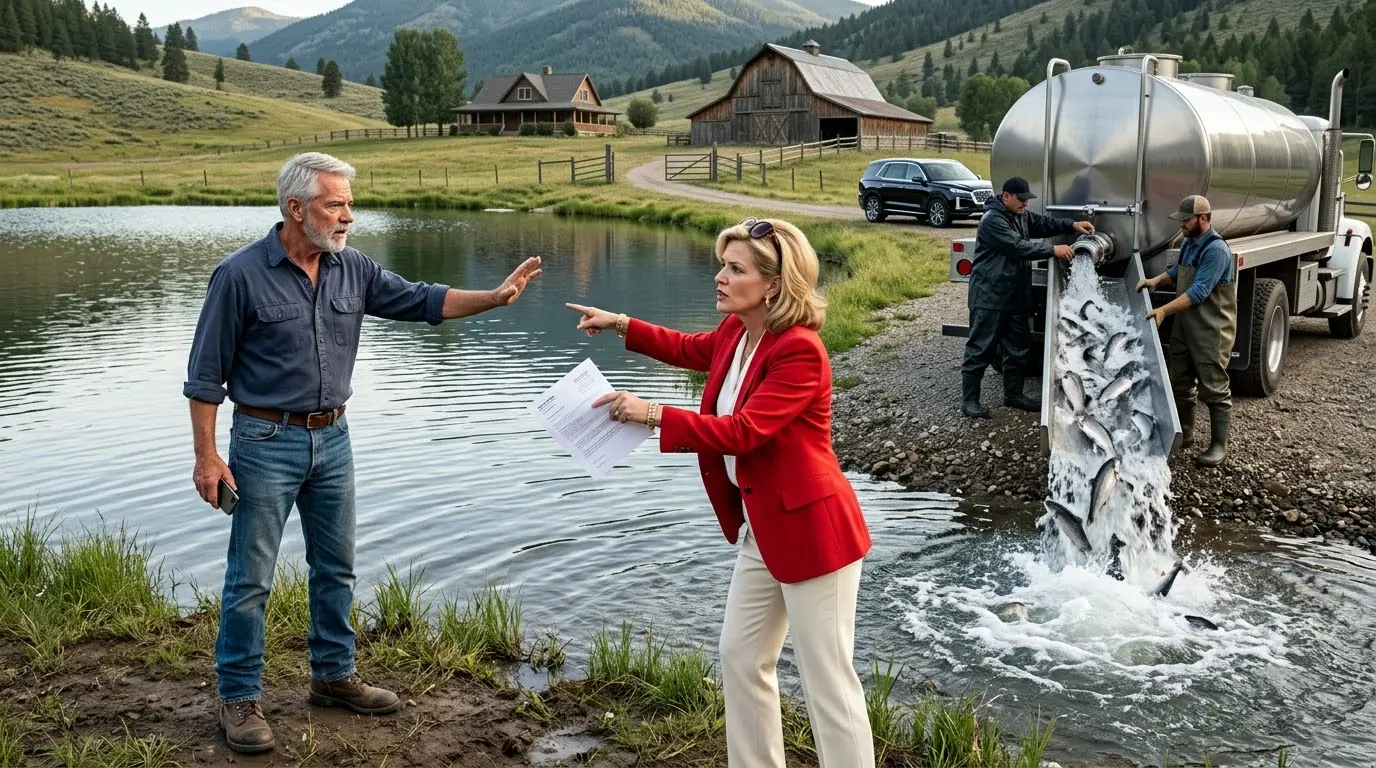
On the morning Karen Whitmore came to tell me she had solved a problem, the water looked as though something enormous was boiling beneath it. Every few seconds another dark back broke the surface, followed by a pale flash of belly and the sharp, restless circle of a tail.
I stood at the bank in my oldest work jacket, watching thousands of fish crowd into the shallow eastern cove. A few were as long as my forearm, but most were smaller, and there were so many that the ones near the surface seemed to be pushing the others out of the way. The water had a faint metallic smell I had never noticed before. My pond was spring-fed, deep in the middle, and usually clear enough that I could count the stones beside the dock, yet that morning I could barely see a foot below the surface.
I had owned that pond for more than twenty years. I knew the way it behaved after a heavy rain, after a hard freeze, and when deer came down from the woods to drink at first light. I knew which corner warmed first in spring and which patch of water stayed cold enough for trout all summer. I did not know what could make it look like that overnight, and the fact that I did not know frightened me more than I wanted to admit.
The sound of tires on gravel came from behind me. I turned to see a dark SUV easing through the open ranch gate, the one I had unlocked for a delivery expected later that morning. Karen Whitmore stepped out before the engine had fully stopped. She wore cream-colored trousers, a quilted vest, and the bright, self-satisfied expression she always brought to a conversation in which somebody else was about to be inconvenienced.
"Problem solved," she announced.
I looked from her to the pond and back again. "What problem?"
"The fish," she said, as though I had been waiting all week for that answer. "Silver Ridge needed somewhere to put them. Your pond was the obvious choice."
She drew a white folder from her handbag and placed it in my hands. The first sheet was an invoice with an impressive-looking company logo at the top and a total of $4,800 at the bottom. Under the amount, somebody had typed EMERGENCY POND MANAGEMENT in large capital letters. Karen watched me read it with the expression of a woman expecting gratitude for bringing a bill.
"You hired people to put these fish on my property," I said.
"We arranged an environmentally responsible relocation."
"Without asking me."
"You weren't available."
"Karen, I was home three nights ago. I was home two nights ago. I have been home every night this week."
Her smile tightened. "Robert, you live so far back from the road that nobody can ever find you when something important needs doing. We couldn't wait indefinitely."