Two patrol cars sat crossways across my gravel driveway, their headlights climbing the four steel legs of my grandfather's water tower.
Red and blue light swept over the pump house, over the old concrete pad, and over the name WILSON painted in fading white letters across sixty thousand gallons of gray steel.
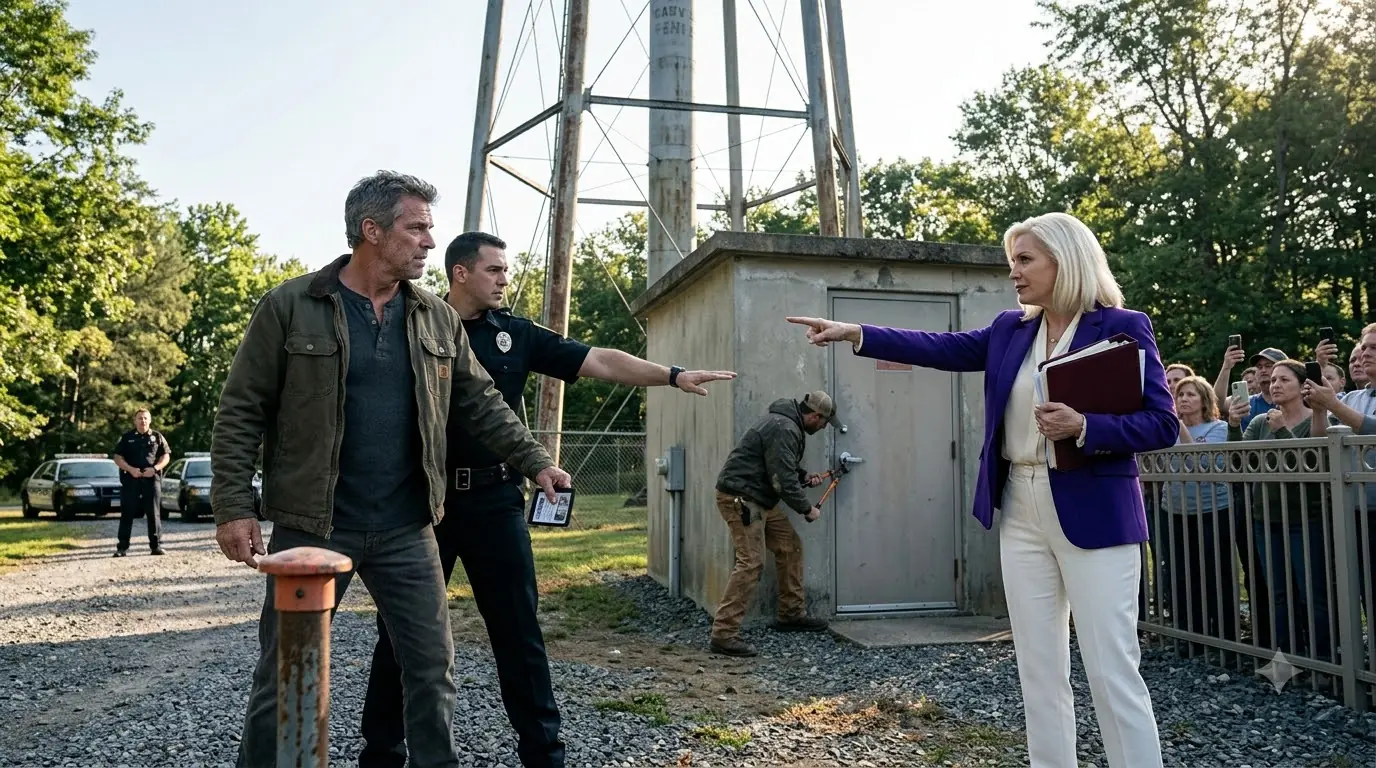
The tower made its familiar low groan above us, only tonight I could hear the pressure dropping through the sound of idling engines and people talking behind a fence that should never have been there.
Diane Caldwell pointed at me before the first officer had both feet on the ground.
"That's him. He's the one. He cut the water to a hundred and eighty-six homes. There are children in those houses. I want him arrested."
My hand was still resting on the main valve wheel. The metal was cold and wet with evening dew. I'd turned that wheel before during maintenance outages, but never with a crowd watching and never while somebody told the police I had committed a crime by doing my job.
"Sir," the older officer said, "hands off the equipment. Step away."
I did. Eleven feet, by my count, across gravel my grandfather had spread himself. I stopped beside a crack in the concrete and held my empty hands where the officer could see them. Beyond the fence, maybe forty people stood under the glow of their phones. Some wore bathrobes. Some had children beside them. A few were neighbors I'd known for fifteen or twenty years. Not one called my name.
"He's not even staff," Diane continued. Her perfume reached me before she did. "He's a farmer who thinks he owns our utility. Take his keys and get him off community property before he causes more damage."
The younger officer looked toward the tower and then at me. "Did you shut the supply off?"
"Yes," I said. "I had to."
Diane gave a short laugh. "He had to. Write that down."
And somewhere under the anger, under the embarrassment of standing in front of my neighbors like a suspect, I felt something colder. She hadn't asked a single question about the water. Not one. She didn't want to know whether it was safe. She wanted it turned on, and she wanted everybody watching to believe she had the authority to make that happen.
I handed over my keys when the officer asked. I didn't raise my voice. I didn't push past him to prove where the survey line ran. I had already learned that facts told at the wrong volume become arguments, and arguments filmed on forty telephones become whatever story the person posting them decides to write.
I didn't know then how much that evening would cost me. I didn't know I'd be threatened with the loss of my license, hauled toward a criminal investigation, and ordered by a court to restore a water supply I believed could poison a child. I didn't know that Diane had been preparing to take that tower for years. And I certainly didn't know that, when the county's chief water official finally came up this same driveway, she would end Diane's entire performance with six words.