HOA Ordered Me to Fix the Cracks in My Sidewalk — So I Turned Them Into a Neighborhood Attraction
HOA Ordered Me to Fix the Cracks in My Sidewalk — So I Turned Them Into a Neighborhood Attraction
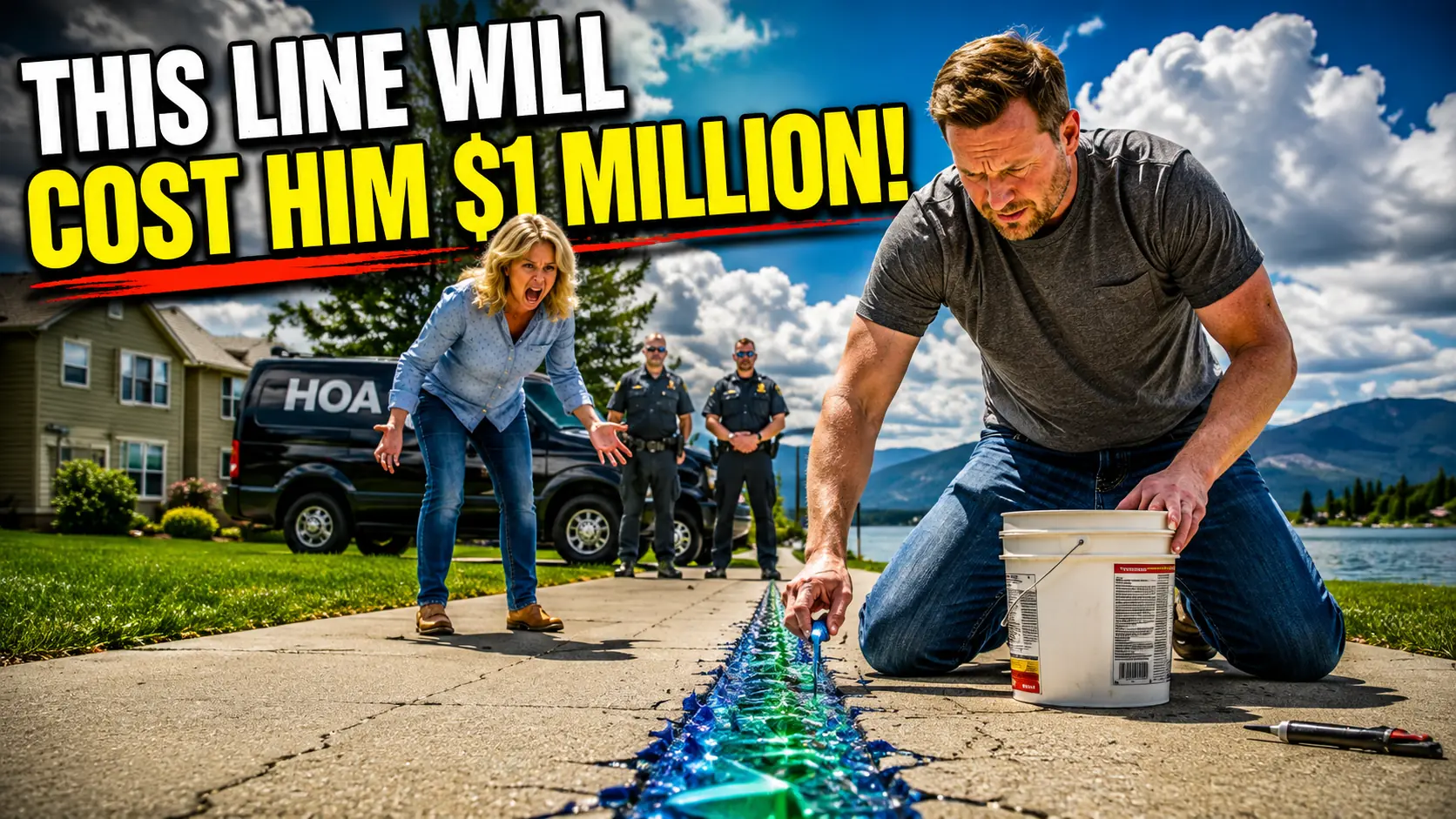
The letter wasn’t just a letter. It was an omen printed on the color of despair. Beige. A specific soul-crushing shade of beige. Like the waiting room of a government office where dreams go to be filed in triplicate and then lost. It arrived on a Tuesday, which is objectively the most beige day of the week. So the synergy was, I’ll admit, impressive.
I found it wedged in my mailbox, peeking out from between a coupon for a discount oil change and a flyer for a pizza place that promised gourmet toppings and then listed pineapple as the first example. Even that culinary crime paled in comparison to the envelope in my hand. It was thick card stock. The return address didn’t list a name, just a sterile, ominous title: Maple Creek Estates Architectural Control Committee.
“Oh no,” I muttered to my dog Buster, a golden retriever with the IQ of a doorknob and the emotional intelligence of a Zen master. He wagged his tail, blissfully unaware that our suburban tranquility was about to be violated. Inside, my home office was my sanctuary. It was a comfortable mess of dual monitors, a sprawling graphic design tablet, and shelves lined with Funko Pops and vintage sci-fi novels.
It was the one place in this neighborhood of militant conformity where I could be myself. Maple Creek Estates was sold to us on a promise of harmonious living. What they meant was aggressively monotonous living. Every house was a variation of the same three models painted in one of five approved shades of off-white. Lawns were manicured to within a millimeter of their lives. Individuality was a rumor, a ghost story whispered by the rebellious few who dared to put up their Christmas lights a week before Thanksgiving.
And the warden of this low-security prison of aesthetics was Brenda. Brenda was the HOA president. She was a woman in her late 50s who had the sharp predatory eyes of a hawk and the relentless energy of a border collie. I’d never seen her without a tennis visor, even in the rain, and she always carried a clipboard, which I was convinced was just a prop to give her an air of unearned authority.
My office window had a perfect view of the street, and I’d compiled a mental list of her greatest hits. I’d seen her measure a neighbor’s grass with a tape measure. I’d witnessed her time with a stopwatch how long it took the guy at number 17 to bring in his trash cans after pickup, and I was certain she had a catalog of every unapproved decorative garden gnome within a 5-mile radius. I slid open the beige envelope with a letter opener, feeling like I was disarming a very boring bomb.
The heading screamed VIOLATION NOTICE in a severe all-caps font. Below it, a grainy black-and-white photo of my sidewalk with the offending cracks circled in what looked like a blood-red Sharpie. “For the love of—” I sighed, reading the text aloud in my best robot voice. “Per bylaw 7, section 4A, all homeowner-maintained walkways must be kept in a smooth, uncracked, and uniformly safe condition. The attached photographic evidence indicates multiple cracks exceeding the 1/4-inch width limit. Please remedy this violation within 14 days to avoid further action.”
“Further action?” It sounded so threatening. What was she going to do? Fine me into oblivion? Revoke my beige privileges? The most insulting part was the giant red stamp at the bottom that read FINAL NOTICE. “Final notice?” I yelled to an empty room. Buster lifted his head, thumped his tail twice, and went back to sleep. “It’s my first notice. She skipped the entire notice protocol. This is tyranny. It’s a violation of my homeowner rights.”
That evening, I presented the evidence to my partner, Chloe, as she was making dinner. Chloe is the anchor to my chaotic kite. She’s a structural engineer, a woman who thinks in straight lines and solid foundations, which makes her the perfect, if sometimes exasperating, foil to my creative nonsense. She took the letter, read it, and handed it back with a sigh that I knew all too well. It was the “Leo is about to make this a thing” sigh.
“Oh my God, Leo, just go to Home Depot and get a tube of concrete patch. It’ll take you an hour tops.” “But it’s the principle of it, Chloe,” I said, waving the letter around. “Look at this beige stationery. Feel the passive aggression in this font choice and the final notice stamp. That’s a declaration of war. Brenda didn’t choose violence. She chose bureaucracy, which is slower, more painful, and involves more paperwork.”
“You’re going to make this a thing, aren’t you?” she said, not even looking up from the garlic she was mincing. “I’m not making it a thing,” I insisted, leaning against the counter. “Brenda is making it a thing. She and her architectural control committee, which is probably just her and some guy named Gary who really likes measuring things. I’m simply going to respond in a manner that is both compliant and artistically expressive.”
Chloe paused her mincing. “What does that mean?” “It means I’m going to fix the cracks,” I said, a slow smile spreading across my face. “I’m going to fix them so well, so thoroughly, that Brenda will rue the day she ever pointed her clipboard in my direction.” She just shook her head and went back to the garlic. “Just don’t get us fined, Picasso.”
That night, sleep was a distant country I couldn’t find on a map. I lay in bed, the smug beige letter sitting on my nightstand mocking me. I grabbed my laptop. My first search was “how to fix sidewalk cracks.” The results were a parade of gray, soulless products: concrete patch, polyurethane sealant, mortar mix. It was a cry for help from the world’s most boring search engine results page.
I typed in “creative sidewalk repair.” The results were more interesting. People planting tiny moss gardens in cracks. People filling them with colorful Legos. Then I stumbled upon it. A picture of a broken ceramic bowl, its cracks mended with shimmering gold lacquer. Kintsugi. The Japanese art of repairing broken pottery by embracing the flaws, highlighting them, making the object more beautiful for having been broken.
My fingers flew across the keyboard. “Kintsugi for concrete.” More images. People had filled cracks with beautiful mosaics, with colored cement. It was close, but not quite right. It had to be something that followed the letter of the law but completely obliterated its beige spirit. The bylaw said the sidewalk had to be smooth and uniform. It didn’t specify the material. It didn’t specify the color. And it definitely didn’t specify its properties in the absence of light.
My final search at 2:17 a.m. was the one that sealed our fate. “Glow-in-the-dark epoxy resin.” The screen filled with images of river tables, luminous jewelry, and otherworldly art projects. I saw powders in every color imaginable: cosmic blue, alien green, supernova orange. A plan as terrible and brilliant as a Bond villain’s monologue began to form in my mind. “Uniformly safe,” I whispered to the dark room, the glow of the laptop illuminating my triumphant, maniacal grin.
“The letter says nothing about uniformly boring.” Buster snored at the foot of the bed. The war was on, and he hadn’t even enlisted. The next morning, I woke up with a sense of purpose I hadn’t felt since my last all-night caffeine-fueled design deadline. This wasn’t just a chore anymore. It was a mission, a quest for glorious, malicious compliance. Chloe was already at work, having left a sticky note on the coffee machine that just said, “Don’t burn the house down or the sidewalk.” A reasonable request.
My first stop was an art supply store downtown. The kind of place that smells like turpentine and possibilities. I strode to the pigments aisle, feeling like a secret agent procuring weapons for a black-ops mission. I found the phosphorescent powders shimmering in their little plastic jars. A teenager with purple hair and a nose ring whose name tag read Stara watched me from behind the counter. I started piling jars of aqua glow and cosmic blue powder onto the counter. One jar, two, five, ten. I needed enough to fill several feet of concrete fissures.
Stara finally broke the silence. “Whoa,” she said, her voice a monotone drawl. “Are you like building a rave?” I leaned in conspiratorially, lowering my voice. “Classified,” I whispered. “It’s for a municipal infrastructure project. Very serious business. It’s a new federal initiative to improve nocturnal pedestrian safety through photoluminescent polymers.” She blinked slowly, processing this fire hose of nonsense. “Right on,” she said, and began scanning the jars. “That’ll be $187.45.”
I paid with a grim satisfaction. The price of freedom isn’t cheap. My next stop was the hardware store, a vast, dusty warehouse of manliness where you could buy everything from a 2x4 to a self-propelled lawn mower. I found the epoxy resin, giant cans of viscous liquid with more warning labels than a vial of plutonium. As I was struggling to read the fine print on mixing ratios, a voice like grinding gravel startled me. “That’s the good stuff. What you building?”
I turned to see a man who was built like a refrigerator and sported a magnificent walrus mustache. His name tag, stained with what might have been grease or coffee, read S. “Just a little sidewalk repair,” I said, trying to sound casual. S squinted at the ten jars of glowing powder in my cart. “With pixie dust?” I sighed. There was no fooling S. He had the ancient wisdom of the hardware gods. “Okay, look. My HOA sent me a nasty letter. They want me to fix the cracks in my sidewalk.”
S’s face, which had been a mask of gruff neutrality, cracked into a wide grin. “The HOA, huh?” He let out a hearty laugh that seemed to echo through the aisle. “My brother-in-law’s got one of them. Tried to fine him ’cause his garden hose wasn’t coiled in a clockwise direction. Bunch of miserable—” He trailed off, muttering a few choice words I’m sure weren’t in any HOA bylaw. “So you’re going to fill the cracks with this stuff?” “That’s the plan,” I confirmed.
He took a can of the epoxy and tapped it. “Stick it to ’em, kid. Here’s a tip. Mix it slow. Like really slow. Otherwise you get air bubbles and it’ll ruin the smooth, uniform finish.” He winked. “You wanted to be compliant, right?” “Exactly,” I said, shaking his calloused hand. S was a patriot, a true ally in the war against beige. Back home, I suited up: safety goggles, an old band t-shirt, and a pair of nitrile gloves. I looked less like a DIY enthusiast and more like a low-budget version of Walter White.
The first step was cleaning the cracks. I’d bought a Dremel tool on S’s recommendation, and as I carved away the dirt and debris, a cloud of concrete dust billowed around me. I was a suburban Pig-Pen creating a masterpiece through grime. Buster watched from the safety of the living room window, his head cocked in deep confusion. Then came the moment of truth. I poured the epoxy resin, part A, into a large bucket. It was thick and clear, like industrial honey. Then came part B. The chemical reaction began immediately, warming the bucket, and finally the pixie dust.
I dumped all ten jars of the glowing powder in and began to stir slowly and deliberately, just as S had instructed. The mixture swirled, transforming from clear to a milky, ethereal blue. It was mesmerizing. I felt like a wizard brewing a potion, a potion of petty revenge. As I was kneeling, ready to pour, a shadow fell over me. “Doing a little repair work, Leo?” It was Gary. Gary was Brenda’s loyal lieutenant, a man whose entire personality consisted of khaki shorts and an almost pathological need to know everyone else’s business. He was walking his Pomeranian, a yapping ball of fluff named Princess Fluffy Butt. I am not making that up.
“Just complying with bylaw 7 section 4A, Gary,” I said, not looking up from my bucket of glowing goo. “Making the community safer one crack at a time for the children.” “Looks blue,” Gary observed, peering into my bucket. Princess Fluffy Butt yapped in agreement. “It’s a special high-durability polymer blend,” I said, the lie rolling off my tongue with astonishing ease. “Aerospace grade. It settles into a neutral gray. The blue is just a temporary color from the bonding agent for safety.” “Ah,” Gary said, nodding sagely as if he understood a single word I’d just said. “Safety. Good. Brenda will be pleased.” I highly doubted that.
He and his yapping overlord continued their patrol, and I got to work. I poured the viscous, glowing liquid into the cracks. It flowed like lava, slowly filling every crevice. I used a small trowel to smooth the surface, ensuring it was perfectly flush with the rest of the sidewalk. It was messy. I got it on my hands, my jeans, and somehow in my hair, but when I was done, the cracks were gone, replaced by veins of pale blue running through the concrete. In the harsh afternoon sun, it looked strange, but not necessarily bad. Now all I could do was wait for nightfall.
The wait was agonizing. I paced the house, glancing out the window every five minutes. Chloe got home around 6:00 and surveyed my handiwork from the doorway. “You really did it,” she said, a mixture of awe and terror in her voice. “What did the neighbors say?” “Gary thinks it’s for safety,” I said proudly. “Gary thinks the 5G towers are reading his thoughts. He’s not a reliable barometer.” As dusk began to settle, we took our positions at the living room window, like scientists waiting for a comet to appear. At first, there was nothing. The sidewalk was just a sidewalk. The blue lines were barely visible. My heart sank. Did I screw it up? Did I get the ratio wrong? Was S a double agent?
But then, as the last vestiges of sunlight faded from the sky, it happened. A faint luminescence appeared. It grew stronger, brighter, until the cracks in my sidewalk were no longer cracks. They were rivers of soft, ethereal light, glowing with an intense blue-green radiance. It was breathtaking. The ugly broken lines were now intricate patterns like constellations on the ground, like a map of a city from a science fiction movie. Chloe let out a long, slow breath. “Okay,” she said, her voice a whisper. “I have to admit, that’s actually really cool.” “See?” I said, my chest swelling with pride. “I’m not just a rebel. I’m an artist, a suburban beautification specialist.”
Just then, a car turned onto our street. It slowed to a crawl as it passed our house, the driver’s head craning out the window, their face illuminated by the otherworldly glow from the ground. Then another car did the same, and another. The first shot in the great HOA war had been fired, and it was a tracer round. I woke up the next morning feeling like a king. The sun was streaming through the window. I had a fresh pot of coffee brewing, and I was the proud owner of the most spectacular sidewalk in the continental United States. I strode to my office window, coffee in hand, ready to survey my glowing kingdom in the daylight.
The resin had cured to a placid, semi-translucent light blue, almost like sea glass embedded in the concrete. It was subtle, but just weird enough to be interesting. The real show, however, was happening on the sidewalk itself. A small congress of neighborhood children was gathered, crouched down, tracing the glowing lines with their fingers as if they were magical ley lines. One of them, a little girl with pigtails, was hopping from one line to another, a custom-made hopscotch grid. It was the most life I’d ever seen on this sterile stretch of pavement.
A little farther down the street, my neighbor Tom Miller from house number 32 was getting his newspaper. He caught my eye, grinned, and gave me a hearty thumbs-up. This was good. I was a man of the people, a hero to the children, a champion of cool stuff. Then I saw her across the street. Brenda was standing on her perfectly edged lawn, clipboard clutched to her chest like a ballistic shield. She wasn’t moving. She was just staring. Her face a frozen mask of pure unadulterated rage. Her visor was pulled down so low it practically touched her nose. But I could feel the heat of her glare through the double-paned glass of my window.
Beside her, Gary was pointing, his arm jabbing at the air in the direction of my house, his mouth moving a mile a minute. I couldn’t hear him, but I was pretty sure he was no longer convinced the blue was a temporary bonding agent. The calm before the storm was over. The storm was here, and it was wearing a visor. I didn’t have to wait long. She marched across the street with the determined stride of a drill sergeant heading toward a sloppily made bed. Her sensible walking shoes barely made a sound on the asphalt, a terrifying silence that preceded her arrival. I met her at the door, leaning against the frame with what I hoped was an air of casual indifference.
“Maxwell,” she said. Her voice was clipped, devoid of any warmth. It was the verbal equivalent of her beige stationery. “What is this?” She gestured vaguely at the sidewalk as if it were a crime scene. “Good morning, Brenda. Lovely day, isn’t it?” I chirped, taking a deliberate sip of my coffee. “To what do I owe the pleasure?” “Don’t play coy with me,” she snapped. “The sidewalk.” “Ah, yes, the sidewalk,” I said, feigning sudden realization. “I fixed it. Got your letter and everything. Complied immediately. All the cracks are filled, perfectly smooth and uniform. No more tripping hazards. You can rest easy.”
“It’s glowing,” she said, the word coming out like she had tasted something foul. “Yes, isn’t it great?” I beamed, launching into the speech I had been rehearsing in the shower. “It’s a new safety feature. It’s made of a photoluminescent polymer composite. It absorbs latent UV radiation during the day and then provides gentle eco-friendly ambient illumination at night. It helps prevent accidents for evening strollers and joggers. It’s a win-win for community safety and the environment.” I almost convinced myself.
Brenda was not convinced. She was already flipping through the thick three-ring binder she’d brought with her, the sacred text of the HOA bylaws. Her finger stabbed at a page. “Aha. Section 12, subsection C. All exterior modifications, including but not limited to paint, siding, and fixtures, must be selected from the preapproved Maple Creek Estates color palette. I’ve checked. There is no cosmic blue or radioactive alien green on this list.” I took another sip of coffee, stalling for time. “A brilliant point, Brenda. A truly masterful citation of the sacred texts. However, you’ll note that subsection refers specifically to paint, siding, and fixtures. This is none of those. This is a structural crack filler, a utilitarian compound. It’s infrastructure, not decoration. And if you read the fine print on bylaw 7, the one you cited in your letter to me, it says nothing about the color of repair materials. Loophole, Brenda. A glorious glowing loophole.”
Her face went through several shades of red. It was like watching a mood ring on a very angry person. She was sputtering, flipping through pages, trying to find a rule, any rule that I had broken. The children were still playing on the sidewalk behind her, their laughter the soundtrack to her defeat. She finally slammed the binder shut. “This is not over, Maxwell,” she hissed. “You have made a mockery of this committee. You will be hearing from our lawyer.” She spun on her heel and marched back across the street, Gary scurrying behind her like a pilot fish after a particularly grumpy shark. I watched them go, feeling a surge of adrenaline. This was way more exciting than kerning fonts all day.
The next phase of the war began online. That afternoon, Chloe sent me a link with the message, “OMG, you’re famous.” It was a TikTok. A high school kid from down the street, username @ski8boy9, had filmed it the night before. The video was a sweeping shot of the sidewalk glowing in all its glory set to a dreamy synthwave song. The camera panned up to show our house number, then back down to the hypnotic lines. The caption read, “My neighbor is fighting his HOA in the coolest way possible. #Glowwalk #HOAwars #epoxyrebellion #suburbanlegend.” The video had 50,000 views and it was climbing fast.
The comments were a waterfall of support. “Not all heroes wear capes,” one read. “That HOA president is about to have a glowing aneurysm,” read another. Someone else wrote, “I want to live on that street.” The court of public opinion had convened, and the verdict was in my favor. Of course, Brenda had her own court. Two days later, a second envelope appeared in my mailbox. This one was bright red. It looked like a blood oath. Inside, another notice. This time, it wasn’t a warning. It was a fine. $500 for unapproved aesthetic modification and creation of a public nuisance.
I held the notice up for Buster to see. “Public nuisance?” I scoffed. “The public loves it. The kids are using it for a nighttime disco. I saw Mrs. Henderson from number 40 admiring it on her evening walk. Brenda’s just mad because she can’t fine the photons for unapproved glowing.” Chloe was less amused. “$500, Leo. This is getting expensive.” “It’s not about the money, Chloe,” I said, my voice filled with dramatic conviction. “It’s about freedom. It’s about light. It’s about our inalienable right to have a non-boring walkway.” “It’s about you being a stubborn weirdo,” she countered. But she was smiling. “So, what are you going to do now?” I looked at the red letter, then out the window at my beautiful, bizarre, and now very expensive sidewalk. “Oh, I’m going to fight it,” I said. “This nuisance is going national.”
Brenda, it turned out, was not a woman who took public humiliation well. The TikTok had morphed into a local meme. Someone had photoshopped my sidewalk onto the yellow brick road from The Wizard of Oz. Someone else had set the video to the X-Files theme. My little act of malicious compliance had become a spectacle, and Brenda was not the type to enjoy being part of the circus unless she was the ringmaster. So she did what any cornered, power-mad HOA president would do. She escalated. She called the cops.
I was in the middle of designing a logo for a new brand of organic dog food when I saw the flashing lights. Red and blue strobed across my office walls, painting everything in the patriotic colors of an official complaint. I peeked through the blinds. A police cruiser was parked at my curb. My first thought was, she actually did it. She told them I built a UFO landing strip and they believed her. Two officers got out. One was older with a weary, slumped posture that suggested he’d seen it all and was profoundly unimpressed by it. The other was younger, taller, and looked like he was desperately trying to maintain a straight face.
I decided to meet them on the battlefield. I walked out my front door and stood proudly next to my glowing creation, which was just beginning to hum with stored sunlight as dusk settled. The older officer, whose name tag read Miller, approached me with a sigh that seemed to carry the weight of every ridiculous 911 call in the county’s history. “Evening, sir,” he said, his eyes flicking from me to the sidewalk and back again. “We got a call about a, uh—” He squinted at his notepad. “A public light nuisance causing a potential traffic hazard.”
“That would be my sidewalk,” I said cheerfully, gesturing with a grand sweep of my arm. “Just a little home improvement project. You know, safety first. Can’t have people tripping in the dark.” The younger officer, Davis, had his hand over his mouth, and I could see his shoulders shaking slightly. He was losing his battle with professionalism. Across the street, Brenda was standing on her porch, arms crossed, watching the scene with an expression of grim satisfaction. Officer Miller turned his gaze toward her. “Ma’am?” he called out, his voice echoing in the quiet suburban evening. “You the one who called this in?” Brenda nodded regally. “That is an unapproved, distracting, and hazardous installation!” she shouted back.
Miller turned back to me, then looked down at the sidewalk. He nudged one of the glowing lines with the toe of his boot. “Is it flashing?” he asked. “Nope,” I said. “Steady glow. Very calming.” “Is it making any noise?” “Silent as the night.” “Is it projecting images onto the roadway, calling down alien motherships, opening a portal to another dimension?” “Not yet,” I said with a straight face, “but I’m hopeful for the portal. Might improve property values.” This time, Davis let out an audible snort. Miller shot him a glare that could peel paint. He turned his attention back to Brenda. “With all due respect, ma’am,” he called, his voice laced with practiced patience, “there’s no law against a sidewalk being luminescent. It’s not a traffic hazard. In fact, I’d say it makes the walkway more visible. As far as I can tell, he ain’t breaking any city ordinances.”
He then lowered his voice and spoke to me. “Look, man, between you and me, this is pretty cool. My kid would go nuts for this.” He gave me a nod. “It’s a civil matter, folks. HOA business, not a police matter. Have a good night, sir.” They got back in their car and drove away, leaving a stunned silence in their wake. It was a monumental victory. I had faced the law, and the law had shrugged and said, “Looks fine to me.” I could feel the tide of the war turning. The neighbors who had been watching from their windows were now openly smiling. Tom Miller gave me another even more enthusiastic thumbs-up. Brenda looked like she might spontaneously combust. She spun around and slammed her door so hard I think a picture fell off my wall.
The failed police intervention was the gasoline on the fire of my local fame. The story on the local news blog got updated: “HOA vs. Glowing Sidewalk Saga Continues. Police Called, Declare Sidewalk ‘Pretty Cool.’” The next evening it escalated again. A van from Channel 8 News parked on the street. A reporter with impossibly perfect hair and a microphone with a fluffy windguard on it was walking up my driveway. Her name was Cynthia. She was here for a human-interest story. “It’s about the little guy,” she’d said on the phone. “It’s about creativity in the face of conformity.” Chloe was mortified. “They’re going to put you on TV, Leo. Our neighbors are going to see you. My mother is going to see you.” “I’ll be a star,” I said, striking a pose. “A voice for the voiceless, a light for the lightless.”
The interview was a masterclass in surrealism. I stood on my lawn, the glowing sidewalk providing a dramatic, otherworldly uplighting. “So, Leo,” Cynthia began, her smile bright enough to compete with the epoxy, “what motivated you to take such a unique approach to sidewalk repair?” “Well, Cynthia,” I said, adopting my most serious civic-minded tone, “it all started with a deep and abiding respect for the bylaws of my community. The HOA sent me a very official-looking letter ordering me to fix the cracks, and I believe in not just meeting expectations, but exceeding them. This isn’t just a repair, it’s a revolution in pedestrian safety.”
“So you’d say this is primarily a safety feature?” she asked, leaning in. “Absolutely. The photoluminescent matrix provides zero-carbon, off-the-grid illumination. It increases visibility, reduces the risk of stumbles, and frankly, it brings a sense of wonder and joy to the neighborhood. Look at the children. They love it. This is the safest and happiest sidewalk in the entire state of [your state here].” The segment aired on the 10:00 news. They intercut my interview with shots of the kids playing on the sidewalk and a quick blurry shot of Brenda peering angrily through her blinds. They even interviewed a law professor who confirmed that most HOA regulations on repair materials are vaguely worded and ripe for “creative interpretation.”
Watching it later with Chloe, I felt a surge of triumph. The news had painted me as a quirky, lovable folk hero, a suburban David fighting the beige Goliath. “An artistic visionary,” Chloe said, quoting the reporter’s closing line. She shook her head, but she was laughing. “You are completely out of control.” “I’m not out of control,” I corrected her. “I’m just glowing with the flow.” She threw a couch cushion at my head. The war was far from over, but for the first time, I knew without a doubt that I was winning. Brenda, having been thwarted by public opinion and local law enforcement, decided to abandon the hearts-and-minds approach and go straight for the jugular, or in this case, the concrete. If she couldn’t legally compel me to remove my masterpiece, she would do it herself.
It was the HOA’s nuclear option. She was hiring a contractor to forcibly demolish the offending section of my sidewalk and pour a fresh, boring gray slab in its place. The bill, of course, would be sent directly to me, along with, I assumed, a hefty inconvenience fee for having to deal with my nonsense. I found out via another letter, this one delivered by certified mail, requiring a signature. It was on crisp white linen paper, a significant upgrade from the beige and red. This was their “we are very serious and have spoken to a lawyer” stationery. It informed me that a licensed and insured contractor will be on site on Friday at 9:00 a.m. to perform mandatory remediation of the non-compliant walkway and that any interference would be met with further legal action. Interference. She didn’t know who she was dealing with. Interference was my middle name.
Friday morning arrived with a sense of impending doom. I sat in my office sipping coffee and watching the street like a soldier in a trench. Right at 9:00 a.m., a truck rumbled into view. It was a beat-up rust-colored Ford F-150 that looked like it had survived a demolition derby. It groaned to a halt in front of my house, and a man emerged from the driver’s side. He was a mountain, easily 6'4", with a beer belly that strained the fabric of his faded work shirt and arms as thick as tree trunks. He had a magnificent, bristly walrus mustache and a face that looked like it had been carved from granite by a very tired artist. He looked like he ate gravel for breakfast and washed it down with motor oil. My heart sank into my socks. This was it. This was the guy who was going to murder my art.
He lumbered to the back of his truck and pulled out a sledgehammer. A sledgehammer? Theatrics, Brenda. A nice touch. I knew a direct confrontation was a losing battle. I couldn’t outmuscle this guy. I had to outthink him. I put on my friendliest face, grabbed two bottles of cold water from the fridge, and walked outside. “Morning,” I said with all the cheer I could muster. “You must be the contractor. I’m Leo.” The man grunted, sizing me up. He looked from my slippers to my nerdy t-shirt, then at the glowing sidewalk and back to me. His expression was unreadable. “Gus,” he rumbled. He gestured with the sledgehammer. “I’m here to rip this out.”
“Gus, great to meet you,” I said, extending a bottle of water. “Hot one today. Figured you could use this before you start the, uh, remediation.” He hesitated for a second, then took the water, his massive hand swallowing the bottle. He twisted the cap off and downed half of it in one go. “Look, Gus,” I started, deciding to go for broke. “Before you start swinging that thing, which by the way is a magnificent sledgehammer, truly top-tier, can I just tell you the story behind this sidewalk? Just so you know the full context of the art you’re about to destroy.” He raised a skeptical eyebrow but leaned the sledgehammer against his truck. “Art?”
“A masterpiece of suburban rebellion,” I declared. I gave him the whole story. The beige letter, the final notice, Brenda and her clipboard, S at the hardware store, the TikTok, the cops, the Channel 8 news segment. I laid it all out, not as a whiny complaint, but as the ridiculous epic saga it had become. I showed him the TikTok on my phone. Gus watched the video, his expression unchanging. He looked at my sidewalk, shimmering faintly in the morning sun. He looked at Brenda’s house, where I could see the blinds twitching. He looked back at me. He took another long drink of water. A slow smile spread across his face, cracking his stony expression and making his mustache twitch.
Then he let out a booming laugh, a deep rumbling sound that shook the quiet morning air. “A hazardous chemical spill,” he roared, slapping his thigh. “That’s what the dragon lady told me on the phone. Said it was a dangerous, uncontained substance.” “Does it look like a chemical spill to you, Gus?” I asked, a grin breaking out on my own face. “Kid,” he said, wiping a tear of laughter from his eye, “this is the funniest damn thing I’ve seen in 30 years of pouring concrete. You got guts. Real guts.” He finished his water, crushed the bottle in one hand, and tossed it into the back of his truck. He pulled out his phone. “What’s the dragon lady’s number?” I gave it to him. He put the phone on speaker and jabbed the screen with a sausage-sized finger. He winked at me.
The phone rang twice before Brenda picked up. “This is Brenda.” “Yeah, Brenda, it’s Gus, the contractor. I’m out here at the Maxwell property.” “Excellent,” she chirped, her voice dripping with venomous glee. “Have you begun the demolition?” “About that,” Gus said, his voice now a serious professional baritone. “I’m looking at this sidewalk here. This isn’t a simple repair job. What you’ve got here is a custom art installation. It’s got epoxy resin, exotic aggregates. It’s a whole thing. My insurance doesn’t cover the demolition of public art. Too much liability.” There was a stunned silence on the other end of the line. “Public art?” Brenda squawked. “It’s a sidewalk.”
“Look, lady, I just pour concrete,” Gus said, inspecting his fingernails. “I ain’t an art critic. All I know is this is beyond the scope of the work order. My hands are tied. Plus,” he added, looking directly at Brenda’s house, “it looks structurally sound. Way better than the crap job on number 42. You got some serious heaving over there. You should have them fix that before someone twists an ankle.” “But—but you have to—” she stammered. “Can’t do it. Sorry,” Gus said, not sounding sorry at all. He hung up the phone. He turned to me, a huge grin splitting his face. “Don’t tell ’em I said this,” he said, lowering his voice, “but you can fight the bill. They can’t just modify your private property without a court order, and a snotty letter from an HOA ain’t a court order. If they try to put a lien on your house, tell them your lawyer will have a field day with it.” He clapped me on the shoulder, a friendly gesture that nearly sent me sprawling into the bushes. “You keep fighting the good fight, kid.”
He got back in his truck, gave me a final parting toot of the horn, and rumbled off down the street, leaving me standing alone on my sidewalk, victorious once again. The blinds on Brenda’s window snapped shut. The professionals had been called in, and they had officially joined the rebellion. Brenda was out of options. Her foot soldiers, the cops, had defected. Her hired muscle, Gus the Concrete King, had turned traitor. The public was overwhelmingly on my side. She was a general with no army, fighting a war with nothing but a binder full of rules that no one else seemed to care about. So she did the only thing she had left to do. She went full politician.
An official notice was sent to every single homeowner in Maple Creek Estates. This one was on a grim gray paper as if mourning the death of conformity. It announced a mandatory emergency community meeting to be held at the neighborhood clubhouse. The agenda had only one item: a vote on amendment 14B to bylaw 7, section 4A. The proposed amendment was written out in excruciating detail. It sought to explicitly define approved sidewalk repair materials as “standard concrete patch or mortar mix, gray in color.” And for good measure, it included a clause banning any and all “luminescent, reflective, scintillating, phosphorescent, or otherwise attention-grabbing substances.” She’d basically just Googled synonyms for “shiny.” This was it, the final showdown. The OK Corral, but with bad coffee and uncomfortable folding chairs.
“This is serious,” Chloe said, reading the notice over my shoulder. “She’s trying to change the law. If this passes, your glowing loophole is gone.” “She can try,” I said, a fire in my belly. “But she’s forgotten one thing. This is a democracy. A deeply flawed, pedantic, and often pointless democracy, but a democracy nonetheless.” “So what’s your plan?” Chloe asked. “You’re going to have to speak. You’re going to have to convince them.” “I know,” I said. “And I have the perfect weapon.” The night of the meeting, I prepared for war. Chloe, who was now so deep in this fight she was practically my campaign manager, helped me craft a speech. We didn’t make a PowerPoint. That was Brenda’s turf. Instead, we printed out things. We printed enlarged, glossy photos of the neighborhood kids laughing and playing on the sidewalk. We printed out screenshots of the most supportive comments from the TikTok video and the news blog. We printed a copy of the glowing review Gus the contractor had given my sidewalk’s structural integrity. This wasn’t going to be a battle of bylaws. It was going to be a battle of emotions.
The clubhouse was packed. I’d never seen more than ten people in here at once, usually for the sad annual potluck. Tonight, there must have been over a hundred. The air was thick with tension and the smell of stale popcorn. You could practically see the dividing line down the middle of the room. On one side sat Team Brenda, a collection of older, stern-faced residents who probably ironed their socks. Gary was in the front row looking like a nervous little bird. On the other side sat Team Leo: the Millers, the family with the teenagers who filmed the TikTok, a bunch of younger couples who had waved at me, and to my surprise, S from the hardware store. He’d told me his brother-in-law lived in the neighborhood and had called him as soon as he heard about the meeting. S gave me a huge mustache-quivering wink.
Brenda stood at a podium at the front of the room, looking severe and official. The meeting began. After a tedious reading of last month’s minutes, she launched into her main presentation. She had, as predicted, a PowerPoint. It was a masterpiece of soul-crushing boredom. The first slide was titled “The Importance of Aesthetic Uniformity.” It featured charts with squiggly lines that supposedly proved that neighborhoods with non-standard sidewalks had lower property values. The data was, of course, completely hypothetical. She showed pictures of other uniform suburban communities, all of them looking like they’d been dipped in a vat of beige paint. She spoke in a monotone, using words like “precedent,” “non-compliance,” and “fiduciary duty.” You could feel the life draining from the room. People were checking their phones. Someone in the back started to snore softly.
Then it was my turn. I walked to the front, not to the podium, but to the center of the floor. I just had a few pieces of paper in my hand. I took a deep breath. “Hi everyone,” I started, my voice a little shaky. “For those of you who don’t know me, I’m Leo, and this,” I said with a grin, “is all my fault.” A few people chuckled. The tension in the room eased a little. “I got a letter,” I continued, holding up the original beige notice. “It told me to fix my sidewalk, and I did. Now, I’ll admit, I did it in a silly way, a weird way, a way that Brenda is probably right to call attention-grabbing.” I looked over at Brenda, who was glaring at me. “But then, a funny thing happened,” I said, my voice growing stronger. “The day after I fixed it, I saw something I’d never seen before. A dozen kids were on my sidewalk. They were playing. They were laughing. They invented a new game on the spot. I’ve met more of my neighbors in the past two weeks than I have in the two years I’ve lived here. Gus, the concrete guy, a man who knows more about sidewalks than all of us combined, called it a masterpiece.”
I held up the picture of the kids. “Brenda’s presentation is about rules. It’s about property values and uniformity. And I get that. I really do. But it misses the point. A neighborhood isn’t just a collection of houses that all look the same. It’s a community. It’s the people who live in them. And what does a community need? It needs connection. It needs joy. It needs—well, every now and then, it needs a little bit of light in the dark.” I looked around the room, making eye contact with my neighbors. “This glowing sidewalk has become a landmark. It’s weird, sure, but it’s our weird landmark. It’s a story we can tell. Don’t vote for more rules. Don’t vote for more beige. Vote for a little bit of fun. Vote for a little bit of glow.” I finished and for a moment there was silence.
Then Tom Miller started clapping. S from the hardware store let out a whoop and then the whole side of the room erupted in applause. Brenda looking rattled called for the vote. “All in favor of amendment 14B, please raise your hand.” A smattering of hands went up on her side of the room. Gary’s shot up so fast he almost hit himself in the face. I counted about fifteen. “All opposed?” Brenda asked, her voice tight. A forest of hands shot up. My hand, Chloe’s, the Millers’, S’s, dozens of them. It wasn’t even close. A murmur went through the room. The amendment was defeated. Overwhelmingly. I had won. The crowd started cheering. People were patting me on the back. It was surreal. I looked over at Brenda. She stood alone at the podium, her face pale. She slowly gathered her papers, her hands trembling slightly. She didn’t look like a tyrant anymore. She just looked defeated. For the first time in this whole ridiculous war, I actually felt a tiny pang of pity for her. The battle was over. The glow had won.
In the days following the town hall showdown, a strange thing happened. I became a reluctant local celebrity. My sidewalk was now officially a neighborhood landmark. People would take detours on their evening walks just to pass by my house. I’d be out watering my plants and a car would slow down, the driver pointing and saying to their kids, “See, that’s the glow-in-the-dark sidewalk.” I was the Banksy of the suburbs, a guerrilla artist whose medium was concrete repair. The HOA, forced into a corner by the will of the people, sent me one final letter. This one was on plain white paper. It was a single sentence stating that the $500 fine had been rescinded. There was no apology, no acknowledgement of the ridiculousness of it all, but it was a surrender. I framed it and hung it in my office.
I even started getting emails from people in other neighborhoods forwarded to me by the local news blog. “Can you come glow up my driveway?” “My HOA is trying to fine me for my pink flamingo. I saw your story. You’re an inspiration.” “How do I fight a citation for an unapproved basketball hoop?” I politely declined all requests, recommending S at the hardware store for supplies and Gus the contractor for moral support. “I’m retiring from the glowing sidewalk business,” I wrote back. “I’ve peaked. It’s best to go out on top.” The war was over, but the peace felt incomplete. Every time I saw Brenda, she’d veer in the opposite direction. She stopped her clipboard patrols past my house. The neighborhood felt calmer, but there was an unresolved tension hanging in the air.
A few weeks later, I saw her in her front yard, kneeling and aggressively pulling weeds from her perfectly manicured flower bed. She looked smaller without her podium and her binder of rules, just a woman fighting a losing battle against dandelions. On a whim, I walked across the street. This whole thing started with a confrontation. Maybe it needed to end with one, too. A different kind. “Tough meeting the other night,” I said, keeping a respectful distance. She didn’t look up, just ripped a weed out by its roots. “You made a mockery of this community’s standards,” she said, her voice flat. “Or maybe I just gave it a new one,” I offered gently. “One that’s a little less beige.”
She finally stopped and looked up at me. Her eyes weren’t filled with anger anymore, just a deep, profound weariness. There was a crack in her armor. “Do you know why I care so much, Leo?” she asked, her voice quiet. “Do you think I enjoy being the neighborhood villain?” I just shook my head. “My husband and I, our first house, the one we poured all our savings into, we lost it. Not in a foreclosure, not in a fire. We lost it because the buyer’s inspection found an unapproved deck that the previous owner had built without a permit. The deal fell through and by the time we got it all sorted out, the market had crashed. We lost everything because of one person who thought the rules didn’t apply to them.”
She looked at her perfect lawn, her perfectly compliant house. “The rules aren’t here to crush joy, Leo,” she said, her voice cracking just a little. “They’re there to protect people, to keep things stable. I just—I don’t want to see anyone go through what we went through.” And just like that, I understood. Brenda wasn’t a monster. She wasn’t a power-mad tyrant. She was just someone who had been burned badly by chaos and had spent the rest of her life trying to build impenetrable walls of order around herself to keep it from happening again. My glowing sidewalk wasn’t just non-compliant to her. It was a symbol of the kind of unpredictable risk that had ruined her life once before. It didn’t excuse the ridiculousness of it all, but it explained it.
“I’m sorry that happened to you, Brenda,” I said, and I meant it. “I honestly am.” We stood there for a moment in silence. It wasn’t an apology, and it wasn’t forgiveness. It was something quieter, an understanding, a truce. “The blue has grown on me,” she admitted almost in a whisper before turning back to her weeds. That was as close to a peace treaty as we were ever going to get. I walked back to my own house, the world feeling a little bigger, a little more complicated, and a little less black and white. That evening, Chloe and I sat on our porch swing, a couple of beers in hand, watching the world go dark and my sidewalk come to life. The lines glowed with their familiar, comforting light.
A family we didn’t know walked by and their little girl giggled as she jumped from one glowing crack to the next. Her parents smiling. It was a good feeling. A really good feeling. “You know,” Chloe said, leaning her head on my shoulder, “you’ve become a community leader, a man of the people. They’re probably going to make you run for HOA president one day.” I choked on my beer, sputtering and coughing. The thought was so horrifying, so utterly terrifying that it sent a shiver down my spine. “Don’t you even joke about that,” I managed to gasp, wiping my mouth. “That is a nightmare I wouldn’t wish on Brenda.” Chloe laughed, a warm, happy sound that filled the quiet night. I looked at our glowing sidewalk, our little monument to a stupid fight that became something more. It was a testament to the glorious, ridiculous, and unexpectedly wonderful things that can happen when you decide to fight back against the beige, one glowing crack at a time.
The letter wasn’t just a letter. It was an omen printed on the color of despair. Beige. A specific soul-crushing shade of beige. Like the waiting room of a government office where dreams go to be filed in triplicate and then lost. It arrived on a Tuesday, which is objectively the most beige day of the week. So the synergy was, I’ll admit, impressive.
I found it wedged in my mailbox, peeking out from between a coupon for a discount oil change and a flyer for a pizza place that promised gourmet toppings and then listed pineapple as the first example. Even that culinary crime paled in comparison to the envelope in my hand. It was thick card stock. The return address didn’t list a name, just a sterile, ominous title: Maple Creek Estates Architectural Control Committee.
“Oh no,” I muttered to my dog Buster, a golden retriever with the IQ of a doorknob and the emotional intelligence of a Zen master. He wagged his tail, blissfully unaware that our suburban tranquility was about to be violated. Inside, my home office was my sanctuary. It was a comfortable mess of dual monitors, a sprawling graphic design tablet, and shelves lined with Funko Pops and vintage sci-fi novels.
It was the one place in this neighborhood of militant conformity where I could be myself. Maple Creek Estates was sold to us on a promise of harmonious living. What they meant was aggressively monotonous living. Every house was a variation of the same three models painted in one of five approved shades of off-white. Lawns were manicured to within a millimeter of their lives. Individuality was a rumor, a ghost story whispered by the rebellious few who dared to put up their Christmas lights a week before Thanksgiving.
And the warden of this low-security prison of aesthetics was Brenda. Brenda was the HOA president. She was a woman in her late 50s who had the sharp predatory eyes of a hawk and the relentless energy of a border collie. I’d never seen her without a tennis visor, even in the rain, and she always carried a clipboard, which I was convinced was just a prop to give her an air of unearned authority.
My office window had a perfect view of the street, and I’d compiled a mental list of her greatest hits. I’d seen her measure a neighbor’s grass with a tape measure. I’d witnessed her time with a stopwatch how long it took the guy at number 17 to bring in his trash cans after pickup, and I was certain she had a catalog of every unapproved decorative garden gnome within a 5-mile radius. I slid open the beige envelope with a letter opener, feeling like I was disarming a very boring bomb.
The heading screamed VIOLATION NOTICE in a severe all-caps font. Below it, a grainy black-and-white photo of my sidewalk with the offending cracks circled in what looked like a blood-red Sharpie. “For the love of—” I sighed, reading the text aloud in my best robot voice. “Per bylaw 7, section 4A, all homeowner-maintained walkways must be kept in a smooth, uncracked, and uniformly safe condition. The attached photographic evidence indicates multiple cracks exceeding the 1/4-inch width limit. Please remedy this violation within 14 days to avoid further action.”
“Further action?” It sounded so threatening. What was she going to do? Fine me into oblivion? Revoke my beige privileges? The most insulting part was the giant red stamp at the bottom that read FINAL NOTICE. “Final notice?” I yelled to an empty room. Buster lifted his head, thumped his tail twice, and went back to sleep. “It’s my first notice. She skipped the entire notice protocol. This is tyranny. It’s a violation of my homeowner rights.”
That evening, I presented the evidence to my partner, Chloe, as she was making dinner. Chloe is the anchor to my chaotic kite. She’s a structural engineer, a woman who thinks in straight lines and solid foundations, which makes her the perfect, if sometimes exasperating, foil to my creative nonsense. She took the letter, read it, and handed it back with a sigh that I knew all too well. It was the “Leo is about to make this a thing” sigh.
“Oh my God, Leo, just go to Home Depot and get a tube of concrete patch. It’ll take you an hour tops.” “But it’s the principle of it, Chloe,” I said, waving the letter around. “Look at this beige stationery. Feel the passive aggression in this font choice and the final notice stamp. That’s a declaration of war. Brenda didn’t choose violence. She chose bureaucracy, which is slower, more painful, and involves more paperwork.”
“You’re going to make this a thing, aren’t you?” she said, not even looking up from the garlic she was mincing. “I’m not making it a thing,” I insisted, leaning against the counter. “Brenda is making it a thing. She and her architectural control committee, which is probably just her and some guy named Gary who really likes measuring things. I’m simply going to respond in a manner that is both compliant and artistically expressive.”
Chloe paused her mincing. “What does that mean?” “It means I’m going to fix the cracks,” I said, a slow smile spreading across my face. “I’m going to fix them so well, so thoroughly, that Brenda will rue the day she ever pointed her clipboard in my direction.” She just shook her head and went back to the garlic. “Just don’t get us fined, Picasso.”
That night, sleep was a distant country I couldn’t find on a map. I lay in bed, the smug beige letter sitting on my nightstand mocking me. I grabbed my laptop. My first search was “how to fix sidewalk cracks.” The results were a parade of gray, soulless products: concrete patch, polyurethane sealant, mortar mix. It was a cry for help from the world’s most boring search engine results page.
I typed in “creative sidewalk repair.” The results were more interesting. People planting tiny moss gardens in cracks. People filling them with colorful Legos. Then I stumbled upon it. A picture of a broken ceramic bowl, its cracks mended with shimmering gold lacquer. Kintsugi. The Japanese art of repairing broken pottery by embracing the flaws, highlighting them, making the object more beautiful for having been broken.
My fingers flew across the keyboard. “Kintsugi for concrete.” More images. People had filled cracks with beautiful mosaics, with colored cement. It was close, but not quite right. It had to be something that followed the letter of the law but completely obliterated its beige spirit. The bylaw said the sidewalk had to be smooth and uniform. It didn’t specify the material. It didn’t specify the color. And it definitely didn’t specify its properties in the absence of light.
My final search at 2:17 a.m. was the one that sealed our fate. “Glow-in-the-dark epoxy resin.” The screen filled with images of river tables, luminous jewelry, and otherworldly art projects. I saw powders in every color imaginable: cosmic blue, alien green, supernova orange. A plan as terrible and brilliant as a Bond villain’s monologue began to form in my mind. “Uniformly safe,” I whispered to the dark room, the glow of the laptop illuminating my triumphant, maniacal grin.
“The letter says nothing about uniformly boring.” Buster snored at the foot of the bed. The war was on, and he hadn’t even enlisted. The next morning, I woke up with a sense of purpose I hadn’t felt since my last all-night caffeine-fueled design deadline. This wasn’t just a chore anymore. It was a mission, a quest for glorious, malicious compliance. Chloe was already at work, having left a sticky note on the coffee machine that just said, “Don’t burn the house down or the sidewalk.” A reasonable request.
My first stop was an art supply store downtown. The kind of place that smells like turpentine and possibilities. I strode to the pigments aisle, feeling like a secret agent procuring weapons for a black-ops mission. I found the phosphorescent powders shimmering in their little plastic jars. A teenager with purple hair and a nose ring whose name tag read Stara watched me from behind the counter. I started piling jars of aqua glow and cosmic blue powder onto the counter. One jar, two, five, ten. I needed enough to fill several feet of concrete fissures.
Stara finally broke the silence. “Whoa,” she said, her voice a monotone drawl. “Are you like building a rave?” I leaned in conspiratorially, lowering my voice. “Classified,” I whispered. “It’s for a municipal infrastructure project. Very serious business. It’s a new federal initiative to improve nocturnal pedestrian safety through photoluminescent polymers.” She blinked slowly, processing this fire hose of nonsense. “Right on,” she said, and began scanning the jars. “That’ll be $187.45.”
I paid with a grim satisfaction. The price of freedom isn’t cheap. My next stop was the hardware store, a vast, dusty warehouse of manliness where you could buy everything from a 2x4 to a self-propelled lawn mower. I found the epoxy resin, giant cans of viscous liquid with more warning labels than a vial of plutonium. As I was struggling to read the fine print on mixing ratios, a voice like grinding gravel startled me. “That’s the good stuff. What you building?”
I turned to see a man who was built like a refrigerator and sported a magnificent walrus mustache. His name tag, stained with what might have been grease or coffee, read S. “Just a little sidewalk repair,” I said, trying to sound casual. S squinted at the ten jars of glowing powder in my cart. “With pixie dust?” I sighed. There was no fooling S. He had the ancient wisdom of the hardware gods. “Okay, look. My HOA sent me a nasty letter. They want me to fix the cracks in my sidewalk.”
S’s face, which had been a mask of gruff neutrality, cracked into a wide grin. “The HOA, huh?” He let out a hearty laugh that seemed to echo through the aisle. “My brother-in-law’s got one of them. Tried to fine him ’cause his garden hose wasn’t coiled in a clockwise direction. Bunch of miserable—” He trailed off, muttering a few choice words I’m sure weren’t in any HOA bylaw. “So you’re going to fill the cracks with this stuff?” “That’s the plan,” I confirmed.
He took a can of the epoxy and tapped it. “Stick it to ’em, kid. Here’s a tip. Mix it slow. Like really slow. Otherwise you get air bubbles and it’ll ruin the smooth, uniform finish.” He winked. “You wanted to be compliant, right?” “Exactly,” I said, shaking his calloused hand. S was a patriot, a true ally in the war against beige. Back home, I suited up: safety goggles, an old band t-shirt, and a pair of nitrile gloves. I looked less like a DIY enthusiast and more like a low-budget version of Walter White.
The first step was cleaning the cracks. I’d bought a Dremel tool on S’s recommendation, and as I carved away the dirt and debris, a cloud of concrete dust billowed around me. I was a suburban Pig-Pen creating a masterpiece through grime. Buster watched from the safety of the living room window, his head cocked in deep confusion. Then came the moment of truth. I poured the epoxy resin, part A, into a large bucket. It was thick and clear, like industrial honey. Then came part B. The chemical reaction began immediately, warming the bucket, and finally the pixie dust.
I dumped all ten jars of the glowing powder in and began to stir slowly and deliberately, just as S had instructed. The mixture swirled, transforming from clear to a milky, ethereal blue. It was mesmerizing. I felt like a wizard brewing a potion, a potion of petty revenge. As I was kneeling, ready to pour, a shadow fell over me. “Doing a little repair work, Leo?” It was Gary. Gary was Brenda’s loyal lieutenant, a man whose entire personality consisted of khaki shorts and an almost pathological need to know everyone else’s business. He was walking his Pomeranian, a yapping ball of fluff named Princess Fluffy Butt. I am not making that up.
“Just complying with bylaw 7 section 4A, Gary,” I said, not looking up from my bucket of glowing goo. “Making the community safer one crack at a time for the children.” “Looks blue,” Gary observed, peering into my bucket. Princess Fluffy Butt yapped in agreement. “It’s a special high-durability polymer blend,” I said, the lie rolling off my tongue with astonishing ease. “Aerospace grade. It settles into a neutral gray. The blue is just a temporary color from the bonding agent for safety.” “Ah,” Gary said, nodding sagely as if he understood a single word I’d just said. “Safety. Good. Brenda will be pleased.” I highly doubted that.
He and his yapping overlord continued their patrol, and I got to work. I poured the viscous, glowing liquid into the cracks. It flowed like lava, slowly filling every crevice. I used a small trowel to smooth the surface, ensuring it was perfectly flush with the rest of the sidewalk. It was messy. I got it on my hands, my jeans, and somehow in my hair, but when I was done, the cracks were gone, replaced by veins of pale blue running through the concrete. In the harsh afternoon sun, it looked strange, but not necessarily bad. Now all I could do was wait for nightfall.
The wait was agonizing. I paced the house, glancing out the window every five minutes. Chloe got home around 6:00 and surveyed my handiwork from the doorway. “You really did it,” she said, a mixture of awe and terror in her voice. “What did the neighbors say?” “Gary thinks it’s for safety,” I said proudly. “Gary thinks the 5G towers are reading his thoughts. He’s not a reliable barometer.” As dusk began to settle, we took our positions at the living room window, like scientists waiting for a comet to appear. At first, there was nothing. The sidewalk was just a sidewalk. The blue lines were barely visible. My heart sank. Did I screw it up? Did I get the ratio wrong? Was S a double agent?
But then, as the last vestiges of sunlight faded from the sky, it happened. A faint luminescence appeared. It grew stronger, brighter, until the cracks in my sidewalk were no longer cracks. They were rivers of soft, ethereal light, glowing with an intense blue-green radiance. It was breathtaking. The ugly broken lines were now intricate patterns like constellations on the ground, like a map of a city from a science fiction movie. Chloe let out a long, slow breath. “Okay,” she said, her voice a whisper. “I have to admit, that’s actually really cool.” “See?” I said, my chest swelling with pride. “I’m not just a rebel. I’m an artist, a suburban beautification specialist.”
Just then, a car turned onto our street. It slowed to a crawl as it passed our house, the driver’s head craning out the window, their face illuminated by the otherworldly glow from the ground. Then another car did the same, and another. The first shot in the great HOA war had been fired, and it was a tracer round. I woke up the next morning feeling like a king. The sun was streaming through the window. I had a fresh pot of coffee brewing, and I was the proud owner of the most spectacular sidewalk in the continental United States. I strode to my office window, coffee in hand, ready to survey my glowing kingdom in the daylight.
The resin had cured to a placid, semi-translucent light blue, almost like sea glass embedded in the concrete. It was subtle, but just weird enough to be interesting. The real show, however, was happening on the sidewalk itself. A small congress of neighborhood children was gathered, crouched down, tracing the glowing lines with their fingers as if they were magical ley lines. One of them, a little girl with pigtails, was hopping from one line to another, a custom-made hopscotch grid. It was the most life I’d ever seen on this sterile stretch of pavement.
A little farther down the street, my neighbor Tom Miller from house number 32 was getting his newspaper. He caught my eye, grinned, and gave me a hearty thumbs-up. This was good. I was a man of the people, a hero to the children, a champion of cool stuff. Then I saw her across the street. Brenda was standing on her perfectly edged lawn, clipboard clutched to her chest like a ballistic shield. She wasn’t moving. She was just staring. Her face a frozen mask of pure unadulterated rage. Her visor was pulled down so low it practically touched her nose. But I could feel the heat of her glare through the double-paned glass of my window.
Beside her, Gary was pointing, his arm jabbing at the air in the direction of my house, his mouth moving a mile a minute. I couldn’t hear him, but I was pretty sure he was no longer convinced the blue was a temporary bonding agent. The calm before the storm was over. The storm was here, and it was wearing a visor. I didn’t have to wait long. She marched across the street with the determined stride of a drill sergeant heading toward a sloppily made bed. Her sensible walking shoes barely made a sound on the asphalt, a terrifying silence that preceded her arrival. I met her at the door, leaning against the frame with what I hoped was an air of casual indifference.
“Maxwell,” she said. Her voice was clipped, devoid of any warmth. It was the verbal equivalent of her beige stationery. “What is this?” She gestured vaguely at the sidewalk as if it were a crime scene. “Good morning, Brenda. Lovely day, isn’t it?” I chirped, taking a deliberate sip of my coffee. “To what do I owe the pleasure?” “Don’t play coy with me,” she snapped. “The sidewalk.” “Ah, yes, the sidewalk,” I said, feigning sudden realization. “I fixed it. Got your letter and everything. Complied immediately. All the cracks are filled, perfectly smooth and uniform. No more tripping hazards. You can rest easy.”
“It’s glowing,” she said, the word coming out like she had tasted something foul. “Yes, isn’t it great?” I beamed, launching into the speech I had been rehearsing in the shower. “It’s a new safety feature. It’s made of a photoluminescent polymer composite. It absorbs latent UV radiation during the day and then provides gentle eco-friendly ambient illumination at night. It helps prevent accidents for evening strollers and joggers. It’s a win-win for community safety and the environment.” I almost convinced myself.
Brenda was not convinced. She was already flipping through the thick three-ring binder she’d brought with her, the sacred text of the HOA bylaws. Her finger stabbed at a page. “Aha. Section 12, subsection C. All exterior modifications, including but not limited to paint, siding, and fixtures, must be selected from the preapproved Maple Creek Estates color palette. I’ve checked. There is no cosmic blue or radioactive alien green on this list.” I took another sip of coffee, stalling for time. “A brilliant point, Brenda. A truly masterful citation of the sacred texts. However, you’ll note that subsection refers specifically to paint, siding, and fixtures. This is none of those. This is a structural crack filler, a utilitarian compound. It’s infrastructure, not decoration. And if you read the fine print on bylaw 7, the one you cited in your letter to me, it says nothing about the color of repair materials. Loophole, Brenda. A glorious glowing loophole.”
Her face went through several shades of red. It was like watching a mood ring on a very angry person. She was sputtering, flipping through pages, trying to find a rule, any rule that I had broken. The children were still playing on the sidewalk behind her, their laughter the soundtrack to her defeat. She finally slammed the binder shut. “This is not over, Maxwell,” she hissed. “You have made a mockery of this committee. You will be hearing from our lawyer.” She spun on her heel and marched back across the street, Gary scurrying behind her like a pilot fish after a particularly grumpy shark. I watched them go, feeling a surge of adrenaline. This was way more exciting than kerning fonts all day.
The next phase of the war began online. That afternoon, Chloe sent me a link with the message, “OMG, you’re famous.” It was a TikTok. A high school kid from down the street, username @ski8boy9, had filmed it the night before. The video was a sweeping shot of the sidewalk glowing in all its glory set to a dreamy synthwave song. The camera panned up to show our house number, then back down to the hypnotic lines. The caption read, “My neighbor is fighting his HOA in the coolest way possible. #Glowwalk #HOAwars #epoxyrebellion #suburbanlegend.” The video had 50,000 views and it was climbing fast.
The comments were a waterfall of support. “Not all heroes wear capes,” one read. “That HOA president is about to have a glowing aneurysm,” read another. Someone else wrote, “I want to live on that street.” The court of public opinion had convened, and the verdict was in my favor. Of course, Brenda had her own court. Two days later, a second envelope appeared in my mailbox. This one was bright red. It looked like a blood oath. Inside, another notice. This time, it wasn’t a warning. It was a fine. $500 for unapproved aesthetic modification and creation of a public nuisance.
I held the notice up for Buster to see. “Public nuisance?” I scoffed. “The public loves it. The kids are using it for a nighttime disco. I saw Mrs. Henderson from number 40 admiring it on her evening walk. Brenda’s just mad because she can’t fine the photons for unapproved glowing.” Chloe was less amused. “$500, Leo. This is getting expensive.” “It’s not about the money, Chloe,” I said, my voice filled with dramatic conviction. “It’s about freedom. It’s about light. It’s about our inalienable right to have a non-boring walkway.” “It’s about you being a stubborn weirdo,” she countered. But she was smiling. “So, what are you going to do now?” I looked at the red letter, then out the window at my beautiful, bizarre, and now very expensive sidewalk. “Oh, I’m going to fight it,” I said. “This nuisance is going national.”
Brenda, it turned out, was not a woman who took public humiliation well. The TikTok had morphed into a local meme. Someone had photoshopped my sidewalk onto the yellow brick road from The Wizard of Oz. Someone else had set the video to the X-Files theme. My little act of malicious compliance had become a spectacle, and Brenda was not the type to enjoy being part of the circus unless she was the ringmaster. So she did what any cornered, power-mad HOA president would do. She escalated. She called the cops.
I was in the middle of designing a logo for a new brand of organic dog food when I saw the flashing lights. Red and blue strobed across my office walls, painting everything in the patriotic colors of an official complaint. I peeked through the blinds. A police cruiser was parked at my curb. My first thought was, she actually did it. She told them I built a UFO landing strip and they believed her. Two officers got out. One was older with a weary, slumped posture that suggested he’d seen it all and was profoundly unimpressed by it. The other was younger, taller, and looked like he was desperately trying to maintain a straight face.
I decided to meet them on the battlefield. I walked out my front door and stood proudly next to my glowing creation, which was just beginning to hum with stored sunlight as dusk settled. The older officer, whose name tag read Miller, approached me with a sigh that seemed to carry the weight of every ridiculous 911 call in the county’s history. “Evening, sir,” he said, his eyes flicking from me to the sidewalk and back again. “We got a call about a, uh—” He squinted at his notepad. “A public light nuisance causing a potential traffic hazard.”
“That would be my sidewalk,” I said cheerfully, gesturing with a grand sweep of my arm. “Just a little home improvement project. You know, safety first. Can’t have people tripping in the dark.” The younger officer, Davis, had his hand over his mouth, and I could see his shoulders shaking slightly. He was losing his battle with professionalism. Across the street, Brenda was standing on her porch, arms crossed, watching the scene with an expression of grim satisfaction. Officer Miller turned his gaze toward her. “Ma’am?” he called out, his voice echoing in the quiet suburban evening. “You the one who called this in?” Brenda nodded regally. “That is an unapproved, distracting, and hazardous installation!” she shouted back.
Miller turned back to me, then looked down at the sidewalk. He nudged one of the glowing lines with the toe of his boot. “Is it flashing?” he asked. “Nope,” I said. “Steady glow. Very calming.” “Is it making any noise?” “Silent as the night.” “Is it projecting images onto the roadway, calling down alien motherships, opening a portal to another dimension?” “Not yet,” I said with a straight face, “but I’m hopeful for the portal. Might improve property values.” This time, Davis let out an audible snort. Miller shot him a glare that could peel paint. He turned his attention back to Brenda. “With all due respect, ma’am,” he called, his voice laced with practiced patience, “there’s no law against a sidewalk being luminescent. It’s not a traffic hazard. In fact, I’d say it makes the walkway more visible. As far as I can tell, he ain’t breaking any city ordinances.”
He then lowered his voice and spoke to me. “Look, man, between you and me, this is pretty cool. My kid would go nuts for this.” He gave me a nod. “It’s a civil matter, folks. HOA business, not a police matter. Have a good night, sir.” They got back in their car and drove away, leaving a stunned silence in their wake. It was a monumental victory. I had faced the law, and the law had shrugged and said, “Looks fine to me.” I could feel the tide of the war turning. The neighbors who had been watching from their windows were now openly smiling. Tom Miller gave me another even more enthusiastic thumbs-up. Brenda looked like she might spontaneously combust. She spun around and slammed her door so hard I think a picture fell off my wall.
The failed police intervention was the gasoline on the fire of my local fame. The story on the local news blog got updated: “HOA vs. Glowing Sidewalk Saga Continues. Police Called, Declare Sidewalk ‘Pretty Cool.’” The next evening it escalated again. A van from Channel 8 News parked on the street. A reporter with impossibly perfect hair and a microphone with a fluffy windguard on it was walking up my driveway. Her name was Cynthia. She was here for a human-interest story. “It’s about the little guy,” she’d said on the phone. “It’s about creativity in the face of conformity.” Chloe was mortified. “They’re going to put you on TV, Leo. Our neighbors are going to see you. My mother is going to see you.” “I’ll be a star,” I said, striking a pose. “A voice for the voiceless, a light for the lightless.”
The interview was a masterclass in surrealism. I stood on my lawn, the glowing sidewalk providing a dramatic, otherworldly uplighting. “So, Leo,” Cynthia began, her smile bright enough to compete with the epoxy, “what motivated you to take such a unique approach to sidewalk repair?” “Well, Cynthia,” I said, adopting my most serious civic-minded tone, “it all started with a deep and abiding respect for the bylaws of my community. The HOA sent me a very official-looking letter ordering me to fix the cracks, and I believe in not just meeting expectations, but exceeding them. This isn’t just a repair, it’s a revolution in pedestrian safety.”
“So you’d say this is primarily a safety feature?” she asked, leaning in. “Absolutely. The photoluminescent matrix provides zero-carbon, off-the-grid illumination. It increases visibility, reduces the risk of stumbles, and frankly, it brings a sense of wonder and joy to the neighborhood. Look at the children. They love it. This is the safest and happiest sidewalk in the entire state of [your state here].” The segment aired on the 10:00 news. They intercut my interview with shots of the kids playing on the sidewalk and a quick blurry shot of Brenda peering angrily through her blinds. They even interviewed a law professor who confirmed that most HOA regulations on repair materials are vaguely worded and ripe for “creative interpretation.”
Watching it later with Chloe, I felt a surge of triumph. The news had painted me as a quirky, lovable folk hero, a suburban David fighting the beige Goliath. “An artistic visionary,” Chloe said, quoting the reporter’s closing line. She shook her head, but she was laughing. “You are completely out of control.” “I’m not out of control,” I corrected her. “I’m just glowing with the flow.” She threw a couch cushion at my head. The war was far from over, but for the first time, I knew without a doubt that I was winning. Brenda, having been thwarted by public opinion and local law enforcement, decided to abandon the hearts-and-minds approach and go straight for the jugular, or in this case, the concrete. If she couldn’t legally compel me to remove my masterpiece, she would do it herself.
It was the HOA’s nuclear option. She was hiring a contractor to forcibly demolish the offending section of my sidewalk and pour a fresh, boring gray slab in its place. The bill, of course, would be sent directly to me, along with, I assumed, a hefty inconvenience fee for having to deal with my nonsense. I found out via another letter, this one delivered by certified mail, requiring a signature. It was on crisp white linen paper, a significant upgrade from the beige and red. This was their “we are very serious and have spoken to a lawyer” stationery. It informed me that a licensed and insured contractor will be on site on Friday at 9:00 a.m. to perform mandatory remediation of the non-compliant walkway and that any interference would be met with further legal action. Interference. She didn’t know who she was dealing with. Interference was my middle name.
Friday morning arrived with a sense of impending doom. I sat in my office sipping coffee and watching the street like a soldier in a trench. Right at 9:00 a.m., a truck rumbled into view. It was a beat-up rust-colored Ford F-150 that looked like it had survived a demolition derby. It groaned to a halt in front of my house, and a man emerged from the driver’s side. He was a mountain, easily 6'4", with a beer belly that strained the fabric of his faded work shirt and arms as thick as tree trunks. He had a magnificent, bristly walrus mustache and a face that looked like it had been carved from granite by a very tired artist. He looked like he ate gravel for breakfast and washed it down with motor oil. My heart sank into my socks. This was it. This was the guy who was going to murder my art.
He lumbered to the back of his truck and pulled out a sledgehammer. A sledgehammer? Theatrics, Brenda. A nice touch. I knew a direct confrontation was a losing battle. I couldn’t outmuscle this guy. I had to outthink him. I put on my friendliest face, grabbed two bottles of cold water from the fridge, and walked outside. “Morning,” I said with all the cheer I could muster. “You must be the contractor. I’m Leo.” The man grunted, sizing me up. He looked from my slippers to my nerdy t-shirt, then at the glowing sidewalk and back to me. His expression was unreadable. “Gus,” he rumbled. He gestured with the sledgehammer. “I’m here to rip this out.”
“Gus, great to meet you,” I said, extending a bottle of water. “Hot one today. Figured you could use this before you start the, uh, remediation.” He hesitated for a second, then took the water, his massive hand swallowing the bottle. He twisted the cap off and downed half of it in one go. “Look, Gus,” I started, deciding to go for broke. “Before you start swinging that thing, which by the way is a magnificent sledgehammer, truly top-tier, can I just tell you the story behind this sidewalk? Just so you know the full context of the art you’re about to destroy.” He raised a skeptical eyebrow but leaned the sledgehammer against his truck. “Art?”
“A masterpiece of suburban rebellion,” I declared. I gave him the whole story. The beige letter, the final notice, Brenda and her clipboard, S at the hardware store, the TikTok, the cops, the Channel 8 news segment. I laid it all out, not as a whiny complaint, but as the ridiculous epic saga it had become. I showed him the TikTok on my phone. Gus watched the video, his expression unchanging. He looked at my sidewalk, shimmering faintly in the morning sun. He looked at Brenda’s house, where I could see the blinds twitching. He looked back at me. He took another long drink of water. A slow smile spread across his face, cracking his stony expression and making his mustache twitch.
Then he let out a booming laugh, a deep rumbling sound that shook the quiet morning air. “A hazardous chemical spill,” he roared, slapping his thigh. “That’s what the dragon lady told me on the phone. Said it was a dangerous, uncontained substance.” “Does it look like a chemical spill to you, Gus?” I asked, a grin breaking out on my own face. “Kid,” he said, wiping a tear of laughter from his eye, “this is the funniest damn thing I’ve seen in 30 years of pouring concrete. You got guts. Real guts.” He finished his water, crushed the bottle in one hand, and tossed it into the back of his truck. He pulled out his phone. “What’s the dragon lady’s number?” I gave it to him. He put the phone on speaker and jabbed the screen with a sausage-sized finger. He winked at me.
The phone rang twice before Brenda picked up. “This is Brenda.” “Yeah, Brenda, it’s Gus, the contractor. I’m out here at the Maxwell property.” “Excellent,” she chirped, her voice dripping with venomous glee. “Have you begun the demolition?” “About that,” Gus said, his voice now a serious professional baritone. “I’m looking at this sidewalk here. This isn’t a simple repair job. What you’ve got here is a custom art installation. It’s got epoxy resin, exotic aggregates. It’s a whole thing. My insurance doesn’t cover the demolition of public art. Too much liability.” There was a stunned silence on the other end of the line. “Public art?” Brenda squawked. “It’s a sidewalk.”
“Look, lady, I just pour concrete,” Gus said, inspecting his fingernails. “I ain’t an art critic. All I know is this is beyond the scope of the work order. My hands are tied. Plus,” he added, looking directly at Brenda’s house, “it looks structurally sound. Way better than the crap job on number 42. You got some serious heaving over there. You should have them fix that before someone twists an ankle.” “But—but you have to—” she stammered. “Can’t do it. Sorry,” Gus said, not sounding sorry at all. He hung up the phone. He turned to me, a huge grin splitting his face. “Don’t tell ’em I said this,” he said, lowering his voice, “but you can fight the bill. They can’t just modify your private property without a court order, and a snotty letter from an HOA ain’t a court order. If they try to put a lien on your house, tell them your lawyer will have a field day with it.” He clapped me on the shoulder, a friendly gesture that nearly sent me sprawling into the bushes. “You keep fighting the good fight, kid.”
He got back in his truck, gave me a final parting toot of the horn, and rumbled off down the street, leaving me standing alone on my sidewalk, victorious once again. The blinds on Brenda’s window snapped shut. The professionals had been called in, and they had officially joined the rebellion. Brenda was out of options. Her foot soldiers, the cops, had defected. Her hired muscle, Gus the Concrete King, had turned traitor. The public was overwhelmingly on my side. She was a general with no army, fighting a war with nothing but a binder full of rules that no one else seemed to care about. So she did the only thing she had left to do. She went full politician.
An official notice was sent to every single homeowner in Maple Creek Estates. This one was on a grim gray paper as if mourning the death of conformity. It announced a mandatory emergency community meeting to be held at the neighborhood clubhouse. The agenda had only one item: a vote on amendment 14B to bylaw 7, section 4A. The proposed amendment was written out in excruciating detail. It sought to explicitly define approved sidewalk repair materials as “standard concrete patch or mortar mix, gray in color.” And for good measure, it included a clause banning any and all “luminescent, reflective, scintillating, phosphorescent, or otherwise attention-grabbing substances.” She’d basically just Googled synonyms for “shiny.” This was it, the final showdown. The OK Corral, but with bad coffee and uncomfortable folding chairs.
“This is serious,” Chloe said, reading the notice over my shoulder. “She’s trying to change the law. If this passes, your glowing loophole is gone.” “She can try,” I said, a fire in my belly. “But she’s forgotten one thing. This is a democracy. A deeply flawed, pedantic, and often pointless democracy, but a democracy nonetheless.” “So what’s your plan?” Chloe asked. “You’re going to have to speak. You’re going to have to convince them.” “I know,” I said. “And I have the perfect weapon.” The night of the meeting, I prepared for war. Chloe, who was now so deep in this fight she was practically my campaign manager, helped me craft a speech. We didn’t make a PowerPoint. That was Brenda’s turf. Instead, we printed out things. We printed enlarged, glossy photos of the neighborhood kids laughing and playing on the sidewalk. We printed out screenshots of the most supportive comments from the TikTok video and the news blog. We printed a copy of the glowing review Gus the contractor had given my sidewalk’s structural integrity. This wasn’t going to be a battle of bylaws. It was going to be a battle of emotions.
The clubhouse was packed. I’d never seen more than ten people in here at once, usually for the sad annual potluck. Tonight, there must have been over a hundred. The air was thick with tension and the smell of stale popcorn. You could practically see the dividing line down the middle of the room. On one side sat Team Brenda, a collection of older, stern-faced residents who probably ironed their socks. Gary was in the front row looking like a nervous little bird. On the other side sat Team Leo: the Millers, the family with the teenagers who filmed the TikTok, a bunch of younger couples who had waved at me, and to my surprise, S from the hardware store. He’d told me his brother-in-law lived in the neighborhood and had called him as soon as he heard about the meeting. S gave me a huge mustache-quivering wink.
Brenda stood at a podium at the front of the room, looking severe and official. The meeting began. After a tedious reading of last month’s minutes, she launched into her main presentation. She had, as predicted, a PowerPoint. It was a masterpiece of soul-crushing boredom. The first slide was titled “The Importance of Aesthetic Uniformity.” It featured charts with squiggly lines that supposedly proved that neighborhoods with non-standard sidewalks had lower property values. The data was, of course, completely hypothetical. She showed pictures of other uniform suburban communities, all of them looking like they’d been dipped in a vat of beige paint. She spoke in a monotone, using words like “precedent,” “non-compliance,” and “fiduciary duty.” You could feel the life draining from the room. People were checking their phones. Someone in the back started to snore softly.
Then it was my turn. I walked to the front, not to the podium, but to the center of the floor. I just had a few pieces of paper in my hand. I took a deep breath. “Hi everyone,” I started, my voice a little shaky. “For those of you who don’t know me, I’m Leo, and this,” I said with a grin, “is all my fault.” A few people chuckled. The tension in the room eased a little. “I got a letter,” I continued, holding up the original beige notice. “It told me to fix my sidewalk, and I did. Now, I’ll admit, I did it in a silly way, a weird way, a way that Brenda is probably right to call attention-grabbing.” I looked over at Brenda, who was glaring at me. “But then, a funny thing happened,” I said, my voice growing stronger. “The day after I fixed it, I saw something I’d never seen before. A dozen kids were on my sidewalk. They were playing. They were laughing. They invented a new game on the spot. I’ve met more of my neighbors in the past two weeks than I have in the two years I’ve lived here. Gus, the concrete guy, a man who knows more about sidewalks than all of us combined, called it a masterpiece.”
I held up the picture of the kids. “Brenda’s presentation is about rules. It’s about property values and uniformity. And I get that. I really do. But it misses the point. A neighborhood isn’t just a collection of houses that all look the same. It’s a community. It’s the people who live in them. And what does a community need? It needs connection. It needs joy. It needs—well, every now and then, it needs a little bit of light in the dark.” I looked around the room, making eye contact with my neighbors. “This glowing sidewalk has become a landmark. It’s weird, sure, but it’s our weird landmark. It’s a story we can tell. Don’t vote for more rules. Don’t vote for more beige. Vote for a little bit of fun. Vote for a little bit of glow.” I finished and for a moment there was silence.
Then Tom Miller started clapping. S from the hardware store let out a whoop and then the whole side of the room erupted in applause. Brenda looking rattled called for the vote. “All in favor of amendment 14B, please raise your hand.” A smattering of hands went up on her side of the room. Gary’s shot up so fast he almost hit himself in the face. I counted about fifteen. “All opposed?” Brenda asked, her voice tight. A forest of hands shot up. My hand, Chloe’s, the Millers’, S’s, dozens of them. It wasn’t even close. A murmur went through the room. The amendment was defeated. Overwhelmingly. I had won. The crowd started cheering. People were patting me on the back. It was surreal. I looked over at Brenda. She stood alone at the podium, her face pale. She slowly gathered her papers, her hands trembling slightly. She didn’t look like a tyrant anymore. She just looked defeated. For the first time in this whole ridiculous war, I actually felt a tiny pang of pity for her. The battle was over. The glow had won.
In the days following the town hall showdown, a strange thing happened. I became a reluctant local celebrity. My sidewalk was now officially a neighborhood landmark. People would take detours on their evening walks just to pass by my house. I’d be out watering my plants and a car would slow down, the driver pointing and saying to their kids, “See, that’s the glow-in-the-dark sidewalk.” I was the Banksy of the suburbs, a guerrilla artist whose medium was concrete repair. The HOA, forced into a corner by the will of the people, sent me one final letter. This one was on plain white paper. It was a single sentence stating that the $500 fine had been rescinded. There was no apology, no acknowledgement of the ridiculousness of it all, but it was a surrender. I framed it and hung it in my office.
I even started getting emails from people in other neighborhoods forwarded to me by the local news blog. “Can you come glow up my driveway?” “My HOA is trying to fine me for my pink flamingo. I saw your story. You’re an inspiration.” “How do I fight a citation for an unapproved basketball hoop?” I politely declined all requests, recommending S at the hardware store for supplies and Gus the contractor for moral support. “I’m retiring from the glowing sidewalk business,” I wrote back. “I’ve peaked. It’s best to go out on top.” The war was over, but the peace felt incomplete. Every time I saw Brenda, she’d veer in the opposite direction. She stopped her clipboard patrols past my house. The neighborhood felt calmer, but there was an unresolved tension hanging in the air.
A few weeks later, I saw her in her front yard, kneeling and aggressively pulling weeds from her perfectly manicured flower bed. She looked smaller without her podium and her binder of rules, just a woman fighting a losing battle against dandelions. On a whim, I walked across the street. This whole thing started with a confrontation. Maybe it needed to end with one, too. A different kind. “Tough meeting the other night,” I said, keeping a respectful distance. She didn’t look up, just ripped a weed out by its roots. “You made a mockery of this community’s standards,” she said, her voice flat. “Or maybe I just gave it a new one,” I offered gently. “One that’s a little less beige.”
She finally stopped and looked up at me. Her eyes weren’t filled with anger anymore, just a deep, profound weariness. There was a crack in her armor. “Do you know why I care so much, Leo?” she asked, her voice quiet. “Do you think I enjoy being the neighborhood villain?” I just shook my head. “My husband and I, our first house, the one we poured all our savings into, we lost it. Not in a foreclosure, not in a fire. We lost it because the buyer’s inspection found an unapproved deck that the previous owner had built without a permit. The deal fell through and by the time we got it all sorted out, the market had crashed. We lost everything because of one person who thought the rules didn’t apply to them.”
She looked at her perfect lawn, her perfectly compliant house. “The rules aren’t here to crush joy, Leo,” she said, her voice cracking just a little. “They’re there to protect people, to keep things stable. I just—I don’t want to see anyone go through what we went through.” And just like that, I understood. Brenda wasn’t a monster. She wasn’t a power-mad tyrant. She was just someone who had been burned badly by chaos and had spent the rest of her life trying to build impenetrable walls of order around herself to keep it from happening again. My glowing sidewalk wasn’t just non-compliant to her. It was a symbol of the kind of unpredictable risk that had ruined her life once before. It didn’t excuse the ridiculousness of it all, but it explained it.
“I’m sorry that happened to you, Brenda,” I said, and I meant it. “I honestly am.” We stood there for a moment in silence. It wasn’t an apology, and it wasn’t forgiveness. It was something quieter, an understanding, a truce. “The blue has grown on me,” she admitted almost in a whisper before turning back to her weeds. That was as close to a peace treaty as we were ever going to get. I walked back to my own house, the world feeling a little bigger, a little more complicated, and a little less black and white. That evening, Chloe and I sat on our porch swing, a couple of beers in hand, watching the world go dark and my sidewalk come to life. The lines glowed with their familiar, comforting light.
A family we didn’t know walked by and their little girl giggled as she jumped from one glowing crack to the next. Her parents smiling. It was a good feeling. A really good feeling. “You know,” Chloe said, leaning her head on my shoulder, “you’ve become a community leader, a man of the people. They’re probably going to make you run for HOA president one day.” I choked on my beer, sputtering and coughing. The thought was so horrifying, so utterly terrifying that it sent a shiver down my spine. “Don’t you even joke about that,” I managed to gasp, wiping my mouth. “That is a nightmare I wouldn’t wish on Brenda.” Chloe laughed, a warm, happy sound that filled the quiet night. I looked at our glowing sidewalk, our little monument to a stupid fight that became something more. It was a testament to the glorious, ridiculous, and unexpectedly wonderful things that can happen when you decide to fight back against the beige, one glowing crack at a time.
Tags:
News in the same category


The Black Belt Shoved the Limping Handyman — Then He Stopped Walking Away
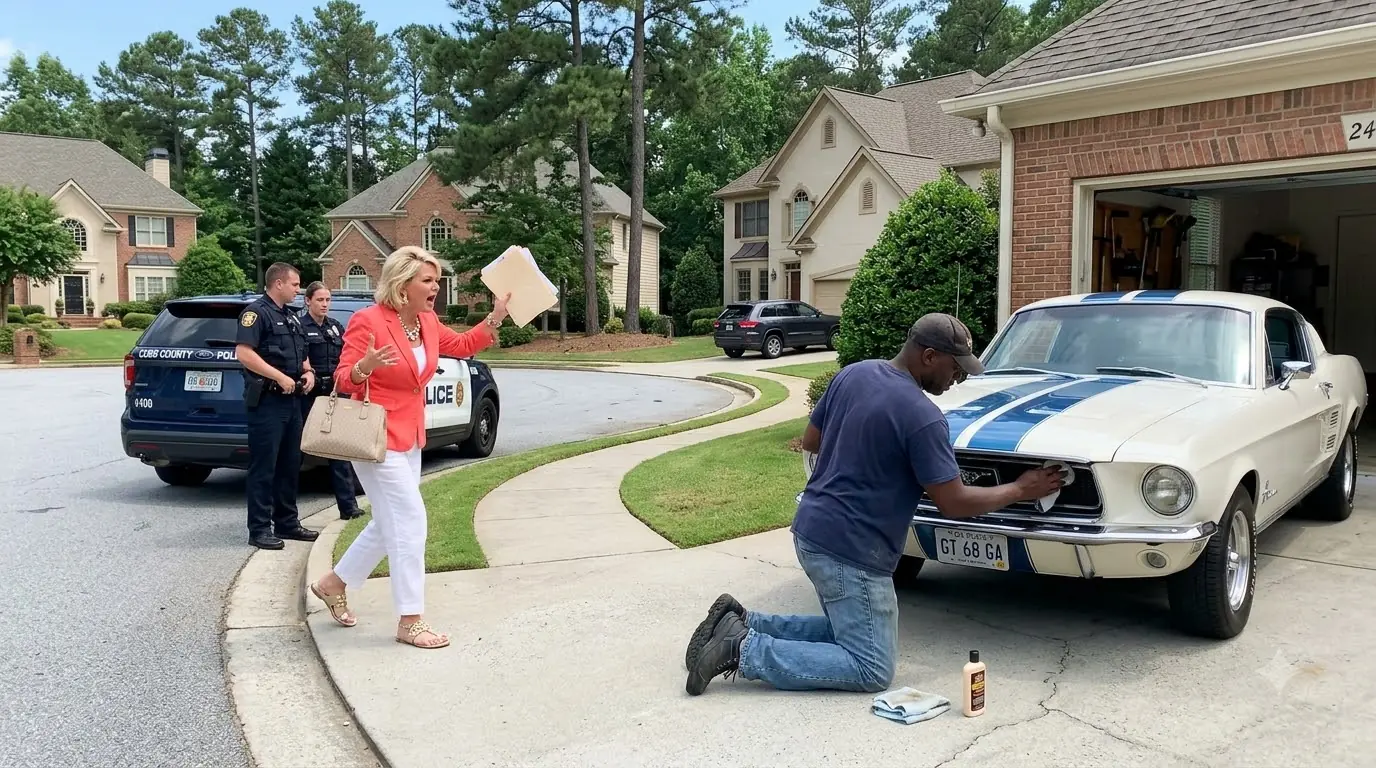
She Called Police to Tow His Mustang — Then the Officers Looked at Him Twice

She Stormed Into the Hotel Demanding the Vault Keys — Then Her “Court Order” Hit the Table
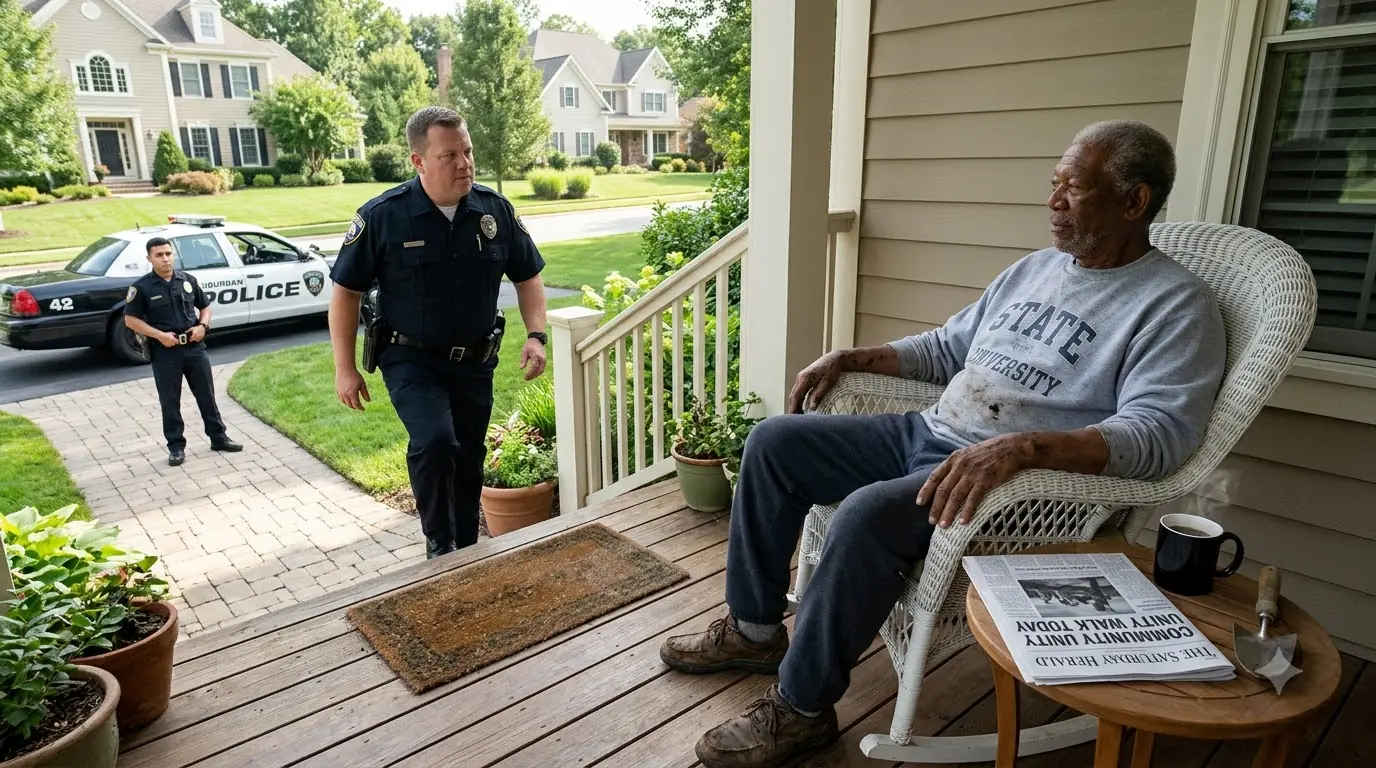
He Was Drinking Coffee on His Own Porch — Then the Officer Put Him in Cuffs
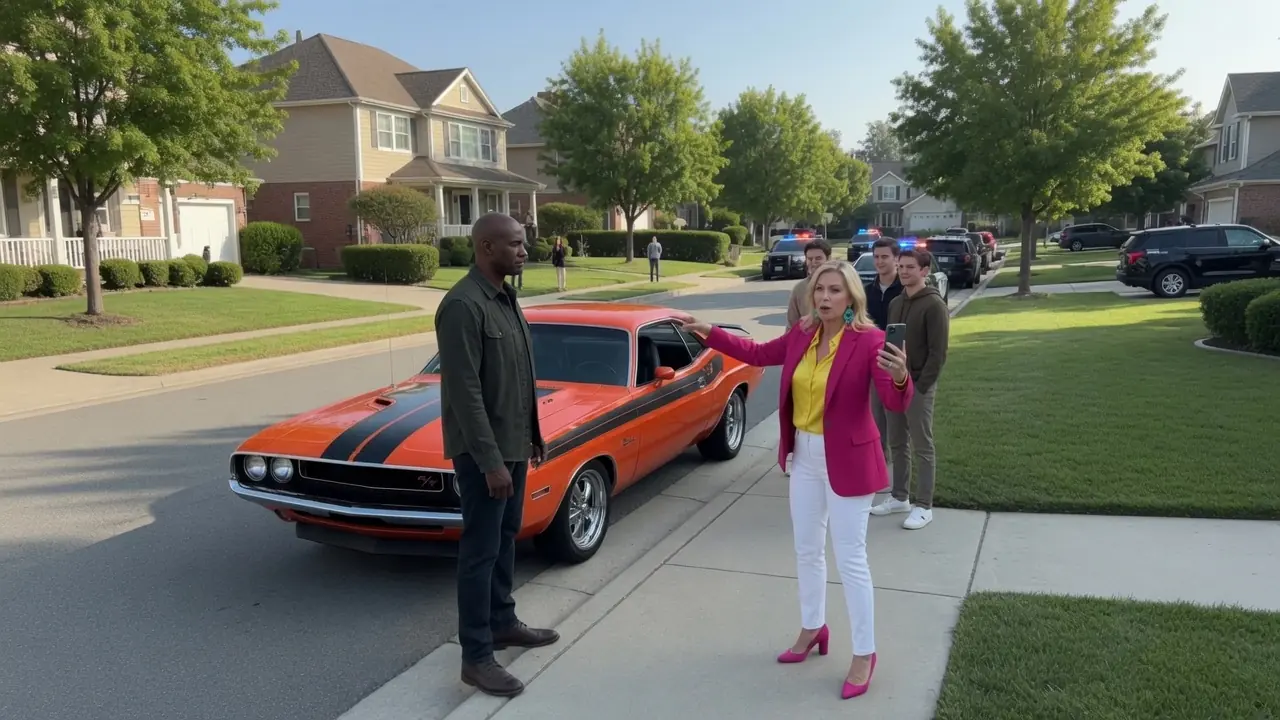
She Called the Police Over His Mustang — Then Pointed at Him and Screamed “Thief”
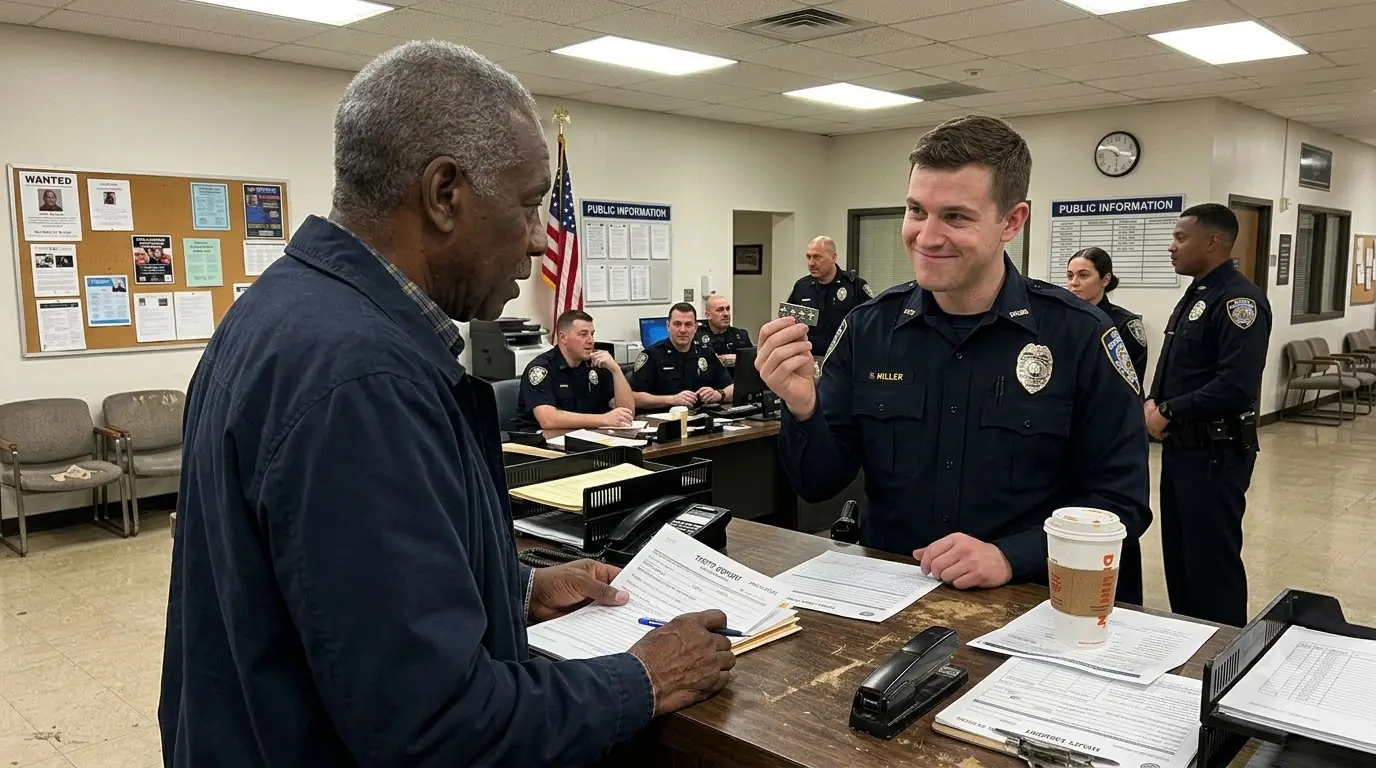
They Mocked the Four-Star Pin in His Pocket — Then Put Him in Handcuffs

The Black Belt Humiliated the New Girl — Then She Dropped the Pads
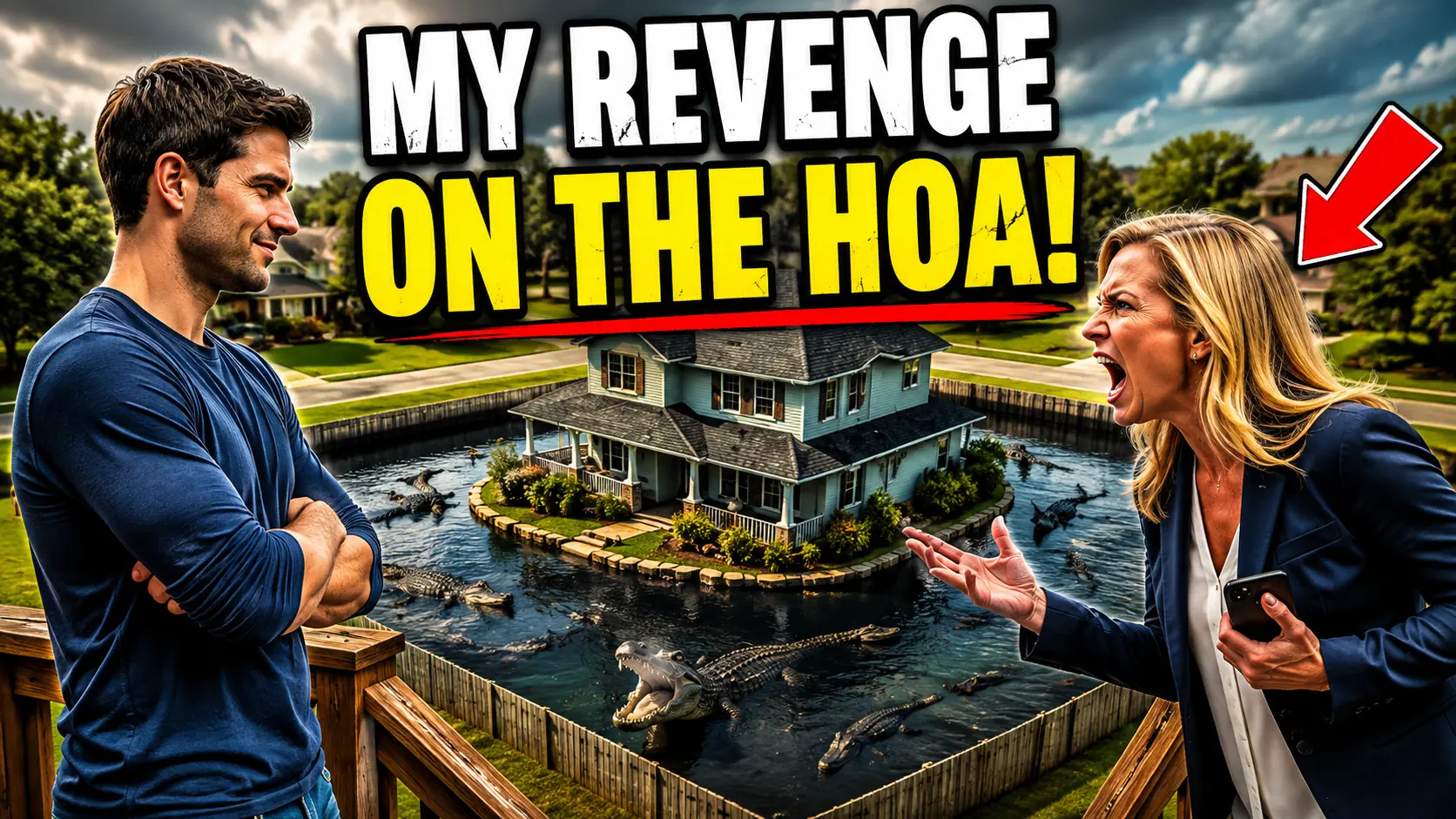
HOA Shut Down My Pool — They Never Expected My Next Move

A Billionaire Mocked a Maid's Son and Bet $1 Million at Chess — Biggest Mistake of His Life
A Billionaire Mocked a Maid's Son and Bet $1 Million at Chess — Biggest Mistake of His Life
"She's Too Weak," 12 Marines Mocked a Black Single Mom — Then Everything Changed
HOA Ordered Me to Fix the Cracks in My Sidewalk — So I Turned Them Into a Neighborhood Attraction
HOA Thought They Could Control My Backyard — Then I Turned the Tables
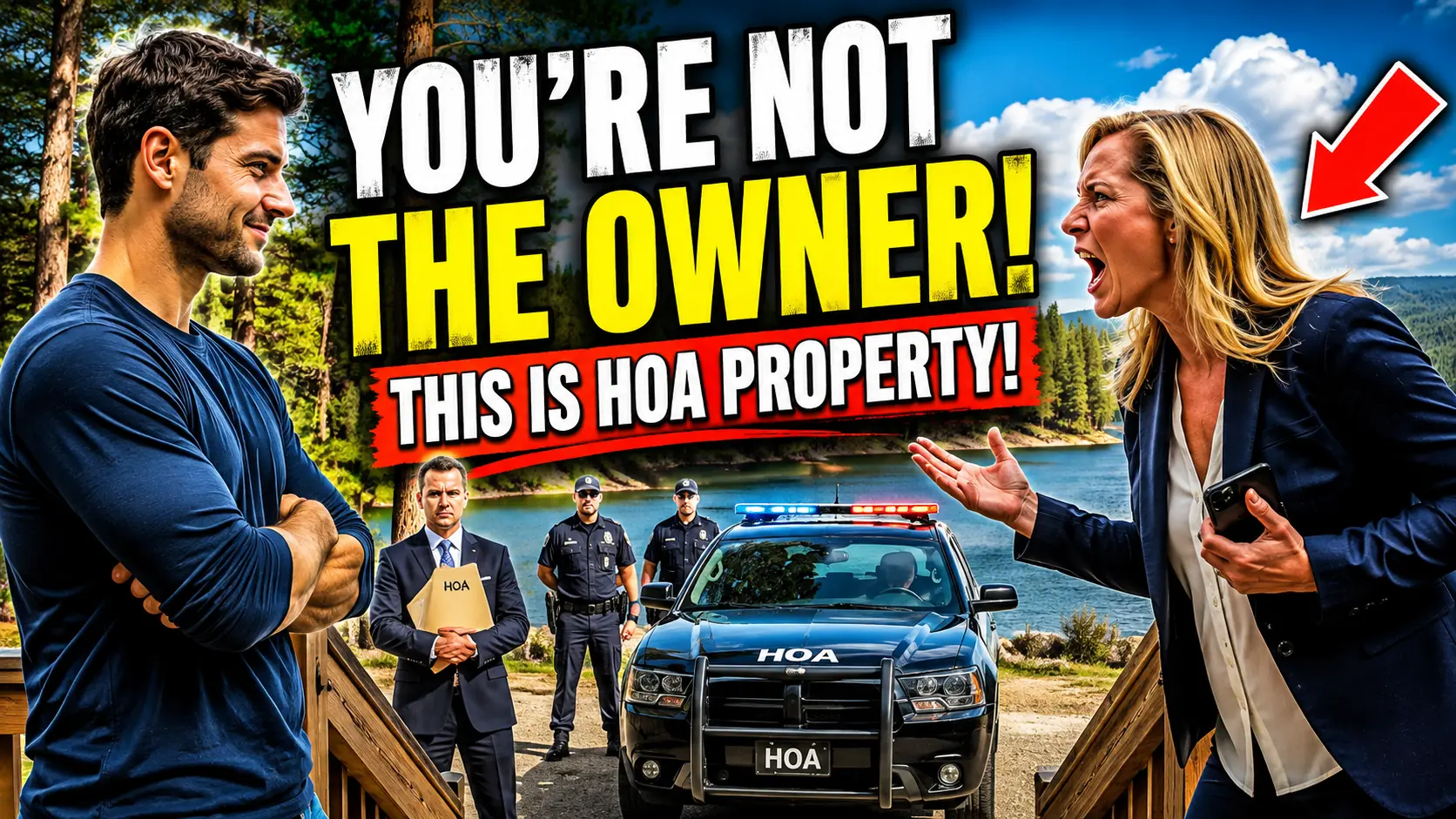
Karen Called the Cops for Me Loitering on My Porch, So I Hired a PI to Dig Up Her Old Warrants!
A Billionaire Bet $1 Million a Maid's Son Couldn't Beat Him at Chess — Then Everything Changed

The Pilots Collapsed Mid-Flight — A Poor Black Kid Did the Unthinkable
12 Marines Laughed at a Black Single Mom — Minutes Later, Nobody Was Laughing