The first time Christine Gray threatened to take my ranch, she did it with three pickup trucks, a clipboard, and a smile that never reached her eyes.
She stood in front of the locked gate to forty-seven acres I had bought at a bankruptcy auction, holding a bill for $47,000 as though she were delivering a restaurant check.
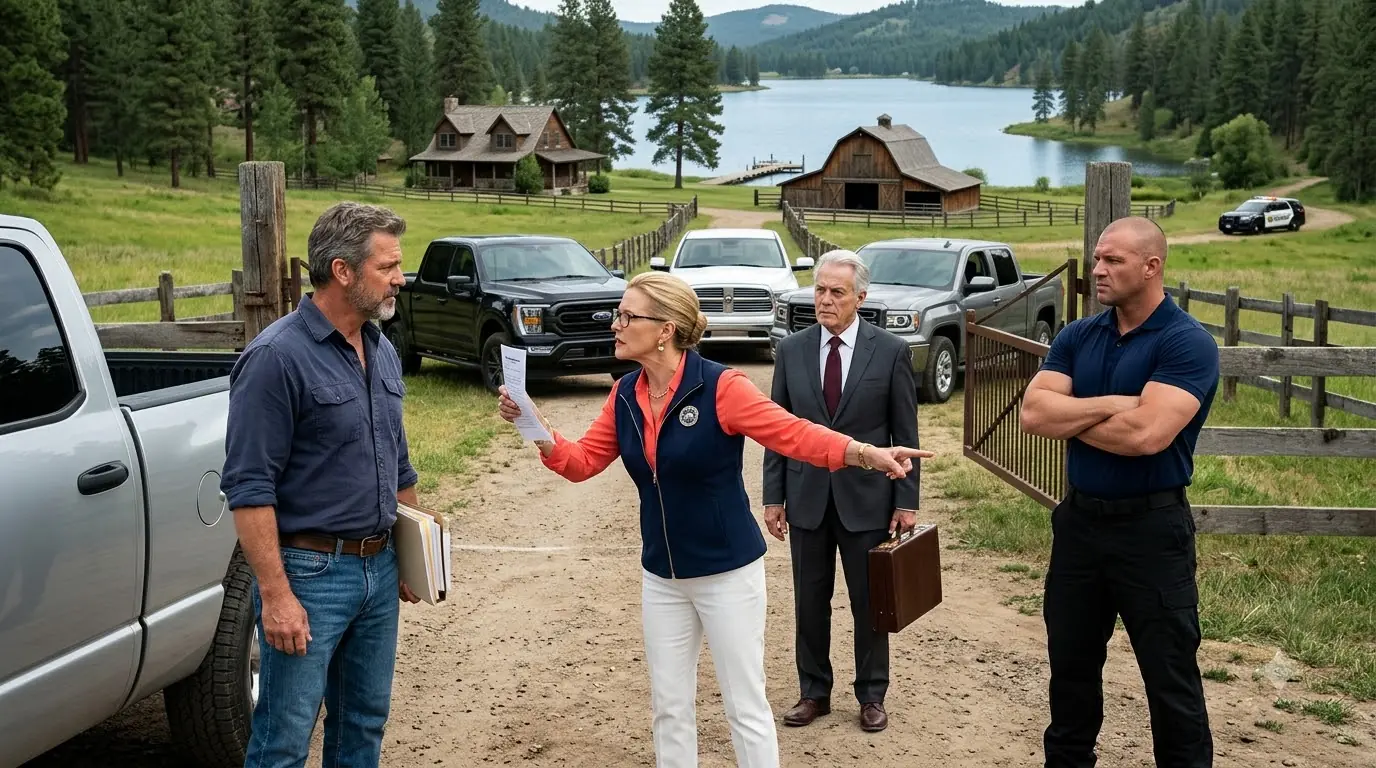
Behind her, a man with folded arms made certain I could not reach the chain. The woman beside him held up a palm to stop me from taking a photograph, and somewhere beyond them I could hear wind moving through the pines I had spent almost everything I owned to call mine.
I would learn later that those three people had practiced this performance before. They had frightened other new owners, collected money for debts that did not exist, and helped put at least three families out of homes they believed they had legally purchased. The land behind my gate was not part of their homeowners association, and the paper Christine was waving was not a recorded lien. At that moment, however, all I knew was that my second chance had been blocked by strangers who spoke as though they had already sold it to someone else.
My name is Frank Johnson. I was fifty-six when I bought Morrison Ranch, an age at which a man ought to know the difference between a bargain and a trap, but still young enough to believe a quiet piece of land can change his life. Three weeks before that morning, I had bid $183,000 at a court-supervised bankruptcy auction for a lakeside farm that had once been valued at more than $400,000. I paid in cash, not because I was rich, but because the money represented nearly every dollar I had left after my divorce. If it went wrong, I would not have a second reserve to fall back on.
For twenty-eight years, I worked as an estimator for a regional commercial construction company. My days were spent comparing plans with contracts, finding the line items other people had missed, and explaining why a change described as minor would add six months to a schedule. I knew enough to distrust a number offered without a source and a signature attached to a document that could not be located in the public records. None of that made me a lawyer. It did mean I was comfortable asking one more question after somebody else had decided the discussion was over.
My marriage to Claire ended two years earlier, after a long series of disappointments neither of us could put into one dramatic sentence. We did not hate each other, and in some ways that made the end harder. She wanted the life we had planned when we were thirty, full of travel and dinners and people who never let a conversation fall silent. I had become a man who worked too many hours and found it difficult to explain why. We divided the house, divided the savings, and finally accepted that neither of us could give the other person the past back.