The first thing Nolan Vance noticed was that nobody reached for a weapon. They didn't need to.
Thirty-two men in battered leather cuts had gone silent around a long table, and every face had turned toward the photograph in his hand. The silence was so complete that he heard a spoon settle against a saucer three tables away.
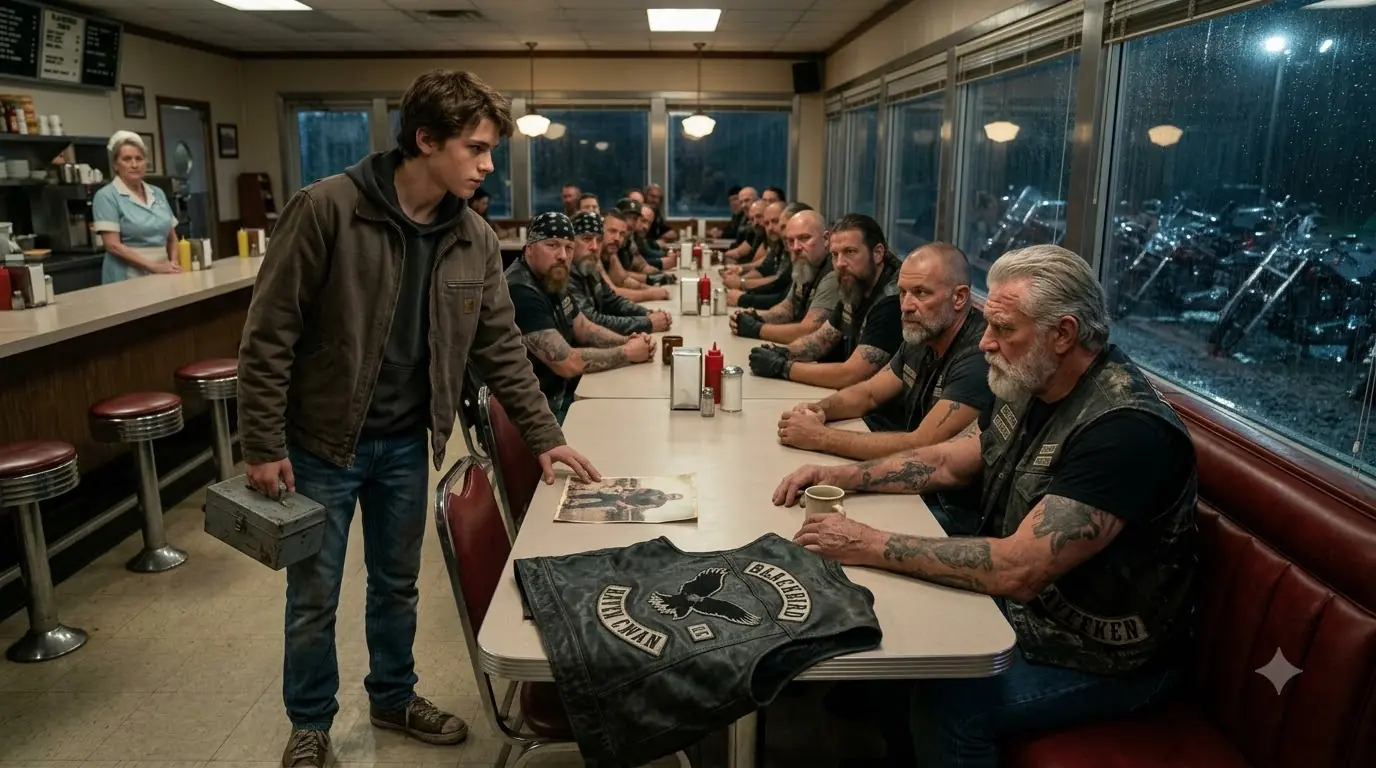
He had driven two and a half hours to reach the Blackbird Diner, following a map drawn by a woman who could no longer explain it. He was twenty-six years old, unemployed, exhausted, and eleven days into the particular grief of losing the only parent he had ever known. The photograph was older than almost every certainty in his life, and he had carried it against his chest beneath his jacket the entire drive.
At the head of the table sat a man with silver hair, enormous hands, and a PRESIDENT patch stitched above a black raven. Nolan set the photograph down before him and heard himself speak through a throat that had almost forgotten how. "I found my father's old colors," he said. He had rehearsed other introductions in his truck, some courteous and some angry, but those were the words that came.
The man looked at the picture. Then he stopped breathing for a moment, his fingers tightening around a thick white coffee mug. The color withdrew from his face, and a tremor passed through hands that looked as if they had held steady through everything else life had ever thrown at them. In the photograph stood a massive biker with one hand resting protectively on a small boy's shoulder. The little boy was Nolan, although he had no memory of the moment. The man beside him had disappeared twenty-two years earlier, and thirty-two people in that diner had just recognized a face they had stopped expecting to see.
Two days before Nolan walked through the diner door, he had been standing inside a rented storage unit with dust on his tongue and a cardboard box collapsing in his arms. The unit was ten feet by ten feet, barely large enough to hold the remnants of Carla Vance's apartment. She had paid for it month after month while telling her son there was nothing in it that he needed. Carla had been dead eleven days. A brief illness had become a serious one, then a sequence of appointments and hospital corridors and carefully neutral voices, until the people around Nolan began speaking in the past tense. His mother was fifty-four when she died, which seemed impossibly young to him and impossibly unfair to the few people at the funeral who had known how much she had endured.
The storage manager had given Nolan until Sunday to clear the unit. Five days sounded manageable to someone who wasn't also sorting funeral invoices, trying to avoid an overdraft fee, and waking every morning with the instinct to call a woman whose number would never answer again. He had spent the first hour standing among her possessions without lifting anything, unwilling to be the person who decided which pieces of a life deserved space.