Injured Pit Bull Mix Rescued With a Tennis Ball He Refused to Leave Behind
Reader Theme:
Font Size:
24px
Rocky and the Old Tennis Ball
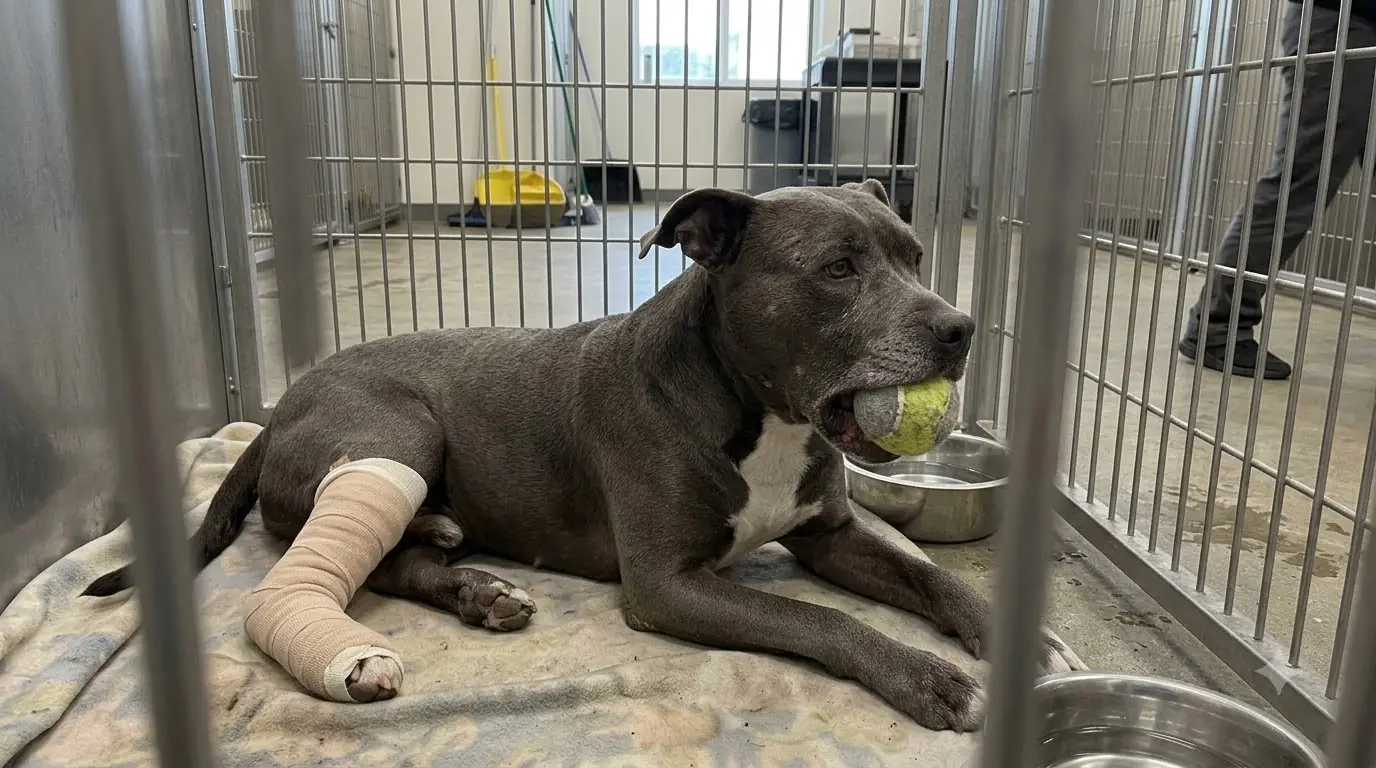
Rocky was difficult to separate from the tennis ball in people's memories.
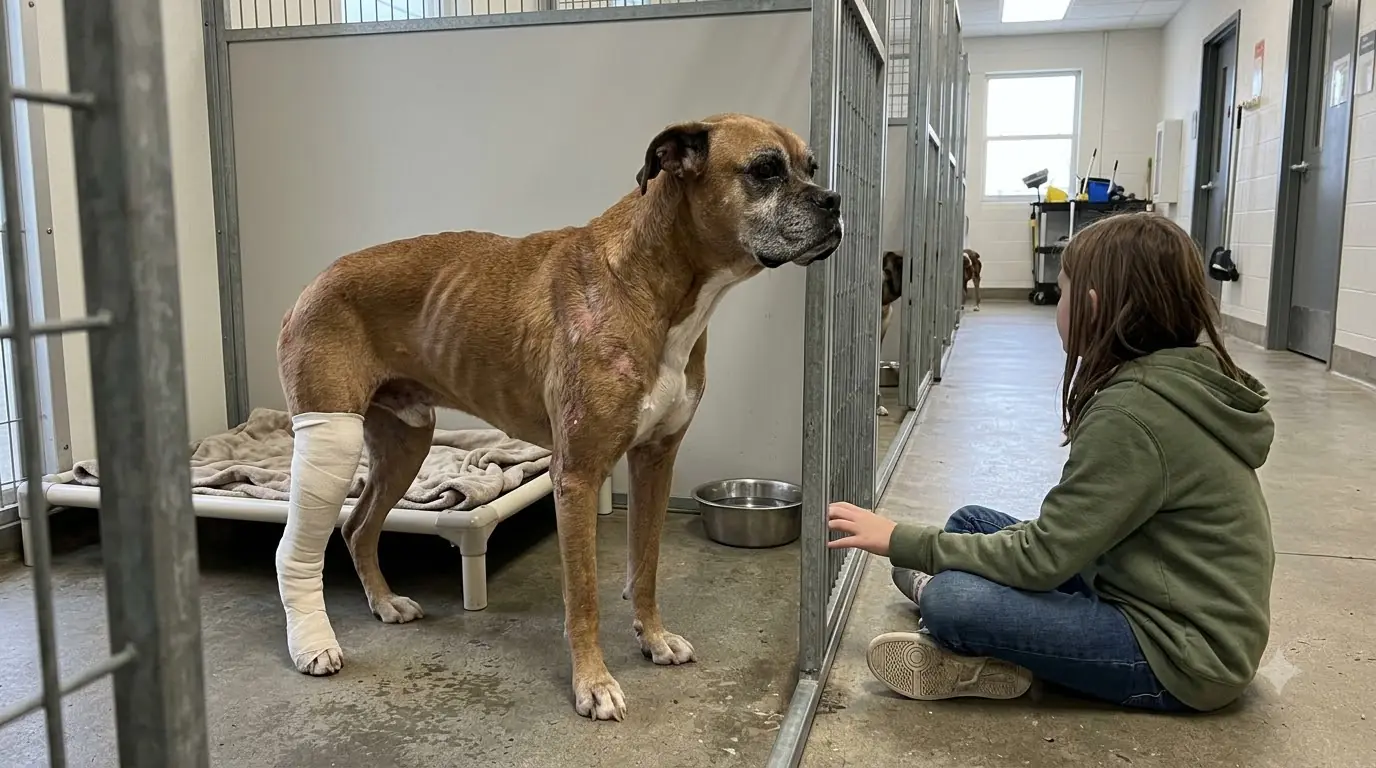
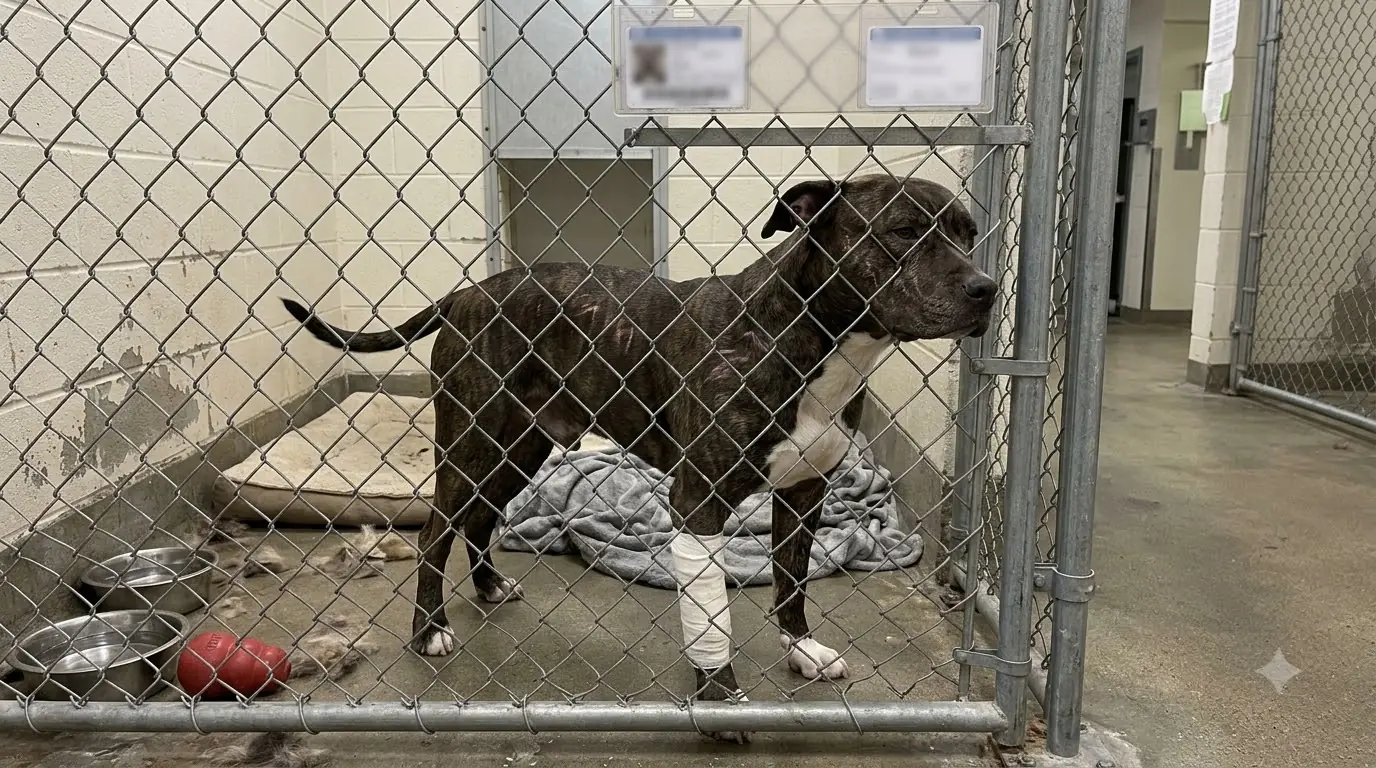
The 8-year-old Pit Bull mix had arrived with an injured hind leg, a heavy bandage, and no reliable history explaining exactly what had happened before he entered care.
But he also arrived with a worn tennis ball.
It was faded.
The fuzzy surface had been flattened in several places.
There was nothing unusual about the toy itself.
What made it noticeable was where Rocky kept it.
Beside his front paws.
Every day.
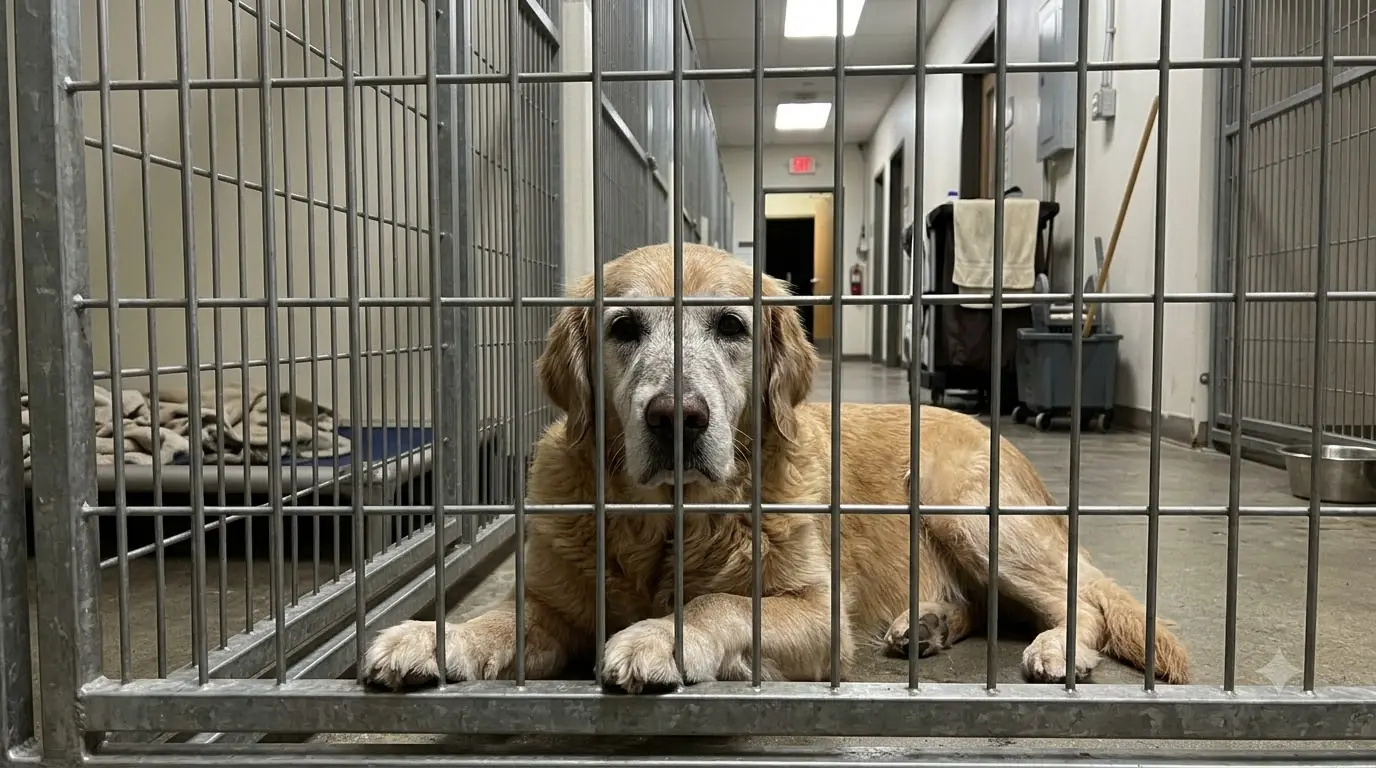
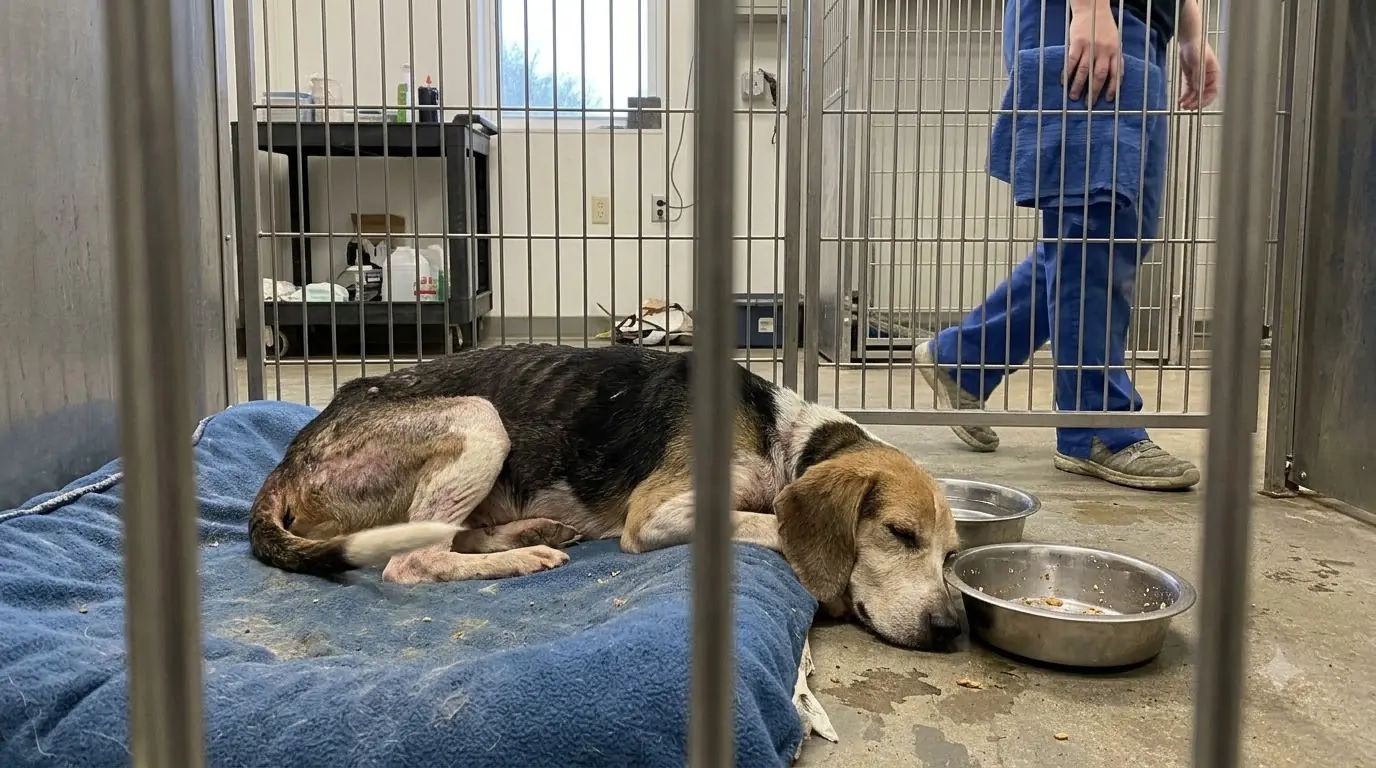
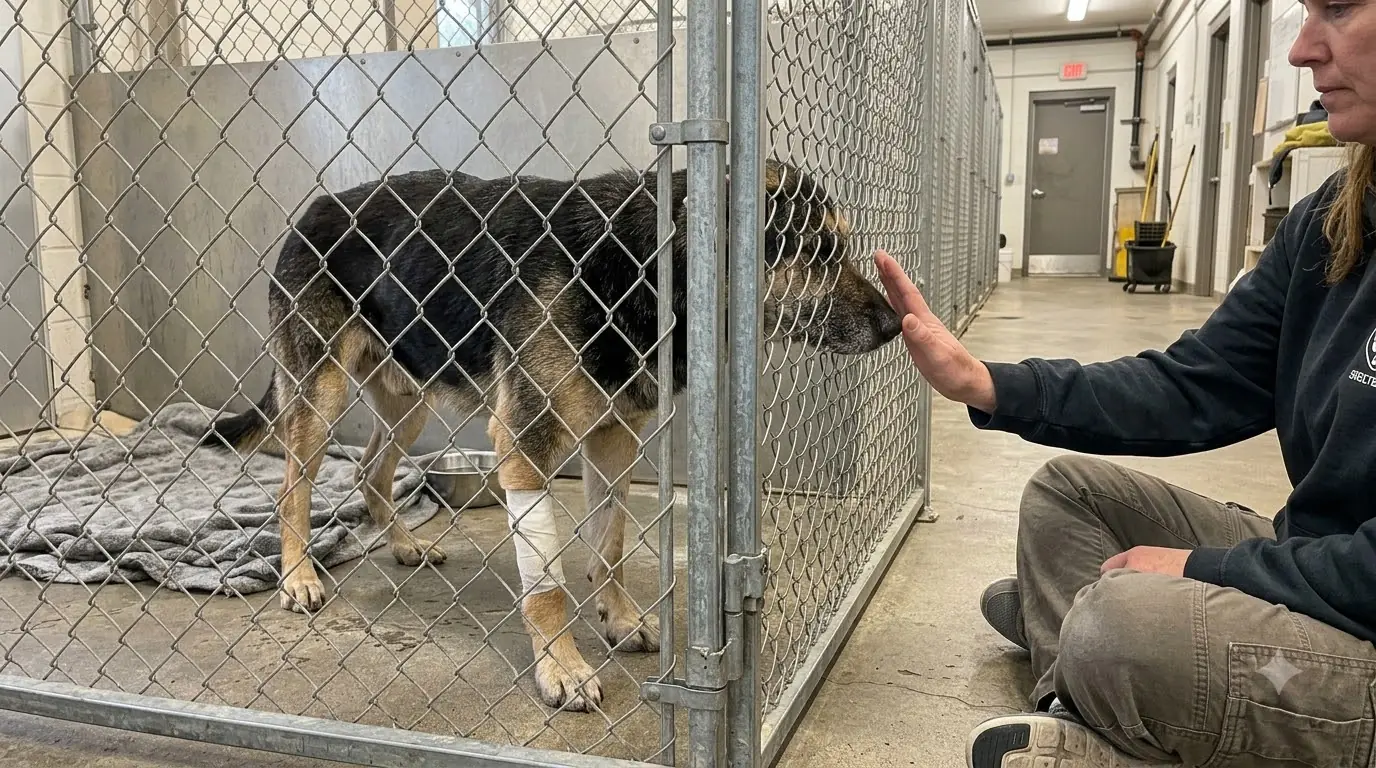
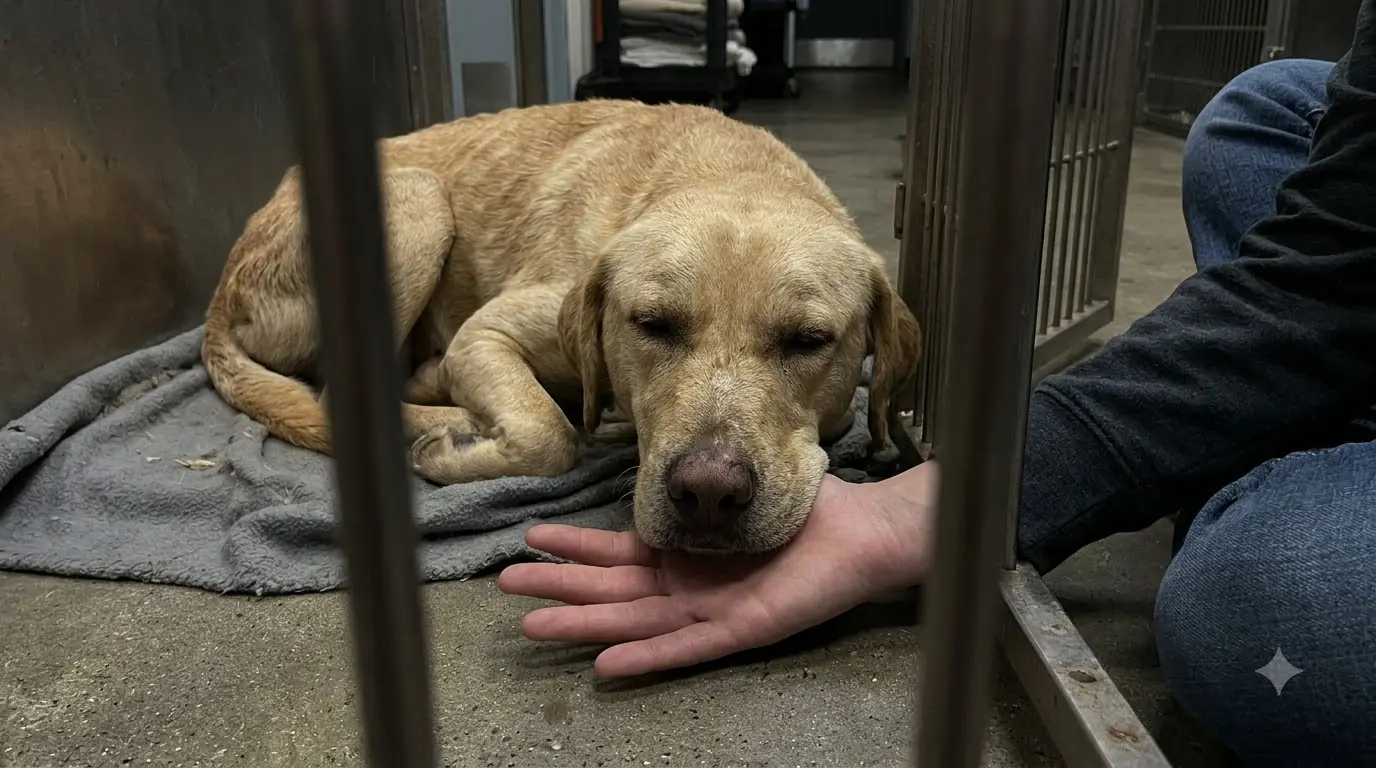
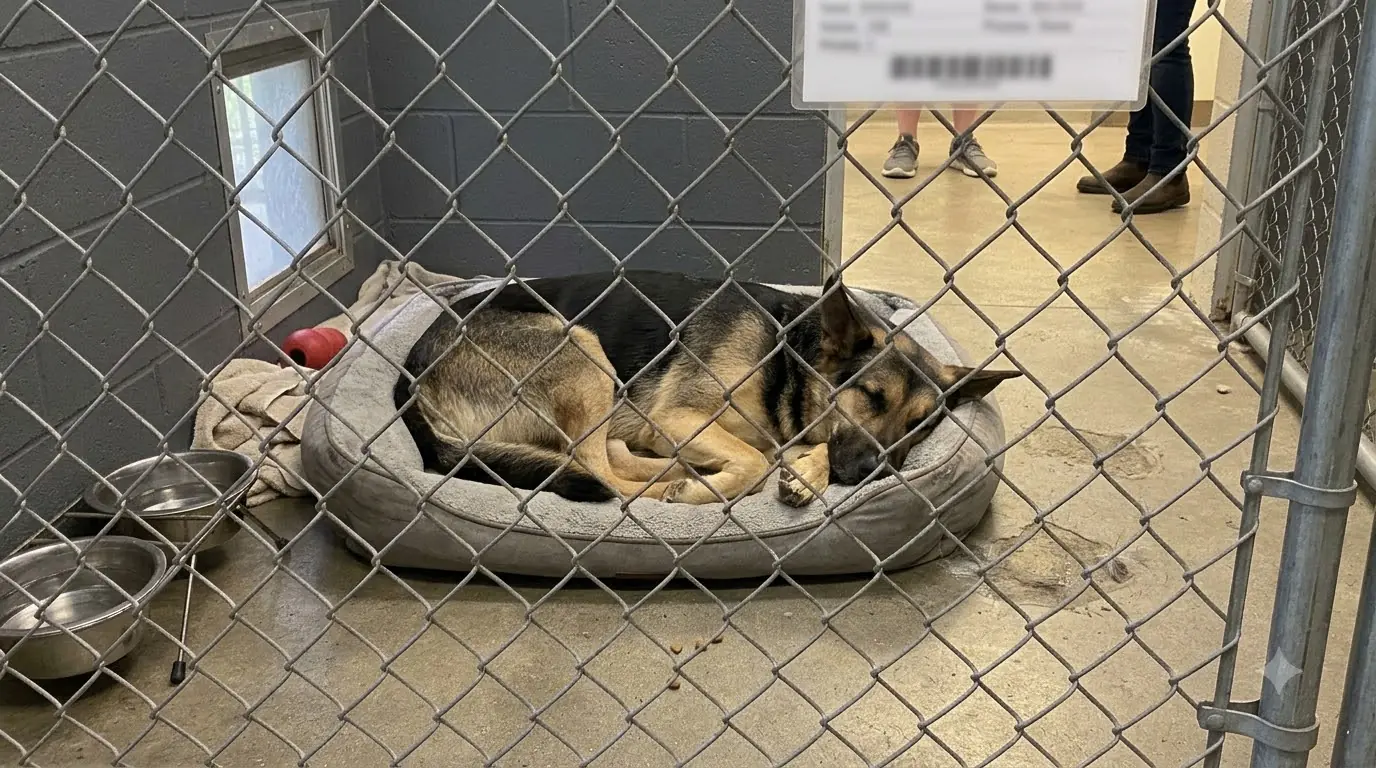
Rocky spent much of his early shelter stay curled on an old blanket because walking was uncomfortable. While neighboring dogs paced or stood at their kennel doors, he usually remained down.
The tennis ball remained with him.
Sometimes, when footsteps approached the kennel room, Rocky picked it up.
His head rose.
His eyes shifted toward the gate.
For several moments, he waited.
Then the sounds moved away.
Rocky lowered the ball.
He placed it carefully beside his paws.
And he curled around it again.
His Leg Needed Immediate Attention
Rocky's bandaged leg was the first medical priority.
A bandage can protect injured tissue, but it cannot tell veterinarians exactly what is happening underneath.
The veterinary team removed the wrap carefully.
There was swelling around the lower portion of the hind limb and knee region.
A superficial wound was healing, but Rocky's reluctance to bear weight suggested a deeper injury.
He held the leg partially elevated while standing.
When the veterinarian palpated around the joint, Rocky turned his head and tightened his body.
That was enough.
The examination paused.
Pain does not need to produce growling or crying to be real.
Rocky was telling the team that the area hurt.
What We Could Not Determine
There was no verified account explaining the injury.
We could not say Rocky had been hit by a vehicle.
We could not say he had fallen.
We could not say another animal had injured him.
Nor could we claim someone had deliberately harmed him.
Without reliable information, the shelter would not turn possibilities into facts.
The medical findings could tell us what his body needed.
They could not necessarily reconstruct his past.
Imaging the Leg
Radiographs were taken once Rocky had appropriate pain control and could be positioned safely.
There was no major displaced fracture.
That was encouraging.
There was also no obvious destructive bone lesion.
The knee joint itself remained aligned.
However, the physical examination suggested significant soft-tissue injury.
The structures supporting a dog's knee—including ligaments, tendons, and surrounding muscle—can sustain serious damage without producing an obvious break on radiographs.
The veterinarian was particularly concerned about ligament instability and swelling around the stifle.
Further orthopedic assessment was recommended.
A Partial Ligament Injury
Follow-up examination supported a diagnosis of a partial cranial cruciate ligament injury along with surrounding soft-tissue strain.
The cranial cruciate ligament helps stabilize the canine knee.
Complete rupture can produce marked instability and may require surgical stabilization depending on the dog's size, age, activity level, and overall health.
Rocky's knee retained enough stability that the team did not immediately recommend emergency surgery.
Instead, conservative management was considered reasonable initially.
That meant strict activity restriction.
Pain management.
Weight control.
Controlled rehabilitation.
And repeated evaluation.
If instability progressed or Rocky failed to improve, surgery would remain an option.
The Bandage Changes
The thick bandage Rocky arrived with was not simply left in place.
Bandages require monitoring.
They can become wet.
They can slip.
They can create pressure.
They can hide swelling.
The veterinary team changed Rocky's wrap according to his medical needs and eventually reduced external support as the superficial wound healed.
His toes were checked for swelling.
The skin underneath was inspected.
Staff made sure Rocky did not chew the bandage.
Through every change, the tennis ball stayed nearby.
Sometimes a staff member moved it temporarily to keep the treatment area clear.
As soon as Rocky returned to his bed, the ball was returned too.
His First Days Were Quiet
Rocky ate.
He drank.
He went outside for short bathroom breaks.
Then he returned to the blanket.
He did not appear interested in walking around simply because neighboring dogs were moving.
That was appropriate.
Every unnecessary step placed additional stress on the injured knee.
Staff kept food and water close.
Non-slip surfaces gave his other legs better traction.
His walks were functional.
Outside.
Bathroom.
Back inside.
No long exploring.
No running.
No jumping.
Bathroom Habits
Rocky could urinate independently.
At first, squatting to defecate was more difficult.
He shifted most of his weight toward the uninjured side.
Handlers gave him time.
They did not pull on the leash.
His bowel movements remained regular.
He drank normally.
There was no persistent vomiting or diarrhea.
Those ordinary functions were useful signs that the injury had not created a broader systemic emergency.
The Tennis Ball Routine
The ball became part of Rocky's daily rhythm.
Morning cleaning.
Breakfast.
Medication.
Bathroom break.
Rest.
Then the sounds of visitors.
That was when Rocky sometimes picked it up.
He never threw it toward the gate.
He did not bark around it.
He simply held it.
Sometimes a family stopped.
Sometimes nobody did.
If the footsteps continued past his kennel, Rocky eventually lowered his head.
The ball returned to the blanket.
Staff began wondering whether it had been familiar to him before intake or whether it had simply become important after he arrived.
They did not know.
The shelter could not honestly claim that the toy came from a previous home or person.
What they could see was that Rocky consistently chose it.
That was enough reason to let him keep it.
Pain Management Starts Helping
Rocky began veterinarian-directed pain management.
Within several days, his posture changed slightly.
He stood with less hesitation.
He began touching the injured foot to the ground more consistently.
The limp remained obvious.
That was expected.
A partial ligament injury does not resolve after a few doses of medication.
The improvement meant Rocky was more comfortable.
It did not mean the knee was healed.
Activity restrictions continued.
His Weight Mattered
Rocky's body condition was slightly heavier than ideal.
For a dog with a knee injury, that mattered.
Every extra pound increases the load on an unstable or painful joint.
The goal was not aggressive weight loss during recovery.
It was gradual movement toward a leaner, healthier condition.
His meals were measured.
Treats were controlled.
The tennis ball, fortunately, did not contain calories.
A More Detailed Orthopedic Evaluation
At his next recheck, the swelling had decreased.
The veterinarian could assess stability more accurately.
The knee remained mildly unstable but had not worsened dramatically.
Rocky was also beginning to place more weight through the leg during slow controlled walking.
Because he was improving, conservative management continued.
The rescue remained prepared to reconsider surgery if his progress stalled.
Treatment plans should respond to the dog in front of us.
Not to a predetermined storyline.
The First Time He Carried the Ball to the Gate
One morning, a familiar shelter worker entered the room.
Rocky lifted his head.
Then he picked up the tennis ball.
Usually, he stayed on the blanket.
This time, he stood.
The worker stopped.
Rocky took several careful steps toward the gate.
His injured leg touched the floor with each stride, though he was still shifting weight away from it.
When he reached the front, he stood with the ball in his mouth.
The worker crouched.
Rocky's tail moved.
Then his legs began tiring.
She opened the kennel carefully and sat beside him rather than encouraging him to remain standing.
Rocky lowered himself.
The ball landed between them.
He Still Wasn't Ready to Play
The worker rolled the ball only a few inches.
Rocky followed it with his eyes.
He did not chase it.
That was exactly what the medical team wanted.
A dog recovering from a knee injury can feel better before tissues are ready for sudden acceleration, twisting, or jumping.
Fetch would have been a poor rehabilitation exercise at that stage.
Instead, the ball became calm enrichment.
Rocky could carry it.
Chew gently.
Rest with it.
No running required.
Rehabilitation Begins
Once the acute swelling had decreased and the veterinarian was satisfied with the knee's stability, rehabilitation started gradually.
The earliest goal was controlled weight bearing.
Short leash walks on flat surfaces.
Slow standing exercises.
Careful transitions from lying to standing.
Then rest.
Rocky did not need to walk far.
He needed to use the leg correctly.
Over time, his injured side began carrying more weight.
Muscle Loss Was Another Problem
Weeks of reduced use had already caused some muscle loss in the injured hind leg.
This was expected.
Muscles weaken quickly when a painful limb is protected.
Rebuilding that muscle would be essential because stronger surrounding muscles could help support the joint.
But strengthening had to happen slowly.
Too much activity could worsen the injury.
Too little could leave Rocky permanently deconditioned.
His rehabilitation plan was adjusted based on how he moved after each increase.
A Setback
Several weeks into recovery, Rocky had a difficult day.
During a bathroom break, he turned suddenly after hearing another dog bark behind him.
He did not fall.
But later, his limp became more noticeable.
His caregiver immediately shortened activity and contacted the veterinary team.
The knee was reexamined.
There was increased soreness but no evidence that the partial injury had progressed to complete instability.
Rest was increased temporarily.
His pain management plan was reviewed.
Within several days, Rocky returned to his previous baseline.
It was a useful reminder.
Healing is not a straight line.
The Ball Stayed Through the Setback
On the day Rocky was sorer, he returned to his blanket.
The tennis ball remained beside him.
He did not pick it up when visitors passed.
That told staff almost as much as his gait.
Rocky's interest in the toy had become one of the subtle ways they measured how he felt.
The next morning, he lifted it again.
Not a medical test.
But a welcome sign.
Moving Into Foster Care
Once Rocky's knee was stable enough for home-based rehabilitation, the rescue looked for an experienced foster caregiver.
The foster home needed good traction.
Few stairs.
No expectation of rough play.
No uncontrolled access to furniture if jumping could not be prevented.
A volunteer familiar with orthopedic recovery offered to help.
Rocky left the shelter with his records, medication, food, leash, orthopedic instructions—and the worn tennis ball.
Nobody considered leaving it behind.
His First Night in a Home
Rocky entered the foster home carefully.
He sniffed the entryway.
Then the living room.
He found his water.
He found the large padded bed prepared for him.
His foster caregiver placed the tennis ball on the blanket.
Rocky walked over.
He picked it up.
He turned once.
Then he lay down with it between his front legs.
That first evening, he did very little.
That was appropriate.
Household Life
The foster home allowed Rocky to rest without the constant noise of a kennel room.
He learned a simple routine.
Morning bathroom break.
Breakfast.
Medication.
Rest.
Controlled rehabilitation.
More rest.
Dinner.
Evening bathroom trip.
Sleep.
He adjusted quickly.
The biggest challenge was not fear.
It was increasing confidence.
As Rocky felt better, he wanted to do more.
His foster caregiver had to make sure his enthusiasm did not outrun the healing process.
Food and Water
Rocky's appetite remained strong.
His meals were measured to support gradual weight reduction without compromising muscle recovery.
He drank normally.
His bathroom habits remained regular.
There were no ongoing gastrointestinal concerns.
As his activity increased, the veterinary team made sure his weight remained appropriate.
Slowly, his waist became more defined.
That helped reduce strain on the injured knee.
His Walks Become Longer
Rocky's walks increased in small increments.
At first, only a few minutes.
Then several more.
The terrain remained level.
His caregiver avoided sudden turns and slippery surfaces.
If Rocky's limp increased after activity, the next session was shortened.
His gait gradually improved.
The injured leg began moving more confidently.
The Ball Finally Moves Farther
One afternoon, Rocky picked up the tennis ball before his foster caregiver opened the door for a rehabilitation walk.
He carried it to the doorway.
The caregiver laughed but did not let him take it outside.
Fetch was still not part of the plan.
Instead, the ball was placed back on the bed.
Rocky looked at it.
Then looked at the leash.
For the first time, the leash won.
He walked outside without the toy.
That was a small change.
Follow-Up Examination
At a later orthopedic recheck, the veterinarian was pleased with Rocky's progress.
His knee remained mildly thickened, but stability had improved functionally.
He was using the leg consistently.
Pain during examination had decreased.
Muscle mass was beginning to return.
There was no clear indication at that point that surgery was necessary.
The team emphasized that future arthritis in the affected knee remained possible.
A ligament injury can alter joint mechanics even when a dog recovers well.
Rocky's long-term plan would need to account for that.
Managing Future Arthritis Risk
Rocky's future care would center on maintaining a lean weight, regular moderate exercise, good muscle condition, and veterinary reassessment if limping returned.
He did not need to be treated as fragile forever.
He did need sensible activity.
Explosive twisting and repeated high-impact exercise could place additional stress on the knee.
His future family would need to understand the difference between keeping Rocky active and pushing him too hard.
His Personality Expands
As his mobility improved, Rocky became more socially engaged.
He followed his foster caregiver between rooms.
He liked lying near the kitchen.
He enjoyed chest scratches.
He often carried the tennis ball when someone entered the room.
Sometimes he brought it closer.
Sometimes he simply held it.
He was not obsessed with playing fetch.
The toy seemed to function partly as comfort and partly as invitation.
A New Toy Is Offered
His foster caregiver once offered Rocky a brand-new tennis ball.
Bright.
Clean.
Perfectly round.
Rocky sniffed it.
Then he returned to the worn one.
The new ball remained untouched for most of the afternoon.
There was no way to know why the old ball mattered more.
Maybe it smelled familiar.
Maybe he preferred its softer texture.
Maybe dogs simply have favorite objects for reasons humans never understand.
The rescue did not need a dramatic explanation.
Rocky had chosen.
That was enough.
Sleep Changes
At the shelter, Rocky often slept curled tightly with the ball beside his paws.
In foster care, his sleeping positions became more relaxed.
He stretched onto his side.
Sometimes the ball rolled several inches away.
Rocky no longer woke immediately to retrieve it.
That was another subtle change.
He was beginning to trust that things could remain where he left them.
Another Recheck
Several more weeks passed.
Rocky's gait continued improving.
His weight reached a healthier range.
His muscle condition was better.
The affected leg no longer looked dramatically smaller than the other.
He could stand comfortably.
He could walk around the house.
He could manage normal bathroom trips.
His veterinarian cleared him for a more typical daily activity level, still with reasonable limitations.
The First Gentle Game
Eventually, Rocky was allowed a very controlled version of play.
His foster caregiver sat on the floor.
The old tennis ball was placed several feet away.
Not thrown.
Placed.
Rocky walked over.
Picked it up.
Carried it back.
Then he sat down.
The caregiver repeated the game once.
That was enough.
No sprinting.
No twisting.
No dramatic fetch session.
Rocky seemed satisfied anyway.
Adoption Planning
Once his recovery had reached a stable stage, the rescue began planning for a permanent home.
Rocky was an older adult dog with a significant orthopedic history.
Potential adopters needed to understand that.
His knee might develop more arthritis with time.
Weight management would remain important.
Routine exercise should continue.
Sudden persistent limping would require veterinary attention.
He might never be the ideal companion for intense running or repetitive ball chasing.
That did not mean his life needed to be inactive.
The Kind of Home Rocky Needed
Rocky enjoyed people.
He liked quiet companionship.
He liked moderate walks.
He liked toys he could carry.
He was capable of settling well indoors.
A family willing to respect his physical limits would likely suit him.
The rescue did not want someone adopting him because they felt sorry for the injured dog on the blanket.
They wanted someone who liked the dog Rocky had become.
Meeting Potential Adopters
A couple eventually came to meet him.
They had read about his recovery.
They sat on the floor rather than calling him across the room.
Rocky watched.
Then he picked up the tennis ball.
He walked toward them.
His gait was controlled and comfortable.
He stopped in front of the woman.
She held out a hand.
Rocky lowered the ball beside her shoe.
Then he leaned against her knee.
That was the beginning of the meeting.
They Asked the Right Questions
The couple wanted to know about the knee.
They asked what signs would mean his arthritis was worsening.
They asked about exercise.
They asked whether he could use stairs.
They asked how to keep him lean.
They did not ask when he could start chasing a ball at full speed.
That mattered.
The rescue wanted people prepared for the dog they were meeting, not an imagined younger version of him.
A Trial Placement
A gradual home transition was arranged.
Rocky entered the house carefully.
There were rugs over the main hard floors.
His bed was prepared in the living room.
The foster caregiver had sent the worn tennis ball with him.
Rocky immediately found it.
He carried it to the bed.
Then he settled.
The Ball Stops Waiting at the Gate
In the new home, Rocky still picked up the ball when he heard footsteps.
But the context had changed.
Someone walked down the hallway.
Rocky lifted his head.
A person appeared.
The footsteps did not simply disappear past a kennel.
Sometimes the person sat beside him.
Sometimes they clipped on his leash.
Sometimes they went into the kitchen.
Rocky began carrying the ball after them.
His Permanent Home
After the transition period went well and his medical needs were being managed appropriately, Rocky's placement became permanent.
There was no dramatic ceremony from his perspective.
He woke up in the same bed.
He ate breakfast.
He went outside.
The people were still there.
That ordinary continuity was the point.
Rocky Today
Rocky now walks comfortably for normal daily activities.
He still has a history of a significant knee injury.
He may develop or experience more arthritis as he ages.
His family keeps him lean.
His exercise is regular but sensible.
His veterinarian continues monitoring his mobility.
He eats and drinks normally.
His bathroom habits are consistent.
He sleeps comfortably.
His muscle condition has improved considerably.
And the worn tennis ball still exists.
It Is Still His Favorite
There are newer toys in the house.
Some squeak.
Some are softer.
Some look far better than the old ball.
Rocky still chooses it often.
He carries it into the living room.
Sometimes he drops it beside his bed.
Sometimes he brings it to someone.
Occasionally, during an approved gentle play session, it travels a short distance across the floor.
Rocky walks after it.
He picks it up.
He comes back.
What the Ball Really Tells Us
We still do not know the history of that tennis ball.
We cannot say it belonged to someone Rocky loved.
We cannot say it was the only thing left from a previous home.
We cannot even say with certainty that he had it before entering shelter care unless that detail was documented.
What we can say is that once Rocky had it, he consistently chose to keep it near.
That is enough.
Objects can become part of an animal's routine without humans needing to turn them into symbols.
But sometimes the change in how an object is used tells its own story.
From Waiting to Carrying
At the shelter, Rocky picked up the ball when footsteps approached.
He looked through the bars.
He waited.
Then he set it back down when nobody stopped.
Today, Rocky sometimes hears footsteps and picks up the same ball.
But now he gets up too.
He walks toward the sound.
His leg supports him.
His family appears around the corner.
And Rocky carries the ball with him.
That is the difference.
Recovery Was Not About Fetch
Rocky's rehabilitation was never about getting him back to chasing a tennis ball as quickly as possible.
That would have missed the point.
His recovery involved pain control.
Bandage management.
Orthopedic evaluation.
Weight management.
Restricted activity.
Gradual rehabilitation.
Monitoring setbacks.
Rebuilding muscle.
And finding a home willing to protect the progress he had made.
The ball simply stayed beside him through all of it.
The Blanket Is Gone
Rocky no longer spends most of his day curled on the old shelter blanket.
He has a supportive bed.
He has rugs for traction.
He has regular walks.
He has people who know his medical history.
He has a veterinarian who can reassess the knee if his gait changes.
And he has somewhere to carry the tennis ball.
Some evenings, he still drops it beside his front paws before sleeping.
The habit remains.
But the kennel gate is gone.
There are no rows of footsteps disappearing into another room.
No need to watch through bars.
Rocky can pick up the ball whenever he wants.
And now, when he carries it toward someone, there is usually someone there to meet him.