Iris’s Recovery After Two Years in a Shelter Kennel
PART 2 — CURRENT CONDITION UPDATE
Iris is now living in a quiet medical foster home while she undergoes treatment for heartworm disease. She is stable and comfortable at rest, but her condition is more advanced than we initially hoped. The veterinary team has classified her infection as significant enough to require strict activity restriction, careful preparation, and close monitoring throughout treatment.
Heartworms are transmitted through mosquito bites. Once inside a dog, immature parasites develop over several months and eventually settle in the heart and nearby pulmonary arteries. Adult worms can interfere with blood flow, injure the vessels of the lungs, and force the heart to work harder.
Iris’s positive screening test was confirmed with a second blood test. A separate examination also detected immature heartworms circulating in her bloodstream. This indicates an active infection rather than a previous exposure.
Chest X-rays revealed changes in the pulmonary arteries and a mild pattern of inflammation in the lungs. The right side of her heart appeared slightly prominent, although there was no evidence of congestive heart failure or fluid collecting in her chest. An echocardiogram showed that her heart was still contracting effectively.
These findings mean that Iris has a reasonable chance of responding well to treatment, but the process cannot be rushed. Killing adult heartworms too quickly or allowing Iris to exercise while the worms are breaking down could cause fragments to lodge in small vessels inside the lungs. This can trigger severe inflammation, breathing difficulty, collapse, or a life-threatening pulmonary embolism.
For that reason, the most important part of Iris’s treatment is not a medication. It is rest.
Iris may walk on a leash only for brief bathroom trips. She cannot run, jump, chase toys, wrestle with another dog, or become highly excited. Her foster home uses baby gates to keep her away from stairs, and a secure harness is placed on her before any exterior door is opened.
The restriction is especially difficult because Iris is young and became more energetic soon after leaving the shelter. During her first two days, she slept for long periods. Once she began feeling secure, she attempted to follow her caregiver rapidly through the house and bounced when meals were prepared.
Her foster caregiver has learned to keep greetings quiet and movements predictable. Food is prepared before Iris enters the kitchen, the leash is attached only after she settles, and visitors are asked to sit down before she is brought into the room. These small changes help prevent sudden bursts of activity.
Iris has started the preparation phase of treatment. She received a heartworm preventive medication under veterinary supervision to eliminate susceptible immature stages of the parasite and prevent new infection. She was observed closely afterward and did not experience a serious reaction.
She is also receiving an antibiotic that targets bacteria living symbiotically inside heartworms. Reducing those bacteria weakens the parasites and decreases some of the inflammation that can occur when the adult worms die. The medication must be given consistently for several weeks.
During the first few days, Iris experienced mild stomach upset and left part of one meal unfinished. Her veterinarian adjusted the timing of the medication and instructed the caregiver to give it with food. Since then, her appetite has returned, and she is tolerating the treatment well.
An anti-inflammatory medication may be used at specific stages depending on her coughing and chest findings. Because these drugs can cause side effects, the team will monitor her thirst, urination, appetite, stool, and behavior. Iris is not receiving any unnecessary medication that could complicate the treatment.
The adult heartworms will later be treated with a series of injections administered deep into the muscles of her lower back. The recommended protocol separates the injections over time to improve safety and effectiveness. Iris will remain under veterinary observation after each one.
The injections can cause soreness. Her foster home already has a low orthopedic bed and nonslip runners to make movement easier during recovery. Pain medication will be provided, and her caregiver has been shown how to help her stand without pressing near the injection sites.
Strict rest will become even more important after the adulticide injections. As the worms die and begin to break apart, Iris may look outwardly normal while dangerous changes are occurring inside the pulmonary vessels. Her activity will remain limited for weeks after the final injection, even if she appears eager to run.
Her caregiver checks her resting respiratory rate every day while she is asleep. The number of breaths per minute is recorded along with any coughing, weakness, reduced appetite, or change in gum color. Tracking these details helps the veterinary team identify a problem before it becomes an obvious emergency.
So far, Iris coughs only occasionally, usually after becoming excited or pulling briefly against the leash. She does not cough while sleeping, and her breathing remains quiet at rest. She has not shown fainting, blue gums, abdominal swelling, or severe fatigue.
Those are encouraging signs, but they do not mean the heartworm disease is mild. Dogs often compensate for cardiovascular strain until the condition becomes advanced. Iris will continue to receive regular examinations throughout treatment.
Her mild anemia is also being monitored. The veterinarian believes chronic inflammation from heartworm disease may be contributing, though inconsistent nutrition before she entered the shelter could have played a role. Her red blood cell count is below normal but stable.
Iris does not need a transfusion. She receives a complete diet in measured portions, and unnecessary supplements have been avoided. Repeat bloodwork will show whether the anemia improves as inflammation decreases and treatment progresses.
Her kidney and liver values are currently within normal limits. That is important because both organs help process medications used during heartworm treatment. Blood tests will be repeated before the adulticide injections to make sure anesthesia or additional supportive treatment is not needed.
A urine test showed no significant protein loss or infection. Her blood pressure was also normal. The medical team will continue checking these values because heartworm disease can affect more than the heart and lungs in complicated cases.
Iris’s right knee caused concern during her initial examination. She occasionally held the leg up after turning sharply and shifted her weight forward while standing. Orthopedic evaluation revealed a partially unstable kneecap and early inflammation within the joint.
X-rays did not show a fracture or advanced arthritis. The veterinarian suspects an old soft-tissue injury that never received proper rehabilitation. Surgery is not recommended while Iris is undergoing heartworm treatment unless the knee becomes significantly worse.
For now, the same activity restriction protecting her lungs also gives the joint time to rest. A pain-relief plan was selected carefully to avoid conflicts with her other medications. Ice packs wrapped in a towel can be applied for several minutes if the knee becomes swollen, though Iris does not always tolerate them.
Once the heartworm treatment is complete and exercise is safe again, a rehabilitation specialist will assess the knee. Iris may benefit from controlled strengthening, balance exercises, and slow leash walking. If instability persists, more detailed imaging or surgery may be considered.
Her worn paw pads are improving with indoor rest. Two pads had shallow cracks but no deep infection or embedded objects. A protective balm is applied after her feet are cleaned, and she walks only on grass or smooth surfaces during bathroom trips.
At first, Iris licked the balm away immediately. Her caregiver now applies it just before offering a food puzzle, which keeps her occupied while it absorbs. The cracks have begun closing, and she no longer pulls a paw away when it is examined.
The irritated skin beneath her old collar had healed before she entered our care, but the fur remained thin. She also had redness between her toes and along her lower belly. Skin samples showed yeast overgrowth without mites or a severe bacterial infection.
Environmental allergies are suspected. Iris receives a gentle medicated wash and has her paws wiped after going outside. Because she is already taking several important medications, the team is avoiding unnecessary additions unless the itching worsens.
Her skin is less red, and she no longer spends long periods chewing her feet. New gray hair is beginning to cover the thin area around her neck. She wears a harness for all walks, so no pressure or friction is placed on that sensitive skin.
Iris’s weight is close to ideal, though she has lost some muscle after two years of limited activity. Ordinarily, gradual exercise would be used to rebuild it. That will have to wait until the heartworm treatment is complete and her lungs have had time to recover.
To prevent weight gain during restricted activity, her meals are precisely measured. High-calorie treats have been replaced with small portions of her regular food. Her caregiver uses those pieces during calm training exercises that require very little movement.
Iris has learned to touch her nose to an open hand, rest her chin on a folded towel, and remain on her bed while food is placed nearby. These exercises give her a mental task without increasing her heart rate significantly.
She initially ate each meal so quickly that the bowl slid across the floor. A slow feeder now stretches breakfast over several minutes. Iris still finishes everything, but she no longer gulps large mouthfuls or becomes frantic when the bowl is set down.
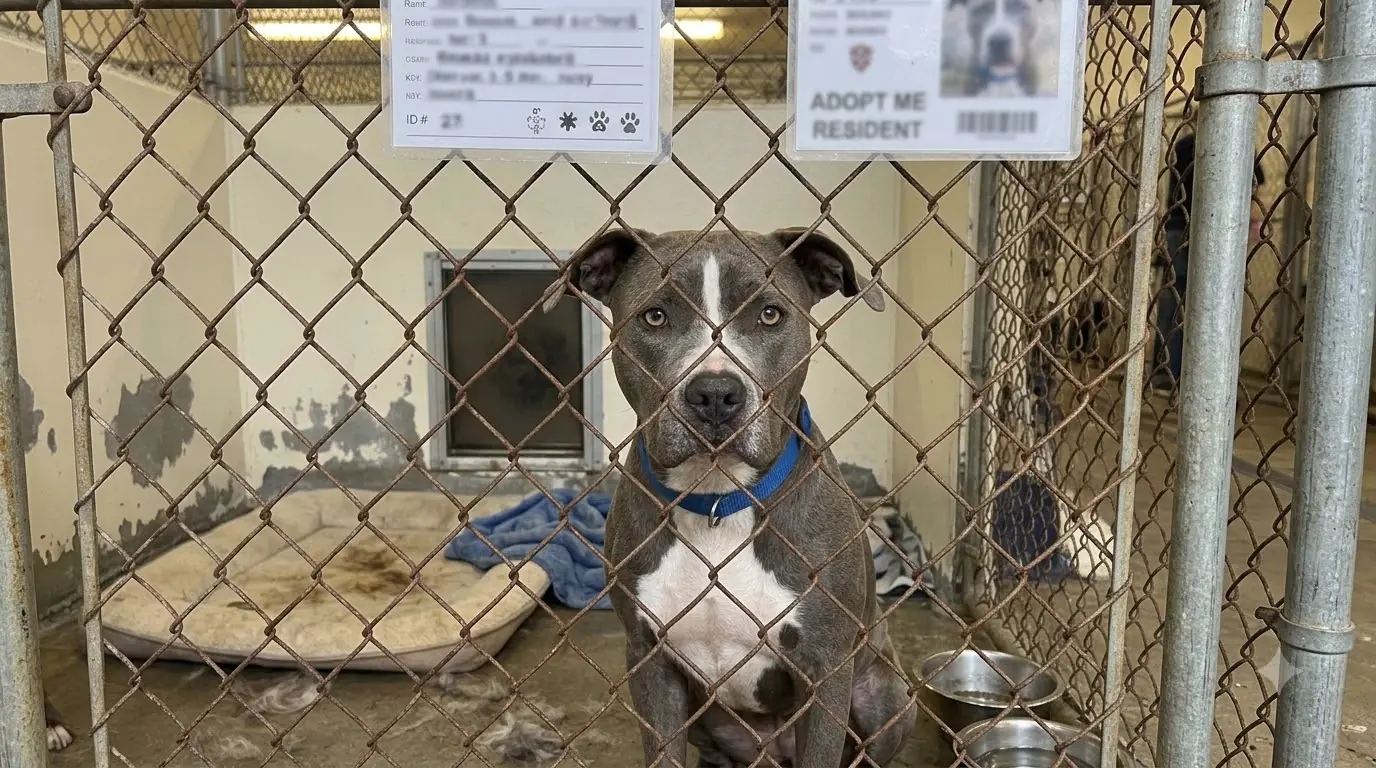
Her emotional recovery is unfolding alongside the medical treatment. Two years in a shelter taught Iris to watch every approaching face closely. Her eyes attracted attention, but attention rarely became commitment.
In the foster home, Iris positioned herself where she could see both the front door and the hallway. She followed every movement with her gaze and lifted her head whenever someone stood. Even while resting, she appeared prepared for the person beside her to leave.
During her first night, Iris refused the covered crate and lay directly in front of the bedroom door. She woke whenever her caregiver moved and stood immediately if the light was switched on.
No one forced her into the crate. The door remained open, and a padded bed was placed beside it. Iris eventually chose the bed after her caregiver sat nearby and turned away, removing the pressure of direct attention.
By the fourth night, she slept for nearly three uninterrupted hours. She stretched onto one side and allowed her legs to relax instead of keeping them tucked beneath her. Her resting breathing stayed slow and even.
Iris now recognizes the sound of her caregiver’s morning alarm. She remains on her bed until the harness is brought out, then walks over and lowers her head so it can be placed around her shoulders. She no longer circles the door in anticipation.
Her wide-eyed stare is often misunderstood. Iris is not challenging the people around her. She watches because observation became her way of predicting what would happen next. When someone moves calmly and follows a familiar routine, the tension gradually leaves her face.
Visitors are instructed not to reach through doorways or lean over her. They sit sideways and allow Iris to approach. She usually begins by smelling their shoes, then steps back to study their response.
One visitor returned several days after their first meeting. Iris recognized the person before she spoke, moving from her bed with a low, careful wag. She approached without crouching and placed her chin briefly against the visitor’s knee.
Her foster caregiver has become the person Iris follows most closely. At first, she stayed directly behind her from room to room. The family worried that this constant movement would interfere with her required rest, so they began teaching her that remaining on the bed was safe.
The caregiver takes one or two steps away, returns, and rewards Iris for staying relaxed. The distance has gradually increased. Iris can now remain on her bed while the caregiver crosses the room or briefly enters the kitchen.
She still watches, but she does not always rise. Sometimes her head lowers again before the caregiver returns. This is one of the most important emotional improvements because it shows that Iris is beginning to expect people to come back.
Since energetic play is prohibited, the foster family provides quiet enrichment. Iris works on simple scent puzzles, licks food from a rubber mat, and searches through loosely folded blankets for pieces of kibble.
Her favorite activity is choosing between two closed hands. She smells each one, touches the hand holding food, and then waits for it to open. The game requires concentration but keeps her body almost completely still.
Iris has shown curiosity toward other dogs but has not been allowed direct contact. Through a secure barrier, she observed a calm adult dog and gave several loose tail movements. She did not bark, growl, or press against the gate.
Rough play could be dangerous during heartworm treatment, even if both dogs were friendly. Any formal dog introduction will wait until the veterinarian lifts her activity restrictions. Her compatibility with cats and young children also remains unknown.
Iris is affectionate without being demanding. When invited, she approaches and presses her chest against a person’s legs. She enjoys having the sides of her face rubbed gently, then often lowers her head into the person’s lap.
One afternoon, her caregiver sat beside the bed while reading. Iris moved close, placed her muzzle across the caregiver’s ankle, and fell asleep. She remained there even when a car door closed outside.
That moment may appear small, but for a dog who spent two years waking whenever someone moved away, deep sleep beside another person represents real trust.
The next major stage of Iris’s treatment will begin after she completes the preparatory medication and passes repeat bloodwork. She will then receive the first adulticide injection and remain at the clinic for observation.
Her caregiver will monitor her particularly closely during the days following each injection. Mild soreness and fatigue can be expected. Heavy breathing, persistent coughing, fever, loss of appetite, weakness, or collapse would require immediate examination.
Several weeks later, Iris is expected to receive the remaining injections according to the veterinarian’s protocol. Her activity restriction will continue well beyond the final dose. The total recovery process will take months, not days.
After an appropriate waiting period, Iris will be retested. A negative result will be an important milestone, but her lungs may still need time to heal from the inflammation caused by the worms. Follow-up chest imaging could be recommended if the cough persists.
She will remain on year-round heartworm prevention for the rest of her life. Preventive medication, routine testing, mosquito control, and regular veterinary examinations will be essential to ensure she never faces this disease again.
Her knee will be reassessed only after the cardiovascular risk has passed. At that point, Iris can begin the slow process of rebuilding the strength lost during shelter confinement and medical rest. Her return to normal activity must remain gradual.
Iris is not ready for adoption. Her treatment requires consistent medication, transportation to veterinary appointments, careful monitoring, and a household willing to enforce rest even when she appears healthy.
The right permanent home will need to remain calm during her transition and understand her tendency to watch people closely. It must also continue her skin care, protect her recovering knee, and maintain heartworm prevention without interruption.
For now, Iris no longer needs a sign asking visitors to notice her eyes. The people caring for her see the whole dog: the painful knee, the healing paws, the quiet fear of being left, and the trust she offers one careful step at a time.
Her medical journey will be long, and the risk from heartworm disease is real. But Iris is eating well, breathing comfortably at rest, responding to treatment, and sleeping beside someone who returns every morning.
After two years of watching families pass beyond the fence, Iris is finally safe in a home where no one has to be persuaded to see her.