By the time the 1986 Harley-Davidson FXR arrived at Apex Iron Works for the fourth time, nobody in the garage wanted to touch it.
That was not an exaggeration.
Apex had built its reputation on motorcycles other shops had already given up on.
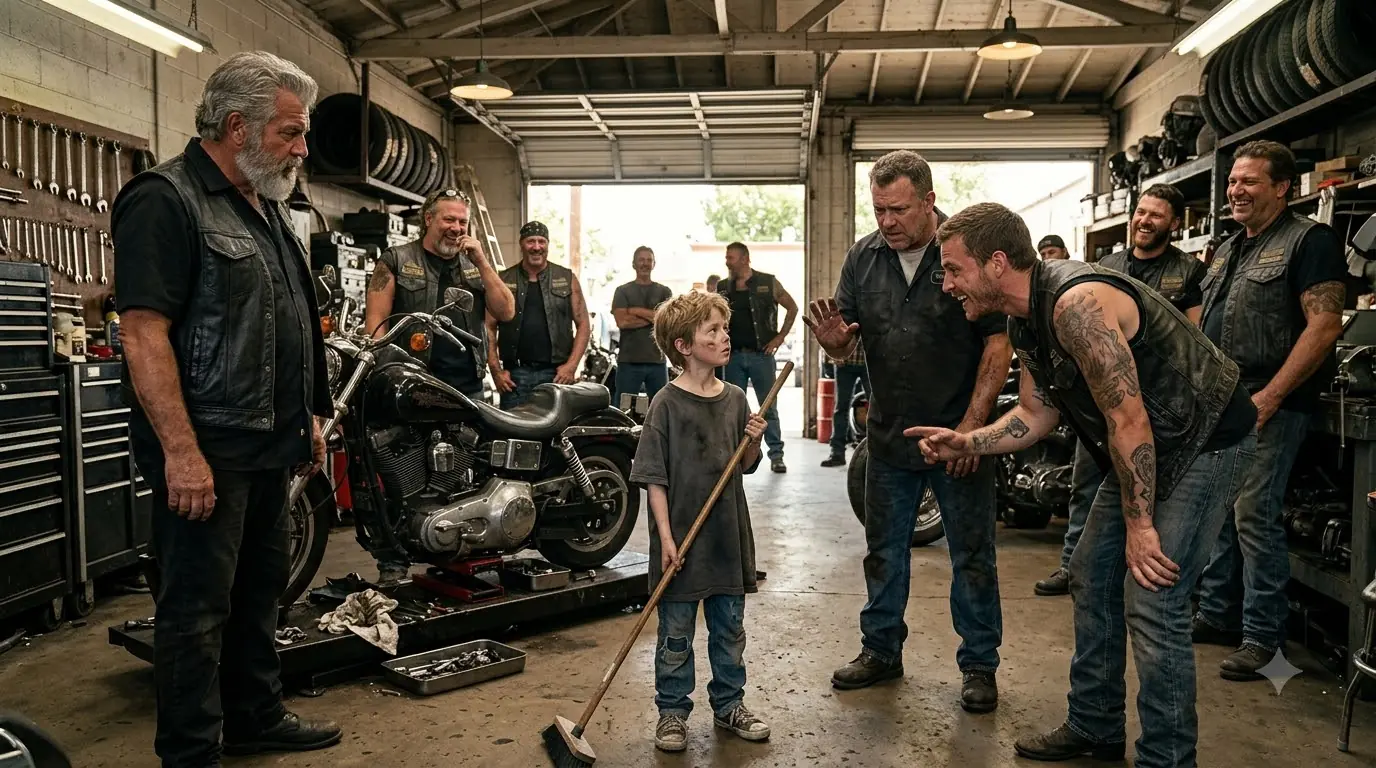
Rusty Calder, the owner, had spent almost thirty years repairing everything from neglected commuter bikes to hand-built customs worth more than houses. His mechanics joked that if a machine still contained metal, compression, and even one usable thread, Rusty would find a way to make it run.
Dutch Sullivan's FXR had made liars out of all of them.
For two straight weeks, the old Harley occupied the center bay beneath the brightest lights in the shop.
Its paint had once been deep black, but forty years of road grit, California sun, rain, heat, and hard riding had dulled it into something closer to charcoal. Chrome along the exhaust and forks carried scars beneath the polish. The leather seat was cracked at the edges and permanently molded to the shape of a man who had spent thousands of hours riding it.
Nobody wanted those imperfections restored.
They were Dutch.
Every scratch had a story.
Every worn patch of paint represented a place he had been.
And the motorcycle had been with him through almost all of it.
That was why Rusty had taken the job even though something inside him had warned him not to.
Dutch Sullivan had died three months earlier.
He had been one of the most respected older figures in his motorcycle club, a man whose name still changed the volume of conversations whenever it came up. Some people remembered his temper. Others remembered his generosity. Still others remembered the impossible number of riders he had helped when they were broke, stranded, grieving, or simply too stubborn to admit they needed somebody.
Jim Mercer remembered all of it.
Jim had ridden beside Dutch for almost thirty years.
The first time they met, Jim had been twenty-six, angry at the world, recently released from jail after a series of stupid decisions, and sleeping in the storage room behind a motorcycle shop because nobody else wanted him around.
Dutch had found him there one winter morning.
He had not offered sympathy.
He had thrown Jim a broom.
“If you're going to sleep here,” Dutch had told him, “you can sweep.”
Jim had hated him immediately.
Six months later, Dutch gave him a motorcycle jacket.
A year after that, Jim had become part of the only family he trusted.
When Dutch died, Jim handled most of the funeral arrangements.
He dealt with riders calling from across the country.
He helped Dutch's distant relatives sort through possessions they barely understood.
He stood in Dutch's garage afterward, staring at the black FXR sitting beneath a sheet.
The bike had not been started in almost a year.
Dutch's health had declined quickly near the end.
He had still walked into the garage some evenings just to sit beside it.
Jim knew because he had found him there more than once.
“You ought to sell this damn thing while it's still worth something,” Jim once told him.
Dutch had run a cloth across the fuel tank.
“Sell you first.”
Jim laughed.
“I'm worth less.”
“That ain't saying much.”
It was one of the last normal conversations they ever had.
After Dutch's death, the club decided that his FXR would lead the memorial run.
Not beside the procession.
Not on a trailer.
Running.
The event was scheduled for Saturday.
Riders from across California had already committed to come. Other clubs had sent messages. Old friends were flying in from Nevada, Arizona, and Oregon. Hundreds of motorcycles would follow the Pacific Coast Highway before the procession turned inland toward the cemetery where Dutch had been buried.
Jim wanted the FXR at the front.
It was not a suggestion.
For the first week, Rusty thought that was completely reasonable.
Then the bike refused to start.
The first mechanic blamed the carburetor.
They rebuilt it.
Nothing.
The second suspected ignition failure.
They replaced worn electrical components.
The engine cranked but refused to catch.
A new battery lasted minutes before mysteriously losing power.
They replaced it.
The replacement drained too.
They inspected the charging system.
Then the coil.
Then the wiring.
Then compression.
Then fuel delivery.
Then timing according to the factory specifications.
Everything seemed close enough to correct that the engine should have at least coughed.
Instead, the FXR behaved like a machine actively refusing to cooperate.
The kick starter became notorious.
One of Rusty's apprentices tried it on the second day.
The lever snapped backward so violently that it threw him off balance.
After that, nobody volunteered.
By the fifth day, Big Dave called the bike cursed.
By the seventh, Tommy had stopped laughing at the joke.
By the tenth, even Old Man Pete, who claimed electricity feared him personally, admitted he could not locate the battery drain.
And on Tuesday afternoon, four days before the memorial ride, Rusty called Jim Mercer.
He told him the truth.
They had failed.
Jim did not shout over the phone.
That was worse.
He simply said, “I'm coming.”
The pack appeared forty minutes later.
The midday Oakland sun beat mercilessly against the cracked asphalt outside Apex Iron Works.
Heat rose from the parking lot in wavering curtains, making the motorcycles approaching along the industrial road appear almost liquid in the distance.
Then the sound arrived.
Deep V-twin engines.
Not one.
Many.
The noise rolled between warehouses and loading yards, growing until conversation inside Apex became pointless.
Rusty stepped into the open bay doorway.
Big Dave stopped pretending to organize sockets.
Tommy wiped his hands on his pants.
Pete removed his glasses and cleaned them even though they were already spotless.
Near the back wall, almost hidden behind a stack of tires, an eight-year-old boy stopped sweeping.
Leo Hayes knew exactly who was coming.
Everybody did.
Jim Mercer led the motorcycles into the lot.