The boy had walked three miles through freezing darkness by the time the first hint of morning touched the mountains. He was thirteen years old, hungry enough to feel hollow, and wearing two thin layers that did almost nothing against the wind.
Ahead of him, behind a twelve-foot chain-link gate, nearly a hundred motorcycles filled a gravel yard.
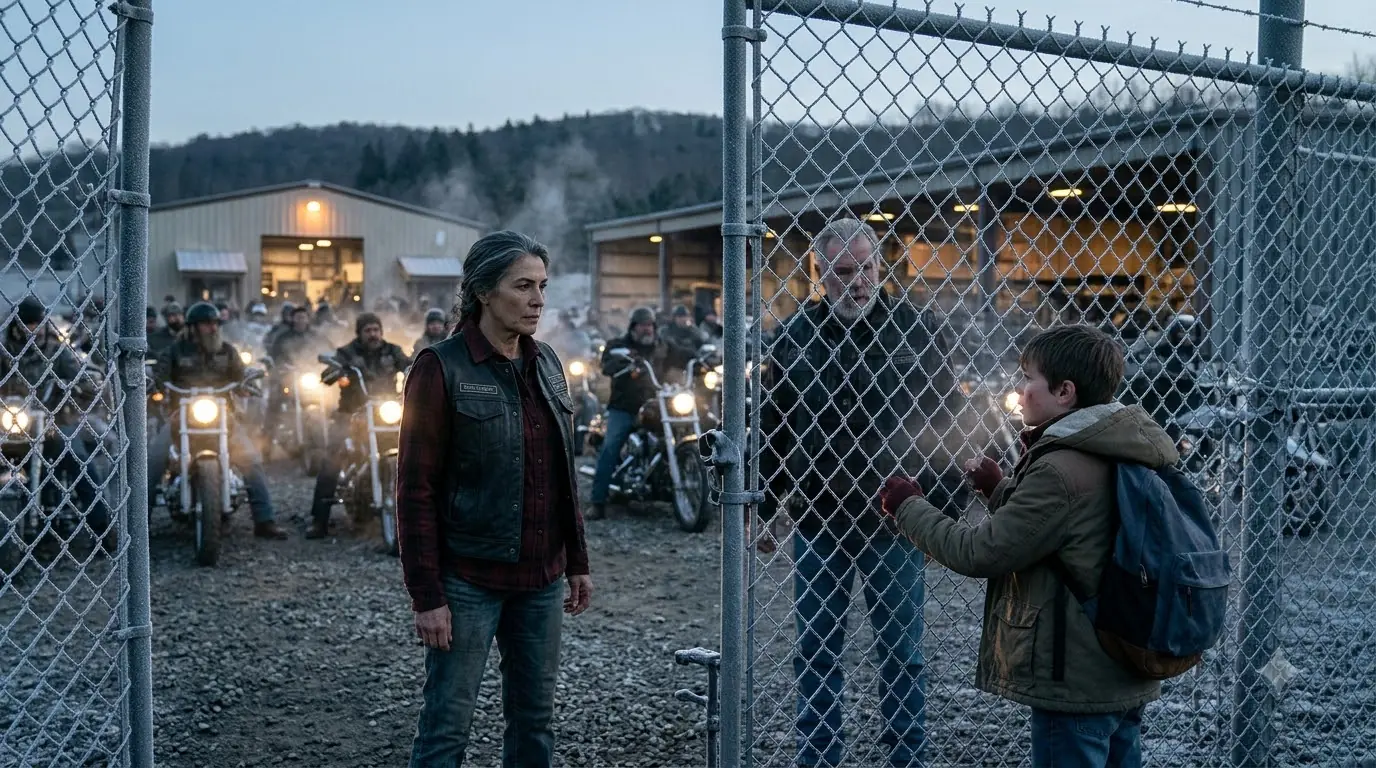
Some engines were already running, their exhaust rising in white coils, and the men and women moving among them wore leather patches that people in Ridgerest County knew better than to ask about.
Eli Mercer stopped at the gate and pressed his stiff fingers into the wire. A broad-shouldered man with a gray beard saw him from the far side of the yard and came slowly toward him. He looked at Eli's worn shoes, the bluish color around his mouth, and the expression of a child who had practiced asking for help and still dreaded saying the words. Then Eli looked at the small memorial patch above the man's heart, swallowed hard, and said seven words that changed the morning.
"My dad's name is on your vest."
The man did not answer immediately. His hand moved to the edge of the patch as though checking that it was still there, although he knew exactly what was stitched into the leather. Behind him, a mechanic stopped tightening a strap, and two riders near the fuel shed turned their heads. The yard did not fall silent all at once; silence traveled across it in widening circles until even the men who had not heard the boy were looking toward the gate.
Three nights earlier, Eli had been lying awake in a house that was technically heated but had gone cold enough for his breath to appear in the bedroom. There was propane in the tank, but he had stopped using it except when the temperature became dangerous. The bill on the television remote said thirty-two dollars past due, and the refrigerator contained an almost empty pickle jar, baking soda, and four eggs he was saving for his mother. Her bedroom door had remained closed for eleven days except for brief trips to the bathroom.
The house stood on Clearwater Road, four miles outside the town of Ridgerest, where fields became timber and the mountains made winter arrive before the calendar admitted it. From the road it looked ordinary enough: one story, white siding gone gray at the edges, a porch with two soft boards, and an aging pickup in the drive that had not moved since summer. Eli knew every flaw in the building. He knew which faucet needed a second twist, which window rattled when the east wind blew, and which section of floor creaked loudly enough to wake his mother if he stepped there after midnight.
Those were not the things a thirteen-year-old should have needed to know. He should have known the names of the kids at the next lunch table, the dates of basketball games, and whether he had remembered to bring his homework. He knew some of those things, too, but they lived beneath another set of calculations. How many dollars would buy bread and a little peanut butter? How much propane could he save by sleeping in both of his jackets? How long could his mother remain behind the door before somebody at school noticed what he was no longer able to hide?