My mom smiled and said, "Grandpa's never coming home. We're selling his house." I called him right in front of her, put the phone on speaker, and replied, "Why don't you tell him that yourself?" They thought an 82-year-old man recovering from a broken hip would never make it home to stop them. They were wrong. My grandpa Arthur practically raised me. My parents were always busy chasing money or cleaning up my younger brother Jason's latest disaster, so most weekends I spent at grandpa's place.
It wasn't a fancy house. It was an old brick home with a wraparound porch, a vegetable garden, and 4 acres of land that grandma had loved until the day she passed away. Grandpa always said he wasn't living on valuable property. He was living in memories. Developers disagreed.
Every few months, someone offered to buy the land because the entire area around it had exploded with new shopping centers and housing developments. Grandpa refused every offer without even negotiating. "You can't put a price on home," he'd tell them before closing the door. My mother hated that answer. She constantly reminded him that he could sell move into a nice retirement community and have enough money left over to help the family.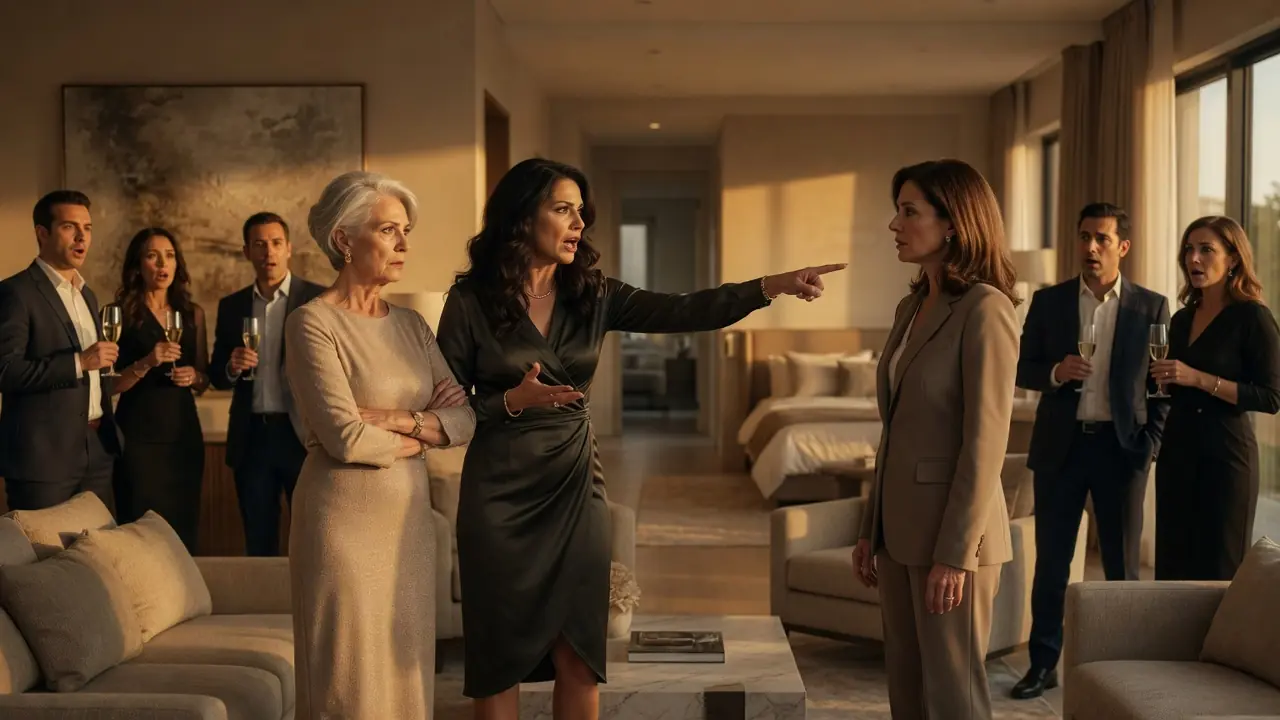
By family, she meant everyone except grandpa. Jason wanted a down payment for a house despite never keeping a job longer than 6 months. My aunt Rebecca's beauty salon was drowning in debt. My uncle Mark had another failed business that somehow always needed rescuing. Grandpa would smile politely whenever they brought it up, then changed the subject.
I honestly believed that was the end of it until February when grandpa slipped on a patch of ice while getting the morning newspaper and broke his hip. The surgery went well, but the doctors wanted him in a rehabilitation center for several weeks before he returned home. Grandpa hated the idea, but he agreed because he wanted to recover properly. Before I left the hospital that first night, he grabbed my wrist. "Check on the house everyday," he said.
"Feed Winston, bring in the mail, and don't let your mother start rearranging things." I laughed because I thought he was joking. He wasn't. The first week was normal. I stopped by every evening after work, fed Winston, watered grandma's plants, collected the mail, and made sure everything was locked. Then something changed.
My mother suddenly started visiting Grandpa almost every day. So did Aunt Rebecca. Jason, who hadn't voluntarily seen Grandpa in nearly 8 months, somehow found time to stop by twice in one week. At first, I thought maybe the accident had reminded everyone that life was short. Then the question started.
Mom kept asking the nurses whether Grandpa would ever be able to climb stairs again. Rebecca wanted to know if the doctors thought he could safely live alone. Jason asked whether grandpa had ever talked about downsizing. None of those questions seemed strange individually. Together, they made me uneasy.
Grandpa noticed it, too. One afternoon after they left, he looked at me and quietly said, "Funny how interested everyone becomes once they think an old man might not be coming home." I told him he was overthinking it. I wish I'd been right. 2 days later, mom called while I was driving home from work. She asked if I could leave Grandpa's spare key under the flower pot because she wanted to clean the house before he came back. I reminded her that grandpa specifically asked me not to let anyone move his things.
She sighed loudly. Evan, I'm his daughter. I know. Then stop acting like you need to protect him from me. I refused to leave the key.
She hung up without saying goodbye. The next evening, I pulled into grandpa's driveway and immediately noticed the front door was open. My heart nearly stopped. I rushed inside expecting to find a burglary, but instead I found my mother wrapping Grandma's china in newspaper while Rebecca packed dishes into moving boxes. Jason was carrying framed photographs toward the garage.
"Ready ready for grandpa?" She looked at me for a second before saying, "Ready for whatever happens." I walked into the dining room and started opening boxes. Everyone contained family keepsakes, grandma's china, grandpa's war medals, old photo albums, crystal glasses that hadn't been touched in years. This wasn't cleaning. They were emptying the house. Put everything back, I said.
Rebecca laughed. Don't be dramatic. Grandpa never asked you to do this. He will thank us later. No, I replied.
He won't. Mom finally put the plate down and looked directly at me. You're too emotional to understand what's happening. Then explain it. Your grandfather can't live here anymore.
His doctors disagree. Doctors don't see the bigger picture. What's the bigger picture? She hesitated just long enough for me to realize there was something she wasn't saying. Jason broke the silence.
It's just a house. I looked around the room. Not to grandpa. Nobody argued with that. They simply continued packing as though I'd never spoken.
I called Grandpa right there in the middle of the dining room and put him on speaker. Mom and Rebecca are boxing up Grandma's things, I told him. The room instantly froze. Grandpa didn't raise his voice. He simply asked, "Did I tell anyone to do that?" "No, then tell them to stop." I repeated his words.
Mom folded her arms. "He's confused." "Grpa heard that through the phone." "Linda," he said calmly. "I'm old, not confused. Put my dishes back in the cabinet." For several seconds, nobody moved. Then mom looked at Rebecca, nodded toward the boxes, and said through clenched teeth, "Fine." They unpacked everything in complete silence.
As they walked out of the house, Mom stopped beside me, and quietly said, "You're making this much harder than it needs to be." I watched them drive away before locking the front door. That night, I changed every lock in the house with Grandpa's permission. I thought that would be the end of it. I couldn't have been more wrong. Three mornings later, I pulled into Grandpa's driveway on my way to work and found two strangers walking around the property with clipboards, measuring wheels, and a camera.
One of them smiled when he saw me. Morning, he said. We're just doing the pre-listing inspection. I felt my stomach drop. Pre-listing for what?
He glanced at his paperwork. The sale of the property. I stared at him for several seconds before asking the question I already knew the answer to. Who told you this house was for sale? The inspector looked down at his paperwork before answering.
Your mother, Linda Collins, she said she was handling the sale for the owner. I told him grandpa was very much alive, was expected to return home within weeks and had never mentioned selling the property. The man's expression changed immediately. I'm sorry, he said. We were told your grandfather had already decided to move into assisted living.
You were told wrong. He apologized again, packed up his measuring wheel, and said he'd be contacting his office before leaving. I watched them drive away before calling Grandpa. He was quiet for a long moment after I explained everything. They're moving faster than I expected.
He finally said, "What do you want me to do? Go through every room. Tell me if anything's missing." I spent nearly 2 hours opening drawers, checking closets, and comparing everything against old photographs I'd taken over the years. At first, it looked like nothing had changed. But then, I noticed Grandma's jewelry box was gone.
It hadn't contained anything particularly valuable because grandma had distributed most of her jewelry years before she died, but the wooden box itself had been handmade by grandpa when they were first married. I also couldn't find the folder that held old family photographs or grandpa's military discharge papers. When I told him, he sounded more disappointed than angry. Those things aren't worth money, he said quietly. They're worth remembering.
That evening, I drove to the rehabilitation center earlier than usual. Mom's car was already there. I stopped outside Grandpa's room when I heard raised voices. Dad, you're being stubborn, Mom said. No, Grandpa replied calmly.
I'm being consistent. You can't keep living alone. I've managed for 12 years since your mother passed. Things are different now. The only thing that's different is that all of you suddenly care what happens to my house.
I stepped into the room before the argument could get any worse. Mom immediately forced a smile. Perfect timing, she said. Maybe you can talk some sense into him. Grandpa looked at me instead.
Did you tell her about the inspector? Not yet. I turned toward Mom. How long have you been telling people Grandpa's house is for sale? She blinked.
What are you talking about? Don't do that. I honestly don't know what you mean. A property inspector was at Grandpa's house this morning because someone claiming to represent him requested a pre-listing inspection. Her smile disappeared.
That must be some misunderstanding. Really? Because they had your name. She folded her arms. I only asked questions.
There's nothing wrong with exploring options. Grandpa leaned forward in his chair. Did I ask you to explore options? She ignored him. Dad, you're focusing on the wrong thing.
No, he answered. I'm focusing on my house. She sighed dramatically, picked up her purse, and walked toward the door. Before leaving, she looked directly at me. You think you're helping him, but you're making this much harder than it needs to be.
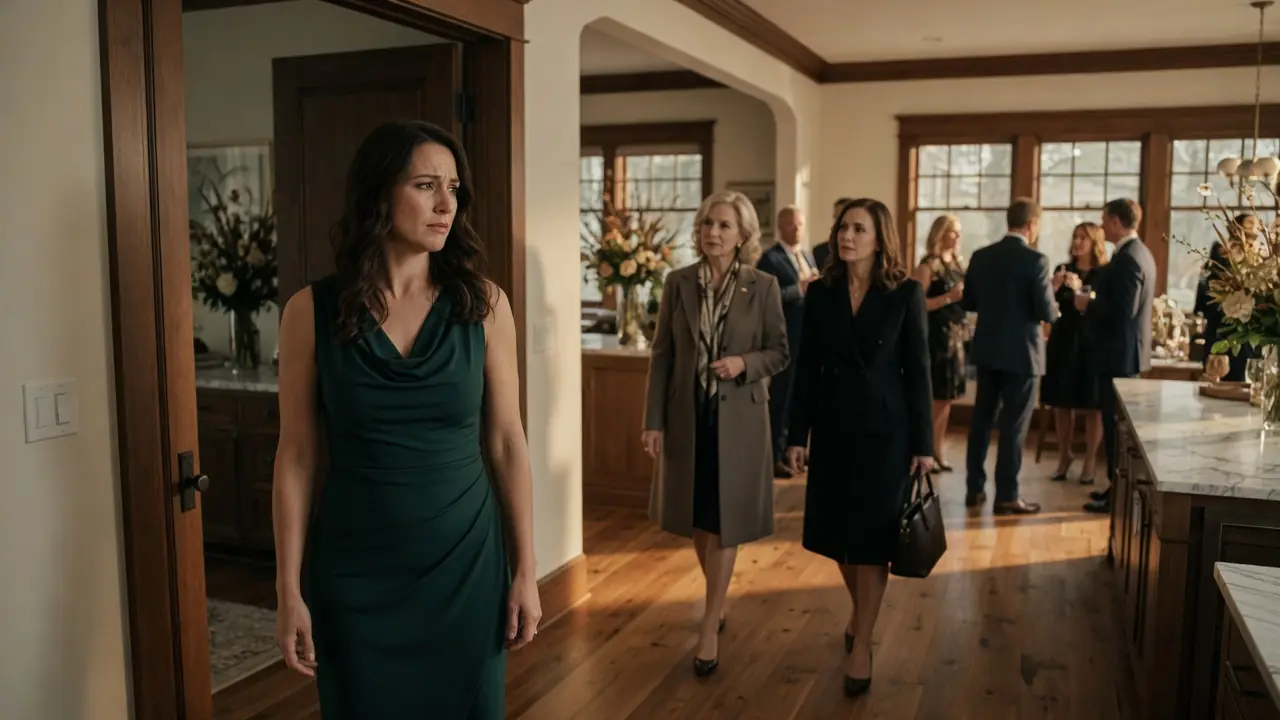
After she left, Grandpa shook his head. She still thinks if she repeats something enough, it'll become true. The next morning, my cousin Emily called. She rarely contacted me unless something was wrong. "Can we meet?" she asked.
We met during my lunch break at a diner near her office. "She looked nervous before she even sat down. I shouldn't be telling you this," she said. "Then why are you?" "Because grandpa doesn't deserve what's happening." She told me Aunt Rebecca had been bragging to several relatives that Grandpa would never live independently again and that the property would probably be sold before summer. According to Rebecca, everyone should start thinking about what they'll do with their share.
I almost laughed because it sounded so ridiculous. Their share of what Emily shrugged. Apparently, they've already divided it. She pulled out her phone and showed me a screenshot from a family group chat I wasn't part of. My mother had written, "Once everything is finalized, Jason gets enough for a down payment.
Rebecca's business gets cleared. Mark gets his investment money and will finally renovate the kitchen." I stared at the screen. Grandpa was still alive recovering every single day, and they were already spending money they didn't have. Emily quietly added. They keep saying it's what grandpa would have wanted.
Did anyone ask grandpa? She shook her head. I don't think they want the answer. That night, I drove past a self- storage facility on my way home because Emily mentioned Rebecca had been renting a unit there. I wasn't expecting to see anything.
Instead, I found Jason's truck backed up to one of the units with the rear doors open. Mom and Rebecca were carrying boxes inside. I parked across the lot and watched from a distance. After a few minutes, Jason carried out Grandpa's old rocking chair from the porch, the one grandpa sat in every evening with Winston curled beside him. Then came grandma's sewing machine, then several framed photographs from the hallway.
I started recording with my phone. Jason noticed me first. Seriously, he shouted. You're spying on us now. I walked over calmly.
Why is Grandpa's furniture in a storage unit? Mom answered before anyone else could. We're protecting it from what the house needs to be prepared. Prepared for Grandpa to come home. She looked away for just a second before saying, "Prepared for whatever comes next." "You mean prepared to sell?" Rebecca laughed nervously.
"Nobody said that," I pointed toward the rocking chair. "Then why is his furniture leaving before he gets home?" "Mom's patience finally disappeared." "Because someone has to think realistically." "Realistically," I asked. "Grandpa is walking with a cane now. He'll never manage 4 acres again. Then I'll help him." "For how long?" she snapped.
"As long as it takes." She stared at me for several seconds before quietly saying something that made my blood run cold. You're one person, Evan. We're thinking about the future. Whose future? She didn't answer.
She simply turned around and continued stacking boxes inside the storage unit. I drove straight to the rehabilitation center and showed Grandpa the video. He watched the entire thing without saying a word. When it finished, he asked me to play it again. The second time, he didn't watch the screen.
He watched my mother's face. After the video ended, he handed my phone back. "I think I finally understand," he said quietly. "Understand what I asked?" He sighed. They stopped seeing me as their father.
He looked out the window toward the parking lot. Now they only see what they'll inherit. Before I could respond, there was a knock on the door. Maryanne, Grandpa's attorney, stepped inside carrying a folder. Arr.
She said, "I think it's time we called a family meeting." Grandpa nodded once. Good. He looked at me with a calm expression I'd never seen before. Let them all come. Why, I asked.
He smiled sadly. Because they've been making plans without me. He rested both hands on the top of his cane. Now it's my turn to make one. The family meeting happened the following Saturday at grandpa's house because he insisted on one condition if everyone wanted to make decisions about his future.
They could do it under the roof they were so eager to get rid of. By noon, every chair around the dining table was occupied. Mom, Dad, Jason, Aunt Rebecca, Uncle Mark, Emily, Marianne, and I were all there. Nobody looked comfortable. Grandpa slowly walked into the room with his cane, but instead of looking frail, he looked determined.
He sat at the head of the table and smiled politely. "Thank you all for coming," he began. I've heard a lot about my future over the last few weeks. Apparently, I'm moving into assisted living, selling my house, dividing my property, and paying off everyone else's problems. Nobody laughed.
Mom immediately leaned forward. Dad, that's not what this is. Grandpa raised a hand. Please, you've all had weeks to talk. I'd like a few minutes.
She leaned back without another word. Grandpa looked around the table. When your mother and I bought this place, we had $63 left in our checking account. We painted every wall ourselves. We planted every tree out back.
We fixed the roof after storm shoveled snow every winter and raised three children here. This house isn't valuable because developers want the land. It's valuable because it's where our lives happened. Jason shifted in his chair but said nothing. Grandpa continued.
Do you know what hurt me most? He looked directly at mom. Not one of you asked me what I wanted. You all decided for me. Mom finally spoke.
Dad, we were worried about your health. Then why did nobody ask how therapy was going? Grandpa replied. Why did every conversation become about my house? Rebecca tried to jump in.
We just thought. Grandpa cut her off with a calm voice. Exactly. You thought. None of you listened.
The room fell silent again. Maryanne quietly slid several photographs across the table. They showed the boxes inside the storage unit. Grandma's rocking chair, the family photo albums, and the china cabinet wrapped in blankets. Nobody touched the pictures.
Who authorized this? Maryanne asked. Rebecca looked at Mom. Mom looked at Jason. Jason stared at the table.
I asked who authorized this? Maryanne repeated. Jason finally muttered. Mom said grandpa wouldn't mind. Grandpa nodded slowly.
Did you ask me? Jason didn't answer. Did you? Grandpa repeated. No.
Then why were you carrying my furniture out of my house? Jason rubbed the back of his neck. Mom said it was temporary. Dad finally spoke for the first time. Arthur.
Maybe we got ahead of ourselves. Grandpa looked at him sadly. Maybe Dad lowered his eyes. Emily quietly pushed her chair back and stood. I'm sorry, Grandpa.
She said. I should have told you sooner. Grandpa smiled warmly. You did the right thing. Then he looked back at the others.
The interesting part is that Emily is the only one who apologized before being asked. Mom suddenly became emotional. "Dad, we weren't trying to hurt you." "Then what were you trying to do?" Grandpa asked. She opened her mouth, but couldn't answer. After several uncomfortable seconds, she finally whispered, "We thought.
We thought you weren't coming back." Grandpa leaned back in his chair and let those words hang in the air. Did a doctor tell you that? No. Did I tell you that? No.
Then you decided I was finished with my own life. Tears began running down Mom's face. I was scared. Grandpa nodded gently. I believe you were.
But fear doesn't explain why everyone had already planned how to spend money that wasn't theirs. Nobody could argue with that. Maryanne then opened another folder. Arthur asked me to prepare something before today's meeting. She handed each person a single sheet of paper.
It wasn't a new will. It was a letter Grandpa had written himself. He waited while everyone read it. In it, Grandpa explained that watching his family argue over his property while he was still alive had made him realize something painful somewhere along the way. They had stopped visiting because they loved him and started visiting because they loved what he owned.
By the time everyone reached the last paragraph, even Uncle Mark looked ashamed. Grandpa cleared his throat. I'm not reading that to punish anyone. I'm reading it because I still have time to tell you how disappointed I am. Instead of letting a lawyer do it after I'm gone, nobody spoke.
Even Jason looked like he wanted to disappear. Grandpa stood carefully with his cane. I'm keeping this house. I'll decide when it's time to leave it. Not before.
If I need help, I'll ask. If I don't ask, don't make decisions for me. He then looked at me. Evan has checked on me every day, not because he expected anything in return, but because he loves me. Every one of you had the same opportunity.
Mom quietly asked, "Can we fix this?" Grandpa's expression softened, but only slightly. You don't fix trust with one conversation. You rebuild it one decision at a time. Nobody argued. One by one, they left the house much more quietly than they had arrived.
Mom was the last to leave. Before walking out, she hugged Grandpa, and after a long hesitation, he hugged her back. It wasn't forgiveness. It was simply a father reminding himself that disappointment and love can exist at the same time. After everyone was gone, Grandpa and I carried the rocking chair back onto the porch together.
Winston immediately jumped into Grandpa's lap as though nothing had happened. Grandpa smiled, looked across the yard, and said, "Funny thing about home. The people who truly belong here never need to fight over it." I sat beside him until sunset, realizing the biggest victory wasn't that the house had been saved. It was that grandpa got to live the rest of his life knowing someone had fought for him while he was still there to see it. Four years passed faster than I ever imagined they would.
If you had asked me the day grandpa came home from the rehabilitation center whether life would ever feel normal again, I would have said no. At the time, every family gathering felt like a courtroom. Every phone call felt like the beginning of another argument. And every holiday came with the expectation that someone would bring up the house. Instead, something unexpected happened.
Silence slowly replaced the chaos. Grandpa never spoke about what my mother Rebecca Jason and Uncle Mark had tried to do unless someone else mentioned it first. He refused to spend the last chapter of his life reliving one of its ugliest moments. I've wasted enough time being disappointed he'd tell me whenever I tried to apologize for the family. I'd rather spend whatever time I've got left enjoying the people who still want to be here.
And that's exactly what we did. Every Saturday became our day. I'd show up around 8:00 in the morning with coffee and breakfast sandwiches, and we'd sit on the porch for an hour before pretending we were going to work in the yard. Most weekends, we accomplished about 30 minutes of actual gardening and 3 hours of talking. We'd argue about baseball, complain about politicians, laugh over stories from his younger days, and somehow end every conversation with him, insisting tomatoes tasted better 50 years ago.
Winston usually slept beside Grandpa's rocking chair, occasionally waking up just long enough to glare at squirrels that had wandered too close to the bird feeder. They were simple days, and after everything we'd been through, simple felt like a luxury. My mother tried several times to repair the relationship. At first, I honestly believed she only wanted access to grandpa again because she was worried about the inheritance, but over time, I realized life had a way of humbling people. She and dad never got the kitchen renovation they'd planned.
Jason's down payment disappeared because there had never been any money to divide. Rebecca eventually sold her salon after years of struggling, and Uncle Mark quietly took a regular job for the first time in decades. Without grandpa's property hanging over everyone's heads, they were finally forced to solve their own problems instead of expecting someone else to solve them. Mom started visiting Grandpa once a month. She never came empty-handed.
Sometimes she'd bring homemade soup, sometimes flowers for the garden, and sometimes she'd simply sit beside him in silence. She apologized more than once. Grandpa never told her everything was forgiven, but he also never turned her away. One afternoon after she left, I asked him why. He looked out across the backyard for a long time before answering.
She's still my daughter. Disappointment doesn't erase love. It just changes what trust looks like. That sentence stayed with me. Forgiveness, I learned, isn't pretending something never happened.
It's choosing not to let that moment define every day afterward. Jason took much longer to grow up. Losing the imaginary future he'd already spent in his mind seemed to force him into reality. He found steady work with a construction company, rented a small apartment, and for the first time in his life, started paying his own bills. He rarely visited Grandpa, but when he did, he stopped asking about money and started asking for advice instead.
Grandpa noticed the difference long before I did. Failure is a better teacher than I ever was. He joked one afternoon after Jason left. A year before Grandpa passed away, he handed me a small envelope while we were sitting on the porch watching a summer storm roll across the fields behind the house. "Don't open this until I'm gone," he said.
I laughed and pushed it back toward him. You're planning on sticking around long enough to complain about my lawn care for another 20 years. He smiled. I'd like that, too. Then he pushed the envelope back into my hand.
Humor an old man. I tucked it into my desk drawer when I got home and forgot about it. Grandpa passed away peacefully the following spring. He was 86. There was no dramatic final speech, no hospital full of machines, no unfinished business.
He woke up, made himself a cup of coffee, sat in his rocking chair on the porch to watch the sunrise, and sometime before I arrived that morning, he quietly slipped away. It somehow felt appropriate that the last thing he saw was the home he had spent more than half a century protecting. His funeral was small because that's exactly how he wanted it. Neighbors came, former co-workers came, old friends I had never met came. Nearly every one of them told me the same thing in different words.
Your grandfather helped me once when he didn't have to. I realized then that kindness leaves a much larger inheritance than money ever could. After the service, the family gathered in Maryanne's office for the reading of the will. Nobody argued. Nobody interrupted.
The years had taken the anger out of everyone. Grandpa had updated his will shortly after everything happened, and he never changed it again. As everyone already expected, the house passed to me. There were a few smaller gifts for the rest of the family enough that no one had been completely forgotten, but it was obvious Grandpa had made his decisions carefully. Then, Maryanne handed me the envelope Grandpa had given me a year earlier.
I opened it with shaking hands. Inside was a single handwritten letter. Evan, if you're reading this, it means I finally got to see your grandmother again. Don't waste time being angry at your family. Life's too short and carrying bitterness is heavier than carrying lumber.
They made mistakes, some bigger than others. But people are capable of changing if they're willing to live with the consequences of their choices. I didn't leave you this house because you fought for it. I left it to you because you fought for me while I was still here. Houses fall apart eventually.
Land changes hands. Money disappears. Character is the only thing people leave behind that doesn't lose value. Take care of this place if it makes you happy. Sell it someday if it doesn't.
Just never let anyone convince you that love is measured by what someone expects to inherit. Love is measured by who shows up when there's nothing to gain. Thank you for making an old man feel like a father instead of a burden. By the time I finished reading, I could barely see the page through my tears. Nobody in the room said a word.
Mom quietly reached over and squeezed my hand before wiping away her own tears. That was the first time in years that our family shared the same grief instead of the same argument. I still live in Grandpa's house today. Winston stayed with me until he was nearly 20 years old, spending most afternoons asleep in the same patch of sunlight near the living room window. The rocking chair is still on the porch.
Grandma's china is still in the cabinet. Every spring I plant tomatoes in the same garden grandpa insisted on producing the best vegetables in the county. I still don't think they taste any different from anyone else's. But every year, I catch myself smiling after the first harvest because I can almost hear him insisting I simply don't know any better. People sometimes ask me if keeping the house was worth all the family drama.
I always tell them they're asking the wrong question. The house was never the prize. The real prize was getting four more years with the man who taught me what loyalty actually looks like. If protecting his home gave him those years of peace, I'd do it all over again without hesitation.