My Wife Said I Had Trust Issues — Then The Condo Guard Told Me About Her “Massage Therapist”
I know the exact month my wife stopped being my wife.
That sounds dramatic until you live through it.
When betrayal finally comes into the light, people assume it arrives all at once, like a door kicked open or a message popping up on a screen. But usually, it has been standing in the room for months, moving furniture around, changing small things, teaching you to doubt your own eyes before it ever says its name.
My name is Nathan Brooks. I was forty-four when my marriage ended, though the papers would take longer to say so. My wife, whom I will call Melissa, was thirty-nine, beautiful in a way she had not always believed, and dangerous in the way people become when attention arrives late and feels like proof they deserved more.
We had been married eleven years.
No children.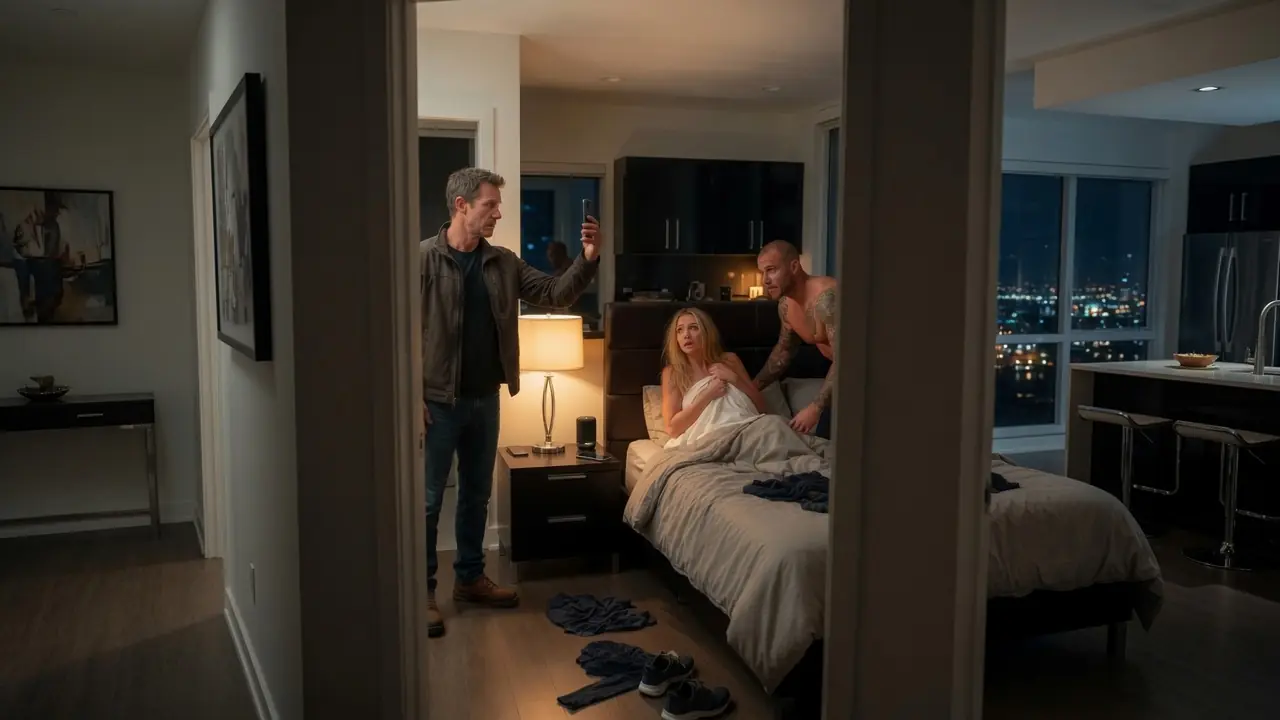
No dramatic early tragedy.
No hidden fortune.
Just a house, two jobs, a shared Costco card, a favorite breakfast place, and the kind of marriage that looked steady because neither of us had tested how much rot could grow beneath routine.
Two years before everything collapsed, I got scared into becoming healthier.
A blood test came back ugly. My doctor leaned back in his chair, looked at the numbers, and said the words prediabetes, hypertension, gout, and lifestyle with the calm voice doctors use when they are trying not to terrify you. It worked anyway.
I was 258 pounds then.
Melissa was 184.
We were not miserable, exactly, but we had become soft in the way busy adults become soft when food turns into comfort and comfort becomes an excuse. Pizza Fridays, drive-thru breakfasts, late-night ice cream, big holiday meals that stretched into ordinary Tuesdays. We laughed about being a chubby couple, but the bloodwork made the joke stop being funny.
So we changed.
Slowly at first.
Less soda.
More walking.
Then meal prep.
Then the gym.
At first, we hated it together, which made it bearable. We complained about sore legs, laughed at ourselves on the treadmill, and treated every lost pound like a tiny award. I went from 258 to 188 pounds in a little under two years. Melissa went from 184 to 143, and when I tell you she transformed, I do not mean only her body.
Her posture changed.
Her walk changed.
The way people looked at her changed.
And eventually, the way she looked back changed too.
The gym was called Iron Haven Fitness, a bright, loud place in the lower level of a shopping center in a fictional city named Ridgemont. It had glass walls, black rubber floors, mirrors everywhere, and music that always sounded like someone was being chased through a nightclub. We went nearly every afternoon after work.
That was where we met Chase Keller.
Chase was a personal trainer, early thirties, shaved head, thick arms, tattoos crawling up both shoulders, and the permanent smirk of a man who had learned early that women noticed him and men noticed that they noticed. He called everyone “brother” or “champ,” but never in a way that made you feel included. More like he was making sure you knew he had decided the hierarchy.
I did not like him.
Not at first sight.
Not after a month.
Not ever.
I had seen him stare at women in the mirrors when he thought their husbands were not looking. I had seen him take his shirt off during workouts that did not require shirtlessness. I had seen him correct women’s form with hands that lingered too long for instruction and not long enough to be openly confronted.
Melissa noticed him too.
Of course she did.
At first, I told myself it was harmless. She had spent years feeling invisible in her own body, and now people were turning their heads when she walked past. Maybe she liked being noticed. Maybe she deserved to feel attractive.
That is what a trusting husband tells himself when his stomach is already trying to warn him.
One afternoon, we were on elliptical machines near the back wall. In front of us, Chase was working cable crossovers, shirtless for no reason except the reason everyone understood. He flexed between sets, turned slightly toward the mirror, and caught Melissa watching.
I glanced at her.
She was staring.
Not just noticing.
Staring.
Her lips parted slightly, and then she wet them with the tip of her tongue.
It was small.
It was not proof of anything.
But it hurt with the sharpness of something true.
Chase saw it.
He grinned.
I felt twelve years old again, chubby and invisible, watching a better-looking guy take the room without trying.
On the drive home, I said, “That guy loves putting on a show.”
Melissa looked out the window.
“Who?”
“Chase.”
“Oh.” She shrugged. “I didn’t notice.”
I almost laughed.
Not because it was funny.
Because the lie was so lazy.
“You were looking right at him.”
“I was probably zoning out.”
“Your mouth didn’t look zoned out.”
She turned toward me sharply.
“What is that supposed to mean?”
I backed off.
That was my mistake.
Not because the argument would have fixed anything.
Because every time you back away from a truth to keep peace, you teach the other person where the exits are.
After that, I noticed more.
Chase found reasons to talk to her.
Melissa found reasons to laugh.
He asked about her routine, her diet, her squat depth, her ankle mobility, her goals. She started wearing newer leggings. She started fixing her ponytail before we walked through the gym door. She started asking if a top looked “too much,” then wearing it anyway.
The first real confrontation came near the Smith machine.
Melissa was doing squats, and I had gone to refill my water. When I came back, Chase was behind her, hands on her waist, leaning close as she lowered the bar. His mouth was near her ear, saying something I could not hear.
I saw red.
I walked over and said, “I’ve got it from here.”
Not politely.
Not calmly.
Chase raised both hands and smiled.
“No problem, brother.”
That brother hit my teeth like grit.
Melissa racked the bar and turned on me.
“Oh my God, Nathan.”
“Not here,” I said.
Her eyes flashed.
“Of course not. You only want scenes when you control them.”
We argued in the car.
Then in the kitchen.
Then in the bedroom.
She called me jealous, insecure, immature. I told her Chase wanted to sleep with her. She said she knew he flirted but that she would never cheat on me. I asked why she let him put his hands on her body.
She said, “I didn’t want to be rude.”
That sentence should have told me everything.
She was willing to be disrespectful to her husband so she would not have to be rude to a man who wanted her.
After an hour of fighting, we agreed to change gyms.
The new place was across town, clean, quieter, less crowded. For a little while, I felt like we had chosen our marriage. But Melissa resented me for it. Not openly at first. It came in sighs, short answers, the way she stopped reaching for my hand in the car.
Her argument became simple.
I did not trust her.
I told her trust was not the issue.
She told me that was exactly what people with trust issues say.
Three months later, my job offered me a better position in operations management. More money, better future, but afternoon hours. Melissa and I discussed it, and she told me to take it. She even smiled and said, “We’ll adjust.”
We did adjust.
I went to the gym early in the morning.
She went in the afternoon.
That was when the marriage began its final decline, though I did not know it yet.
Melissa became distant.
Not angry enough to name.
Not affectionate enough to reach.
I texted her during breaks at work. Little things. Memes. Photos of my lunch. Complaints about meetings. “Miss you.” “Hope your day is good.” “Want to cook together Friday?”
Her replies became one-word weather.
Yep.
Okay.
Same.
Maybe.
At home, she said she was tired.
In bed, she was never in the mood.
When I asked what was wrong, she said she was going through a phase. “Maybe it’s just turning forty,” she said, as if forty were a haunted house she had entered alone.
I suggested couples therapy.
She said, “You are the one who needs therapy, Nathan. You are the one who never got over Chase.”
So I went.
That is the part that humiliates me most now, though maybe it should not.
I sat in a therapist’s office for almost a year trying to fix the trust issues my wife had convinced me I had, while she was using those same words as cover for the affair she had already chosen.
I checked her phone twice.
Nothing.
I hated myself for checking.
I looked in her car once for a second phone.
Nothing.
I checked her location history.
Home.
Work.
Gym.
Home.
The map made her look boring and faithful.
That was the genius of it.
The first real clue came from the condo guard.
His name was Mr. Alvarez, though everyone called him Manny. He was in his late sixties, round-faced, cheerful, and knew more about the building than the management company ever would. He remembered birthdays, packages, dog names, and which residents tipped at Christmas.
One evening, I came home early because a system outage shut down my department. Manny was behind the front desk, rubbing his shoulder dramatically.
“You all right?” I asked.
He sighed.
“Old man problems, Mr. Brooks. I helped move a sofa yesterday. Now this shoulder is angry at me.”
I laughed.
“You need to stop lifting sofas.”
“Maybe,” he said. “Or maybe you ask your wife for the number of her massage therapist.”
The words came so casually that it took my mind a second to understand them.
“My wife’s what?”
Manny looked up.
“Massage therapist. The strong guy. He came yesterday. Maybe he can help me too.”
The lobby went quiet around me.
Not because there were no sounds.
Because my body stopped receiving them.
“What guy?” I asked.
Manny’s smile faded.
He understood immediately that he had stepped into something.
“Maybe I misunderstood.”
“Show me.”
He hesitated.
“Manny.”
He swallowed, turned the monitor slightly, and pulled up visitor footage from the previous afternoon.
There he was.
Chase Keller.
Shaved head.
Gym bag over his shoulder.
Signing in under the name “massage therapist.”
My skin went cold.
“How many times?” I asked.
Manny did not answer fast enough.
“How many?”
“Four,” he said quietly. “Maybe five.”
I thanked him.
I do not remember walking to the elevator.
Inside my condo, I stood in the living room and looked at the walls like I was seeing a crime scene.
The couch.
The kitchen island.
The hallway to the bedroom.
The home where I had tried to become a better husband.
The next afternoon, I borrowed my coworker’s car and followed Melissa.
She drove to the shopping center where the old gym was located, but she did not enter Iron Haven. She parked near the far end of the lot and stayed in the car. Five minutes later, Chase appeared from around the side of the building.
She got out.
They kissed before they had fully reached each other.
Not a friendly kiss.
Not a mistake.
A kiss with practice in it.
They walked together, laughing like a couple, two blocks away from the shopping center into a gated residential area. I tried to follow with my phone ready to record, but the guard at the entrance stopped me.
“Can I help you?”
I forced a smile.
“Just admiring the place. Nice couple that went in.”
He gave me the polite blank look of a man trained not to answer strangers.
I walked away.
I called Melissa.
No answer.
I called again.
Nothing.
Then I went back to her car in the shopping center lot and heard her phone ringing inside it.
That was how she had beaten the location history.
She left the phone in the car.
Home.
Work.
Gym.
Home.
The map was faithful because the phone was.
My wife was not.
I sat in my coworker’s car and cried so hard I could barely breathe.
Not dramatic crying.
Not movie crying.
The ugly kind, where your body makes sounds you do not recognize and you keep wiping your face because part of you is still embarrassed even when no one can see you.
Then I called my father.
My father, Richard Brooks, had a way of becoming calm when everyone else was falling apart. He listened without interrupting. When I finished, he said, “Your marriage is over, son. Now you need evidence before emotion makes you stupid.”
That sounded cold.
It saved me.
He called a divorce lawyer he knew.
I drove home.
Melissa called me back around 6:00.
“Hey,” she said. “I saw your missed calls. I was at the gym.”
“My gym?” I asked before I could stop myself.
“What?”
“Nothing. I’m home.”
She heard my voice.
“What’s wrong?”
“I think I caught something at work. Flu maybe. I came home early.”
“Oh no.”
Her concern sounded real enough to hurt.
When she came home, she looked at my face and asked if I had been crying.
I smiled weakly and said I felt awful. I told her not to come close in case I was contagious. I would sleep in the spare room and test in the morning.
She accepted that too quickly.
That night, near midnight, I heard her giggling softly in our bedroom.
Messaging him, I thought.
But I still had nothing usable.
Then it hit me.
She would not hide Chase as Chase.
In the morning, while Melissa showered, I opened her phone. We knew each other’s passcodes because until recently I had believed that meant trust. I linked her messaging app to my laptop, put the phone back exactly where it had been, and waited.
The session worked.
Most of the conversations were deleted, but one chat stood out.
A contact named Dana Works.
Profile picture: a dumbbell.
The messages looked innocent if you did not know the code.
Can you bring the paperwork to my desk?
I knew Melissa did not have a desk at work.
Going to the meeting now. Where are you?
On top of the files.
Boss is still clueless.
I stared at that word.
Boss.
That was me.
Not husband.
Not Nathan.
Boss.
I took screenshots, but the lawyer told me later they were weak. The contact was not Chase’s name, and the messages could be explained away as workplace nonsense. Photos at the mall would not prove sex. Entering the residential property could get me in trouble.
So I needed a better trap.
I texted Melissa from work and told her the flu test was positive. I said I would stay at my parents’ house for a few days so I could rest and avoid exposing her. She responded almost immediately.
Oh baby, that’s probably smart. I’ll miss you. Call me every day.
Three minutes later, the laptop session lit up.
Boss will be out of the office. When can I come to my desk?
My hands went numb.
The bait had worked.
When I got home, my suitcase was already packed.
She had done it for me.
That hurt more than it should have.
She smiled sympathetically, told me to drink fluids, and watched the clock twice while pretending not to. I told her I would miss her. She walked me all the way to the car, which struck me as strange until thirty minutes later.
My father and brother were parked down the street waiting to see if Chase arrived.
He did not.
Then I understood.
He was already inside the building.
Maybe in her car.
Maybe in some stairwell.
Maybe waiting like a man who had done this before.
I drove around the block, parked near the service entrance, and came back through the garage with my old key card. Manny saw me from the desk and stood up, but I lifted one finger to my lips. His face changed. He nodded once.
Inside the condo, music was playing from the bedroom.
Not loud.
Just enough to cover sound.
Clothes were on the chair outside the door.
His.
Hers.
My heart did not break then.
It became something harder.
I started recording on my phone and pushed the bedroom door open.
There they were.
My wife and Chase.
No ambiguity.
No explanation.
No room left for gaslighting.
For a few seconds, the camera caught both of their faces clearly as they turned toward me.
Melissa screamed and grabbed the blanket.
Chase came toward me like he was suddenly the man of the house.
“Why don’t you take a walk, brother?” he said.
I looked at him.
There are moments when a man’s life narrows to one clean line.
I did not want a fight.
I wanted him out.
He stepped closer, naked, aggressive, stupid enough to think muscle was the same as authority.
I struck him in the throat with the heel of my hand.
Not hard enough to kill.
Hard enough to end the performance.
He dropped to his knees coughing, eyes wide, both hands at his neck.
“Get out of my house,” I said.
I threw his clothes into the hallway.
By then, Manny, my father, and my brother were at the door. My brother had the look of a man hoping for violence and my father had the look of a man prepared to prevent it.
“I’ll take it from here,” I told them.
Then I closed the door.
Melissa was still on the bed, wrapped in the blanket, shaking.
I had never seen her look that small.
I felt nothing for three seconds.
Then everything hit.
I said, “I have never hurt you, and I will not start now. Get dressed. I’ll wait in the living room.”
While she dressed, I sent the video to the lawyer.
He replied two minutes later.
I’m sorry, Nathan. But legally, this is everything we need.
Melissa came out wearing sweatpants and one of my old shirts.
That nearly destroyed me.
Of all the clothes in the room, she had chosen mine.
She sat across from me at the dining table and would not look up.
I started recording again.
“Why?” I asked.
She cried.
No answer.
“Was I that bad to you?”
More crying.
No answer.
“Do you love him?”
She shook her head quickly.
Still no words.
I slammed my hand on the table.
“Say something.”
She flinched like a frightened animal.
That hurt me more than I wanted it to.
I had never yelled at her like that.
I sat back down and forced my voice steady.
“My lawyer will contact you. Get one.”
She finally spoke.
“We can fix this.”
“Fix what?”
Her lips trembled.
“Us.”
“There is no us. There is a memory of us, and there is what you did in our bed while I pretended to have the flu so I could catch you.”
“It was a mistake.”
“No,” I said. “A mistake is taking the wrong exit. This was planning. This was lying. This was leaving your phone in your car so a map would defend you.”
She covered her face.
I stood.
“Go to your sister’s house. Tell her the truth, or I will.”
She packed slowly.
That was the part I did not expect.
The way her hands moved through drawers with familiar grace. The way she folded shirts even while crying. The way she reached for a hairbrush I had seen on our dresser for eleven years. These ordinary motions belonged to the woman I loved, and watching her use them while leaving after betrayal felt like seeing a ghost perform household chores.
I went into the spare room before she finished.
Then I broke.
Not cleanly.
Not quietly.
I ugly cried on the edge of the bed until I slid to the floor.
I heard the front door close.
Then silence.
The first full day after discovery, Manny asked to speak with me.
He looked almost ashamed.
“I lied about my shoulder,” he said.
I stared at him.
“What?”
“I knew something was wrong. I saw that man come too many times. But I didn’t know how to say it. So I made up the shoulder pain.”
For the first time in days, I almost smiled.
“You faked an injury to warn me?”
He nodded.
“My wife cheated on me thirty years ago,” he said. “Nobody warned me. I always wished someone had.”
I shook his hand.
Then I bought him a warm jacket a week later because gratitude sometimes needs fabric.
My brother came over and changed the locks.
The lawyer filed papers.
My father reviewed my accounts.
The condo neighbors whispered because a woman from the ninth floor had apparently seen Chase leave half-dressed and furious, carrying his clothes like a defeated laundry basket.
Good.
Let them whisper.
For the first few days, I cried constantly.
Not in public.
Mostly.
At work, I functioned like a machine with bad wiring. At home, I slept in the spare room because I could not enter the bedroom. I took down photos of Melissa and me one by one. Every picture felt like removing a tooth.
By the fifth day, I went back to the gym.
Not Iron Haven.
A new place near my office.
I lifted until my muscles shook and my mind quieted. That became my medicine. Not enough to heal everything, but enough to keep me from becoming the old version of myself who solved sadness with food and shame.
Then I went to Iron Haven to report Chase.
The owner, Carl Whitaker, was a broad man in his fifties with a shaved gray beard and the calm rage of someone who ran a business built on trust. He listened carefully as I told him what happened.
Then I showed him the video.
He sat back and did not speak for almost a full minute.
“You’re not going to like what I’m about to tell you,” he said.
I laughed once.
“What now?”
Carl called in another trainer named Dean, a bearded guy who looked uncomfortable before he even sat down.
“Tell Nathan what Chase has been saying about his girlfriend,” Carl said.
Dean looked at me.
Then at Carl.
Then back at me.
“He’s been telling people he’s in love with a married woman,” Dean said. “Said she was going to leave her husband. Said he wanted to get her pregnant so she’d have to choose him.”
For a moment, I felt something rise in my chest.
Not sadness.
Not anger.
Something absurd.
Then I laughed.
I laughed so hard I had tears in my eyes.
Carl and Dean stared at me like I had cracked.
Maybe I had.
“My wife blew up eleven years of marriage for a man trying to baby-trap her in a borrowed bed,” I said.
Dean’s face went pale.
“Wait. You’re the husband?”
“Yes.”
“Oh man,” he whispered. “That is messed up.”
Carl told me Chase had previous complaints from female members. Too friendly. Too handsy. Too much staring. But in recent months, he had suddenly become professional with everyone else because he was fixated on Melissa.
That made me laugh again.
Professional because he had found his target.
Then I mentioned the residential complex where I had followed them.
Carl’s face changed.
“What complex?”
I showed him the map.
His jaw hardened.
“That is my late father’s property.”
Apparently, Carl used the vacant house there for storage of broken equipment and old gym machines. He had given Chase a key to drop things off occasionally. He had not given him permission to live there or bring married women there.
The house had cameras.
Lots of them.
By the end of that week, Chase was fired, reported to the trainer association, and facing legal problems for using Carl’s property without permission. His professional license would likely be suspended. Maybe not forever. Long enough to make consequences real.
Chase came to the gym while I was still there.
Dean had clearly called him.
He rushed through the doors looking desperate, hair covered by a cap, face pale.
He held out his hand.
I did not take it.
“Listen, brother—”
“Stop,” I said. “We are not brothers. Manny at my condo is closer to a brother than you will ever be.”
He swallowed.
“I just want to apologize.”
“No, you don’t.”
“I never meant to hurt you.”
“That is the second lie.”
“I really care about Melissa.”
“That is the third.”
His face hardened.
“Just tell me where she is.”
I laughed softly.
“You destroyed my house, and now you want directions?”
He leaned forward.
“You don’t understand. She won’t answer my calls.”
“That sounds like the first smart thing she’s done in months.”
His jaw tightened.
“You cheap-shot me.”
“You entered my home without signing in, slept with my wife in my bed, and approached me aggressively while naked. You are lucky the worst thing you lost was air.”
Carl walked in then.
Everything after that moved quickly.
Chase was pulled into the office.
Dean avoided my eyes.
I left feeling something close to relief, though relief is too clean a word for it.
Karma had arrived, but it did not bring my marriage back.
Two weeks later, Melissa slid a letter under my door.
Three pages.
Front and back.
Her handwriting.
I let it sit on the floor for an hour before picking it up.
In the letter, she wrote that everything started after we changed gyms. She said she had been resentful and embarrassed that I had made a scene with Chase. She said one of her coworkers, a woman named Tara, had been feeding that resentment.
Tara was, according to Melissa, one of those women who believed attention was currency and marriage was only respectable if it did not limit options. She told Melissa that losing weight meant she had outgrown her old life. She said I was insecure, that I wanted to own Melissa now that she looked good, that a “real woman” should experience passion before she got too old to enjoy being wanted.
When Melissa ran into Chase again near the mall, Tara encouraged her.
Not gently.
Aggressively.
She told Melissa she would be stupid not to sleep with him. She said Chase looked like a Greek statue and I looked like the safe guy women settle for when they are tired of being disappointed. Melissa wrote that she hated hearing it but also liked hearing it.
That line was probably the most honest thing in the whole letter.
She explained the codes.
The fake female contact.
The dumbbell profile picture.
The work phrases.
The phone left in the car.
The deleted messages.
The pajamas she started wearing to hide marks Chase left because he hated when she mentioned me.
She admitted the affair had lasted nine months.
Nine months.
A whole pregnancy of betrayal.
She wrote that she had watched me suffer, watched me go to therapy, watched me blame myself, and continued anyway because the pleasure was easier to face than the guilt. She wrote that every time I tried to be kinder, it made her feel worse, so she became colder.
She said catching her had shocked her awake.
She wrote about looking in the mirror after I kicked Chase out and seeing someone she did not recognize. She wrote that when she went to her sister’s house, she lied at first, then broke down the next day after her sister pressed her. She wrote that Tara told her she should celebrate being free and sleep with whoever she wanted.
Melissa said that was when she realized what she had destroyed.
She had not traded me for love.
She had traded me for validation from a man who believed astrology explained character and vaccines were a scam.
Chase had a Taurus tattoo on his forearm.
I remembered it.
I laughed bitterly when I read that part.
Then I stopped laughing.
Because the letter also said she had confessed to her family and our close friends. She had quit her job after coworkers found out and Tara turned on her. She had begun therapy. She had blocked Chase. She said if I took her back, she would spend the rest of her life proving she could be loyal.
She offered me every password.
Every location.
Every call answered.
Every friendship approved by me.
That was when I knew she still did not understand.
I did not want to become a prison guard.
I did not want a wife who had to be monitored into honesty.
I wanted the woman who used to bring me pizza on Fridays and fall asleep halfway through movies with her head on my shoulder. I wanted the woman who celebrated the first time I ran a mile without stopping. I wanted the woman who told me we would survive the health scare together.
But that woman was gone.
Maybe vanity killed her.
Maybe resentment.
Maybe lust.
Maybe Tara.
Maybe Chase.
Maybe some hungry part of Melissa that had been there all along, waiting for enough attention to justify itself.
I did not answer the letter.
Then my body answered for me.
One afternoon at work, my chest tightened, my hands went numb, and the room tilted. I thought I was dying. My coworkers called an ambulance. The paramedic kept telling me, “Sir, you are having a panic attack. You are not dying.”
I did not believe him.
At the hospital, they sedated me.
When I woke up, Melissa was beside the bed.
I had forgotten to remove her as my emergency contact.
For one drugged, confused second, I smiled.
“Melissa,” I said.
She jumped from the chair and came to me with tears in her eyes.
“Hi, my love. You scared us so badly.”
Then everything came back.
The bedroom.
Chase.
The phone.
The letter.
I stopped smiling.
“What are you doing here?”
She looked wounded but stayed gentle.
“I was called. Your parents were here earlier. The doctor said you need rest.”
I tried to sit up, but my body felt heavy and slow.
She pressed a hand near my shoulder, not quite touching.
“Please don’t move too fast. I’ll get the doctor.”
Before leaving, she kissed my forehead.
I could not move fast enough to avoid it.
That kiss felt familiar.
That was the cruelest part.
A veteran nurse later informed me, with the moral confidence nurses earn after seeing too much, that Melissa had helped sponge-bathe me, shave me, and change my gown while I was out. I told the nurse we were divorcing.
She snorted.
“That may be. But she has been here helping, and you look like a man who could use less pride and more soup.”
I tried to feed myself when dinner arrived.
My hands were clumsy from the medication.
I spilled soup on the sheet.
Melissa whispered, “Please let me help.”
I wanted to refuse.
I also wanted soup.
So I let my cheating wife feed me in a hospital bed.
No sentence has ever made me feel more pathetic or more human.
She was gentle.
Too gentle.
She wiped my chin once and immediately looked ashamed for doing something so intimate without permission. I thanked her because I am not a monster. She smiled softly, and I remembered every morning she used to make coffee while dancing badly in the kitchen.
That memory hurt more than the affair for a moment.
Because grief is not only losing what someone did.
It is losing who they used to be before they did it.
She asked if we could talk.
I said yes, but not there.
At the condo.
Later.
I needed closure.
Not reconciliation.
Closure.
I needed to tell her I understood her letter, but I would not return to a life where love required surveillance. I needed to tell her I wanted to remain civil because of her sister’s twins, my godchildren, two little rascals I loved like they were almost mine. I needed to tell her I still loved the old version of her, and that was exactly why the new version could not come home.
After I was discharged, my parents took me to my new apartment.
Small.
Plain.
Mine.
A bed, a table, a desk, a refrigerator, a stove, cleaning supplies, and silence that did not smell like betrayal.
For the first time in weeks, I felt a small spark of excitement.
Not happiness.
Something earlier than happiness.
Possibility.
I gave Manny the jacket I bought him and thanked him for warning me.
He hugged me harder than I expected.
“You will be okay, Mr. Brooks,” he said.
“I don’t feel okay.”
“That is not the same thing.”
A few days later, I went to the beach alone.
My boss had given me five days off after the panic attack, and my therapist said distance might help my mind catch up with what my life had already decided. So I drove three hours to a quiet coastal town and rented a small room over a closed seafood restaurant.
The water was gray.
The sky was gray.
The sand was nearly empty.
It was perfect.
I walked for miles.
I thought about Melissa.
Not the Melissa in the bedroom with Chase.
The older one.
The chubby one who got excited when the pizza place remembered our order. The woman who used to grab my arm during scary movies, then claim she was only checking my pulse. The woman who cried when my bloodwork improved. The woman who kissed me on the treadmill the first time I hit my goal weight.
I loved that woman deeply.
I still do, in some museum inside myself.
But the woman who lied to my face for nine months, let me believe I was broken, let me go to therapy for “trust issues” while she hid a man under a fake contact, left her phone in a car to trick a map, and invited him into our home the moment she thought I was gone?
That woman was not my wife.
She had her face.
Her voice.
Her handwriting.
Her graceful way of folding clothes.
But she was not the woman I married.
At sunset, I stood near the water and let the cold wind push against my chest.
I did not feel healed.
Not even close.
But I felt alive.
That mattered.
A week later, I met Melissa at the condo.
She looked thinner.
No makeup.
Hair tied back.
Eyes swollen in a way that suggested the crying had stopped being useful and become real.
We sat at the dining table where I had once asked why and she had not answered.
This time, she answered before I asked.
“I was selfish,” she said. “I was vain. I was angry that you saw danger before I admitted I wanted it. Tara fed it, Chase used it, but I chose it. Every time.”
I nodded.
That was the first thing she had said that did not sound like it had been written to soften me.
“I am sorry,” she continued. “I know that does not repair anything.”
“No,” I said. “It does not.”
“I know you do not believe we can fix this.”
“We cannot.”
Her eyes filled.
“I know.”
“You say you will give me access to everything.”
“Yes.”
“I don’t want it.”
She looked confused.
“I thought that would help.”
“It would make me your jailer.”
She looked down.
“I deserve that.”
“No,” I said. “You deserve consequences. I deserve peace. Those are not the same thing.”
She cried quietly.
I let her.
Then I spoke the truth I had come to say.
“I love who you were. I love the woman who built a life with me before all this. But I do not trust who you became, and I will not spend the rest of my life wondering which one is coming home.”
She covered her mouth.
“I killed us,” she whispered.
“Yes.”
The word hurt both of us.
But it was clean.
We talked for two hours.
About the divorce.
About the condo.
About her sister’s twins.
About family birthdays and whether we could be in the same room someday without turning every gathering into a funeral.
We did not hug when she left.
She asked.
I said no.
She accepted it.
That acceptance did more for her apology than all three pages of the letter.
The divorce moved forward by mutual consent.
The prenup protected what I owned before marriage, including the condo. I chose not to fight over every piece of furniture or appliance because everything in that place carried fingerprints of a life I needed to stop touching. I rented the condo fully furnished to three university students six weeks later.
They were thrilled.
I was free.
I took the promotion at work, the one I had delayed because it required travel. Now travel felt less like inconvenience and more like oxygen. I learned to cook simple meals in my apartment. Badly at first. Then better. I kept going to the gym. I watched my diet because depression was waiting nearby with old habits and open arms.
I refused to go back to the body I had escaped just because my marriage had died.
Melissa and I stayed cordial.
Barely at first.
Then honestly.
We saw each other at her sister’s house for the twins’ birthday. I brought remote-control cars and a cake shaped like a dinosaur because my godson had temporarily become obsessed with extinct violence. Melissa stood across the yard holding paper plates, and for one second, we looked at each other with the sadness of people who knew exactly what had been lost.
But there was no begging.
No performance.
No secret attempt to pull me aside.
She let me be their godfather without making it about her.
That was something.
Not enough to repair a marriage.
Enough to protect two children from adult wreckage.
Months later, I ran into Chase once outside a supplement store.
He looked smaller in regular clothes.
No gym lighting.
No audience.
No borrowed house.
No married woman making him feel chosen.
He saw me and turned away first.
That felt better than I expected.
I did not follow him.
I did not speak.
Some men are not worth another scene.
Tara lost her job after a separate office scandal that had nothing to do with me and everything to do with her being exactly who Melissa said she was. I heard about it through Melissa’s sister. I felt nothing. People who live by poison eventually mistake it for water.
A year after discovery, I woke up in my apartment on a Saturday morning and realized I had slept eight full hours.
No nightmares.
No checking old messages.
No replaying the bedroom door.
Just sleep.
I made eggs, burned one side, ate them anyway, then went to the gym.
On the treadmill, I caught my reflection in the mirror.
Forty-five.
Leaner.
Older.
Still here.
For years, I thought my biggest transformation was going from 258 pounds to 188.
I was wrong.
The real transformation was going from a man who begged reality to be kinder to a man who could survive looking at it directly.
I had spent months believing I had trust issues.
I did not.
I had evidence issues.
And when evidence finally came, it did not make the pain smaller, but it made the path clearer.
That matters more than people think.
Today, I do not hate Melissa.
Some days I miss her.
Not the woman Chase knew.
The woman I married.
The woman who existed before vanity, resentment, and bad counsel opened a door she should have walked past.
But missing someone is not the same as inviting them back.
I miss being young too.
I miss pizza Fridays without blood pressure warnings.
I miss thinking love was mostly about loyalty and shared groceries.
Life does not give everything back just because you grieve properly.
What it gives, if you are lucky and stubborn, is a place to stand.
Mine is a small apartment with cheap furniture, a decent stove, a gym bag by the door, and a calendar slowly filling with things that belong only to me.
I am not healed in some perfect inspiring way.
I still have bad days.
I still avoid certain songs.
I still feel something twist when I smell Melissa’s old perfume on a stranger in an elevator.
But I am not stuck in that bedroom doorway anymore.
I am not the husband being called jealous while his instincts begged him to listen.
I am not the man sleeping in a spare room while his wife laughed into a phone under the same roof.
I am not the “boss” in their cruel little code.
I am Nathan Brooks.
I was betrayed.
I survived it.
And now, finally, I belong to myself again.
Tags:
News in the same category
CHAPTER 2:"Dodge Just One Punch," the Boxer Smirked at the Old Janitor — Then the Gym Fell Silent
CHAPTER 3:"Dodge Just One Punch," the Boxer Smirked at the Old Janitor — Then the Gym Fell Silent
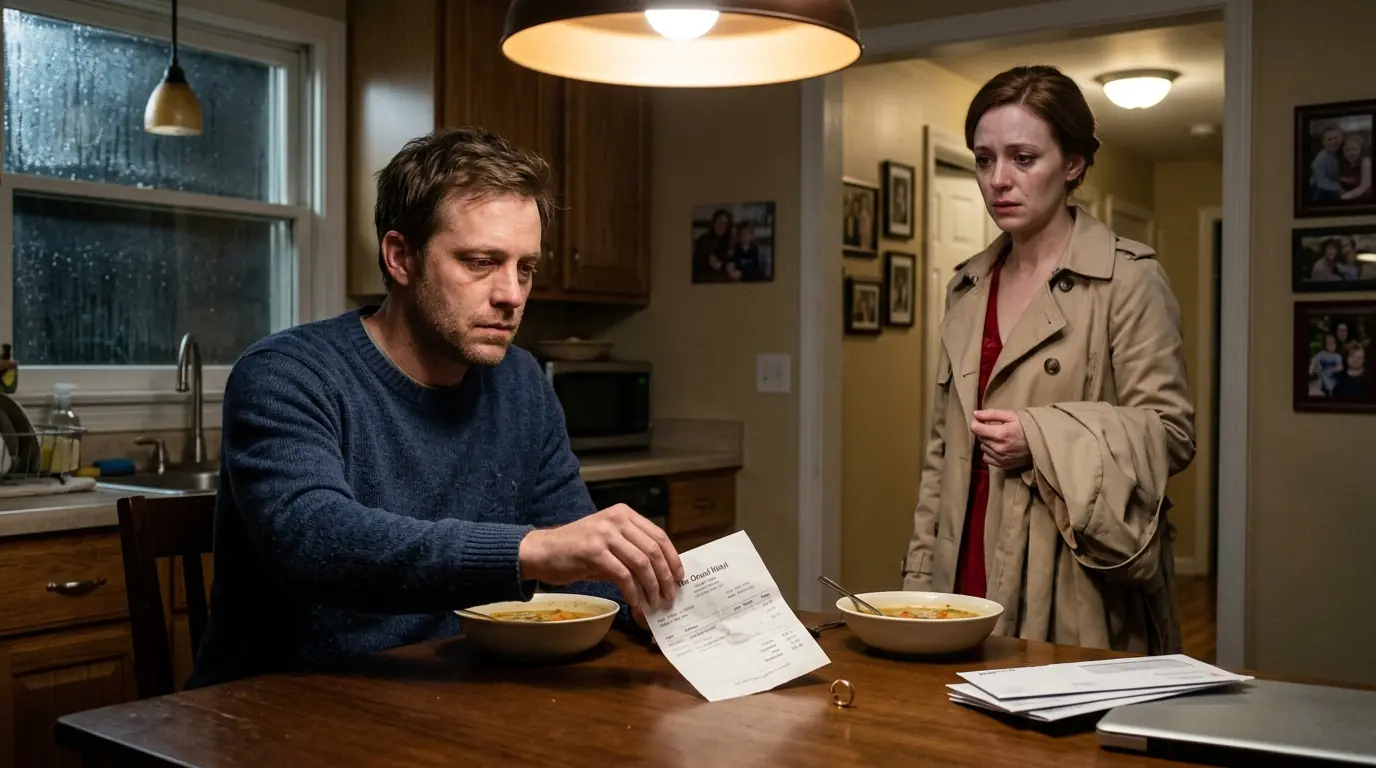
I Told My Husband I Was Working Late — Then He Put The Hotel Receipt Beside My Wedding Ring

"She Can't Speak Chinese," the Millionaire Laughed — Then the Entire Room Stood Up

A Cocky MMA Fighter Offered an Old Farmer $500 to Take Free Punches — Then Everything Changed

I Packed One Suitcase to Leave My Husband... But He Thought I'd Be the One Walking Away With Nothing

A Millionaire Mocked a Black Waitress With a $100K Bet — Her First Words Left Everyone Standing

My Husband Secretly Filed for Divorce the Day Before My Promotion... He Never Expected Me to Become His New CEO

CHAPTER 2: A Millionaire Mocked a Black Waitress With a $100K Bet — Her First Words Left Everyone Standing

My Future Father-in-Law Threw My Engagement Ring Away... He Had No Idea I Secretly Owned Everything He Was Trying to Protect
CHAPTER 3: A Millionaire Mocked a Black Waitress With a $100K Bet — Her First Words Left Everyone Standing
The Champion Shoved the Quiet Reader to the Floor — Then the Entire Gym Went Silent

A Millionaire Bet $100K a Black Waitress Couldn't Speak Chinese — Then the Whole Room Rose to Its Feet

A Poor Black Girl Sang at a Talent Show to Save Her Mom — She Never Knew One Judge Was Her Father
A Poor Black Girl Sang at a Talent Show to Save Her Mom — She Never Knew One Judge Was Her Father

My Husband's Phone Accidentally Played His Secret Voice Message... And It Destroyed Our Marriage

An MMA Kid Paid an Old Farmer $500 for Three Minutes of Free Punches — Then the Farmer Stood Up Straight

My Daughter-in-Law Called Me "Country Trash" at Her Luxury Wedding... She Had No Idea Who Had Actually Paid for It
News Post
"Dodge Just One Punch," the Boxer Smirked at the Old Janitor — Then the Gym Fell Silent
CHAPTER 2:"Dodge Just One Punch," the Boxer Smirked at the Old Janitor — Then the Gym Fell Silent
CHAPTER 3:"Dodge Just One Punch," the Boxer Smirked at the Old Janitor — Then the Gym Fell Silent
I Told My Husband I Was Working Late — Then He Put The Hotel Receipt Beside My Wedding Ring
"She Can't Speak Chinese," the Millionaire Laughed — Then the Entire Room Stood Up
A Cocky MMA Fighter Offered an Old Farmer $500 to Take Free Punches — Then Everything Changed
I Packed One Suitcase to Leave My Husband... But He Thought I'd Be the One Walking Away With Nothing
A Millionaire Mocked a Black Waitress With a $100K Bet — Her First Words Left Everyone Standing
My Husband Secretly Filed for Divorce the Day Before My Promotion... He Never Expected Me to Become His New CEO
CHAPTER 2: A Millionaire Mocked a Black Waitress With a $100K Bet — Her First Words Left Everyone Standing
My Future Father-in-Law Threw My Engagement Ring Away... He Had No Idea I Secretly Owned Everything He Was Trying to Protect
CHAPTER 3: A Millionaire Mocked a Black Waitress With a $100K Bet — Her First Words Left Everyone Standing
The Champion Shoved the Quiet Reader to the Floor — Then the Entire Gym Went Silent
A Millionaire Bet $100K a Black Waitress Couldn't Speak Chinese — Then the Whole Room Rose to Its Feet
A Poor Black Girl Sang at a Talent Show to Save Her Mom — She Never Knew One Judge Was Her Father
A Poor Black Girl Sang at a Talent Show to Save Her Mom — She Never Knew One Judge Was Her Father
My Husband's Phone Accidentally Played His Secret Voice Message... And It Destroyed Our Marriage
An MMA Kid Paid an Old Farmer $500 for Three Minutes of Free Punches — Then the Farmer Stood Up Straight