Nova’s Recovery After Giving Birth to Six Puppies in a Shelter
Reader Theme:
Font Size:
24px
Nova’s Recovery After Giving Birth to Six Puppies in a Shelter
PART 2 — CURRENT CONDITION UPDATE
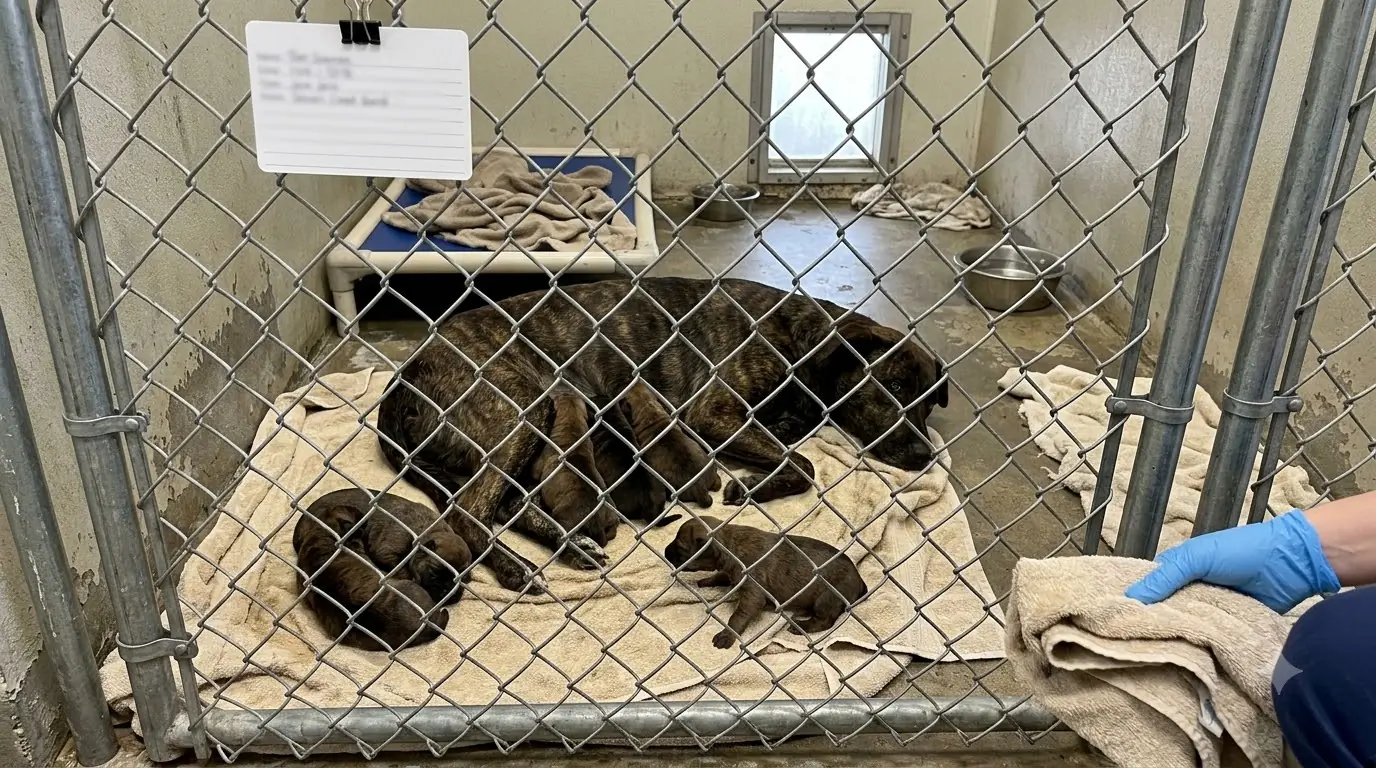
Nova and her six puppies are now staying in a private maternity room under close veterinary supervision. The room is warm, quiet, and separated from other animals to reduce stress and exposure to infection. The family is stable, but Nova’s recovery requires careful monitoring because the uterine infection discovered after delivery could have become life-threatening without treatment.
Veterinarians diagnosed Nova with postpartum metritis, an infection and inflammation of the uterus that can develop after a difficult delivery. Retained placental tissue was considered the most likely cause, although ultrasound could not identify every small piece clearly. Her fever, dehydration, poor appetite, abnormal uterine fluid, and trembling all supported the diagnosis.
Bloodwork showed a significant inflammatory response. Nova’s white blood cell count was elevated, and several values suggested that her body was under substantial stress. She was mildly anemic but did not need a transfusion. Her kidney and liver measurements remained acceptable, allowing the medical team to begin treatment immediately.
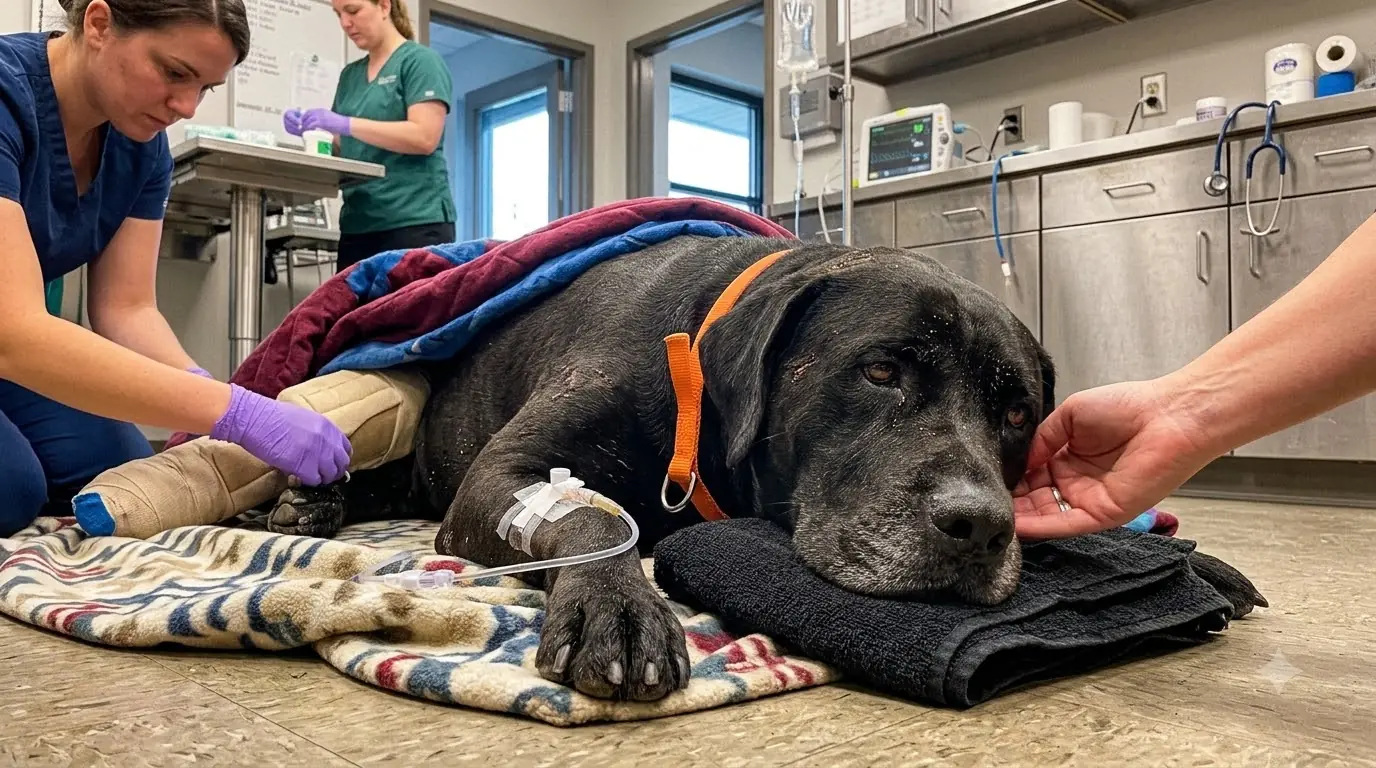
Nova received intravenous fluids to correct her dehydration and support circulation. A broad-spectrum antibiotic was selected that could treat the suspected uterine infection while remaining appropriate for a nursing mother. The veterinarian also chose pain medication carefully so the puppies would not be exposed to an unsafe amount through her milk.
Because the delivery had occurred only hours earlier, medication was administered under veterinary supervision to help the uterus contract and clear remaining material. Nova was monitored continuously for discomfort, excessive bleeding, weakness, and changes in heart rate. Surgery was kept as an emergency option if she failed to respond or if the infection spread.
During her first night in treatment, Nova remained curled around the puppies despite her fever. She lifted her head whenever a technician entered and attempted to cover the litter with her front legs. She did not growl or snap, but her body became rigid whenever someone reached toward them.
The staff avoided separating the family unnecessarily. Examinations were performed beside Nova whenever possible, and each puppy was returned immediately after being weighed. One technician stayed near Nova’s head, offering small pieces of food and speaking quietly while another checked the puppies.
Nova refused her first two meals. She smelled the food but turned back toward the litter without eating. Because producing milk for six puppies requires substantial energy and fluid, her lack of appetite was a serious concern.
The team offered warm, calorie-dense food formulated for nursing dogs. A shallow bowl was placed close enough for Nova to eat without leaving the puppies. She eventually accepted several bites from a technician’s hand and then finished a small portion on her own.
By the following morning, her temperature had begun to fall. She stood to drink water and went outside briefly with assistance. Her gait was slow and unsteady, but she returned directly to the maternity bed and counted the puppies with her nose before lying down.
Repeat bloodwork showed that the inflammatory values remained elevated but were no longer worsening. A second ultrasound revealed less fluid within the uterus, and there was no sign of rupture or free fluid in her abdomen. These findings suggested that the medication and supportive care were beginning to work.
Nova’s fever has now resolved, though she remains on antibiotics and is not considered fully recovered. Metritis can return or worsen if infected material remains, so the veterinary team continues checking her temperature, appetite, hydration, uterine discharge, and abdominal comfort several times each day.
If her fever returns, her blood values deteriorate, or ultrasound shows persistent abnormal tissue, Nova may need surgery to remove the infected uterus. The team hopes to avoid an emergency operation while she is weak and actively nursing, but her safety will take priority if medical management stops working.
Nova is now eating four smaller meals throughout the day. Nursing mothers need considerably more calories than ordinary adult dogs, but suddenly feeding a large amount could upset her stomach. Her portions are being increased gradually according to her appetite, body weight, and milk production.
Warm water is mixed into every meal to support hydration. She also has constant access to fresh water in a stable bowl that cannot be tipped into the bedding. Nova drinks most readily immediately after the puppies finish nursing.
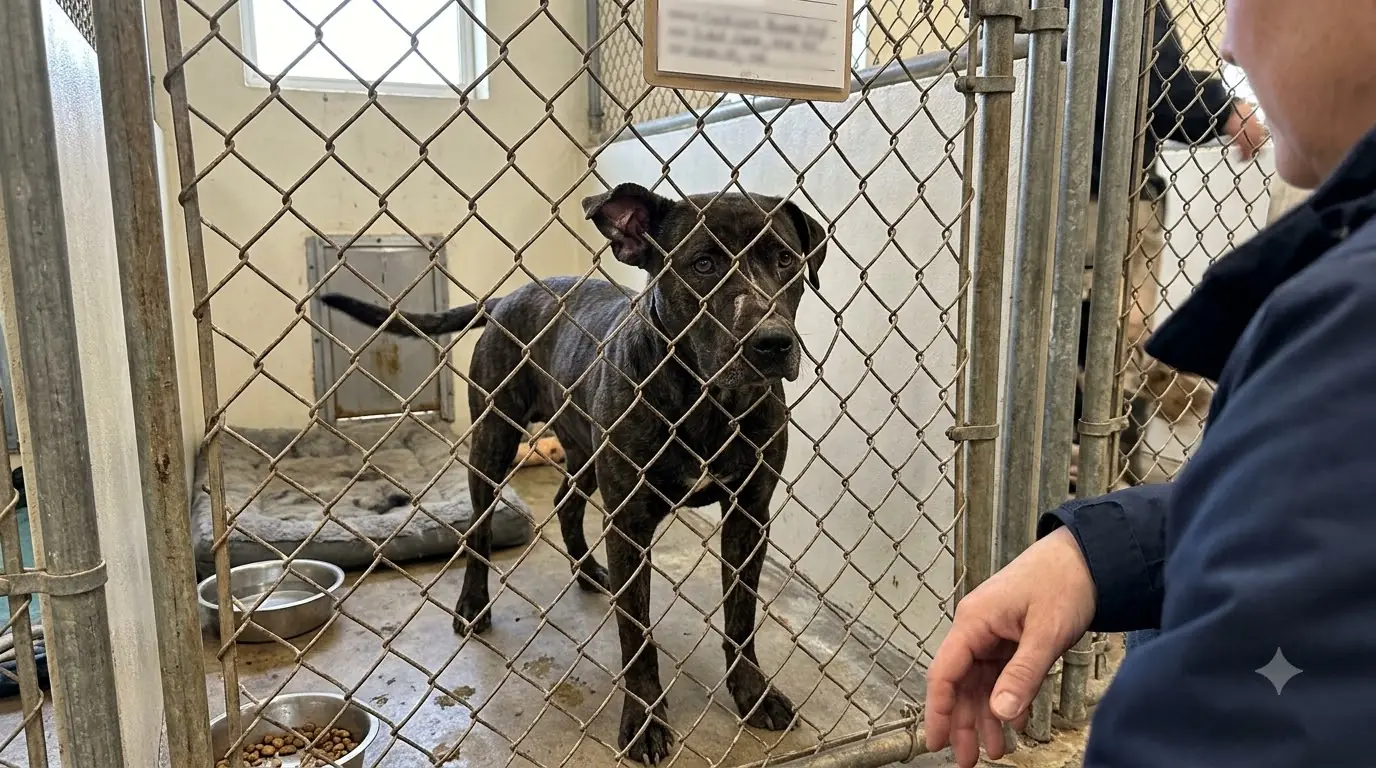
She is still underweight. Her ribs and hip bones can be felt too easily beneath her brindle coat, and she has little reserve muscle along her back. The veterinary team believes she had been struggling to find consistent food for weeks before she was discovered.
Despite her condition, Nova is producing milk from all functioning mammary glands. Each gland is examined daily for heat, hardness, swelling, discoloration, or pain that could indicate mastitis. So far, there is no evidence of a serious mammary infection.
One gland near her back leg became mildly firm after the puppies repeatedly favored the opposite side. A warm compress and guided nursing helped empty it. The firmness resolved, and Nova did not develop a new fever.
The puppies are rotated between nursing positions to make sure each one has access to milk and to reduce pressure on Nova’s most heavily used glands. Staff supervise several feedings each day but allow Nova to care for them naturally whenever she is comfortable.
All six puppies are weighed at the same time every morning using a digital scale. Newborn puppies cannot safely go long without gaining weight, and even a small loss may be the first sign that something is wrong. Their individual weights, nursing behavior, body temperature, and elimination are recorded.
Five puppies began gaining steadily after the first day. They crawl toward Nova as soon as she lies down, latch firmly, and settle into sleep after nursing. Their bodies remain warm and relaxed, and their bellies feel gently rounded rather than hard or swollen.
The smallest puppy, a female temporarily called Pip, required additional support. She was born noticeably lighter than her littermates and had difficulty maintaining a strong latch. When the larger puppies pushed against her, she tired quickly and slipped away from the nipple.
During the first examination, Pip’s temperature was slightly low and her blood sugar was near the lower limit of the safe range. She was warmed gradually before receiving food because feeding a chilled newborn can be dangerous. Once her temperature improved, she was given a carefully measured amount of supplemental formula.
Pip is not tube-fed routinely because she can swallow and nurse when given assistance. A veterinary technician places her at one of Nova’s fullest glands while the larger puppies are temporarily moved to the other side. The technician supports her body until she establishes a steady rhythm.
She receives supplemental feedings only as needed after nursing. The amount is calculated from her weight and adjusted to avoid overfilling her stomach. Her caregivers watch for coughing, milk near the nose, abdominal bloating, or difficulty breathing, which could indicate aspiration or improper feeding.
Pip lost a small amount of weight during her first day, but she has since begun gaining. Her progress remains slower than that of her siblings. She is still the weakest puppy and receives more frequent checks, including overnight monitoring.
A faint heart murmur was heard during Pip’s initial examination. Soft murmurs can occur temporarily in very young puppies as circulation changes after birth, but they can also indicate a congenital heart problem. At her current size, the veterinarian cannot determine the cause from the murmur alone.
Pip does not currently have blue gums, labored breathing, or fluid accumulation. She becomes tired sooner than the other puppies but recovers after resting against Nova. The medical team will listen to her heart regularly and schedule an echocardiogram if the murmur persists as she grows.
The other five puppies have normal heart and lung sounds at this stage. None has a cleft palate, obvious limb deformity, or visible umbilical infection. Their umbilical areas are drying normally, and their bedding is kept clean to reduce bacterial exposure.
Their eyes and ears remain closed, which is normal for newborn puppies. They navigate primarily through scent, warmth, and touch. When separated briefly for weighing, they crawl toward the sound and smell of Nova as soon as they are returned.
The puppies spend most of the day nursing and sleeping. Staff intervene only when necessary because uninterrupted rest is essential for growth. Handling is brief, gentle, and performed with clean hands.
The maternity room is maintained at a controlled temperature, with a safely positioned warming area covering only part of the enclosure. This allows the puppies to move away from the heat if they become too warm. Nova can also lie outside the heated section when she needs a break.
Overheating is avoided just as carefully as chilling. The puppies’ behavior helps guide adjustments: a tightly piled, restless litter may be cold, while puppies scattered far apart and crying can be too warm. At present, they usually sleep together in a loose, quiet group.
Nova has begun leaving the bed voluntarily for short periods. During her first day, she resisted every attempt to take her outside and had to be encouraged with a leash and food. She would eliminate quickly, then pull toward the maternity room.
She now walks calmly to the small enclosed relief area several times a day. She spends a few moments smelling the grass before returning inside. These breaks allow her to stretch, drink, eat, and rest away from the constant demands of nursing.
Her hind legs occasionally tremble when she stands for too long. Blood tests showed that her calcium level was within the normal range, so there was no evidence of eclampsia at the time of testing. However, nursing six puppies can rapidly increase calcium demands, and the team continues watching closely.
Restlessness, heavy panting, a stiff gait, facial twitching, worsening tremors, fever, or seizures could indicate dangerously low calcium and would require emergency treatment. Nova is receiving a balanced diet designed for growth and lactation rather than unmonitored calcium supplements, which can create other problems when used incorrectly.
Her physical strength is slowly returning. She can now rise without assistance and walk to the door without stumbling. The trembling has decreased and usually appears only after a long nursing session.
Nova’s coat remains rough and thin in several places. She had fleas when rescued, along with minor scabs around her tail and lower back. The veterinary team used parasite control considered appropriate for a nursing mother and cleaned the irritated areas gently.
There are no deep wounds or severe skin infections. The scabs are drying, and Nova scratches less often. Full coat recovery will depend on consistent nutrition and time, particularly while so much of her energy is being directed toward milk production.
Her nails were long enough to catch in the blankets. They were trimmed gradually to avoid cutting sensitive tissue that had extended within them. Keeping the nails short also reduces the chance that she will accidentally scratch a puppy while repositioning herself.
Emotionally, Nova remains intensely protective but is becoming more trusting. Her behavior is not treated as disobedience. She gave birth in an unfamiliar place after surviving outdoors, and every instinct tells her to keep the puppies close.
The maternity team limits the number of people entering the room. The same caregivers provide most meals, medication, bedding changes, and puppy checks. Predictability has helped Nova understand that handling does not mean a puppy is being taken away.
During early examinations, she kept her head directly above the puppy being handled. She watched every movement and repeatedly touched the technician’s wrist with her nose. If the puppy cried, Nova attempted to stand immediately.
Caregivers now show her the puppy before lifting it and keep the newborn within her sight. Nova’s body stays more relaxed, and she sometimes continues nursing the remaining puppies while one is weighed nearby.
Pip’s care initially caused the greatest anxiety. Because the smallest puppy needed extra warming and feeding, she was handled more often than the others. Nova followed the technician’s hands and became restless whenever Pip was moved away from her chest.
A portable warming pad was placed beside the maternity bed so most of Pip’s support could occur within Nova’s reach. Nova can smell and touch her throughout the process. This adjustment reduced her pacing and allowed Pip to receive care without repeatedly upsetting the mother.
Nova has started seeking reassurance from her caregivers. When the room is quiet, she rests her chin on the edge of the bed and accepts gentle strokes along her cheek. She sometimes closes her eyes while a familiar technician sits beside her.
One afternoon, Nova left the puppies sleeping in a warm pile and walked three steps toward her foster caregiver. She leaned against the caregiver’s knee for several seconds before returning to the bed. It was the first time she had voluntarily moved away from the litter to request contact.
At night, a camera allows the medical team to observe the family without entering repeatedly. Nova changes position carefully and checks the puppies before settling. If one becomes trapped behind her, she responds to its cries and shifts her body.
She is attentive but still inexperienced. Staff have occasionally helped when she lay down too close to the smallest puppy or moved before all six had finished nursing. These corrections are performed calmly so Nova does not associate human presence with danger.
The family will remain together throughout the nursing period unless a medical emergency requires separation. The puppies depend on Nova not only for nutrition but also for warmth, stimulation, and early behavioral development.
As they grow, their needs will change quickly. Their eyes are expected to open at roughly two weeks of age, and they will begin moving around the enclosure more purposefully soon afterward. The maternity area will be expanded gradually while keeping it safe and easy for Nova to enter and leave.
The puppies will receive veterinarian-directed deworming and vaccinations at the appropriate ages. They will not be exposed to public ground or unfamiliar dogs while their immune protection remains incomplete.
When they are old enough, they will begin a controlled socialization program involving gentle handling, safe household sounds, different surfaces, and brief positive interactions. The goal is to prepare them for family life without overwhelming them.
Pip’s development will be evaluated separately rather than simply compared with her larger siblings. If her heart murmur disappears and she continues gaining weight, she may follow the same schedule with minor adjustments. If the murmur persists, her vaccinations, activity, and future placement may need to be coordinated with a cardiologist.
Nova’s next ultrasound is scheduled after she completes several more days of antibiotics. The veterinarian will check whether the uterine fluid has continued to decrease and whether any suspicious tissue remains.
Her bloodwork will also be repeated. A falling white blood cell count, stable red blood cell count, normal organ values, and continued absence of fever would support ongoing medical treatment. Worsening values could indicate that the infection has not been fully controlled.
If Nova requires surgery, the team will make arrangements to maintain the puppies’ feeding schedule while she recovers. Depending on her condition and medications, supervised nursing may still be possible, or the litter may need temporary bottle and tube-feeding support.
The preferred outcome is for Nova to recover without emergency surgery and remain with her puppies until they are naturally weaned. Once the litter no longer depends on her milk and she is medically stable, she will be spayed to prevent another pregnancy and eliminate the risk of future uterine infection.
Nova will not be available for adoption until she has recovered fully, completed the nursing period, and had time to adjust emotionally after separation from the puppies. Mother dogs are often adopted later than their puppies, but our commitment to her will not end when the litter leaves.
Each puppy will also remain in care until old enough for adoption, appropriately vaccinated, and individually assessed. Their future homes will be chosen according to temperament and needs rather than appearance alone.
For now, Nova’s temperature is normal, her appetite is improving, and she is producing enough milk to support the litter with limited supplementation. Five puppies are gaining steadily, while little Pip continues making slower but measurable progress.
The family is not entirely out of danger. Nova’s uterine infection requires continued treatment, and Pip’s low birth weight and heart murmur remain important concerns. Newborn puppies can decline quickly, so every feeding and weight check still matters.
But Nova no longer has to give birth beneath an abandoned loading dock or protect her puppies without food, warmth, or help. She can sleep while someone else watches over them.
Her six puppies are warm, fed, and close to their mother. Nova is receiving the medical care she needs, and for the first time since the family was discovered, she does not have to keep everyone alive alone.