Molly Arrives With Almost No Reserve Left
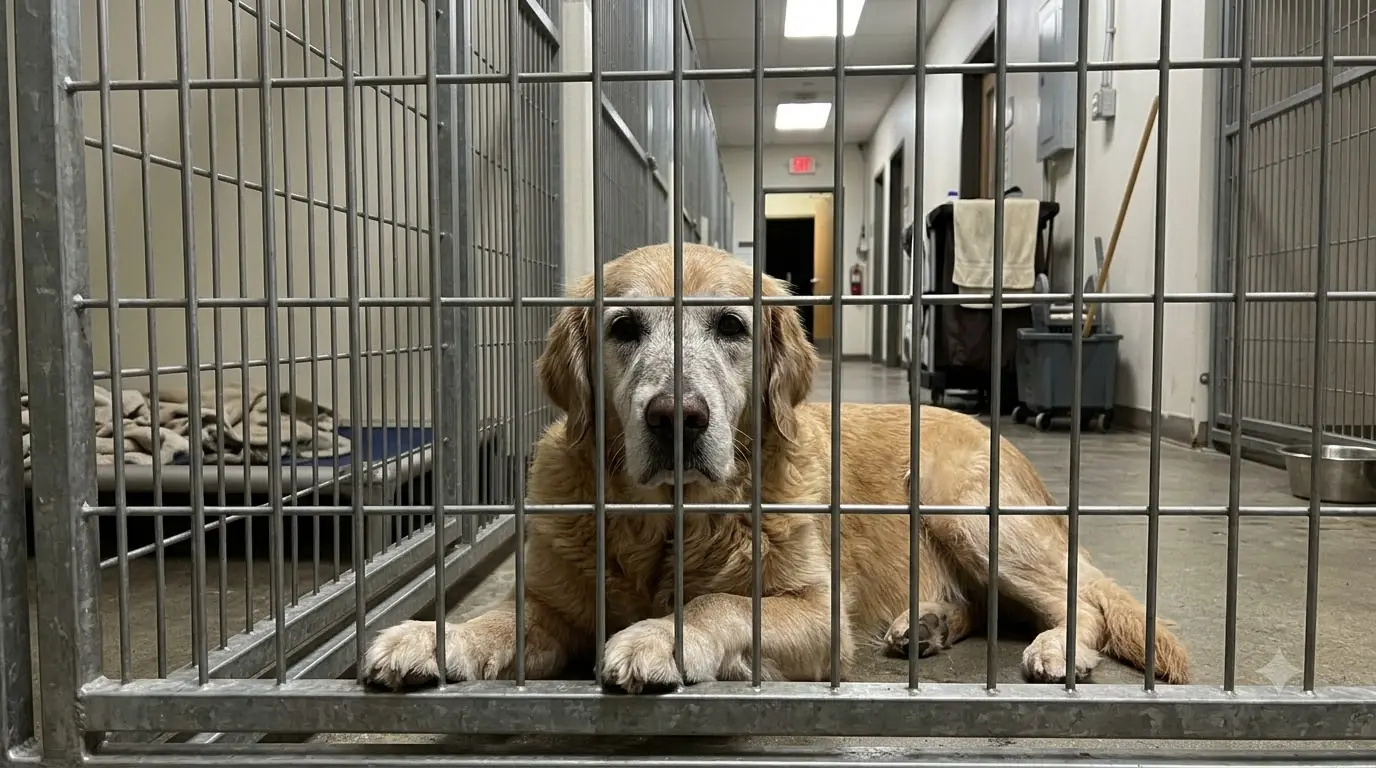
When Molly first arrived at the shelter, her condition was immediately concerning.
The 6-year-old Beagle mix was extremely thin.
Her ribs were easy to see.
Her waist was sharply defined.
Muscle loss was especially noticeable around her hips and hindquarters.
Several areas of her coat were missing, and the exposed skin underneath looked irritated.
Some patches were red.
Others were flaky.
Molly did not appear interested in exploring.
She walked only as far as necessary before lowering herself onto the bed prepared for her.
Staff placed food and water close by because even short movement seemed to tire her.
The First Priority Was Stability
Molly was not treated as though she simply needed to “eat more.”
Severe weight loss can have many causes.
Poor nutrition is one.
Parasites are another.
Chronic infection, dental disease, gastrointestinal illness, endocrine disease, kidney problems, liver problems, cancer, and other conditions can all contribute.
Her irritated skin added another layer.
That could reflect parasites, infection, allergies, nutritional deficiency, or several of those problems together.
The rescue did not assume a cause based on appearance.
Molly needed a full veterinary evaluation.
Her Initial Examination
At the clinic, Molly was quiet but responsive.
Her body-condition score confirmed that she was significantly underweight.
She was mildly dehydrated.
Her gums were paler than ideal.
Her heart rate was elevated, though she was also stressed by the unfamiliar environment.
Her lungs sounded clear.
Her abdomen was mildly uncomfortable during palpation, but there was no obvious large mass.
Her skin required closer examination.
The veterinary team collected samples from several irritated areas and also performed testing for external parasites where appropriate.
Her Skin Was More Than Dry
Cytology showed a notable bacterial component consistent with secondary superficial pyoderma.
That meant Molly had a skin infection.
The infection could be treated, but it did not necessarily explain why the skin had become unhealthy in the first place.
The team also considered whether poor nutrition and an underlying parasite burden had weakened her skin barrier.
Because Molly’s body had so few reserves, every problem affected the others.
Poor nutrition could worsen skin quality.
Skin inflammation could make rest more difficult.
Parasites could worsen anemia.
Weakness could reduce appetite.
The treatment plan had to address the full picture.
Bloodwork Adds Another Concern
A complete blood count confirmed that Molly was anemic.
The anemia was moderate.
It was significant enough to contribute to fatigue, but she was not in immediate need of an emergency transfusion based on her overall stability and laboratory values.
Her chemistry panel showed changes consistent with dehydration and poor nutritional condition.
Importantly, there was no evidence of advanced kidney or liver failure.
That was encouraging.
But the team still needed to know why she was losing nutrients and why her red blood cell count was low.
Parasite Testing
A fecal examination identified intestinal parasites, including hookworms.
That finding mattered.
Hookworms can contribute to intestinal blood loss, anemia, weakness, poor body condition, and gastrointestinal upset.
Molly was started on an appropriate deworming protocol.
Follow-up treatment would be needed because parasite life cycles can require more than one dose.
Shelter sanitation became part of her medical plan as well.
Bedding was changed regularly.
Feces were removed promptly.
Her kennel was cleaned carefully to reduce the chance of environmental reinfection.
Feeding Had to Be Slow
Molly looked hungry.
That did not mean it was safe to place a huge bowl in front of her and let her eat without limits.
Her body had been operating with very little reserve.
The veterinary team developed a gradual nutritional plan using a complete, highly digestible diet.
She received several small meals throughout the day.
That approach helped staff monitor tolerance.
They watched for vomiting.
Diarrhea.
Abdominal discomfort.
Refusal to eat.
Changes in stool.
The goal was steady nutritional restoration without overwhelming her digestive system.
Food Stayed Beside the Bed
During the first days, Molly’s bowl was placed directly beside her bed.
She did not need to cross the kennel to reach it.
Sometimes she ate half.
Sometimes less.
Some meals interested her more than others.
Staff recorded every portion.
Her appetite was not absent.
She simply seemed to run out of energy.
That difference mattered.
The Evening She Fell Asleep Beside the Bowl
One evening, Molly was offered another small meal.
She lifted her head when the food arrived.
Then she slowly stood.
She ate several bites.
After a minute, she stopped.
Molly looked at the bowl again but did not continue.
Instead, she lowered herself to the floor.
She curled beside the dish.
Her head rested only inches away from the food.
Then she closed her eyes.
A worker checking the kennel saw her asleep there.
There was no reason to wake her.
The meal had been measured.
Her intake had been documented.
The worker left her resting quietly.
The Empty Bowl
The next morning, staff entered expecting to remove another partially finished meal.
Instead, the bowl was empty.
Molly was sleeping beside it.
At some point during the night or early morning, she had gotten up and finished what remained.
When she heard someone moving outside the kennel, Molly did not stand.
She barely lifted her head.
But her tail moved once.
A tiny wag.
Then another.
It was not a dramatic transformation.
It was not evidence that she was suddenly healthy.
It was simply a small sign that her appetite and awareness were beginning to return.
Treating the Parasites
Molly continued her veterinarian-prescribed deworming plan.
Because the hookworm burden had contributed to her anemia, repeat bloodwork was scheduled.
The team needed to know whether her red blood cell count would stabilize once the intestinal blood loss was controlled.
She was also placed on appropriate preventive care moving forward.
One successful treatment would not protect her forever.
Future parasite prevention would be essential.
Treating the Skin Infection
Molly began treatment for the bacterial skin infection as well.
Topical therapy was used where practical.
Her skin was kept clean and dry.
Medicated bathing was introduced carefully only when she was strong enough to tolerate it without becoming chilled or exhausted.
The team avoided unnecessary handling during the earliest days.
Her body needed rest.
Her Appetite Improves Slowly
Over the next several days, Molly began finishing more meals.
Not every bowl was empty.
But the pattern was changing.
She spent less time staring at the food without eating.
She returned to meals more often.
Her water intake normalized as her hydration improved.
She urinated regularly.
Her bowel movements remained soft during the early phase of parasite treatment and dietary adjustment.
That was monitored closely.
Persistent diarrhea could have worsened dehydration and nutrient loss.
Fortunately, her stools began becoming more formed.
A More Detailed Gastrointestinal Assessment
Because Molly’s body condition had been so poor, the veterinary team remained cautious about assuming parasites explained everything.
Her abdomen was rechecked.
Additional testing was considered based on her response to treatment.
At this stage, there was no evidence of an obstructive process or a mass requiring surgery.
Her improving appetite, stabilizing stool, and early laboratory trends supported continuing conservative medical treatment.
That was encouraging.
Repeat Bloodwork
A follow-up complete blood count showed that Molly’s anemia had stabilized.
Her red blood cell measurements were not normal yet.
But they were no longer moving in the wrong direction.
That was an important milestone.
Her hydration-related abnormalities also improved.
The veterinary team continued treatment.
Recovery from anemia takes time.
Molly’s body needed to rebuild cells gradually.
The Scale Begins to Move
Molly was weighed regularly.
At first, the goal was simply to stop further loss.
Then the number on the scale began increasing.
A small gain.
Then another.
Her ribs were still visible.
Her hips remained prominent.
But the trend mattered.
Nutritional rehabilitation is not supposed to transform a severely underweight adult dog overnight.
Molly’s team wanted steady improvement.
Her Skin Starts Looking Different
The skin changed too.
The red areas became less inflamed.
Flaking decreased.
Molly scratched less often.
Hair did not immediately return.
That was expected.
Coat regrowth lags behind control of inflammation.
The first visible signs were small, soft areas of new growth around the edges of previously thin patches.
Staff photographed the areas during rechecks so they could compare progress rather than rely on memory.
The Infection Responds
At a later dermatologic recheck, the secondary bacterial infection had improved significantly.
There were fewer active lesions.
The skin looked calmer.
The team continued monitoring for recurrence.
If itching or hair loss returned after the infection resolved, additional workup for underlying allergies or other chronic skin disease could be considered.
For now, the priority remained getting Molly physically stronger.
Strength Returns Before Confidence
Molly’s earliest physical improvement was subtle.
She began standing when food arrived.
Then she started walking to the front half of the kennel instead of waiting for staff to bring everything directly to her.
Her movements were still slow.
But she no longer seemed exhausted by every small task.
The shelter team did not push her to exercise.
Her body had been depleted.
Activity needed to return gradually.
Bathroom Habits Become More Normal
Molly could urinate without assistance.
Her bowel movements became increasingly regular as her gastrointestinal system stabilized.
Handlers gave her short bathroom breaks on leash.
At first, she wanted to return inside quickly.
Later, she began sniffing the grass.
That was one of the first behavioral signs that her world was expanding beyond food and sleep.
Her Nose Comes Back Online
As Molly gained strength, her Beagle characteristics became much easier to recognize.
Her nose became busy.
She sniffed blankets.
She sniffed staff shoes.
She sniffed the food cart from a surprising distance.
During bathroom walks, she sometimes forgot she was supposed to be moving because one patch of grass became extremely important.
The shelter did not mind.
Curiosity was a good sign.
A Small Setback
About two weeks into recovery, Molly had a day when she ate less than usual.
She also seemed more tired.
Given her history, the team did not assume it was harmless.
Her temperature was checked.
Her hydration was reassessed.
The veterinarian examined her abdomen.
There was no evidence of a new emergency.
Her stool remained formed.
She was monitored closely and offered smaller portions.
By the following day, her appetite improved again.
The episode was a reminder that recovery does not move upward every day.
A More Predictable Routine
Molly began learning the shelter schedule.
She knew when breakfast was coming.
She recognized familiar voices.
She stood when certain workers approached.
Her tail began wagging more frequently.
The first tiny movement beside the empty bowl became less unusual.
Soon, staff could get several slow wags simply by entering the room.
Moving Into Foster Care
Once Molly was medically stable enough, she transitioned into foster care.
The foster home was quiet.
A bed was placed near the living room but not directly in the busiest pathway.
Food and water were easy to reach.
Her foster caregiver was experienced with recovering adult dogs and understood that Molly still needed careful monitoring.
The first evening was uneventful.
Molly explored several feet.
Found the bed.
Found the water.
Then discovered where food preparation occurred.
That location became very important.
Her First Full Week in a Home
Molly settled into household life quickly.
She slept a great deal.
But now she also moved around between naps.
She followed her foster caregiver into the kitchen.
She investigated the backyard.
She rested near the sofa.
Her appetite continued improving.
Meals were still measured carefully.
The rescue wanted to restore healthy body condition without creating unnecessary weight gain once her appetite fully returned.
Eating Becomes Normal
Within several weeks, Molly no longer needed food placed beside her bed.
She walked to the feeding area.
She ate standing.
She usually finished.
Sometimes she inspected the empty bowl afterward as though verifying that nothing had been forgotten.
Her foster caregiver began using part of her daily food allowance in simple scent games.
Molly loved them.
A Beagle mix whose world had once narrowed to exhaustion and half-finished meals now had enough energy to search for food on purpose.
Weight and Muscle Are Different
Molly gained body weight before she regained full muscle.
That was expected.
Rebuilding muscle requires time and appropriate movement.
Once her veterinary team was satisfied that her anemia and systemic condition were improving, short walks were introduced.
The distance was modest.
The pace was slow.
Molly mostly wanted to sniff.
That suited rehabilitation perfectly.
Her Walks Get Longer
Over time, Molly tolerated longer outings.
Her stride became more confident.
She no longer seemed drained after a few minutes.
Her hips and shoulders gradually gained more muscle.
The foster caregiver watched for signs of fatigue.
If Molly slowed significantly, the walk ended.
There was no reason to turn recovery into an endurance test.
Follow-Up Laboratory Testing
Another blood test showed continued improvement in Molly’s anemia.
Her values were approaching the expected range.
There was no evidence of ongoing significant blood loss.
The parasite treatment had been effective, supported by follow-up fecal testing according to the veterinary schedule.
Her chemistry values remained stable.
The team was pleased.
Her Body Condition Improves
Molly eventually reached a healthier weight.
Her ribs were no longer sharply visible.
Her waist remained appropriate.
Her coat filled in across many of the previously bare patches.
Some areas took longer than others.
Her skin remained calmer.
The rescue avoided declaring the problem permanently solved.
Skin disease can recur.
But Molly was comfortable.
That mattered.
Her Behavior Around People
Molly became increasingly affectionate.
She did not rush strangers.
Familiar people received the strongest reactions.
When her foster caregiver returned home, Molly often walked over with her tail moving.
She liked neck scratches.
She liked sitting beside someone.
She liked food considerably more than either of those things.
Her personality was gentle, curious, and increasingly playful.
She Discovers Toys
At first, Molly ignored toys.
Then one afternoon, she sniffed a soft stuffed toy.
She carried it several feet.
Dropped it.
Returned.
Picked it up again.
That small interaction surprised her foster caregiver because Molly had spent so much of her first weeks conserving energy.
Soon, the toy occasionally appeared in her bed.
It became another sign that survival was no longer consuming all of her attention.
Her Sleep Looks Different
Molly still slept beside her food area occasionally.
But the meaning had changed.
She was no longer collapsing beside a meal she could not finish.
Sometimes she simply liked that spot.
More often, she chose the soft bed in the living room.
She stretched out.
She rolled partially onto her side.
She slept deeply through household sounds.
Rest had become ordinary.
What Caused Her Condition?
Molly’s medical findings explained much of what staff saw at intake.
Hookworms contributed to anemia and nutritional loss.
The bacterial skin infection contributed to discomfort.
Poor body condition and dehydration amplified her weakness.
But those diagnoses did not tell us how Molly came to be in that state.
We did not have a verified history establishing deliberate neglect or abandonment.
We would not invent one.
Medical facts can explain what a dog needs without proving how the condition developed.
Preparing Molly for Adoption
Once Molly’s body condition, bloodwork, stool, and skin had stabilized, adoption planning began.
Her future family would receive full medical records.
Routine parasite prevention would remain essential.
Her skin would need monitoring.
If hair loss or itching returned, she would need veterinary evaluation rather than automatically repeating old treatment.
Her weight should remain healthy.
Given her Beagle appetite, portion control would matter.
The Kind of Home She Needed
Molly did not need an unusually specialized household.
She needed consistency.
Regular veterinary care.
Measured meals.
Moderate exercise.
A family who would pay attention if her appetite suddenly changed.
She enjoyed people.
She settled indoors.
She liked sniffing walks.
She was capable of resting independently.
She would likely do best with people who appreciated a calm adult dog rather than expecting nonstop activity.
Another Empty Bowl
One morning in foster care, Molly finished breakfast before her caregiver had finished making coffee.
She sat beside the empty bowl.
Her caregiver looked over.
Molly’s tail started wagging.
Not one tiny movement.
A full, steady wag.
The caregiver laughed.
The scene looked ordinary.
That was exactly what made it meaningful.
Her Final Major Recheck
At a later veterinary recheck, Molly’s body condition was healthy.
Her hydration was normal.
Her gums had better color.
Her anemia had resolved to a clinically acceptable range.
Her stool was normal.
Follow-up parasite testing was reassuring.
Her skin showed no active widespread infection.
Hair had regrown substantially.
No new systemic problem had appeared.
Molly could transition to routine care.
Molly Today
Molly eats normally.
She drinks normally.
She urinates and defecates normally.
Her weight is healthy.
Her muscle condition has improved.
Her skin is comfortable.
Her coat has largely filled back in.
She walks with good energy.
She enjoys sniffing outdoors.
She plays occasionally.
She sleeps deeply.
And she still takes breakfast very seriously.
The Bowl Everyone Remembers
There were many medical milestones in Molly’s recovery.
The stabilized blood count.
The parasite treatment.
The skin improvement.
The weight gain.
The return of muscle.
But staff still remember one ordinary bowl.
One evening, Molly ate only a few bites.
Then she curled up beside the food and closed her eyes.
The next morning, the bowl was empty.
Molly was asleep beside it.
When she heard someone outside the kennel, her tail moved once.
That tiny wag did not mean everything was fixed.
It meant something had changed.
Her body had found enough strength to finish the meal.
From Barely Eating to Looking for Breakfast
Today, Molly does not need food carried to the edge of her bed.
She hears breakfast being prepared and walks toward it.
She waits.
She eats.
She finishes.
Then, in very typical Beagle fashion, she checks whether breakfast might somehow happen twice.
Her caregivers smile.
But they also remember what that appetite once looked like.
Several bites.
A tired body.
A head on the floor.
A bowl left unfinished.
Recovery took veterinary care, deworming, treatment for infection, careful feeding, bloodwork, monitoring, foster care, and time.
There was no single miracle.
There were dozens of small improvements.
The first empty bowl was simply one of them.
What Comes Next
Molly’s future is now centered on maintenance rather than crisis.
She will need routine veterinary examinations.
Consistent parasite prevention.
A balanced diet.
Healthy weight.
Regular exercise.
Monitoring for recurrent skin problems.
And the same ordinary attention every companion animal deserves.
If her appetite changes significantly, her family will notice.
If her skin becomes irritated again, they will act.
If her energy suddenly falls, it will matter.
Molly no longer needs everyone watching to see whether she can finish one meal.
But the people around her have learned the value of noticing.
That may be one of the most important things her rescue taught us.
The first morning Molly’s bowl was empty, she did not stand up and celebrate.
She stayed curled beside it.
She heard someone moving outside.
And her tail gave one tiny wag.
That was enough to tell us she was still tired.
But she was beginning to come back.