The first thing Leo Gallagher learned about the desert was that the cold could be as cruel as the heat. People who had never spent a night alone in the country west of Kingman imagined an endless oven, a place where the sun burned everything it touched and never let go.
They did not know how quickly a cloudless sky could steal warmth after sunset, or how a teenager with a bruised rib cage and a damp shirt could lie awake shaking on a concrete floor while the stars looked down without pity.
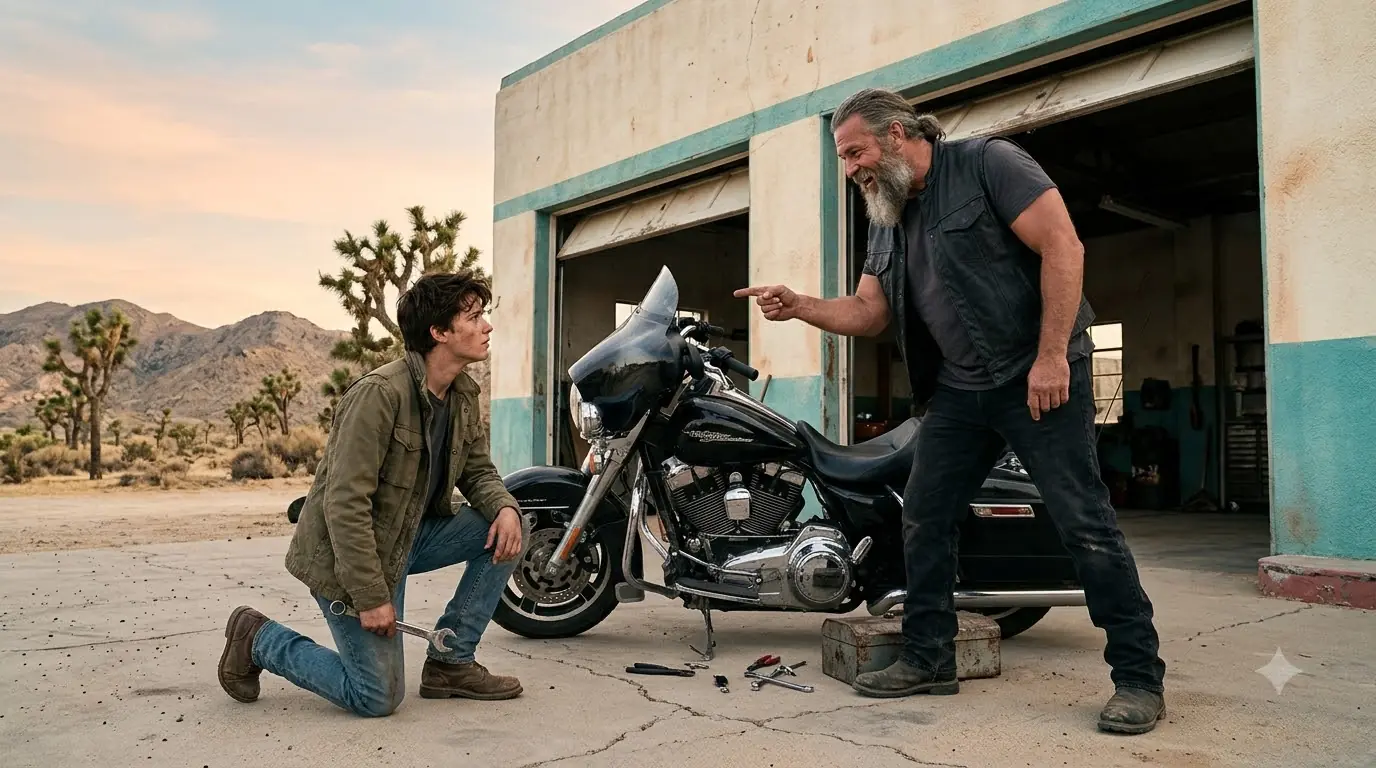
The second thing he learned was worse: thirst could make an ordinary sound, such as a truck moving along the highway, seem like the promise of rescue even when every instinct told him to hide.
He was seventeen years old, and for twenty-one days he had been trying to become invisible. He had no phone, no identification except a torn school card with a photograph taken when his face was fuller, and no money beyond three quarters folded into the lining of his shoe. His right shoe had separated at the toe, leaving a narrow mouth through which sand entered whenever he walked. His last real meal had been two days earlier, a hard roll and an apple taken from the trash behind a diner after the kitchen closed.
In the shadow of an abandoned Sinclair station, he tipped his canteen and listened to the shallow movement of water inside. The amount was so small he could hear individual drops slide across the aluminum bottom. He put it down without drinking. On the wall above him, letters from an old advertisement promised SERVICE WITH A SMILE, though the word SERVICE had lost most of its paint and the smiling face beneath the slogan had been worn blank by wind.
The station stood off a forgotten stretch of Route 66, almost forty miles from Kingman by road and farther than that from anything Leo considered safe. A collapsed awning lay over two dead pumps. The office windows were broken, the roof had settled unevenly, and the garage was filled with the remains of machines that had outlived their owners. In the wash behind the property were an overturned refrigerator, two gutted pickup trucks, a rusted bicycle, and an engine block half buried in sand.
For most people it was a place to avoid. For Leo it was the closest thing he had found to a workshop, and a workshop was the only place in the world where his hands knew what to do before his mind could talk him out of doing it.
His father had been a mechanic named Patrick Gallagher, a quiet man with thick fingers, scarred knuckles, and an almost comical respect for small parts. In Reno, where Leo spent his early childhood, Patrick had repaired motorcycles for men who arrived with expensive expectations and departed astonished that the soft-spoken man in the oil-stained coveralls could make an old machine sing. He built custom choppers when customers could afford them and repaired delivery vans when they could not. The rent was never early, but there was usually food, and Leo's father had made a habit of leaving a clean stool beside the workbench so his son could watch.