
She Saved a Desperate Father’s Motorcycle — Then Her Manager Fired Her
You're done. Pack your tools and get out of my garage. Emma Carter didn't flinch. She looked her manager dead in the eye, grease still on her hands, her heart still pounding from the work she'd just done, the work that saved a father's chance to reach his dying daughter. She didn't beg.
She didn't argue. She picked up her toolbox, walked through a garage full of men who said nothing, and stepped out into the freezing Chicago night alone. She had no job, no plan, and not a single regret. The storm had been building since 4 in the afternoon. By 7:00, the rain was coming down in sheets so thick you could barely see the street signs through the shop's front windows.
The neon light above the entrance of Meridian Auto flickered every time the thunder rolled close enough to shake the walls. It was the kind of Chicago October storm that made people want to lock their doors, pour something warm, and stay put until morning. Emma Carter had been under a 2019 Ford F-150 for the past 3 hours. She was 26 years old and she had been working at Meridian Auto for 4 years, 2 months and 11 days.
Not that she was counting, except she absolutely was, because every one of those days had cost her something. Her patience, her pride, occasionally her temper. The job was supposed to be a stepping stone. It had turned into a wall she kept throwing herself against, hoping one day it would give way.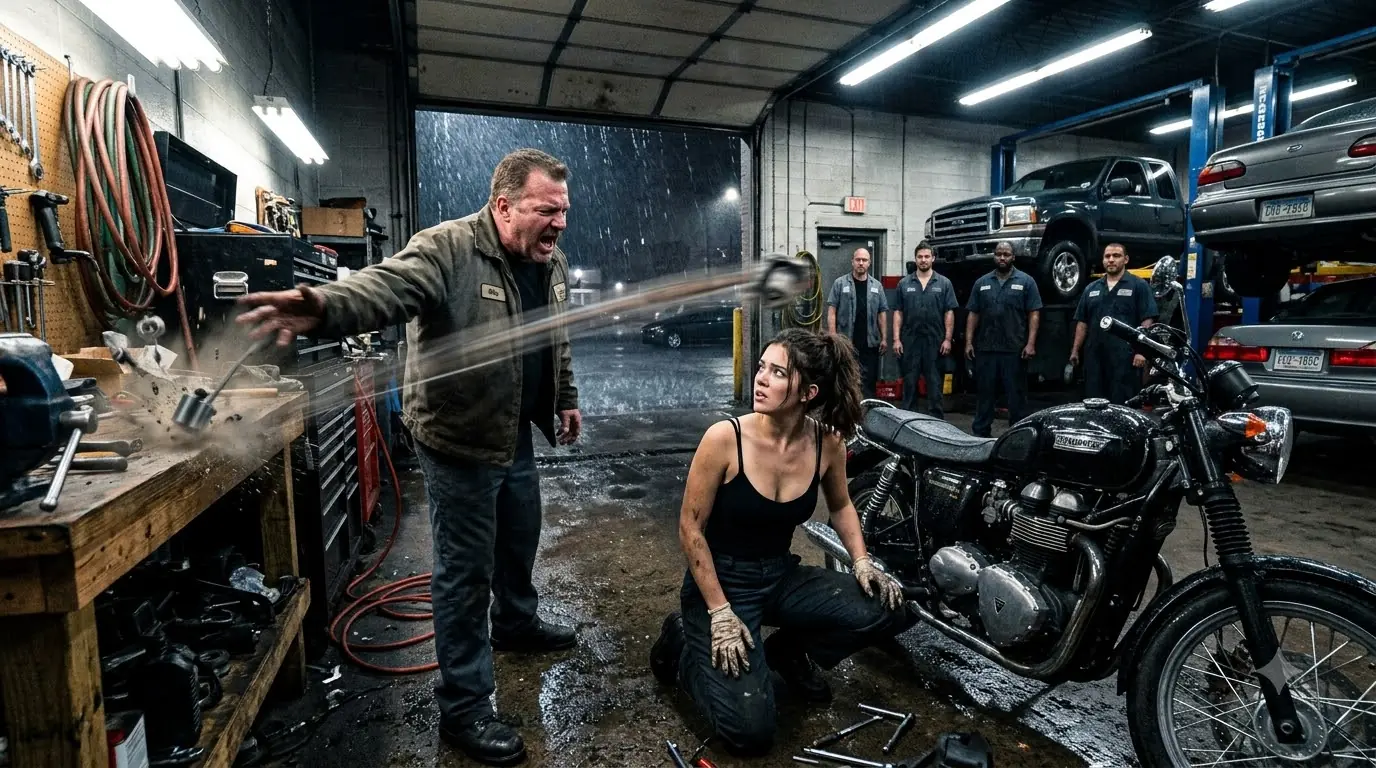
She was one of the best mechanics in that building. She knew it. The customers knew it. Even the men who mocked her knew it, which was exactly why they mocked her.
Carter, you missed a lug on bay 4, someone called out behind her. She didn't bother sliding out from under the truck. I didn't miss it. I left it loose on purpose so I could retorque it after the alignment settles, which you'd know if you'd done one in the last decade.
A round of low laughter from the bay. Not at her, at the guy who'd questioned her. That was the thing about Meridian Auto. The men there existed on a spectrum.
Some of them genuinely despised the idea of a woman running diagnostics better than they could. Some of them had slowly, grudgingly come to respect her. Most of them were somewhere in the middle, willing to work beside her, unwilling to stand up for her when it mattered. She had learned not to wait for anyone to stand up for her.
She had learned to stand up for herself and then just keep working. The truck was almost done. After this, she had one more oil change on the books, and then she was going home, making eggs, and sleeping for 10 hours. She had a plan.
The plan was simple. The plan was good. Then she heard the sound. It came through the rain before it came through the door.
A deep uneven rumble that no healthy engine made. Something mechanical was fighting hard to stay alive. She knew the sound the way a doctor knows a cough. Not just what it was, but what it meant, how serious it was, how much time was left before it became something worse.
She slid out from under the truck. The door swung open and a Harley-Davidson rolled through it, dripping rain, engine coughing, and shuddering, the exhaust pipe, putting out the wrong kind of smoke. The man riding it killed the engine and swung off in one motion. And when he stood up to his full height and turned around, every conversation in the garage stopped.
He was somewhere in his 50s, built like he'd spent that entire time doing something hard with his hands. His hair was gray, slicked back, and soaking wet. His beard was trimmed, but his arms were covered from wrist to shoulder in ink so dense it was hard to tell where one tattoo ended and another began. The leather vest he wore was dark with rain, but the patch across the back that was clear enough that everybody in the shop could read it.
Hell's Angels. The temperature in the room dropped 10° and it had nothing to do with the storm. Nobody moved. Not toward him, not toward the front desk.
Two mechanics near the back bay found something to look at on the floor. The guy at the service counter, 19-year-old Tyler, 3 weeks on the job, took a slow step backward like he was hoping the wall would absorb him. The man looked around the garage. He wasn't aggressive.
He wasn't posturing. He was looking for someone who would help him. And the looking cost him something she could see that even from 20 ft away. A man like this did not ask for help easily.
I need someone to look at my bike, he said. His voice was low and controlled, but there was something underneath it that he was working to hold down. Tonight, right now, silence. The service manager, a heavyset man named Doug Parsonss, who had been running Meridian Auto for 11 years and who had, in Emma's professional opinion, peaked sometime around year three, stepped forward with both hands raised like he was trying to calm a situation that hadn't actually become one yet.
Sir, we're we're pretty backed up tonight. The storm's got us running behind and we're looking at closing in about 40 minutes. So, if you want to leave the bike, we can probably get to it sometime next. I can't leave the bike.
The man's jaw tightened. I need it tonight. Sir, I understand, but our policy. My daughter is in the hospital.
Doug stopped talking. She was in a car accident this afternoon. The man's voice stayed controlled, but the effort it was taking now was visible in every line of his face. She's 17.
They're not sure. They don't know if she's going to wake up. The hospital is 45 minutes from here, and my bike won't make it, and I need someone to fix it. Tonight, right now.
He looked around the room again, and this time the look had something raw in it. Please. That word from a man like that. It landed in the garage like something had been dropped from a great height.
Emma was already walking toward the bike. She heard Doug say her name Carter in the tone he used when he wanted her to slow down and think about what she was doing. She had heard that tone approximately 400 times in four years. She had never once found it convincing.
She crouched beside the Harley. It was a Road King, maybe 8 years old, well-maintained by someone who cared about it. The problem wasn't neglect. She could see that right away.
She put her hand near the engine case, felt the heat pattern, looked at the exhaust, listened to what the dying out cylinder was trying to tell her. "What happened right before it started running rough?" she asked without looking up. The man crouched down beside her. Up close, his eyes were dark brown and completely exhausted.
"It was fine this morning. By the time I got the call about Grace and got to the bike, it was already missing." "Grace is your daughter?" "Yeah." "How old is the fuel system?" I replaced the injectors last spring. Did you run it in the rain before tonight? He thought about it two weeks ago.
Long run. Emma nodded. She already had a working theory. Coil pack.
Probably the secondary coil on the rear cylinder. Wet conditions, especially after a long run, can accelerate the resistance breakdown. It's not dead, but it's misfiring badly enough that you'll lose the engine completely within 10 mi. You won't make 45.
She stood up and looked at him directly. I can fix it. Give me 40 minutes. Something moved through his face.
Not relief, not yet. Because he had been turned down enough times in the last hour that he wasn't letting himself trust it. You sure? I've rebuilt three of these.
Yeah, I'm sure. She turned toward the tool wall. I'm going to need the diagnostic cart in the part shelf on bay 2. Someone want to pull those?
Nobody moved. She looked around the garage at the eight men currently finding reasons to look somewhere else. She let the silence sit for exactly 3 seconds long enough to make sure everyone understood what was happening and then she pulled the diagnostic cart herself. Doug Parsonss appeared at her elbow, voice low.
Emma, think about what you're doing. I'm fixing a motorcycle. I told him we're closing. Then clock me out.
I'll finish on my own time. That's not Emma we have a policy about. She stopped and looked at him. His daughter might be dying, Doug.
His daughter. And you want to talk to me about policy right now. His face did the thing it always did when he knew he was wrong, but wasn't ready to admit it? A kind of tightening around the jaw?
A retreat into bureaucratic authority because it was the only ground he had left. If something goes wrong with that bike, it's our liability. I'll sign whatever you need me to sign. Get me a form.
I'll waive it all. She looked back at the Harley, but I'm fixing the bike. She turned away before he could answer. She heard him say something under his breath.
She didn't catch the words, and she didn't try to. The man was watching all of this. He had stayed back, which surprised her. She half expected him to weigh in, and she would have understood if he had.
Instead, he was quiet, his arms crossed, his eyes, tracking the exchange with an expression she couldn't quite read. "I'm Emma," she said, pulling on her gloves. What's your name? Cole.
Okay, Cole, talk to me while I work. Tell me about Grace. He blinked. It clearly wasn't what he expected.
It helps me think, she said, which was half true. The other half was that she could hear the grief he was carrying, and she didn't want him to be alone with it in a corner of a hostile garage while she worked. Cole was quiet for a moment. Then he pulled up a shop stool and sat down, elbows on his knees, and he started talking.
Grace was 17. She had her mother's laugh in her father's stubbornness. She was a junior at her high school and she wanted to study environmental science. She had been in an accident on I-9 at 5:15 in the afternoon.
A truck had hydroplaned in the rain and she had nowhere to go. She had been unconscious when the paramedics arrived. When Cole got the call, he was an hour outside the city. He had ridden hard and made it to the garage 40 minutes ago, and every garage he'd stopped at had turned him away.
Emma worked while he talked. She didn't look up much. She didn't need to. Her hands knew the work.
She pulled the seat, accessed the coil pack housing, ran the diagnostic leads, confirmed what she already suspected. The secondary coil was showing resistance values that should have been caught at the last service. It hadn't failed completely, but under load in wet conditions, it was dropping signal intermittently. Every time it dropped, the rear cylinder misfired under highway speed, sustained load, 45 minutes of hard rain.
It would have killed the engine before he was halfway there. She had the coil pack out in the 12 minutes. They had one in stock. It was a common enough part that Meridian kept them for exactly this reason.
She signed it out herself, logged it with her employee number, made sure there was a paper trail. If this was going to cost her something, she wanted it to cost her clean. She sounds like someone worth fighting for, Emma said, fitting the new coil pack into the housing. She is.
Cole was quiet for a moment. She's the best thing I ever did. The garage had gone quiet around them. She was aware of the other mechanics in her peripheral vision.
Some of them working, some of them not, and she was aware that the awareness was deliberate. They were watching. She didn't care. You're a mechanic, Cole said.
It wasn't really a question. I'm the mechanic, Emma said. The rest of these guys change oil. A sound from somewhere across the bay.
Something between a laugh and an objection. She let it go. 4 years here. 4 years.
2 months. She seated the connector. Checked the tension. They keep not promoting me.
I keep being better than everyone they promote instead. Cole looked at her for a moment. Why do you stay? It was a fair question.
She'd asked herself the same one, especially on the nights like this one, when the garage felt like it was actively working against her, because leaving would mean they won. She said it simply without drama, and she meant it exactly as much as it sounded. Cole nodded slowly like he understood the specific grammar of that particular stubbornness. The reassembly took another 18 minutes.
She ran a quick bench test on the ignition timing, connected the diagnostic reader one more time to clear the fault codes, checked the fuel pressure for good measure. When she straightened up, her back ached and her hands were shaking slightly from the cold air coming under the garage door. "Try it," she said. Cole got on the bike.
He turned the key. The engine caught on the first crank a smooth, even rumble. Both cylinders firing clean, the idle steady and strong. The sound was different from how it had come in.
Everyone in the garage could hear that. Cole sat there for a moment with his hands on the bars and his eyes closed. She watched him breathe. She watched him collect himself.
How much? He said, "The coil pack is on my invoice. That's $47 labor." She pulled off her gloves. Is on me.
He started to say something. She waved it off. Go, she said. You've got 45 minutes of road ahead of you. and Grace is waiting.
Something crossed his face that she would remember for a long time. It wasn't gratitude exactly. It was bigger than that and also more specific, the look of a man who had stopped expecting anything from strangers and had just been proven wrong in the best possible way. He reached into his vest pocket and pulled out a card.
Set it on the workbench beside her. "If you ever need anything," he said. Then he rolled the Harley out of the bay into the rain and he was gone. Emma stood there for a moment, listening to the sound of the engine fade into the storm.
Then Doug Parsons said her name. She turned around. He was standing by the office door with his arms crossed and his face set in an expression she recognized the one he wore when he had made a decision he didn't want to defend. My office, he said now.
She picked up Cole's card, put it in her front pocket, and walked toward the office. She didn't look at any of the other mechanics. She didn't need to. She could feel the room, some people pulling for her.
More people looking away at all of them. Quiet. The office door closed behind her. Doug sat down.
He didn't offer her a chair. You went against my direct instruction, he said. You didn't give a direct instruction. You gave a suggestion dressed up as a policy.
Emma, his daughter might be dying. Doug, I fixed the bike. I used one $47 part that I logged correctly. Nobody got hurt.
The work is solid. She stood straight. What exactly is the problem free? The problem is that I told you we were closing and you did it anyway.
The problem is that you signed out a part without authorization. The problem is that you created a liability situation that I offered to sign a waiver. You didn't bring me a form, Emma. He leaned back.
His voice went flat in the way it went flat when he had already made up his mind and just needed to get to the end of the speech. I've given you four years of chances. I've looked the other way when you went off script. I've tried to work with your he paused seemed to choose the word carefully, your approach, but tonight you undermined my authority in front of the entire staff.
You created a liability situation and you did it to help a member of a criminal motorcycle organization. The word criminal landed and she felt her jaw tighten. He's a father, she said. He's a Hell's Angel.
He is a father whose daughter was in the hospital and he asked for help and every single person in this building refused him except me and I fixed the problem. I did it correctly and his daughter might see him walk through that hospital door tonight because of it. She looked at Doug steadily. That's what happened.
That's the complete story. Doug looked at her for a long moment. I have to let you go, he said. Effective tonight.
She heard it. She let it sit. She waited for the thing underneath the anger, the fear, the hurt, the calculation about rent and insurance and the account with $300 in it. And she let all of that move through her without letting any of it show on her face.
Okay, she said. You'll get two weeks severance. I don't want it. He blinked.
Emma, log it as voluntary if it's easier for your paperwork. I don't care. She turned toward the door. I'll get my tools.
She packed her toolbox slowly and deliberately. The garage had gone quieter than she'd ever heard it. She could feel people watching her. A couple of the guys she'd worked alongside for years, opened their mouths and closed them again.
Nobody said a word. Marcus Webb, the one mechanic who had consistently treated her like a peer, caught her eye as she snapped the last latch on her box. He mouthed the words, "I'm sorry." She shook her head slightly. "Don't be." She carried her toolbox out through the bay doors into the cold Chicago rain, and she stood on the sidewalk with everything she had built at Meridian Auto in a red metal box in her right hand.
Her phone said it was 8:47 p.m. Somewhere on the highway, Cole Ryder was 45 minutes away from his daughter. She thought about that. She held on to it. She stood in the rain and she let it be enough.
She started walking. She didn't know where she was going yet. She didn't know what came next. She knew that the bike had run clean when Cole rode out that the rear cylinder was firing even and strong.
That 47 miles of rain soaked highway wasn't going to stop him. Now, she knew she had done the right thing. And she knew in the way, you know, things that are true, even when they cost you, that doing the right thing when it's genuinely expensive, when it cost you something real, is the only version of it that matters. She kept walking.
The rain kept falling. And somewhere in the dark on a highway, she couldn't see a father was riding hard toward a hospital room where his daughter was about to open her eyes. She made eggs. That part at least went according to plan.
She stood in her apartment kitchen at 10:30 at night, still in her work clothes, still smelling like motor oil and rain, and she scrambled three eggs in a pan that had seen better days, and she ate them standing over the sink because sitting down felt like admitting something she wasn't ready to admit yet. The toolbox sat by the front door where she dropped. She hadn't unpacked it. She wasn't sure where she would unpack it next.
And that thought, practical, logistical, completely reasonable, was the one she kept reaching for every time something bigger and harder tried to surface. Rent was paid through the end of the month. She had $312 in checking a little more in savings. She had four years of documented work she could put on a resume.
She had skills that were real and verifiable and not dependent on Doug Parsonss or Meridian Auto or anyone else's opinion of what a 26-year-old woman was supposed to look like under the hood of a car. She washed the pan. She brushed her teeth. She lay down on top of her covers with her shoes still on and stared at the ceiling and listened to the rain finally starting to ease up outside.
She thought about Cole on the highway. She thought about Grace in a hospital bed somewhere. A 17-year-old girl who wanted to study environmental science, who had her father's stubbornness, who had been unconscious at 5:15 and might or might not be awake by now. She reached over to her nightstand and picked up the card Cole had left.
Plain white, just a name Cole Ryder and a phone number. No title, no company, just a number written by hand in blue ink, slightly uneven from the pen sliding on the wet surface of whatever he'd been carrying it in. She set it back down. She closed her eyes.
She didn't sleep so much as disappear for a few hours, and when her phone rang at 7:43 the next morning, she came back into consciousness as fast and disoriented, already reaching for it before she understood what was happening. Unknown number, Chicago area code, she answered anyway. Hello, is this Emma Carter? The voice was male mid-range professional.
Not aggressive, not warm, either. The specific neutrality of someone who makes a lot of phone calls and has learned to withhold until he knows what he's dealing with. Who's asking? My name is Daniel Reeves.
I'm the executive assistant to William Ellison. Mr. Ellison is requesting a meeting with you this morning at Meridian Auto in West Fullerton. He's asking if 9:00 works. Emma sat up slowly.
William Ellison. Yes, she knew the name. Everyone in the automotive industry in Chicago knew the name. Ellison Automotive Group ran 14 dealerships across the Midwest, two independent service chains, and a distribution network that supplied parts to shops like Meridian.
William Ellison had been profiled in the Tribune twice in the last three years. He was not the kind of person who called 26-year-old fired mechanics for breakfast meetings. What does he want to meet about? She said, "He'll explain that in person." 9:00.
She looked at the ceiling. She looked at the toolbox by the door. She looked at Cole Ryder's card on the nightstand. 9:00, she said.
She was there at 8:45 because she was always early because being late had never once solved a problem in her life. She stood outside Meridian Auto in clean clothes, her hair pulled back, the toolbox left at home because she didn't know what she was walking into, and she didn't want to look like she'd assumed. Three cars were already parked outside that she didn't recognize. Two black SUVs and a gray Mercedes sedan that probably cost more than she'd made in the past four years combined.
A man in a jacket stood near the SUVs, not doing anything in particular, doing it in the deliberate way of someone whose job is to be present and watchful. Doug Parsonss was visible through the front window, standing very straight, looking like a man who had not slept well, and was currently experiencing the consequences of several decisions. Good, Emma thought, and pushed through the door. The garage had been reorganized.
Not physically, the bays were the same. The equipment was the same, but the energy was completely different. The mechanics were all present, which was notable because the morning shift didn't usually fill in for another 20 minutes. They were standing around trying to look casual and failing.
Tyler at the front desk had the expression of someone watching a weather event they couldn't predict. And standing near the service counter talking quietly to Doug in a way that had made Doug go approximately the color of old putty was a man Emma recognized from the Tribune profile. William Ellison was in his early 60s, trim gray at the temples, dressed in a way that was expensive without performing it. He had the posture of a man who had been making final decisions for so long that disagreement genuinely surprised him.
He wasn't physically imposing. He didn't need to be. He looked up when Emma came through the door and something shifted in his expression. Not quite recognition because they had never met, but a sharpening of attention that told her he had been waiting specifically for her and was now assessing whether the reality matched what he'd been told.
Miss Carter, he said, Mr. Ellison Ellison. She crossed the garage floor toward him and shook his hand. His grip was firm and brief. I was told you wanted to meet.
I did. He glanced at Doug with a brevity that contained an entire conversation. Is there somewhere we can speak privately? They used the manager's office.
Doug offered it and then stood in the doorway looking uncertain about whether he was included. And William Ellison said, "Thank you, Doug." In a tone that settled the question conclusively. The door closed. It was just the two of them.
Emma sat down. She had decided in the parking lot that she was not going to perform gratitude for a meeting she hadn't asked for, and she was not going to perform anxiety either. She was going to be exactly who she was and let that be whatever it was going to be. William Ellison looked at her for a moment before he spoke.
"My brother called me last night," he said. He called me from a chair beside his daughter's hospital bed at 2:00 in the morning. He had been awake for almost 20 hours. And the first thing he said to me when I picked up the phone wasn't about Grace.
It wasn't about the accident. It was about a mechanic at a shop on West Fullerton who fixed his bike when nobody else would. Emma said nothing. She held his gaze.
He told me you talked to him while you worked. William continued, that you asked him about Grace. That you treated him like a person in a crisis instead of a problem to be managed. He paused.
That's not nothing, Miss Carter. Particularly when the person in question is my brother. How is Grace? Emma said.
Something moved through William's face. She woke up at 11:47 last night. Cole was there. He stopped for a moment.
He told me she opened her eyes and the first thing she saw was him sitting beside her. Because of you, that's what happened. Emma felt the breath move through her. She didn't try to say anything.
Some things don't need a response. I also know you were terminated last night," William said. His voice shifted, still controlled, but with an edge under it. "I know the reason given, and I know what actually happened, and I want to be clear that I find Doug Parsons's decision both professionally indefensible and personally offensive." He leaned forward slightly.
"So, I have a question for you, and I'd like an honest answer. I'll give you one. Why did you do it? Not the strategic reason, not the answer you'd give in an interview, the real one.
She thought about it for exactly as long as it deserved. Because he was a father who needed help, and because every man in that garage was going to let him walk out the door, and I couldn't watch that happen. That's it. That's the whole answer.
William nodded slowly. That's what Cole said, you'd say. He reached into the inside pocket of his jacket and laid a single sheet of paper on the desk between them. She looked at it without touching it.
I'm offering you the lead technician position at this location. And he said, "Salary is double what you were making. You'd have full authority over technical operations, hiring recommendations, and service standards. The position has been vacant for 3 weeks because I couldn't find anyone worth putting in it." Emma stared at the paper.
"I want to think about something," she said. William blinked. It was clearly not the response he expected. All right.
You're offering me this because your brother called you at 2:00 in the morning. I understand that and I'm grateful for what it means about who Cole is. She looked up, but if I take this job, I need to know that I have it because I'm the best person for it. Not because I did someone a kindness because kindness doesn't fix engines.
Skill fixes engines. William was quiet for a moment. Then something shifted in his face. A genuine shift.
Not performed, not diplomatic. and she realized she had just surprised him in a way people probably rarely did. I had Daniel pull your service records before I drove over here this morning. He said, "Customer satisfaction scores, diagnostic accuracy rates, comeback ratio, parts cost efficiency." He paused. In four years at a shop that has actively underutilized you, you are running numbers that my top technicians at flagship locations would be proud of.
He picked up the paper and held it out to her. You have the job because of who you are, Miss Carter. The phone call from my brother is why I knew to look. She took the paper.
She read it carefully because she was the kind of person who read things carefully and everything it said was exactly what he had told her. She set it back down. I'll need to review the operation structure, she said. And I want to talk to the current staff before I agree to anything about team composition.
Done. and I wanted in writing that my authority over technical decisions is final. No override from floor managers on diagnostic calls. Also done, she picked up the pen. She signed.
The thing she didn't expect was how quiet she felt doing that. Not triumphant, not relieved, just clear. Like something that had been slightly out of alignment for 4 years had just been corrected and the engine was running right again. When she came out of the office, the garage was watching.
Doug Parsons stood near the bay entrance with his arms crossed and his face doing a complicated calculation. She walked past him without stopping because there was nothing to say to Doug that the paperwork wouldn't say better. Marcus Webb caught her eye. "You coming back?" "Different capacity," and she said," he grinned.
"About time." She spent the next hour walking the shop with William, not as a tour, but as an actual working assessment. She asked questions about the inventory system, about the diagnostic equipment, maintenance schedule, about which suppliers the shop used and why. She noted three things she would change in the first week and said so directly. William listened, asked follow-up questions, and said nothing that felt like management theater.
Then he said, "There's something I need to tell you before you start." She looked at him. The lead technician position was under consideration for someone else, a man named Kevin Hawthorne. He's the nephew of Gerald Hawthorne, who is a senior executive in my operations division. William kept his voice level.
Gerald has been with the company for 9 years. He's been expecting Kevin to get this role, and now Kevin isn't getting it. Correct. She let that sit for a moment.
And Gerald is a political reality I deal with on a regular basis. He's been with the company long enough that removing him requires documentation and due process, neither of which I currently have. William met her eyes. I want to be transparent with you.
You're walking into a situation where a senior executive has a reason to want you to fail. Does he have the authority to interfere with my operations? Not officially. Then I'll take my chances.
She kept her voice even. I've been working in a place that wanted me to fail for 4 years, Mr. Ellison. The difference is that now I have the authority to document it. William studied her for a moment.
You're not worried. I'm very worried, she said. I'm just not going to let it stop me. It was the honest answer.
The fear was real. Gerald Hawthorne was a name attached to real power, real institutional weight, the kind of man who had learned how to make things difficult for people without leaving fingerprints. She understood exactly what she was stepping into. But she also understood something else.
She had been doing the right thing in a place that punished her for it for four years, and she had survived that. She had just walked out of a garage with her toolbox and her integrity intact. Whatever Gerald Hawthorne had planned, it was going to run into a woman who already knew what it cost to hold the line. She came back to Meridian the next morning as lead technician.
The first thing she did was walk every bay, introduce herself to everyone individually, not as a speech, not as a declaration, just one conversation at a time and ask each mechanic one question. What's the one thing about this shop that makes your job harder than it needs to be? Some of them shrugged. Some of them had answers ready, the kind you only have when nobody has ever asked before, and you've been saving up.
Marcus told her about a parts ordering system that was consistently backordered because someone upstream had set up a preferred vendor deal that didn't actually benefit the shop. A mechanic named Luis mentioned that three diagnostic tools hadn't been calibrated in over a year. Tyler at the front desk said quietly that customer complaints sometimes disappeared before they reached the service log. She wrote all of it.
Wait a minute. She was still writing when her phone buzzed. Unknown number again, but this time local corporate prefix, the kind that routed through a company switchboard. Emma Carter, she answered.
Ms. Carter. The voice was smooth, well practiced with the particular warmth of someone who has learned to use warmth as a negotiating tool. My name is Gerald Hawthorne. I'm the VP of operations for Ellison Automotive.
I wanted to personally welcome you to the team. She kept writing. Thank you, Mr. Hawthorne. I also wanted to have a candid conversation, colleague to colleague.
I think it's important that we start our working relationship with honesty. So do I. A brief pause so brief she might have imagined it. The lead technician position here was part of a development plan I'd been building for a very talented young member of my team.
Kevin is an exceptional technician. He was expecting this opportunity. I'm sure he was. I want to be clear that this isn't personal.
The warmth had a sharper edge now barely perceptible. But I want you to understand the complexity of the political landscape you've entered. I've been with this company for 9 years. I have relationships across every level of the organization.
I just think it's important that you know that. She set down her pen. Mr. Hawthorne, she said, I appreciate the call. I want to be equally candid with you.
I'm going to do this job as well as it can possibly be done. I'm going to document everything I do, every decision I make, every result I produce, and I'm going to make sure that the people in this shop have what they need to do their jobs. She paused. If you have a concern about operations at this location, you're welcome to raise it through official channels.
Is there anything else? The pause this time was longer. No, Gerald said. I think that covers it.
Good. Welcome to our working relationship. She hung up. She sat with it for exactly 10 seconds.
The cold coil of it, the clear understanding that the welcome call was a warning dressed up in corporate courtesy, that Gerald Hawthorne had just told her precisely who he was and what he intended. Then she picked up her pen and kept writing. She had been told the landscape was dangerous. She had also been told her entire career that she didn't belong in the room.
She had stopped listening to the second thing. She would take the same approach to the first. What she didn't know yet, what she couldn't have known sitting in that garage with her notepad and her careful handwriting and her clear, steady understanding of what she was up against was that Gerald Hawthorne's war against her was not going to be a simple thing. It was not going to be one incident or one bad review or one complaint filed through channels.
It was going to be systematic. It was going to be patient. And it had already started. The parts order she placed at the end of her first day would not arrive for 2 weeks.
The calibration technician she scheduled would cancel twice. And 3 days from now, a customer complaint would surface one she had no memory of dated 2 days before she had taken the job with her name on it as the service adviser. The campaign was already in motion. She just didn't know it yet.
The parts order arrived 17 days late, not 2 weeks, 17 days. And when the shipment finally showed up, three items on the invoice were wrong. Not close to wrong, not substitution wrong, but categorically wrong. The kind of wrong that meant someone upstream had either made a spectacular series of errors or had made no errors at all.
Emma stood at the receiving dock with the invoice in one hand and the wrong parts in the other. And she did the math quietly in her head. 17 days of delayed work, four customer vehicles that had been rescheduled twice, one fleet account that had already called to express what they carefully described as significant concern. The shop had absorbed the delays as best it could, but there was only so much you could absorb before it started showing up in the numbers.
She photographed everything, the invoice, the parts, the shipping label, the timestamp on the receiving log. She had been doing this since day three. photographing, logging, cross- referencing, building a paper trail so detailed and consistent that it would take something extraordinary to dismiss it. Marcus found her at the dock. Wrong again.
Different wrong this time. She set the parts on the shelf and kept her voice even. Last time it was quantity. This time it's the items themselves.
He leaned against the door frame and looked at the parts and then at her. Emma, that's not random. No, she said it's not. She had stopped pretending it was random on day five when the calibration technician cancelled his second appointment and she called the service company directly and was told that the appointment had been marked as canceled by the requesting party which was her employee number on a date when she had been standing in the shop watching Luis diagnose a transmission problem.
She had not cancelled anything. Someone had used her number to do it. She reported it. She documented it.
She sent the documentation to William Ellison's office through his assistant, Daniel, because she had learned very quickly that going through Gerald Hawthorne's operations channels was like reporting a fire to the arsonist. Daniel acknowledged receipt. William sent a two-line response, I'm aware. Keep documenting.
So, she kept documenting. On day eight, the customer complaint appeared, the one dated 2 days before she had taken the job with her name on it as the service adviser. The customer was listed as a Robert Tally, a name that appeared nowhere in the shop's actual customer history. The complaint alleged that she had given incorrect diagnostic information that led to unnecessary repairs costing over $900.
She read it twice and then walked it directly to Doug Parsonss, who was still technically the floor manager and who had been navigating the new reality of Emma's authority with the careful energy of a man crossing ice he wasn't sure about. This is dated before I started, she said, setting it on his desk. Doug looked at it. He looked at the date.
He looked at her. That's There must be a system error. There's no system error, Doug. Someone filed a complaint under my name for a job I wasn't here for.
She kept her voice flat. I need you to flag this in the system as disputed and pull the original service record for that date. He pulled it. There was no Robert Talley.
There was no $900 repair. There was no record of anything close to the complaint's description on that date or within a week of it. File the dispute, she said, and send a copy to HR. Emma, if I send this to HR, it's going to it's going to create a record that someone filed a fraudulent complaint under my name.
Yes, that's exactly why I'm asking you to do it. She looked at him steadily. Are you going to do it? Doug looked at the paper.
He looked like a man being asked to step into something he knew was going to cost him, weighing that cost against a different one. "Yeah," he said finally. "Yeah, I'll file it." "Thank you." She walked out. She was two steps down the hall when she heard him say quietly more to himself than to her.
"He's going to come after you hard for this." She stopped. She turned around. "I know you're not scared. I already told you being scared isn't the problem." She looked at him for a moment.
You could help Doug. If you have records of anything that doesn't add up approvals that got changed orders that went sideways, I need to know. Doug's face went through something complicated. He was not a bad man.
He was a man who had spent 11 years learning how to keep his head down and his position secure. And that kind of learning left marks. Let me think about it. He said, don't think too long.
The inspection team arrived on a Tuesday morning 9 days after she started. Corporate audit, unannounced. Three people with tablets and clipboards and the specific energy of individuals who have been sent to find something. They walked the shop, checked the equipment logs, reviewed the service records, asked questions that were professionally neutral and contextually pointed.
Emma gave them everything they asked for and more. She walked them through her documentation voluntarily before they requested it, laid out the parts discrepancies and the calibration cancellations in the disputed complaint in clear organized sequence. She watched two of the three auditors exchange a look about 40 minutes into the walkthrough that told her they had come expecting to find problems with her operations and were instead finding a different kind of problem entirely. The lead auditor, a woman named Patricia Chung, asked her at the end.
Did you compile this documentation proactively or in response to the audit notice? There was no audit notice, Emma said. I've been compiling it since my third day on the job. Patricia looked at her for a long moment.
Why? Because I knew what was coming. Another look between the auditors. Patricia wrote something down and said nothing more.
The audit team left. Emma had no idea what they would report or to whom. She went back to work. That afternoon, Gerald Hawthorne called again.
I understand there was an audit this morning, he said. He sounded relaxed, which was the most alarming possible thing he could sound. Yes, Emma said. Those things can be disruptive.
I hope the team wasn't too intrusive. They were professional. Good. A pause.
Emma, can I call you Emma? You can call me Ms. Carter. The briefest hesitation. Ms. Carter, I want to revisit the conversation we had when you started.
I don't think we got off on the right foot. I'd like to propose a working lunch this week. I think there's a way for both of us to Mr. Hawthorne. She kept her voice completely pleasant.
I have a full service schedule this week in a parts inventory to correct. If you have an operational concern about this location, I'd appreciate it in writing so I can address it formally. Is there anything else? The pause this time was different.
Colder. No, he said. That'll do. She hung up and immediately called Daniel at William's office.
Gerald just called me. He wants a lunch meeting. I turned it down. I wanted on record that the call happened.
I'll note it, Daniel said. I also want to know is there anything moving at the corporate level that I should be aware of because the audit team this morning had the energy of people following instructions, not running a standard procedure. A short silence. I'll pass that question to Mr. Ellison.
William called her back 20 minutes later. Are you somewhere you can talk privately? She stepped into the office and closed the door. Yes, the audit was Gerald's request.
William said he filed a compliance concern with the operations board citing three irregularities at your location, parts discrepancies, missed calibration appointments in an unresolved customer complaint. She sat down. He filed the irregularities that he created. Yes, that's what it appears.
His voice was careful. The problem is that appearing and proving are different things. Gerald has nine years of institutional goodwill. He has relationships with four of the seven board members.
He is very good at making things look like standard process. What does the audit report? I don't have it yet. Patricia Chung runs an honest shop.
Whatever she found, it'll be accurate. He paused. How are you holding up? I'm fine.
She meant it mostly. But I need you to understand something. The problems in this shop go beyond what Gerald is doing to me. Marcus found evidence that the preferred vendor arrangement for parts is being managed in a way that's costing this location significantly.
And Tyler told me that customer complaints have been disappearing from the service log before they reach the record. Silence. How long? William said.
Tyler thinks years. He's not sure exactly. He's been here 2 years and he said it was already a pattern when he arrived. She heard William breathe, not a sigh, something more controlled than that.
The sound of a man recalculating something significant. Can Tyler document what he's seen? I'll ask him. Emma, his voice shifted.
If what you're describing is accurate, the vendor arrangements, the complaint suppression, this is much larger than one position and one executive. I know, she said. That's why I'm telling you. She found Tyler at the front desk at the end of his shift.
He was 22, still in that early career place where you understood that something was wrong, but hadn't yet figured out that you had the right to say so. She sat on the edge of the counter and looked at him directly. I need to ask you something, and I need a straight answer. He nodded slightly wary.
The complaints that disappeared. How many are we talking about? He glanced toward the door out of pure reflex. I don't know exactly.
I mean, I I didn't keep track at first because I didn't I didn't realize at first that it was happening on purpose. I just thought they were getting moved to a different system. When did you realize? About 8 months ago, a customer came in who was furious said he'd filed a complaint three times and nobody had ever called him back.
I pulled the log. None of his complaints were there, but I remembered him filing them. I had even sent the confirmation emails myself. What happened when you looked into it?
Tyler looked at his hands. Doug told me the system had a glitch, but then it happened again two weeks later. Different customer. Emma kept her voice quiet and even.
Tyler, I need you to write down everything you remember. Dates, customers, anything that felt wrong. I know that's hard to ask because you've been here and you need this job, but I need you to understand something. She waited until he looked at her.
Whatever is happening in this company, it's going to come out. The question is whether it comes out in a way that protects the people who told the truth or in a way that protects the people who didn't. He was quiet for a long moment. Okay, he said.
Okay, yeah, I'll write it down. Thank you. She was crossing the garage floor when Marcus appeared from bay 3 with a look on his face that she had not seen from him before. something shaken, something that had moved past concern into something colder and more solid. Emma, I need to show you something.
He had been auditing the parts ordering system on his own time. She hadn't asked him to. He had just started doing it the way some people respond to injustice by finding the nearest productive action. What he had found was a purchasing pattern that had been running for at least 3 years.
The shop's preferred vendor, the one whose shipments kept arriving wrong or late, was not the lowest bid. It was not the most reliable. It was not the best rated in the supplier network. It was however connected to a holding company that if you followed the corporate registry far enough resolved to a name.
He showed her the printed registry page. He had highlighted the name in yellow. She read it. She read it again.
Kevin Hawthorne, Gerald's nephew. not just the person who had been promised her job, but a financial beneficiary of the supplier contract that had been directing money out of Ellison Automotive for 3 years. The room tilted slightly, not from shock she had suspected something like this, but from the scale of it. This was not a man engineering a job opportunity for his family. This was a man running a financial arrangement that had been siphoning resources from the company for years with the job manipulation as a secondary layer of protection, a way of keeping the right people in the right positions to make sure nobody looked too hard at the contracts.
How solid is this? She said, "The corporate registry is public record. The connection to the vendor is documented. The purchasing history is in the system." Marcus looked at her.
It's solid. Okay. She folded the paper carefully. I need you to not talk about this to anyone yet.
Not because I don't trust you. Because if Gerald hears that this exists before I can get it to William, it disappears. Marcus nodded. What are you going to do?
I'm going to make sure it can't disappear. She drove to a copy shop that evening and made three copies of everything Marcus had found. She sent one set digitally to Daniel at William's office with a subject line that said, "Urgent. Read tonight.
She kept one set at home. She gave the third to a person she trusted more than she had trusted anyone at Meridian Auto in four years. She drove to a house in Bridgeport and knocked on the door. Cole Ryder opened it.
He looked better than he had in the garage rested or as rested as a man gets after the week he'd had. He was in a plain gray t-shirt and jeans and he looked at her on his doorstep with an expression that moved quickly from surprise to something more serious. Emma, I need to tell you something, she said. And then I need to ask you a favor.
He stepped back and opened the door wider. She sat at his kitchen table and told him everything. He listened without interrupting, which was one of the things she was learning about Cole Ryder. He had the capacity to be completely still when it mattered to let the information land without rushing it.
When she finished, he looked at the copies she had set on the table. He's been running this for 3 years, Cole said. At minimum. Cole's jaw tightened.
He picked up the corporate registry page and looked at it with the focused attention of a man who understood exactly what he was reading. And William doesn't know. William is finding out tonight. But if Gerald moves first, he can't move if he doesn't know you have this.
Cole looked at her. What's the favor? Keep that copy somewhere safe. Somewhere nobody connected to Ellison Automotive would think to look.
He nodded once. Done. She was almost at the door when he said her name. She turned.
You know this isn't just your fight anymore. He said, "You know that, right?" She thought about the mechanics at Meridian who had been passed over for years. She thought about Tyler's disappeared complaints. She thought about the honest managers the outline had hinted at, people pushed out so the contractor arrangements could run clean and unquestioned.
"I know," she said. "Then you're not fighting alone." She drove home in the dark with the heater running and the documentation organized in a folder on the passenger seat and a feeling she couldn't quite name. Something between fear and clarity. The specific sensation of standing at the edge of something large and knowing you are going to step forward anyway.
Her phone buzzed. A text from an unknown number. Three words. Be careful, Emma.
She pulled over. She stared at the message. She didn't recognize the number. She ran it back through her memory against every person she'd spoken to in the last week, and it matched nothing.
But somebody knew her name, somebody knew her number, and somebody wanted her to be careful, which meant somebody knew what was coming and wanted her to survive it. She drove the rest of the way home with her eyes on the mirror. Whatever Gerald Hawthorne had planned, and she was certain now that it was specific, targeted, and already in motion, it was going to happen soon. And she was going to be ready.
She didn't sleep. Not because she was afraid or not only because of that, but because her mind kept running the same calculation over and over, the way an engine runs a diagnostic loop when it detects an anomaly it hasn't resolved yet. She lay on her back in the dark and she thought about the text message. Three words, "Be careful, Emma." Somebody inside the machine had sent that.
Somebody who knew what Gerald was planning and had decided at the last possible moment to say something without saying too much. She got up at 5:30 and made coffee and sat at her kitchen table with the remaining copy of Marcus’s documentation spread out in front of her. She went through it again slowly the way she would go through a diagnostic report, not looking for what she already knew, but looking for what she hadn't noticed yet. And there it was.
She had read past it twice already because it looked like routine accounting notation. A line item in the vendor payment schedule marked as a processing fee 1.4% on every invoice routed through a separate account number that was not the vendor's primary account. It was small enough to miss. It had been running for 31 months.
She did the math on the volume of orders Meridian Auto ran through that vendor. In 31 months, 1.4% was not a small number. It was close to $40,000 moving quietly through a secondary account to a destination she couldn't trace from the documents she had. She photographed the line item separately and sent it to Daniel at 6:02 in the morning with a note.
This is in addition to what I sent last night. Look at the processing fee line on every invoice. Daniel responded at 6:47. Mr. Ellison has seen the documents.
He's meeting with legal at 8:00. He will call you by 10:00. She was at the shop by 7:15. Marcus was already there.
He had the look of a man who had also not slept. And when he saw her face, he straightened up immediately. You found something else. The fee line on the invoices.
Did you see it? He frowned. The processing fee. I thought that was standard.
It routes to a separate account, not the vendor's main account. Marcus was quiet for exactly 3 seconds. That's a skimming operation. That's what it looks like.
He sat down on a shop stool and pushed his hand through his hair. Emma, that's not corporate favoritism. That's fraud. I know.
That's the kind of thing that ends careers. That's the kind of thing that ends with people in handcuffs. I know. She looked at him steadily.
Are you okay? Am I? He almost laughed. I'm the one who found the purchasing records.
I'm already in this. You don't have to be. Yes, I do. He said it simply without drama.
And she felt the same thing she had felt in the garage the night she fixed Cole's bike. the specific grounding weight of someone choosing to stand beside you when they didn't have to. What do we do now? We go to work. We act completely normal and we wait for William to call.
Tyler arrived at 7:45. He had a manila envelope under his arm and the expression of someone who had made a decision overnight that had cost him something but that he wasn't going back on. I wrote down everything he said. He held out the envelope.
14 incidents I could remember clearly. names, dates, what I saw. I also, he stopped swallowed. I also kept copies of three of the confirmation emails, the ones I sent to customers when they filed complaints. I kept them in my personal email.
I don't know if that's I don't know if that's useful. Emma took the envelope. Tyler, this is exactly what I needed. Thank you.
He nodded tightly. If this goes badly, if this goes badly, you have documentation that you reported through proper channels. Your name is on the right side of this. She held his gaze.
I'll make sure of it. He exhaled. Okay. The morning ran.
She worked. She kept her face neutral and her hands busy, and she answered questions and signed off on service orders and did all the ordinary things a lead technician does. And underneath all of it, she was aware of time moving the clock on the wall, the phone in her pocket, the weight of everything that was sitting in William Ellison's legal meeting 45 minutes across the city. Gerald Hawthorne arrived at 9:47.
She knew it was him before she saw him because she heard Doug's voice shift at the front of the shop. A specific tonal change that meant someone with authority had just walked in. She came out of bay, too, and there he was, 60some, silver-haired, the kind of tan you get from deliberate sun rather than outdoor work. A suit that communicated money without announcing it.
He saw her and smiled. It was a very good smile. Practiced warm in the way that things can be warm without containing any actual heat. Ms. Carter.
He crossed toward her with his hand out. I thought I'd stop by in person. It seemed overdue. She shook his hand.
His grip was firm and slightly longer than necessary. Mr. Hawthorne, I wasn't expecting you. I was in the area. He looked around the shop with the proprietary ease of a man who has decided to remind you whose territory this is.
Place looks good. Running well? Very well. Good.
Good. He kept looking around and she tracked his eyes. He was looking for something, assessing, checking something against an expectation. I heard there was some disruption with the parts orders recently.
All sorted out being addressed, she said. And the audit Patricia's team didn't cause too much disruption. None at all. He nodded slowly.
He was running out of approaches and they both knew but the smile held, but the temperature behind it dropped another degree. I was hoping we might have that conversation I mentioned. There's a coffee place around the corner. I have a full bay this morning.
She met his eyes. I appreciate the visit, Mr. Hawthorne. If you have operational concerns, my door is open. Something moved through his face.
Not anger he was too controlled for that, but a kind of recalibration. The look of a man reassessing how much resistance he had underestimated. Of course, he said another time he left. Marcus appeared from behind the tool wall approximately 4 seconds later.
He was looking for something. The documentation, Emma said quietly. He wanted to know if it was here. Is it not in this building?
Her phone rang at 10:14. William Ellison. She stepped into the office and closed the door. Tell me.
Legal has reviewed everything you sent. William said. He sounded different from any of their previous conversations. Tighter, more contained, the voice of a man who has received confirmation of something he hoped wasn't true.
The secondary account number on the processing fee. They traced it. It belongs to a shell company registered in Delaware. The company has one listed officer.
Emma closed her eyes briefly. Kevin Hawthorne. Kevin Hawthorne. William confirmed Gerald's nephew has been receiving approximately $38,000 over the past 31 months through a fee arrangement that should not exist and was never approved at any level I have access to.
A pause. Emma, I owe you an apology. I told you Gerald was a political reality I had to manage. I was wrong.
Gerald is a criminal. I failed to stop for 9 years because I wasn't looking hard enough. You're looking now. I am.
His voice hardened. I'm calling a companywide meeting this afternoon. All managers, all senior staff. I need Gerald in that room before he has time to understand what's happening.
He was here this morning. Emma said he was looking for the documentation. I know. He called Patricia Chung's office this morning trying to access the audit report before it was finalized.
Patricia flagged it. A brief pause. He doesn't know what we have. He knows something is moving, but he doesn't know the shape of it yet.
When is the meeting? 2:00. I want you there in person. She thought about what that meant walking into a corporate meeting room with Gerald Hawthorne present with everything she had spent the past days building about to be laid out in public.
She thought about the text message. Be careful, Emma. I'll be there, she said. One more thing.
William's voice dropped slightly. The person who sent you that text last night, I think I know who it was. She waited. Patricia Chung, she told me this morning that she tried to reach you through an untraceable number.
She had concerns about Gerald's interference with the audit process that she wasn't ready to document formally. He paused. She was warning you because she thought you deserve to know. Emma sat with that for a moment.
An auditor sent to find problems with her operations had instead seen enough to send an anonymous warning in the middle of the night. "Thank her for me," she said quietly. The drive to Ellison Automotive's corporate headquarters took 35 minutes. She used the time to go through everything in her mind one more time, not from anxiety, but from the same discipline she brought to complex diagnostics.
If you know the system, you don't improvise. You run the procedure. You don't skip steps because you're nervous. You especially don't skip steps because you're nervous.
She arrived at 1:45. Daniel met her in the lobby and walked her up without small talk, which she appreciated. On the elevator, he said quietly. Gerald arrived at 1:30.
He doesn't know why he's been called. He thinks it's a quarterly performance review. Does he have anyone with him? Kevin Hawthorne is in the building.
He came with Gerald. Daniel looked straight ahead at the elevator doors. Security has been asked to remain on this floor. She nodded and said nothing.
The meeting room was large enough for 20 people. By the time she walked in, it held 14 executives she recognized from the company website, the two senior managers from Meridian's sister locations. Patricia Chung in the corner with a tablet and the specific composure of a person who has been in difficult rooms before and knows how to sit still in them. Gerald was already seated.
He saw Emma come through the door and his face did something fast and complicated. Surprise recalculation. A decision being made in under a second and then the smile came back professionally deployed. "Ms. Carter," he said pleasantly.
"I didn't realize this was a full operations meeting." "Neither did I," she said, and sat down three seats away from him. William came in at exactly 2:00. He did not open with pleasantries. He sat at the head of the table, put a folder in front of him, and looked around the room with the expression of a man who had decided that what needed to be said was going to be said completely.
I want to thank everyone for being here on short notice, he said. I'll explain why this couldn't wait. He started with the vendor contract. He walked through the purchasing history, the preferred supplier arrangement, the performance gaps between that supplier and competitive alternatives.
He presented it factually without editorializing laying the structure down piece by piece. The way you lay down a foundation before the walls go up. Gerald listened with the expression of a man watching something from a distance. Not fully alarmed yet still calculating whether this was a general compliance discussion that he could navigate.
Then William put the processing fee documentation on the shared screen. The room was quiet. This fee has been routing to a shell company in Delaware for 31 months, William said. The registered officer of that company is Kevin Hawthorne.
Gerald's face went through something that Emma watched carefully. The smile didn't disappear. It couldn't disappear completely. It was too trained in, but it thinned, pulled tight, became a different kind of expression, wearing the same mask.
His hands folded on the table didn't move. There's clearly been an accounting error, Gerald said. His voice was smooth, unhurried. Kevin manages some of my personal consulting arrangements, and I suspect there's been some confusion with Gerald.
William's voice was quiet and absolute. Don't. The room went still. I have 31 months of invoices, two registered corporate documents, four witness accounts of complaint suppression, and a procurement audit that was flagged by my own compliance team.
William looked at Gerald without blinking. I also have emails. Gerald's jaw tightened almost imperceptibly. "Emails between you and the vendor contact going back to the beginning of the arrangement," William continued.
"Emails discussing the fee structure. Emails discussing how to keep certain managers from looking too closely at the contract terms." He paused. Emails discussing how to handle a mechanic at West Fullerton who was asking the wrong questions. The room shifted.
Emma felt a collective intake the specific discomfort of people realizing they are witnessing something that is going to have permanent consequences. Those emails came from your corporate account. William said they were archived by our system automatically. Gerald, you have been committing fraud against this company for nearly 3 years.
You have manipulated promotions, suppressed customer complaints, and directed company funds to your family's financial benefit. He looked around the table. and you have done it in an environment where the people who should have caught it, including me, were not looking closely enough. That ends today. Gerald stood up.
It was not a controlled choice. It was a reflex. The instinct to establish physical presence when verbal ground has collapsed entirely. William, I have 9 years of service to this company.
I have relationships across this organization that you sit down, Gerald. The voice that said it was not Williams. It was Patricia Chung from her corner of the room. Not loud, not theatrical, just absolute.
The voice of a woman who had spent her career in rooms exactly like this one and had no patience left for performances that wasted everyone's time. Gerald looked at her. He looked at the room. He sat down.
The board has been notified, William said. Legal is preparing the formal termination documents. Security will accompany you to collect your personal items after this meeting. He looked around the table.
I also want to address everyone else in this room. The promotion manipulation at West Fullerton was not an isolated event. Gerald systematically blocked merit-based advancement across three locations over four years. Several of you in this room were affected.
I intend to review each case individually. One of the senior managers, a woman in her 40s, who had been sitting very straight and very still for the last 10 minutes, looked down at her hands and then back up. and her expression contained something that had been compressed for a very long time. Emma watched Gerald as William spoke. The armor was still there, the trained composure, the executive self-possession.
But underneath it, something had gone out. Not shame exactly, something simpler and more complete. The end of a bet that had been running for 9 years on the assumption that nobody would ever look hard enough or care enough to follow the trail all the way down. He had been wrong.
Kevin Hawthorne was escorted out of the building 17 minutes later. Gerald followed with security on either side in the folder that was his entire professional future tucked under his arm. The room sat in the silence that followed departures like that, the specific quiet of a space that has just had something heavy removed from it. William looked at Emma.
I believe you have some thoughts on operations. Several people turned to look at her. She recognized the moment for what it was. Not a performance opportunity, not a victory lap, but a beginning.
The work that came after the fight, which was always harder and always more important. I have a list, she said. Quiet laughter moved through the room. Real laughter, not diplomatic.
She pulled out her notepad. She had been keeping the list since day three. The vendor contracts that needed renegotiating the complaint system that needed rebuilding from scratch. the promotion review process that needed an independent oversight structure. She had been building it in the margins of every difficult day, knowing that if she survived long enough, she would need it.
She had survived. She went through the list item by item and the room listened. On the drive back to Meridian, her phone rang. Cole Ryder, I heard he said, "Words." Word travels fast.
You okay? She thought about it honestly. Yeah. Yeah, I really am.
A pause. Grace wants to know if you're coming to dinner Sunday. Emma smiled at the windshield. Tell Grace I'll be there.
She'll be glad. His voice carried something warm underneath the casual delivery. Emma, I know you didn't do any of this for us, but for what it's worth, we're glad you were in that garage that night. She held on to that for a moment.
So am I, she said. She hung up and drove the rest of the way with the windows cracked and the cool October air coming in and the specific quiet feeling of a person who has put a lot of weight down after carrying it for a long time. Not euphoria, not triumph. Something better than both the clean, grounded satisfaction of work that mattered finished honestly finished well.
The shop was still running when she pulled in. The bays were lit. The diagnostic machines were humming. Marcus was finishing up a brake job on a Silverado.
Tyler was logging a service record at the front desk. Everything ordinary, everything working. She sat in the parking lot for a moment and looked at it. Then she got out, picked up her notepad, and went back inside.
There was still work to do. The week after the corporate meeting was the strangest kind of quiet. Not empty quiet. Not the quiet of a place where nothing is happening, but the quiet of a system that has had something broken removed from it and is learning cautiously to run the way it was always supposed to run.
Meridian Auto felt different. Not transformed overnight, not suddenly perfect, but different in the specific way that a room feels different when a source of low-grade tension has been removed and people are only now realizing how much energy they had been spending on managing it. Marcus noticed at first the way he always noticed mechanical things before anyone else did. He came into the shop on Wednesday morning, stood in the middle of the floor for a moment, and said to no one in particular, "It's quieter." Tyler looked up from the service desk.
Nothing's changed. "That's not what I mean, Tyler," Marcus said. Emma knew exactly what he meant. She had felt it herself the moment she unlocked the bay doors that morning.
Something in the air that was the absence of bracing. For weeks, she had been walking into this building with her shoulders already set, already prepared for the next disruption, the next phantom complaint, the next shipment that arrived wrong. That preparation had become so automatic, she had stopped noticing it until it wasn't necessary anymore. The parts order she placed Monday arrived Thursday.
Correct items, correct quantities, delivered by a different supplier, one she had chosen herself from three competitive bids, the way a vendor selection was supposed to work. Luis recalibrated the diagnostic equipment. All three tools took him a day and a half, and he seemed personally offended by how far out of spec they had drifted. Tyler rebuilt the customer complaint log from scratch, going back through his personal email archive and recovering everything he could.
14 complaints re-entered, redated, reassigned to the correct service staff. For 11 of those customers, he made personal phone calls. Not because Emma asked him to, because he said it felt like something that needed to happen. She overheard one of those calls from across the shop.
Tyler's voice, careful and direct. Sir, I'm calling from Meridian Auto. I want to let you know that a complaint you filed several months ago was not processed correctly, and I'm personally sorry for that. Can I ask what we can do to make it right?
She kept walking. She didn't make a thing of it, but she noted it the way you note something that tells you a place is healing. William called Friday afternoon. Patricia's final audit report came in.
He said, "You're going to want to hear this. Tell me." The fraud investigation is being referred to the state attorney's office. Gerald and Kevin are both looking at criminal exposure wire fraud, breach of fiduciary duty, potentially conspiracy. The DA's office has already made preliminary contact with our legal team.
He paused. The board voted yesterday to conduct a full review of all promotions Gerald was involved in over the past four years. Any case where a qualified candidate was bypassed in favor of a Gerald-connected hire is going to be reopened. Emma sat down slowly.
How many cases? 11 confirmed so far, possibly more. His voice was measured, but she could hear something underneath it. the specific discomfort of a man reckoning with a failure he was responsible for by omission. Emma, I want to ask you something directly.
Go ahead. Would you be willing to serve on the review panel? You'd be working with HR and an external assessor. The goal is to make sure the process is clean, that we're actually thoroughly correcting what was done wrong, not just performing a correction.
He paused. I'm asking because you're the person in this company right now who I trust most to call something wrong when it's wrong regardless of who's in the room. She thought about it for exactly as long as it deserved. Yes, on one condition.
Name it. The panel has to include at least one person from the shop floor. Not management, not executive. Someone who was actually affected.
She paused. Marcus Webb. A brief silence. done. She hung up and found Marcus and bay two, deep in a timing chain replacement and she told him.
He went still for a moment with a wrench in his hand and looked at her with an expression she hadn't seen from him before something surprised and something moved in the way that people are moved when they are recognized by a system that has spent years not seeing them. You sure? He said you found the purchasing records. She said you showed up when you didn't have to.
You deserve to be in the room. He turned back to the engine for a moment. She could see him working through it. Okay, he said finally.
Yeah, okay. Sunday came. Cole had given her the address, a house in Bridgeport with a driveway full of motorcycles and the sound of something cooking reaching all the way to the sidewalk. She stood outside for a moment before she knocked, listening to the voices and laughter coming through the door.
And she felt something she hadn't expected. Nervousness. Not the sharp-edged nervousness of a difficult situation, but the softer kind that comes before something good when you're afraid to want it too much. Cole opened the door before she could knock.
He had the look of a man who had been listening for her arrival. She's been watching the window for an hour, he said quietly, stepping back to let her in. The house was full, not crowded full, the specific fullness of a space that has been made for gathering that knows how to hold people. There were maybe 30 of them, ranging from Cole's age down to a couple of kids chasing each other through the hallway.
Several of the men had the same kind of arms as Cole, covered in ink, built from years of hard work. And they looked at Emma when she came in with the open, assessing directness of people who don't bother with pretense. One of them, a big man with a gray beard and a Hell’s Angels vest, looked at her for a moment and then nodded once. Slowly, deliberately, she understood the grammar of it.
She nodded back. Cole walked her through the room with a hand briefly on her shoulder, introducing her as they went, names she absorbed and faces she studied. And then Cole stopped at the edge of the kitchen. "Emma," he said.
"This is Grace." Grace Ryder was 17 years old and she had a healing scar near her hairline that she wore without apology and her father's dark eyes and something in her posture that was entirely her own. a particular kind of stillness that comes not from passivity, but from someone who has recently been close to not being here at all and has decided to take up exactly the amount of space they deserve. She looked at Emma for a moment and then she crossed the room and put her arms around her. No preamble, no speech, just the hug itself, which was real and complete and which Emma caught off guard, took a moment to return and then held on. When Grace stepped back, her eyes were bright.
He talks about you all the time, she said. He thinks I don't notice, but I notice. Cole behind Emma made a sound that was not quite a denial. I wanted to say thank you, Grace said.
But I've been trying to figure out what to say for 2 weeks, and it kept coming out wrong. So, I made something instead. She went to the counter and came back with a framed photograph. Emma took it.
It was a photo she had never seen taken in the hospital. Clearly, the quality of it slightly washed in the way hospital lighting always is. Cole was in a chair beside a bed, leaning forward with his elbows on his knees, and he was asleep. Just asleep.
This enormous tattooed, leather-vested man, completely asleep in a hospital chair beside his daughter's bed, his face in rest, looking younger and more vulnerable than Emma had ever seen it. On the back, in careful handwriting, if you hadn't fixed that bike, he wouldn't have made it. I woke up and he was there. Thank you for giving me that.
Emma stood there with the photograph in both hands, and she did not trust herself to speak for a moment. I had the nurse take it, Grace said quietly. He didn't know. Emma looked up.
It's the best photograph I've ever seen. Grace smiled, and it was her father's smile, the real one, not the controlled public version, wide and slightly crooked and completely genuine. They ate. Long table loud conversation, the kind of meal that moves slowly because everyone keeps stopping to talk.
Emma sat between Cole and a woman named Diane, who turned out to be the club's treasurer, and who had opinions about the automotive supply chain that were Emma discovered both accurate and extremely specific. At some point in the middle of the meal, Cole stood up and the table went quiet. In the way tables go quiet when someone who doesn't normally speak publicly decides to speak. I want to say something, he said.
He looked around the table and then he looked at Emma. Most of you know the story. You know what happened that night in the garage? You know what happened after?
He paused. I want to say something that I've been thinking about for the past few weeks. The room was still. I've been writing for 30 years, he said.
I know what it means when someone treats you like a problem to be managed instead of a person. I know that look where they see the vest before they see the man and they've made their decision before you finished your sentence. He stopped for a moment. Emma didn't do that.
She saw a father. She fixed the bike. She got fired for it. And she walked out with her head up and she didn't ask for anything in return.
He looked at her steadily. The toughest person I met this year wasn't a biker. Wasn't a CEO. Wasn't anybody with a title or a reputation or 30 years of hard miles behind them.
He picked up his glass. It was a 26-year-old mechanic who chose to do the right thing when it cost her everything. And I think that deserves to be said out loud. The table raised their glasses.
Emma looked down at her plate for a moment. She was not someone who cried easily. She had trained herself out of it a long time ago in environments where it was used against you. But she felt the pressure of it, the specific fullness of being genuinely seen by people who don't offer it lightly.
She looked up. Thank you, she said. All of you for being the kind of people who show up. After the meal, she and Cole sat on the front steps while the party continued inside.
The evening had gone cool. The good kind of cool that October carries sometimes clean air quiet street. The sound of laughing coming muffled through the door behind them. How are you actually?
Cole asked. Not the social version of the question. The real one. She thought about it.
Tired? She said good. Tired. The kind where you're tired because you did something real.
The panel review is going to be hard. Yeah. 11 cases. Probably more.
I know. She looked at the street. Some of those people have been waiting 4 years to be seen correctly. That matters more than whether it's hard.
Cole nodded. He was quiet for a moment. William called me last week. She looked at him about what he wanted to know if I thought you'd take a permanent seat on the company's operational ethics committee.
Apparently, Patricia Chung suggested it. He paused. He also said that he's restructuring the oversight process for all 14 locations and he wants someone independent of existing management to consult on the new framework. She stared at him.
He didn't mention any of that to me. I think he was checking first. Cole's mouth curved. He wanted to know if you were the kind of person who would want it.
What did you tell him? I told him you were the kind of person who would want it if it meant something real got fixed and that you'd turn it down flat if it was a title without teeth. She looked at him for a moment. That's exactly right.
I know he wasn't smug about it, just settled. The way people are when they know someone well enough to be accurate. Her phone buzzed. A text from William Patricia Chung wants to speak with you Monday.
She has a proposal. I think you'll want to hear it. She showed it to Cole. He read it and handed the phone back.
"What do you think?" he said. "I think Patricia Chung sent me an anonymous warning in the middle of the night when she could have stayed out of it." Emma said, "I think that makes her worth listening to." She replied to William Monday works. "What time?" The response came back in under a minute. 8:00.
Coffee's on me. She put her phone in her pocket. The sounds from inside the house were warm and continuous. Someone had started music. something with a low rhythm that moved through the walls and the laughter had that quality.
It gets late in a good evening when everyone has stopped performing and is just being wherever they are. She thought about where she had been 6 weeks ago, standing on a Chicago sidewalk in the rain with her toolbox in her hand and $300 in her account in a job she no longer had. She had stood there and made herself hold on to one thing. The sound of Cole's engine firing clean and even carrying him toward his daughter on a rain dark highway.
She had thought that's enough. It had been enough. But this this was what enough became when you did the right thing and kept doing it and refused to stop. It didn't always become this.
She knew that the world was full of people who did the right thing and paid for it and got nothing back but the knowledge that they had been right. that was real and it mattered. And she was not naive enough to think her story was universal. But she was also not going to pretend that what had happened to her was ordinary because it wasn't. It was the accumulated result of a set of choices hers.
Cole's Marcus' Tyler's Patricia Chung’s. Each one small and each one carrying forward into the next until they had built something that none of them could have built alone. The door opened behind them and Grace leaned out. Dad, Emma, Diane is trying to explain blockchain to Luis, and it's going to end badly for everyone.
Someone needs to intervene. Cole stood up. He looked at Emma with the expression of a man who has found something he didn't know he was looking for and is being careful not to make too much of it. "You coming?" he said.
Emma picked up the framed photograph she had set on the step beside her. She looked at it one more time, Cole asleep in the chair, the unguarded face of a father who had made it in time, and she held it carefully and stood up. "Yeah," she said. "I'm coming." She walked back through the door into the warmth and the noise and the gathered weight of people who had chosen each other, and she carried the photograph with both hands, and she did not look back at the street.
She had walked out of Meridian Auto 6 weeks ago carrying a toolbox and nothing else. She walked back into that house carrying a family and that all of it, every difficult day and every correct decision and every moment she had chosen humanity over convenience. That was the work that mattered. Not the title, not the salary, not the fraud that got exposed or the executive who got removed.
The work that mattered was the $47 coil pack installed correctly on a stormy October night by a woman who looked at a desperate father and decided that some things were simply not complicated. Some things are just right and when you do them really do them all the way at full cost without looking for a return. The world sometimes, not always, but sometimes builds something back around you that you never could have planned for. Emma Carter walked into Cole Ryder's house and she was.
END
Tags:
News in the same category
The Officers Mocked and Handcuffed the Quiet Old Man — Then the Red Phone Rang
Three Men Trashed the Store and Cornered Her — But She Refused to Back Down

The Officer Slammed Him Into the Truck — Then One Phone Call Changed Everything
CHAPTER 2: THE NIGHT THE FEDERAL TEAM ARRIVED
An Undercover CEO Visited His Own Café for Coffee — Then Two Cashiers Started Talking
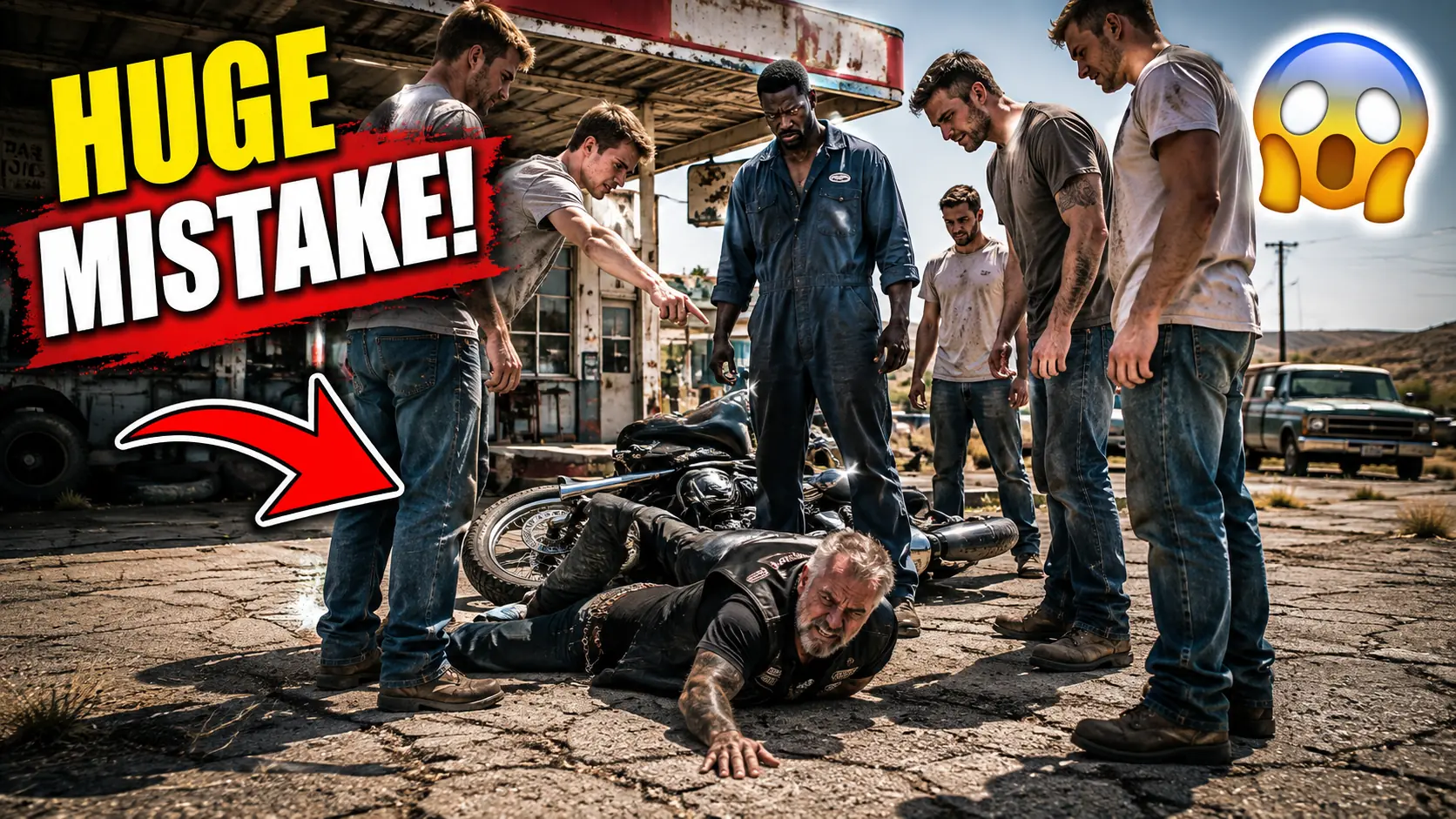
A Black Boy Defended an Elderly Biker From 6 Bullies — The Bikers' Response Left Everyone Speechless
CHAPTER 2: A Black Boy Defended an Elderly Biker From 6 Bullies — The Bikers' Response Left Everyone Speechless
CHAPTER 3: THE PRICE OF A BADGE ABUSED
CHAPTER 3: A Black Boy Defended an Elderly Biker From 6 Bullies — The Bikers' Response Left Everyone Speechless
The Court Laughed When a Black Child Entered as His Father's Lawyer — Then He Asked One Question
The CEO Walked Into His Own Café Disguised as a Customer — What He Overheard Changed Everything
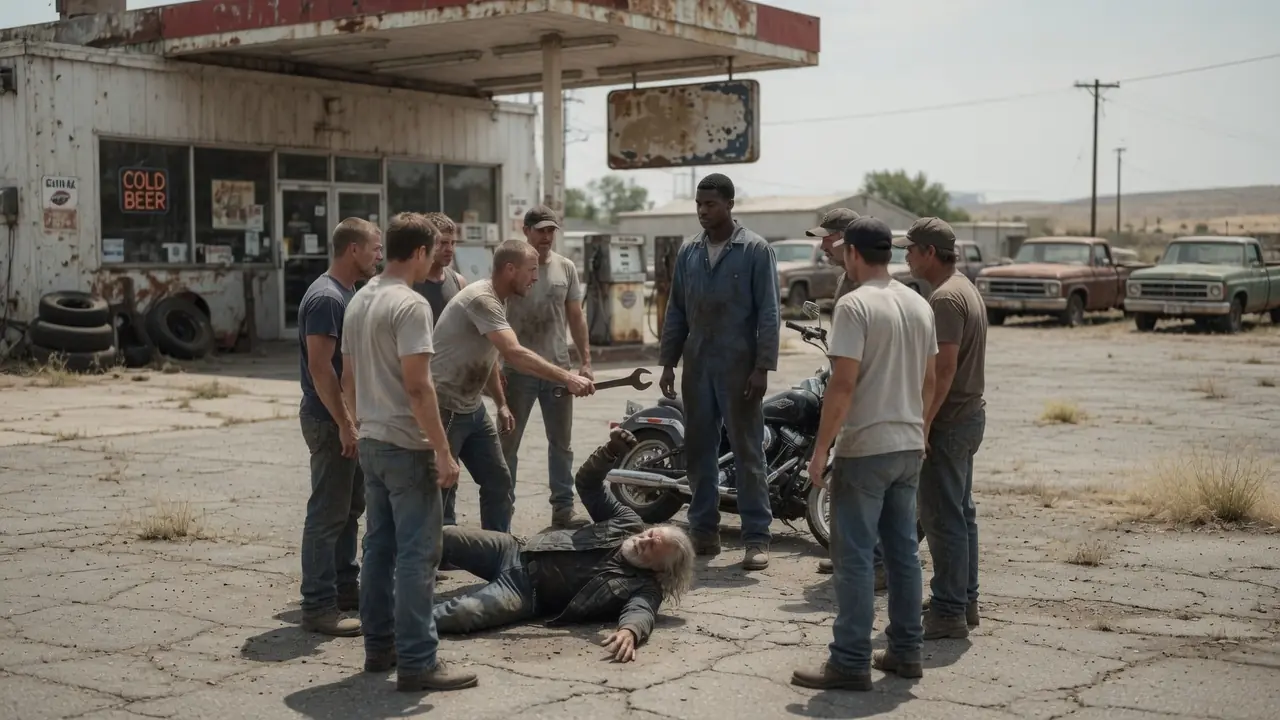
Six Bullies Cornered an Old Biker — Then a Black Boy Stepped In, and Everything Changed
CHAPTER 2: Six Bullies Cornered an Old Biker — Then a Black Boy Stepped In, and Everything Changed
CHAPTER 3: Six Bullies Cornered an Old Biker — Then a Black Boy Stepped In, and Everything Changed
A Black Child Walked Into Court as His Dad's Lawyer — Then One Question Changed Everything
CHAPTER 2: A Black Child Walked Into Court as His Dad's Lawyer — Then One Question Changed Everything
They Laughed at the Dirty Black Janitor — Then the CEO Walked In and Dropped to His Knees
CHAPTER 3: A Black Child Walked Into Court as His Dad's Lawyer — Then One Question Changed Everything
News Post
"Hit Me for $10K!" a Champion Mocked a Black Grandma — Then His Trainer Yelled, "STOP!"
The Officers Mocked and Handcuffed the Quiet Old Man — Then the Red Phone Rang
Three Men Trashed the Store and Cornered Her — But She Refused to Back Down
The Officer Slammed Him Into the Truck — Then One Phone Call Changed Everything
CHAPTER 2: THE NIGHT THE FEDERAL TEAM ARRIVED
An Undercover CEO Visited His Own Café for Coffee — Then Two Cashiers Started Talking
A Black Boy Defended an Elderly Biker From 6 Bullies — The Bikers' Response Left Everyone Speechless
CHAPTER 2: A Black Boy Defended an Elderly Biker From 6 Bullies — The Bikers' Response Left Everyone Speechless
CHAPTER 3: THE PRICE OF A BADGE ABUSED
CHAPTER 3: A Black Boy Defended an Elderly Biker From 6 Bullies — The Bikers' Response Left Everyone Speechless
The Court Laughed When a Black Child Entered as His Father's Lawyer — Then He Asked One Question
The CEO Walked Into His Own Café Disguised as a Customer — What He Overheard Changed Everything
Six Bullies Cornered an Old Biker — Then a Black Boy Stepped In, and Everything Changed
CHAPTER 2: Six Bullies Cornered an Old Biker — Then a Black Boy Stepped In, and Everything Changed
CHAPTER 3: Six Bullies Cornered an Old Biker — Then a Black Boy Stepped In, and Everything Changed
A Black Child Walked Into Court as His Dad's Lawyer — Then One Question Changed Everything
CHAPTER 2: A Black Child Walked Into Court as His Dad's Lawyer — Then One Question Changed Everything
They Laughed at the Dirty Black Janitor — Then the CEO Walked In and Dropped to His Knees