Rowan Mercer had one rule he never broke.
It had nothing to do with money, contracts, religion, or fear of consequences. No one had written it down for him. No teacher had placed it on a classroom wall. No employer had ever rewarded him for following it.
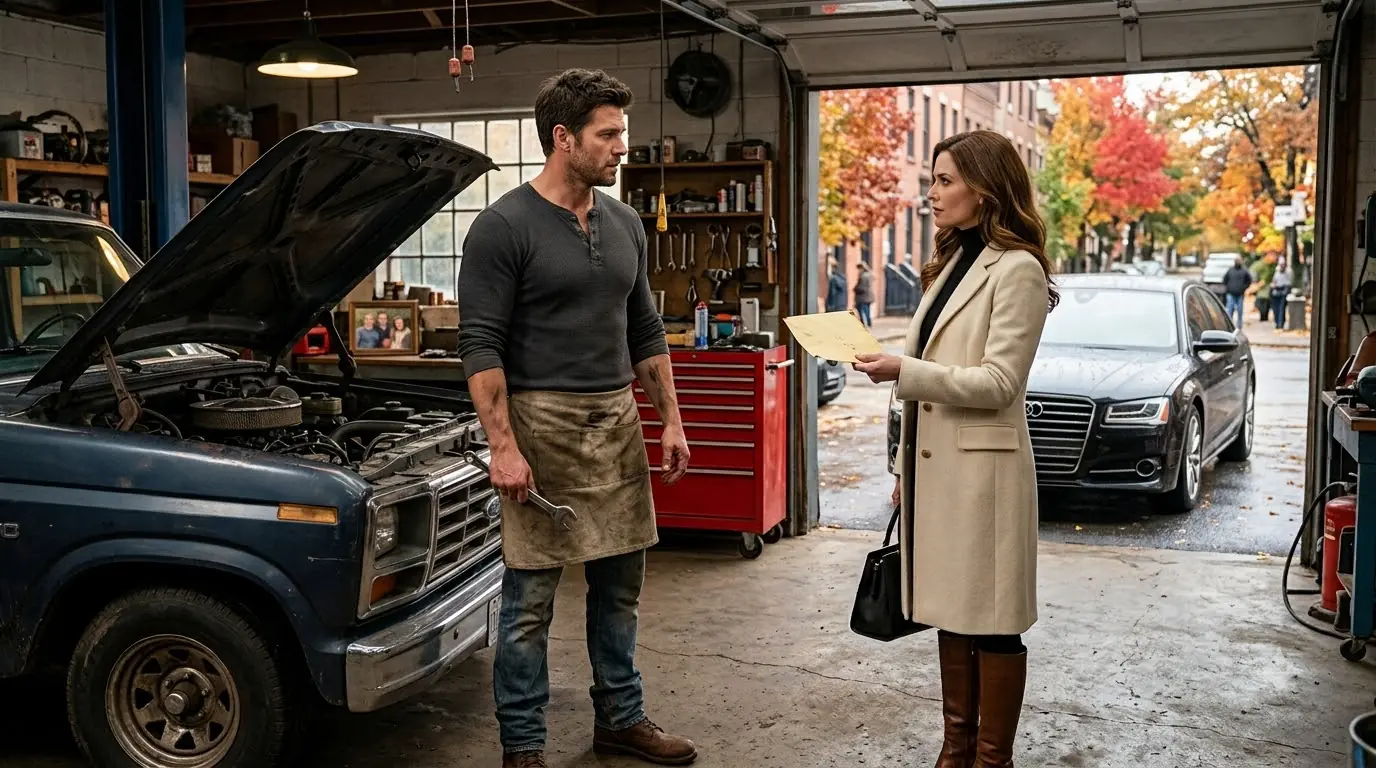
If something was not his, he did not take it.
That was all.
He had learned the rule before he knew enough about the world to understand why it mattered.
His earliest memories of money were not really memories of money at all. They were memories of its absence. An empty cereal box turned upside down on the kitchen counter. His mother, Claire, standing beneath the yellow light over the stove at one in the morning, still wearing the uniform from her first job while preparing food to take to her second. An electric-company envelope hidden beneath a stack of newspapers because she did not want twelve-year-old Rowan to see the red notice through the little plastic window.
Their apartment had two bedrooms, though one was so small Rowan could touch both walls if he stretched his arms far enough. The heater worked when it felt like it. Rain sometimes came through the kitchen window because the landlord had promised to replace the frame three winters in a row and never did.
Rowan’s father, Walter Mercer, had once belonged to an entirely different world.
That was what Rowan understood later.
When Rowan was very young, his father wore pressed shirts, carried a leather briefcase, and left home early in the morning smelling faintly of shaving cream and coffee. Sometimes Walter would bring home glossy company reports filled with charts that Rowan could not understand. He would sit at the kitchen table with a calculator, yellow legal pads, and the look of a man solving something no one else had yet realized was broken.
Then things changed.
The suits disappeared.
The briefcase stayed in the closet.
His parents began whispering after Rowan went to bed.
Walter started leaving the apartment for long stretches without explaining where he was going. He received phone calls that made him lower his voice. Once, Rowan woke at three in the morning and found his father standing at the living-room window, staring at a dark sedan parked across the street.
“Dad?”
Walter turned so quickly he nearly knocked over a lamp.
“What are you doing up?”
“I heard you.”
Walter looked toward the window again.
Then he closed the curtain.
“Go back to bed, son.”
Rowan never forgot the expression on his father’s face.
Fear.
Not panic.
Walter Mercer had never been a panicked man.
It was the expression of someone who had calculated the odds and disliked the answer.
Within a year, Walter’s career was over.
At least, that was the story Rowan was given.
His mother said Walter had made bad choices at work, lost a good position, and could not live with the humiliation. When Rowan demanded to know why his father no longer came home regularly, Claire would go quiet.
“Your father has things he has to work out.”
“What things?”
“Adult things.”
“Is he coming back?”
Claire never answered directly.
Eventually, Walter stopped appearing at all.
Rowan learned not to ask.
For years, he believed his father had simply abandoned them.
It was easier than believing there might be a more complicated answer.
Easier to be angry.
Anger had clean edges.
Confusion did not.
Claire worked two jobs after Walter disappeared from their daily life. During the week she cleaned offices downtown from six in the evening until midnight. On weekends, she worked morning shifts at a small grocery store.
Rowan learned early to make himself inexpensive.
He wore shoes until the soles separated.
He learned which foods lasted longest.
He learned not to ask for school trips.
And he learned never to take what did not belong to him.
The rule came from Walter.
One afternoon when Rowan was nine, they had gone to a diner together. The waitress accidentally gave Walter too much change.
Five dollars.
To Rowan, five dollars had seemed enormous.
Walter counted it.
Then waved the waitress back.
“You gave me too much.”
She looked exhausted.
“Keep it.”
“No.”
Walter placed the bill in her hand.
“That money isn’t mine.”
Walking home, Rowan asked the obvious question.
“Why didn’t you keep it?”
Walter looked down at him.
“Because whether somebody notices has nothing to do with whether something is yours.”
Rowan remembered the sentence.
He remembered it when Walter disappeared.
He remembered it while hating him.
He remembered it when Claire died years later without ever fully explaining what had happened.
And at thirty-nine, Rowan still lived by it.
Quietly.
Stubbornly.
The way other men lived by religion.
He worked with his hands because his hands had always made sense to him.
Construction.
Furniture moving.
Fence repair.
Warehouse shifts.
Delivery driving.
Small engine repair when someone recommended him.
He knew how to frame a wall, replace a damaged floorboard, back a twenty-foot delivery van into an alley barely wider than the mirrors, and carry a refrigerator up three flights of stairs without damaging the refrigerator or the stairs.
He was not rich.
He was not destitute either.
He had reached the kind of stability that felt luxurious to a child raised around shutoff notices.
Rent paid.
Food in the refrigerator.
A little money saved.
No one calling about overdue accounts.
For six years, he rented a small apartment above Bellamy Hardware on Grant Street. The apartment had low ceilings and radiators that hissed at night, but the landlord fixed things when Rowan asked, and the bedroom window looked west over the city.
He liked it.
Ashcombe had become wealthy around him.